Executive Overview
For decades, the global gaming hierarchy possessed a rigid, well-defined architecture: dedicated consoles sat in living rooms, powerful custom-built rigs anchored home offices, and mobile devices were largely relegated to casual, bite-sized time-killers like endless runners and match-three puzzles.
Today, that traditional paradigm is fracturing. Apple—long criticized by hardcore gaming purists for treating the App Store as a casual storefront rather than a serious platform—is making its most aggressive, calculated push yet to rewrite the rules of digital entertainment.
At the center of this metamorphosis is Carson Oliver, Apple’s newly appointed Vice President of the App Store Worldwide. In a comprehensive, wide-ranging interview with Polygon, Oliver pulled back the curtain on Apple’s overarching gaming ambitions. His message was clear: Apple no longer wants to be viewed merely as an incidental distributor of mobile apps. The company is actively positioning the iPhone and iPad as premier, uncompromising gaming devices capable of running heavy-hitting PC ports, sprawling AAA franchises, and boundary-pushing independent titles.
This strategic pivot is not born of sudden inspiration. It is the culmination of years of deliberate hardware and software engineering. By systematically introducing features like hardware-accelerated ray tracing, continually refining the Metal graphics framework, and building sophisticated developer toolsets, Apple has transformed its ecosystem from the silicon up.
Simultaneously, a massive demographic shift is redefining the market. An entire generation of consumers has grown up with an iPhone or iPad as their primary—and in some cases, only—gaming computer. For these users, direct touch is a native control scheme rather than an awkward compromise.
By balancing traditional standalone premium downloads with subscription models like Apple Arcade, Apple is attempting to construct an expansive, flexible ecosystem. This environment accommodates everything from multi-platform blockbusters to hyper-creative indie experiments. As Oliver steps into his new leadership role, the tech giant faces a defining question: Can Cupertino finally convince skeptical core gamers and major developers that iOS is a legitimate, long-term home for AAA entertainment?
Detailed Chronology: The Road to Apple’s Modern Gaming Strategy
To fully understand Apple’s current posture in the gaming industry, one must trace the deliberate, step-by-step evolution of its hardware, software, and corporate positioning over the last decade.
Laying the Foundation: Silicon and Software
For years, mobile gaming was bottlenecked by thermal constraints, battery limitations, and fragmented developer APIs. Apple’s turning point began when the company transitioned away from third-party chipsets to its custom Apple Silicon (A-series and M-series chips).
- The Metal API Revolution: Apple introduced its proprietary graphics API, Metal, designed to provide developers with near-metal access to the GPU, dramatically reducing overhead and maximizing graphics rendering efficiency.
- Hardware-Accelerated Ray Tracing: With the rollout of advanced A-series chips in recent iPhone generations, Apple introduced hardware-accelerated ray tracing and mesh shading. This brought desktop-class lighting, reflections, and shadows directly into mobile form factors, closing a critical feature gap with current-generation consoles.
- Porting Toolkits: Apple launched the Game Porting Toolkit, providing developers with an emulation and translation layer to analyze how Windows games could run on macOS and iOS hardware with minimal friction. This technical bridge signaled to major studios that Apple was actively courting their catalogs.
Structural Changes and Leadership Shifts
As the technical capabilities of the hardware matured, Apple began restructuring its internal leadership to reflect its growing ambitions in software, services, and digital storefront management.
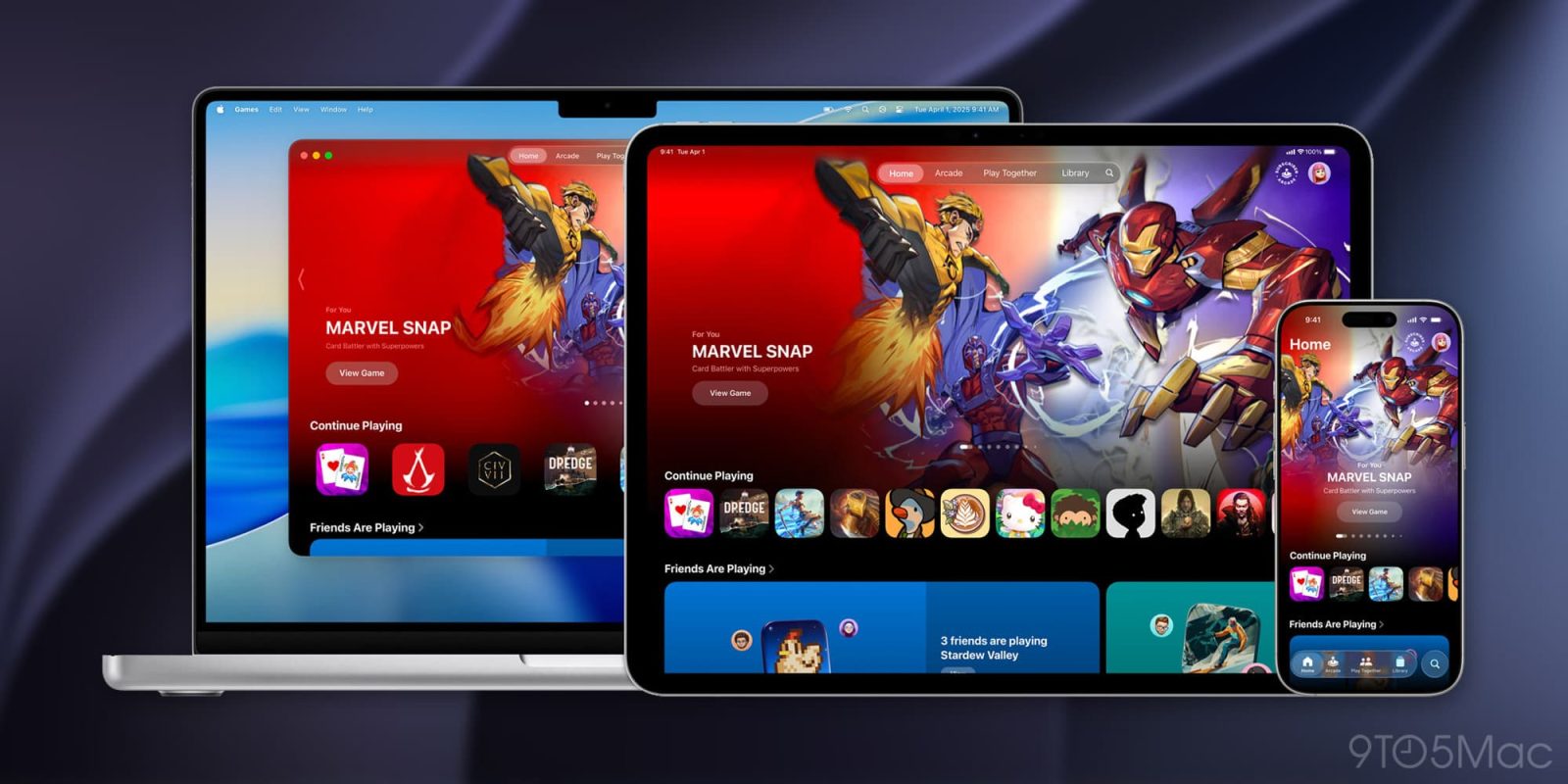
- October 2026 Leadership Shuffle: Following internal reorganizations, Carson Oliver was promoted to Vice President of the App Store Worldwide, stepping into a pivotal role overseeing storefront curation, developer relations, and the strategic positioning of digital goods.
- Spotlighting Indie Innovation: Shortly after Oliver’s promotion was made public, Apple announced its dedicated "Indie Games Week," putting a spotlight on seven distinct upcoming releases for the iPhone and iPad ecosystem. This move underscored Apple’s dual-track approach: courting massive console franchises while simultaneously nurturing the creative vanguard of independent developers.
Supporting Context & Metrics: The Shifting Demographics of Play
The economic and cultural drivers behind Apple’s gaming push are rooted in profound generational changes in how humanity consumes interactive entertainment.
The Post-Console Generation
For decades, the gamer’s journey followed a predictable path: handheld consoles (like the Game Boy or Nintendo DS) in early childhood, transitioning to home consoles (PlayStation, Xbox) or PCs in adolescence.
Carson Oliver highlighted a fundamental disruption to this lifecycle during his discussion with Polygon. An entire generation of modern players has grown up with an iPhone or iPad as their very first gaming platform.
- Native Touch-Screen Literacy: Unlike older demographics who view touchscreens as an inferior substitute for physical gamepads, younger players view direct touch as their primary, intuitive control scheme.
- The Ubiquity Advantage: Because the iPhone is an omnipresent device carried everywhere, the barrier to entry for gaming sessions is virtually zero. Developers are capitalizing on this by creating titles that fit naturally into fragmented pockets of time without sacrificing depth or aesthetic fidelity.
Premium Games on Mobile: Breaking the Free-to-Play Mold
Historically, the App Store was dominated by ad-supported or free-to-play titles fueled by microtransactions. While financially lucrative, this ecosystem alienated core gamers who preferred complete, uncompromised experiences.
Apple’s recent metrics show a measurable shift:
- Rise in Premium Releases: According to internal data cited by leadership, the number of premium (upfront purchase) games launching on the App Store has increased year-over-year.
- Console-to-Mobile Pipelines: Major franchises that once lived exclusively on Windows, PlayStation, and Xbox—ranging from complex role-playing games to tactical strategy titles—are increasingly finding viable, profitable audiences on iOS. The commercial and critical success of crossover phenomena like Balatro proves that players are willing to pay upfront for quality experiences on mobile hardware.
Official Statements: Carson Oliver on the Future of the App Store
Carson Oliver’s interview with Polygon serves as the most comprehensive public roadmap for Apple’s gaming division under his stewardship. Below are the core pillars of his strategic vision.
Embracing Diversity Without Compromise
Addressing the influx of diverse titles hitting the ecosystem, Oliver emphasized that mobile devices are no longer confined to simplistic genres.
"We’ve seen incredible growth of games coming to the App Store, in general, with more premium games releasing on the App Store this year than last. […] While many of those are indies, we’re also seeing more console and PC franchises coming to mobile, as it is a burgeoning audience for those games. These seven games featured in Indie Games Week capture where gaming on iPhone and iPad is heading: incredible diversity and creativity with no compromises on quality."
The Psychology of Touch and Indie Innovation
Oliver also elaborated on the unique creative freedom afforded by Apple’s hardware ecosystem, noting how user habits dictate developer innovation:

"An entire generation of players grew up with an iPhone as their first gaming device, rather than a traditional console or PC. These users embrace direct touch as their primary controller, making iPhone and iPad the ultimate canvas for indie innovation."
The Dual Ecosystem Strategy: App Store vs. Apple Arcade
A persistent question among industry analysts has been how Apple balances standalone premium App Store purchases with its subscription-based service, Apple Arcade. Oliver clarified that the two models are not designed to compete, but rather to coexist and offer creators maximum flexibility:
"We want to give developers a trusted place to reach users around the world, support them at each stage, and help them build successful businesses. […] To achieve that goal, we provide developers with flexible business model options. That means a breakthrough phenomenon like Balatro can thrive as a premium download, and it can also find a home as part of the Apple Arcade service. The important thing is that we give developers the flexibility to make the best choice for every game and players the freedom to play how they want."
Future Outlook: Challenges and Opportunities Ahead
As Apple pushes deeper into the traditional gaming territory long dominated by Sony, Microsoft, Nintendo, and Steam, the path forward is rich with opportunity, yet fraught with distinct challenges.
1. Overcoming the Skepticism of Core Gamers
Despite Apple’s impressive hardware leaps—such as ray tracing and powerful M-series processors in iPads and Macs—hardcore gamers remain skeptical. Concerns regarding thermal throttling during prolonged gaming sessions, the lack of tactile feedback (absent a physical controller), and the historical stigma of mobile gaming as "casual-only" remain hurdles Apple must clear. To win over this demographic, Apple must continue championing day-and-date releases of major AAA titles alongside dedicated hardware accessories like certified controllers.
2. Discoverability and Curation
With millions of applications hosted on the App Store, game discoverability has long been a pain point for independent developers. Initiatives like Indie Games Week and editorial curations help, but as the volume of console-quality ports increases, Apple will need to build more sophisticated, gaming-specific discovery mechanisms. Transforming the App Store tab into an engaging, editorialized hub akin to a digital gaming lounge will be critical for long-term engagement.
3. Monetization Flexibility and Developer Relations
Apple’s ongoing legal and regulatory battles regarding App Store fees, alternative marketplaces, and payment processing cast a long shadow over developer relations. By emphasizing flexibility—allowing developers to choose between traditional premium pricing, in-app purchases, or inclusion in Apple Arcade—Oliver is attempting to foster goodwill. Ensuring that developers feel fairly compensated will dictate whether top-tier studios continue to invest the substantial resources required to port complex games to iOS.
Conclusion
Carson Oliver’s early tenure as head of App Store Worldwide marks a decisive chapter in Apple’s corporate history. No longer content to sit on the sidelines of the multi-billion-dollar gaming industry, Apple is leveraging its world-class silicon, a massive base of native-touch digital natives, and a flexible publishing ecosystem to make its hardware a primary destination for players worldwide. Whether this strategy ultimately unseats traditional consoles remains to be seen, but one thing is certain: the boundary lines separating mobile gaming from traditional PC and console experiences have never been blurrier.