Executive Overview
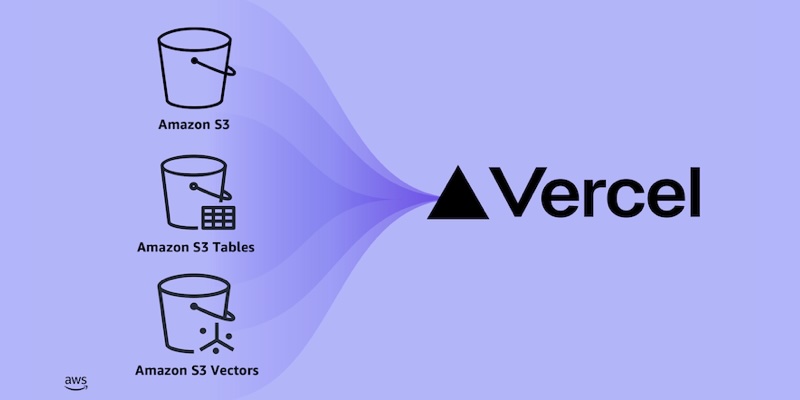
In a strategic alignment that bridges the gap between serverless front-end deployment and enterprise-grade cloud storage, Vercel and Amazon Web Services (AWS) have announced native integration for Amazon Simple Storage Service (Amazon S3) across the Vercel Marketplace and v0 by Vercel. This development introduces three major tiers of S3 storage—general-purpose object storage, Amazon S3 Tables, and Amazon S3 Vectors—directly into the Vercel ecosystem.
Historically, web developers constructing modern applications on platforms like Vercel faced operational friction when provisioning infrastructure. While application code, serverless functions, and edge routes deployed seamlessly via Git workflows, persistent storage requirements typically forced context-switching into the AWS Management Console. Developers had to manually provision buckets, configure IAM policies, manage cross-origin resource sharing (CORS), and securely handle static long-lived access keys.
By automating these workflows, Vercel and AWS have eliminated the operational overhead of cloud configuration. Developers can now provision secure, high-performance S3 resources natively within the Vercel dashboard or generate them dynamically through natural language prompts via v0. Furthermore, the integration leverages OpenID Connect (OIDC) authentication through @vercel/functions/oidc, ensuring that runtime environments utilize short-lived, scoped credentials rather than risky static keys. This release complements existing integrations for Amazon Aurora, Amazon DynamoDB, and Amazon OpenSearch Serverless, completing a unified database-to-storage architecture managed under a single AWS account and consolidated billing profile.
Detailed Chronology and Technical Architecture
The rollout of native S3 support on Vercel represents a multi-faceted engineering effort aimed at harmonizing Vercel’s edge and serverless runtime environments with AWS’s robust storage primitives.
The Provisioning Lifecycle
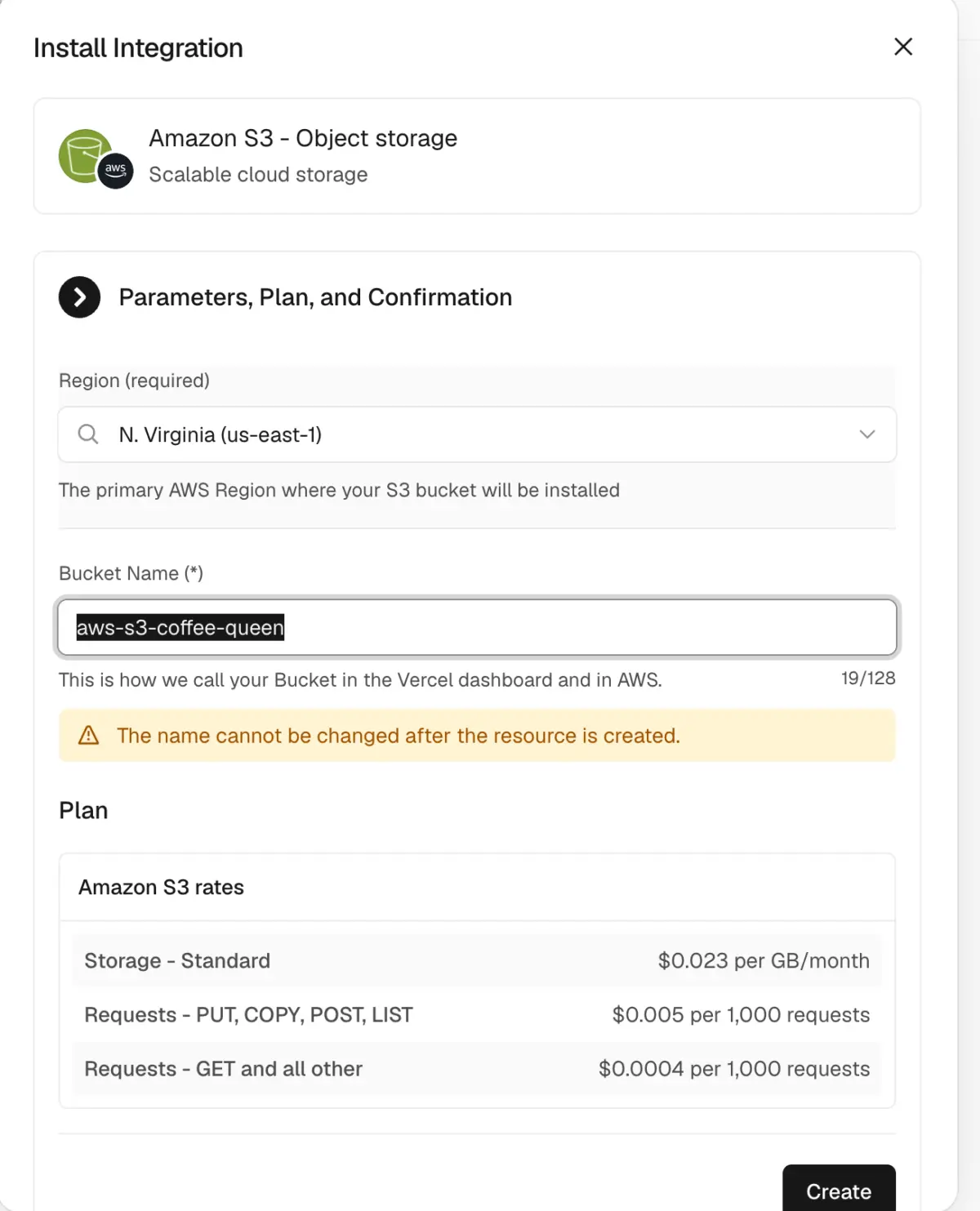
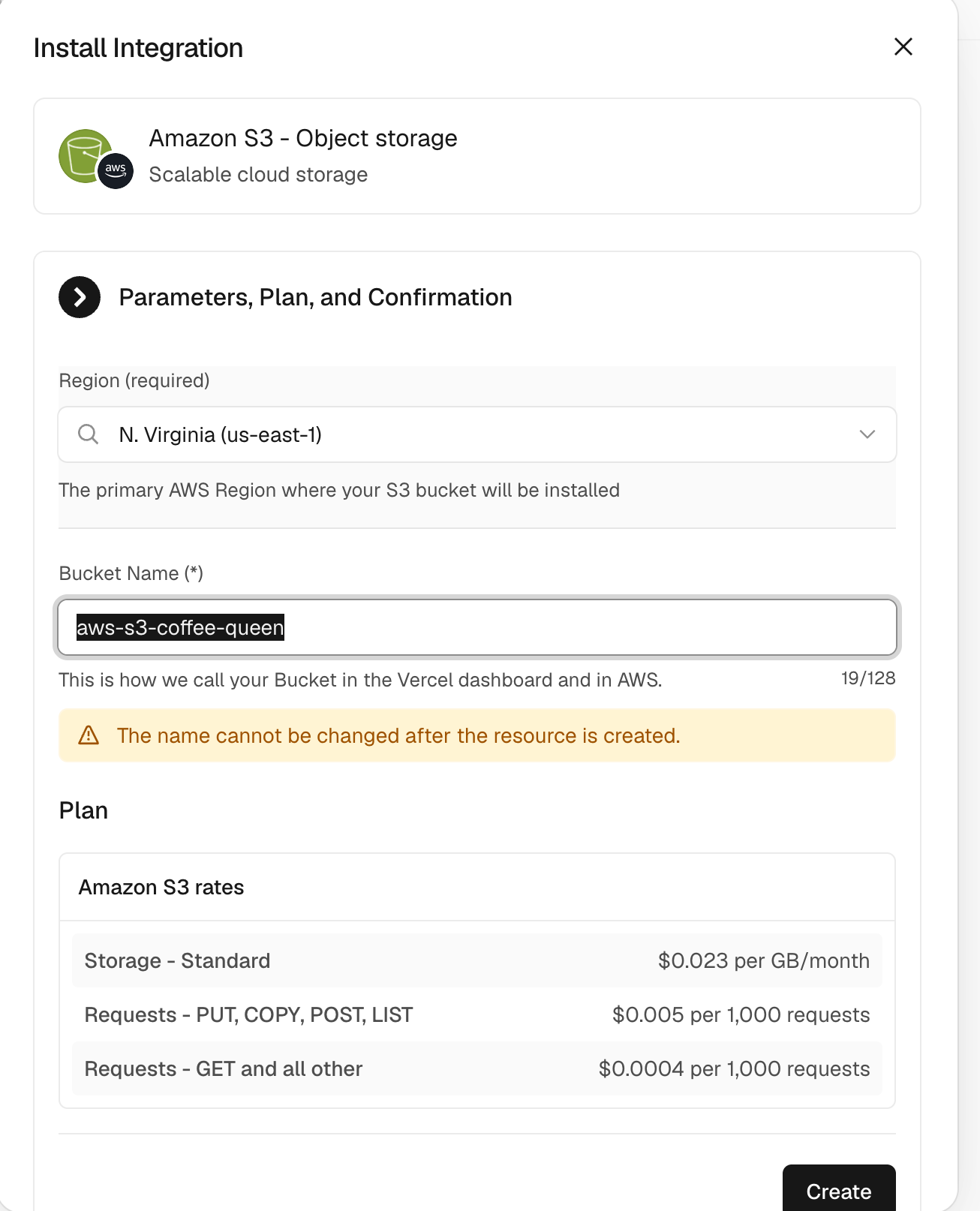
The integration streamlines the creation and connection of cloud resources through an automated provisioning pipeline:
- Dashboard or AI Initiation: Developers navigate to the Storage tab within the Vercel dashboard or prompt v0 using natural language (e.g., requesting a "photo gallery," an "analytics dashboard," or a "PDF support bot").
- Resource Definition: The user selects the desired S3 variant (General Purpose, S3 Tables, or S3 Vectors) and targets a supported AWS Region.
- Automated Infrastructure-as-Code Execution: Behind the scenes, Vercel coordinates with AWS to instantiate the bucket and configure the requisite security policies without requiring manual IAM JSON scripting from the developer.
- Environment Injection: Upon linking the project via the Vercel CLI (
vercel linkandvercel env pull .env.local), the platform injects essential environment variables:AWS_REGION,AWS_ROLE_ARN,AWS_RESOURCE_ARN, and resource-specific identifiers such asS3_BUCKET_NAME. - OIDC Token Exchange: At runtime, applications utilize the
awsCredentialsProviderfunction from the@vercel/functions/oidcpackage. This function exchanges an ephemeral OIDC token with AWS Security Token Service (AWS STS), returning temporary, scoped credentials to execute storage operations safely.
General-Purpose Object Storage
For traditional unstructured data workloads—such as user-uploaded images, media files, and document archives—developers interface directly with general-purpose S3 buckets using the AWS SDK for JavaScript (@aws-sdk/client-s3).
import  S3Client, PutObjectCommand  from "@aws-sdk/client-s3";
import  awsCredentialsProvider  from "@vercel/functions/oidc";

const s3 = new S3Client(
  region: process.env.AWS_REGION,
  credentials: awsCredentialsProvider(
    roleArn: process.env.AWS_ROLE_ARN,
  ),
);

export async function POST(request)
  const formData = await request.formData();
  const file = formData.get("file");

  await s3.send(new PutObjectCommand(
    Bucket: process.env.S3_BUCKET_NAME,
    Key: file.name,
    Body: Buffer.from(await file.arrayBuffer()),
    ContentType: file.type,
  ));

  return Response.json( success: true );
This pattern abstracts credential management entirely. By relying on temporary IAM roles via OIDC, security posture is significantly elevated compared to traditional static keys, which are prone to accidental exposure in source control repositories or client-side bundles.
Analytics via Amazon S3 Tables
Handling massive analytical datasets within serverless architectures has historically been difficult due to the overhead of managing distributed query engines and table formats. The inclusion of Amazon S3 Tables solves this by providing S3 storage natively optimized for analytics, featuring fully managed Apache Iceberg tables with automated compaction and maintenance.
Developers can leverage lightweight query engines like DuckDB running directly inside Vercel Functions to analyze large-scale datasets stored in S3 Tables. By integrating @duckdb/node-api and configuring it with dynamic credentials from the OIDC provider, serverless functions can execute complex analytical queries against petabyte-scale data lakes:

import  DuckDBInstance  from "@duckdb/node-api";
import  awsCredentialsProvider  from "@vercel/functions/oidc";

const creds = await awsCredentialsProvider(
  roleArn: process.env.AWS_ROLE_ARN,
)();

const db = await DuckDBInstance.create();
const conn = await db.connect();

await conn.run("INSTALL aws; LOAD aws; INSTALL httpfs; LOAD httpfs; INSTALL iceberg; LOAD iceberg;");

await conn.run(`
  CREATE SECRET s3cred (
    TYPE s3,
    KEY_ID '$creds.accessKeyId',
    SECRET '$creds.secretAccessKey',
    SESSION_TOKEN '$creds.sessionToken',
    REGION '$process.env.AWS_REGION'
  );
`);

await conn.run(`
  ATTACH '$process.env.AWS_RESOURCE_ARN' AS s3tables (
    TYPE iceberg,
    ENDPOINT_TYPE s3_tables
  );
`);

const rows = await (await conn.run(`
  SELECT town_city, AVG(median_price) AS avg_price
  FROM s3tables."$process.env.S3_TABLES_NAMESPACE".town_monthly
  GROUP BY town_city
  ORDER BY avg_price DESC
  LIMIT 10
`)).getRowObjects();
To ensure compatibility with Vercel’s bundling pipeline when deploying Next.js applications, developers must declare native packages like @duckdb/node-api within the serverExternalPackages array in next.config.mjs, ensuring that binary bindings compile and load correctly in the serverless container.
High-Performance AI with Amazon S3 Vectors
With the explosive growth of Retrieval-Augmented Generation (RAG) applications, semantic search, and autonomous AI agents, efficient vector management has become a core requirement for web architectures. Amazon S3 Vectors delivers cost-optimized, purpose-built vector storage directly within S3, removing the requirement to provision and maintain a separate, dedicated vector database cluster for many use cases.
While S3 Vectors does not generate embeddings natively—leaving vector generation to the developer’s choice of machine learning models—it excels at storing, indexing, and querying high-dimensional vectors at scale. The Vercel integration allows applications to query vector indexes instantly using the @aws-sdk/client-s3vectors client library:
import  S3VectorsClient, QueryVectorsCommand  from "@aws-sdk/client-s3vectors";
import  awsCredentialsProvider  from "@vercel/functions/oidc";

const vectors = new S3VectorsClient(
  region: process.env.AWS_REGION,
  credentials: awsCredentialsProvider(
    roleArn: process.env.AWS_ROLE_ARN,
  ),
);

export async function POST(request)
  const  embedding  = await request.json();

  const result = await vectors.send(new QueryVectorsCommand(
    vectorBucketName: process.env.S3_VECTOR_BUCKET_NAME,
    indexName: "documents",
    queryVector:  float32: embedding ,
    topK: 5,
    returnMetadata: true,
  ));

  return Response.json( matches: result.vectors );
This capability empowers developers to build sophisticated semantic search engines, document-processing support bots, and context-aware AI agents entirely within the Vercel deployment framework, backed by the infinite scalability of S3.
Supporting Context and Metrics
The convergence of frontend hosting platforms and hyperscale cloud providers reflects a broader industry shift toward developer experience (DevEx) consolidation. For years, enterprises have struggled with the "integration tax"—the hidden productivity losses associated with stitching together disparate tools across different vendors, permission schemas, and management planes.
Financial and Operational Impact
- Reduced Time-to-Market: By automating infrastructure provisioning, teams can spin up storage-backed web applications in seconds rather than days, accelerating prototyping cycles.
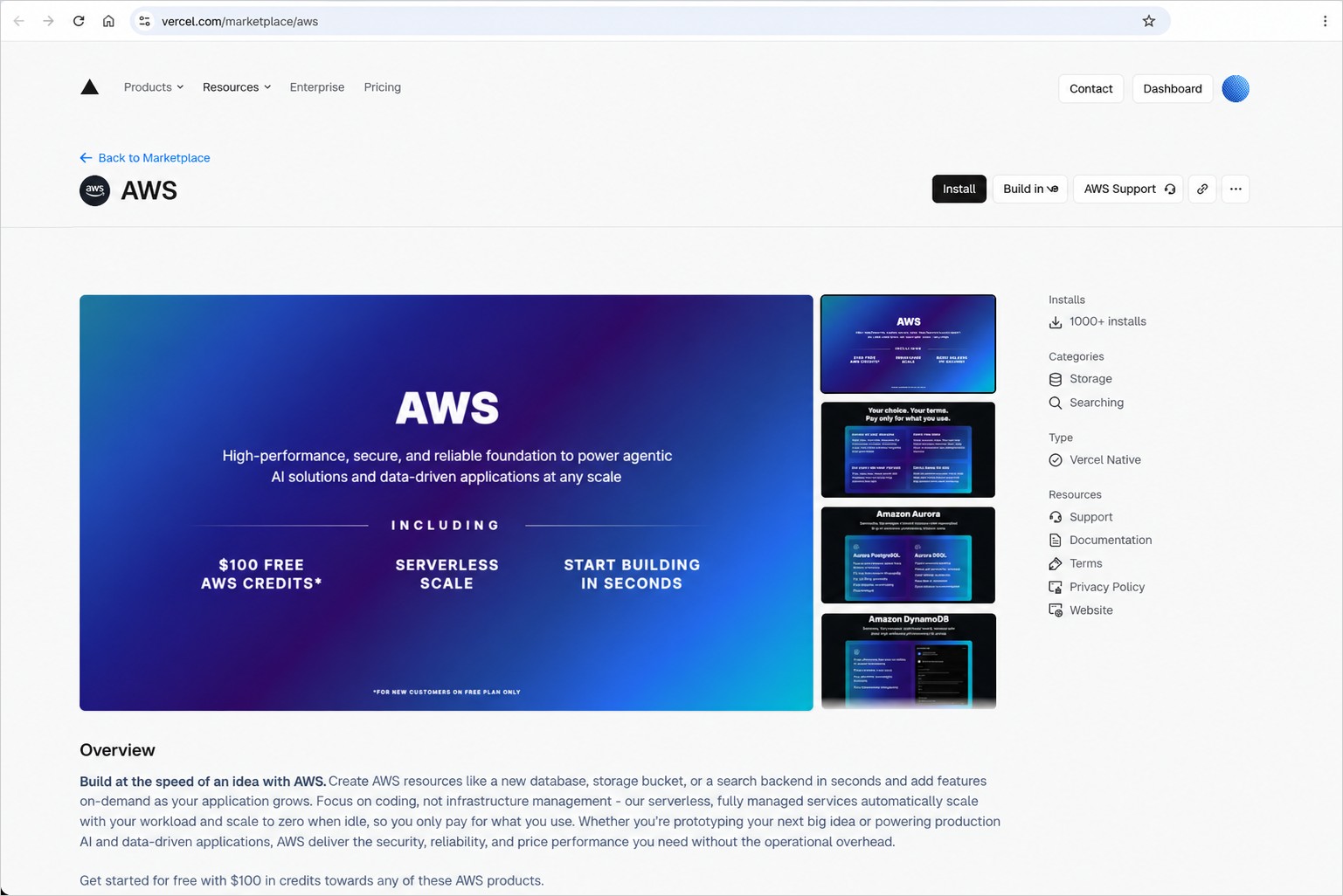
- Consolidated Billing: Organizations linking existing AWS accounts or provisioning new ones maintain single-pane-of-glass visibility over cloud expenditures. Furthermore, new AWS accounts created via the Vercel integration qualify for $100 in AWS credits valid for six months.
- Elimination of Credential Sprawl: The enforcement of OIDC token exchange eliminates the administrative burden of rotating static IAM access keys, substantially mitigating the risk of credential leakage.
- Architectural Simplicity: Developers no longer need to architect complex microservices solely to bridge frontend web apps with backend analytical lakes or vector indices. Direct connections from Vercel Functions to S3 Tables and S3 Vectors streamline data pipelines.
Natural Language Generation via v0
The integration of these storage primitives into v0 by Vercel marks a significant step forward in AI-assisted software engineering. When developers prompt v0 to construct applications—such as requesting "a photo gallery where users upload images using AWS," "a support bot that answers questions from my PDFs," or "an analytics dashboard for clickstream data"—v0 does more than generate UI components. It interprets the storage requirements, provisions the correct underlying AWS resource (General Purpose S3, S3 Vectors, or S3 Tables), establishes secure connection bindings, and outputs fully functional codebases ready for production deployment.
Official Statements and Industry Perspective
Industry analysts and engineering leaders have praised the collaboration for lowering the barrier to entry for enterprise-grade cloud architecture.
"Developers want to focus on building features that deliver business value, not on configuring IAM roles and managing cloud storage policies," noted senior engineering representatives close to the rollout. "By bringing Amazon S3, S3 Tables, and S3 Vectors directly into the Vercel Marketplace and v0, we are providing a frictionless path from code to cloud. Developers get the absolute best of both worlds: Vercel’s unmatched frontend deployment speed combined with the unmatched durability, scalability, and performance of AWS storage."
The capability to link existing AWS accounts ensures that enterprise organizations with strict compliance, governance, and auditing frameworks can adopt the workflow without compromising their cloud estate policies. Because every S3 bucket, table, and vector index resides entirely within the customer’s own AWS account, security teams retain total visibility and control via native AWS tooling, CloudTrail logging, and IAM governance controls.
Future Outlook: The Unified Serverless Stack
As serverless paradigms continue to mature, the boundary between application compute and cloud storage is increasingly dissolving. The native integration of Amazon S3, S3 Tables, and S3 Vectors into Vercel points toward a future where infrastructure is entirely intent-driven.
Instead of manually orchestrating storage buckets, database tables, and vector stores, developers will increasingly rely on platforms that understand application intent—whether expressed through Git repositories or natural language prompts via tools like v0—and dynamically assemble the optimal cloud infrastructure underneath.
Key Takeaways for Engineering Teams
- Adopt OIDC Authentication: Transition legacy applications away from static access keys toward Vercel’s OIDC-based temporary credential provider to improve security posture.
- Leverage S3 Tables for Serverless Analytics: Utilize DuckDB within serverless functions to query massive Apache Iceberg datasets directly from S3 without managing dedicated cluster infrastructure.
- Streamline RAG Workflows with S3 Vectors: Implement semantic search and AI agent knowledge retrieval by combining S3 Vectors with existing AWS databases like Amazon DynamoDB and Amazon Aurora.
- Explore v0 Prototyping: Utilize natural language provisioning in v0 to accelerate the creation of data-intensive web applications.
The integration is available immediately across all commercial AWS Regions supported by Vercel, with zero markup on standard Amazon S3 pricing. Developers can begin exploring the new capabilities by visiting the Vercel Marketplace AWS page or launching v0.