Executive Overview
In the fast-evolving landscape of enterprise cloud computing, open-source projects have transitioned from peripheral alternatives to the foundational core of modern software architecture. Demonstrating this paradigm shift, Amazon Web Services (AWS) contributors recently converged on Seoul, South Korea, to participate in the prestigious Open Source Summit Korea 2026 and the co-located MCP DevSummit Seoul 2026. Over four intensive days, global engineers, regional community leaders, and enterprise users gathered under the auspices of the Linux Foundation to collaborate, share architectural blueprints, and propel key open-source technologies forward.
At the center of AWS’s engagement at the summit were two powerhouse Linux Foundation projects: OpenSearch and Valkey. Both technologies have recently received monumental capability upgrades—OpenSearch 3.7 and Valkey 9.1—which have since been integrated directly into managed AWS offerings like Amazon OpenSearch Service and Amazon ElastiCache. These updates represent more than mere incremental patches; they signify a structural leap in how organizations process unstructured observability telemetry, perform lightning-fast vector searches, and execute ultra-low-latency caching at hyperscale.
This report provides an exhaustive examination of AWS’s footprint at Open Source Summit Korea 2026, dissects the engineering milestones of OpenSearch 3.7 and Valkey 9.1, evaluates their performance metrics in enterprise cloud environments, and explores the strategic outlook for open-source community engagement in the Asia-Pacific region and globally.
Detailed Chronology: Engaging the Community in Seoul
Day-by-Day Breakdown of the 2026 Summit
The four-day immersion in Seoul served as a vital touchpoint for the open-source community in East Asia, bridging the gap between core maintainers, enterprise adopters, and cloud infrastructure providers.
- Day 1 & 2: Keynotes, Foundation Alignment, and Collaborative Workshops
The summit kicked off with keynote addresses from Linux Foundation leaders and major cloud contributors, setting a collaborative tone focused on AI readiness, data management at scale, and community governance. AWS engineers participated in technical tracks alongside localized user group leaders, establishing foundational channels for feedback regarding multi-tenant cloud workloads. - Day 3: Deep Dives and Localized Networking
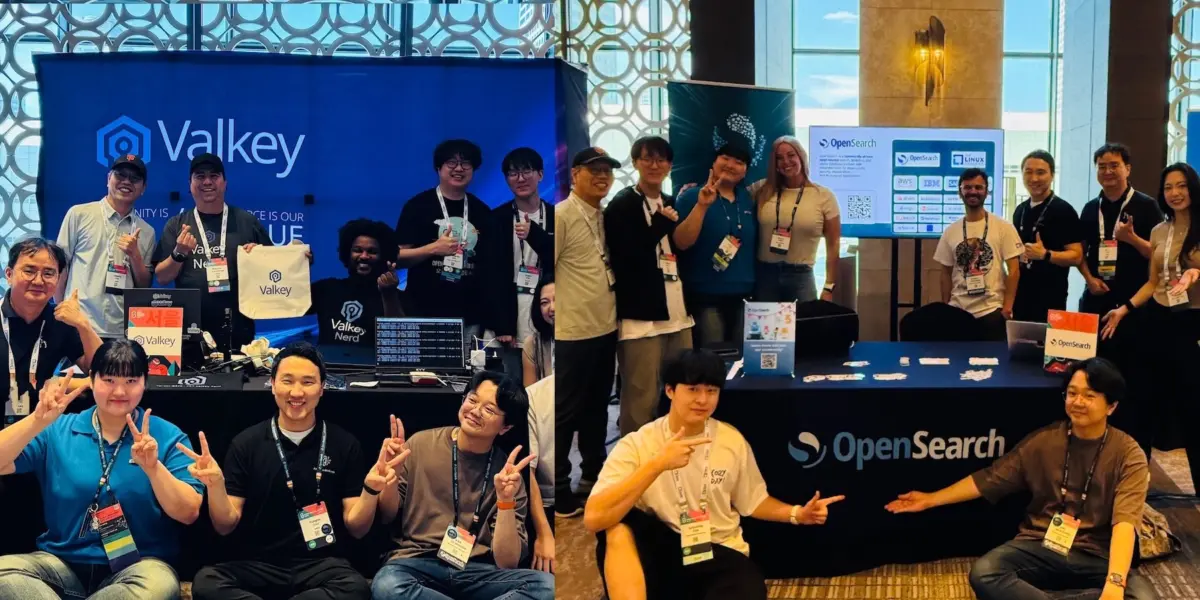
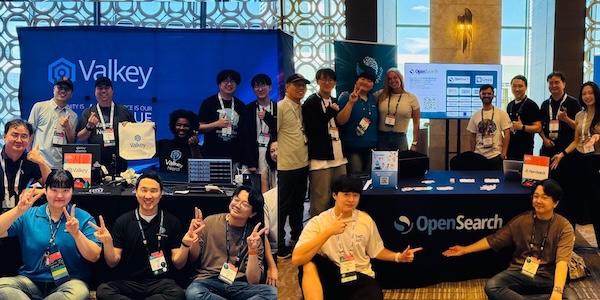
Mid-week activities pivoted toward technical workshops and hands-on coding sessions. Korean OpenSearch community leaders volunteered extensively at the joint AWS-Open Source booth, facilitating live demonstrations of observability pipelines and vector search indexing. Concurrently, the OpenSearch Project Seoul User Group Meetup drew dozens of local developers, DBAs, and cloud architects to discuss real-world migration strategies, scaling hurdles, and customized plugin development. - Day 4: MCP DevSummit Seoul and Future Horizons
The final day converged with the MCP DevSummit Seoul 2026, shifting attention to advanced model context protocols, developer tooling ecosystems, and cross-platform compatibility. AWS contributors hosted targeted roundtable discussions on how managed database services and search suites can seamlessly interoperate with modern generative AI pipelines.
[Day 1-2: Keynotes & Alignment] ---> [Day 3: Workshops & User Group Meetup] ---> [Day 4: MCP DevSummit & AI Integration]Supporting Context & Metrics: OpenSearch 3.7 and Valkey 9.1
To fully appreciate the excitement surrounding the AWS booth in Seoul, one must examine the profound technical achievements introduced by the recent releases of OpenSearch and Valkey, and how these capabilities manifest within managed AWS architectures.
OpenSearch 3.7: Transforming Observability and Vector Retrieval
Released globally on June 9, 2026, OpenSearch 3.7 introduced a paradigm shift for enterprises managing massive volumes of logs, metrics, and traces. Historically, observability silos forced engineering teams to jump between distinct tools to diagnose application performance issues. OpenSearch 3.7 dismantled these barriers by introducing unified tooling designed to query, alert, and track Service Level Objectives (SLOs) across logs, traces, and metrics through a single, cohesive interface.
Furthermore, with the explosive growth of Generative AI and Retrieval-Augmented Generation (RAG) architectures, vector search performance has become a critical enterprise requirement. OpenSearch 3.7 delivered a massive performance breakthrough, enabling vector retrieval up to 5.5x faster than previous iterations.
Amazon OpenSearch Service Integration
Building upon these upstream developments, AWS announced on July 30, 2026, the general availability of OpenSearch version 3.7 on Amazon OpenSearch Service. Enterprise customers leveraging the managed service immediately gained access to:
- Enhanced Vector Search Performance: Dramatically reduced latency for similarity searches, critical for large-scale semantic search and AI applications.
- Refined Search Relevance: Advanced ranking algorithms that improve the precision of search results in complex document repositories.
- Query Insights: Deeper, real-time visibility into query execution patterns, enabling database administrators to optimize slow-running queries effortlessly.
+-------------------------------------------------------------------+
|                   AMAZON OPENSEARCH SERVICE (v3.7)                |
|  +---------------------+  +--------------------+  +------------+  |
|  | Unified Observability|  | 5.5x Faster Vector |  |    Query   |  |
|  | (Logs, Metrics, Traces)| | Retrieval          |  |  Insights  |  |
|  +---------------------+  +--------------------+  +------------+  |
+-------------------------------------------------------------------+
Valkey 9.1: Redefining High-Performance Key-Value Datastores
As an open-source, high-performance key-value datastore that powers caching layers, message queues, and primary database architectures, Valkey has quickly become a cornerstone of modern web infrastructure. On May 19, 2026, the project maintainers released Valkey 9.1, a milestone release engineered to optimize throughput and memory utilization under heavy multi-tenant loads.
Valkey 9.1 introduced a completely redesigned I/O threading model. This architectural redesign yielded two primary benefits:
- Throughput Boost: Up to a 17% increase in overall system throughput, allowing clusters to process significantly more requests per second on identical hardware.
- Memory Optimization: A reduction in memory usage for strings under 128 bytes by up to 20%, maximizing cache density and lowering infrastructure costs for memory-bound applications.
Amazon ElastiCache Integration
Recognizing the immediate value to cloud-native enterprises, AWS rolled out support for Valkey 9.1 in Amazon ElastiCache on June 23, 2026. Tailored specifically for node-based clusters, this managed integration delivered:
- Superior Multi-Tenant Isolation: Stronger access control mechanisms, making it ideal for shared cloud environments.
- Maximized Efficiency: Lower memory footprints translated directly to cost savings for high-velocity caching layers and real-time session stores.
| Technology | Upstream Release Date | Managed AWS Service Launch | Key Performance Metric / Improvement |
|---|---|---|---|
| OpenSearch 3.7 | June 9, 2026 | July 30, 2026 (Amazon OpenSearch Service) | Up to 5.5x faster vector retrieval; unified observability. |
| Valkey 9.1 | May 19, 2026 | June 23, 2026 (Amazon ElastiCache) | Up to 17% higher throughput; 20% lower memory usage for strings <128 bytes. |
Official Statements and Community Perspectives
The collaborative ethos of Open Source Summit Korea 2026 was underscored by active dialogues between AWS representatives, Linux Foundation leadership, and regional user groups.

"The energy at Open Source Summit Korea and MCP DevSummit Seoul this year has been extraordinary," noted a core AWS open-source contributor present at the event. "Open-source projects like OpenSearch and Valkey thrive because of global collaboration, but their true impact is realized when local developer communities take ownership, adapt them to their unique challenges, and feed those insights back into the upstream codebase. Seeing the Korean OpenSearch community lead booth operations and drive packed user group meetups demonstrates the borderless nature of modern software engineering."
Local community leaders in Seoul echoed this sentiment, emphasizing the importance of direct access to core maintainers and cloud architects. By participating in hands-on labs and architectural roundtables, Korean developers were able to voice specific requirements regarding multi-language tokenization, low-latency cross-region replication, and advanced AI agent integration.
Future Outlook: The Road Ahead for Open-Source Builders
As open-source software continues to anchor the future of enterprise IT, events like Open Source Summit Korea serve as vital catalysts for innovation. The convergence of search, observability, and generative AI through OpenSearch 3.7, alongside the hyper-efficient memory and threading models of Valkey 9.1, highlights a maturing ecosystem focused on performance, efficiency, and developer experience.
AWS has signaled that its commitment to these communities extends far beyond financial sponsorship or managed service integration. Engineers and developers seeking to engage with AWS contributors can look forward to an active schedule of upcoming community events:
- OpenSearch Community Events: Ongoing regional meetups, virtual hackathons, and global summits. (Track schedules at OpenSearch Events).
- Valkey Community Gatherings: Developer workshops and architectural forums. (Track schedules at Valkey Events).
- AWS Builder Center & Community Days: Localized builder connections and hands-on technical sessions across the globe.
As we look toward the remainder of 2026 and beyond, the synergy between upstream open-source communities and hyperscale cloud providers like AWS ensures that developers will continue to receive robust, scalable, and cutting-edge tools to build the next generation of digital experiences.