Executive Overview
The evolution of artificial intelligence from conversational chat interfaces to autonomous, goal-directed agents represents one of the most significant paradigm shifts in modern enterprise software engineering. Yet, as developers transition these sophisticated AI agents from isolated prototypes to robust production environments, they frequently run into a wall of infrastructure limitations. Standard serverless execution models and lightweight container setups struggle to maintain the continuous state, multi-day lifecycles, and intensive computational demands that complex, multi-step agentic workflows require.
To bridge this operational chasm, Amazon Web Services (AWS) has announced the launch of Runtime Instances for the Amazon Bedrock AgentCore Runtime. This powerful, complementary compute option provides developers with persistent, fully managed AWS EC2 infrastructure purpose-built for heavy-duty agentic workloads.
By removing the friction of provisioning, configuring, and scaling underlying compute clusters, Runtime Instances empower enterprises to deploy multiple autonomous agents onto shared hosts. These agents can seamlessly collaborate over extended periods—ranging up to 14 days per session—utilizing shared file systems, GPU acceleration, and advanced state management. This release fundamentally changes how organizations architect autonomous multi-agent ecosystems, offering a streamlined pathway from experimental code to reliable, enterprise-scale production systems.
Detailed Chronology: The Architectural Evolution of Agentic Infrastructure
To fully appreciate the significance of Amazon Bedrock AgentCore Runtime Instances, it is vital to examine the chronological progression of challenges that AI developers have faced over recent years, and how AWS has systematically responded to them.

Phase 1: The Prototype Era and Ephemeral Constraints
In the early days of generative AI frameworks like LangChain, LlamaIndex, and CrewAI, developers focused primarily on prompt engineering, model selection, and basic tool invocation. At this stage, agents operated almost exclusively in ephemeral environments. Execution was short-lived—typically lasting only a few seconds per API call. State management was rudimentary, often relying on external vector databases or simple in-memory caches that wiped clean the moment a query completed.
Phase 2: The Multi-Step Production Bottleneck
As organizations began deploying autonomous agents to handle complex, multi-step tasks (such as end-to-end software development pipelines, automated security audits, and autonomous research projects), the limitations of ephemeral infrastructure became glaringly apparent. Workflows that required hours or days of continuous execution kept running into execution timeouts.
Furthermore, when multiple specialized agents needed to work together—such as a "Writer" agent passing code to a "Reviewer" agent—developers had to construct complex, fragile webs of API calls, intermediate message brokers, and external storage layers just to synchronize context. Keeping track of session states across disjunct microservices demanded heavy operational overhead, forcing AI engineering teams to spend more time managing virtual private clouds (VPCs), security groups, and auto-scaling groups than refining their core agent logic.
Phase 3: The Introduction of Runtime MicroVMs
AWS initially addressed these challenges with Amazon Bedrock AgentCore runtime microVMs, which provided a fully managed environment capable of running invocations for up to 8 hours. These microVMs supported stateful workflows through managed session storage, offering a reliable stepping stone for standard production workloads. However, certain advanced tasks—such as continuous multi-day operations, direct operating system access, and GPU-accelerated computing—remained constrained by the boundaries of lightweight microVM architectures.
Phase 4: The Advent of Runtime Instances
Recognizing the need for heavier, unconstrained compute options, AWS introduced Runtime Instances. By pairing AWS-managed Amazon EC2 infrastructure directly with the AgentCore Runtime ecosystem, AWS has eliminated the need for developers to manually build and maintain custom clustering solutions. Agents can now inhabit persistent, high-capacity environments with full OS visibility, multi-day session persistence, and hardware-level acceleration, marking a mature milestone in enterprise AI operations.
Technical Architecture and Deep Dive: How Runtime Instances Work
Runtime Instances introduce a paradigm shift in how infrastructure supports autonomous software. Rather than treating AI invocations as stateless, isolated function calls, Runtime Instances embrace a stateful, collaborative paradigm.
+---------------------------------------------------------------------------------+
|                        Amazon Bedrock AgentCore Runtime                         |
|                                                                                 |
|  +------------------------------+     +--------------------------------------+  |
|  |     Runtime MicroVMs         |     |          Runtime Instances           |  |
|  |  (Fast Scaling / Orchestrator|     |   (Persistent EC2 / Heavy Workers)   |  |
|  |       Lightweight Tasks)     |     |    GPU Access / 14-Day Sessions      |  |
|  +--------------+---------------+     +------------------+-------------------+  |
|                 |                                        |                      |
|                 +-------------------+--------------------+                      |
|                                     |                                           |
|                                     v                                           |
|                        +--------------------------+                             |
|                        |   Shared Session State   |                             |
|                        | (Amazon EBS / File System|                             |
|                        +--------------------------+                             |
+---------------------------------------------------------------------------------+
Core Components and Capabilities
- Managed EC2 Infrastructure: Developers deploy multiple agents onto a single runtime instance. Each agent retains its own distinct dependencies, configuration files, and artifact types while coexisting harmoniously on the same underlying host.
- Extended Session Lifecycles: Sessions can persist for up to 14 days, allowing complex, long-running agent workflows to pause, hibernate (such as overnight), and resume without losing critical context.
- GPU Acceleration: For compute-intensive tasks—such as local model fine-tuning, complex vector mathematics, computer vision, or GUI automation—Runtime Instances support GPU-enabled instance types.
- Persistent Storage Integration: Runtime Instances pair naturally with Amazon Elastic Block Store (Amazon EBS) and AgentCore Memory, ensuring that critical knowledge survives across sessions, reboots, and environmental updates.
- Session Stop and Restart Controls: To optimize operational costs during idle periods, teams can hibernate or stop sessions and resume them precisely where they left off.
Complementary Synergy: MicroVMs and Instances
One of the most powerful architectural patterns enabled by this release is the hybrid deployment model. Developers are no longer forced to choose exclusively between lightweight microVMs and heavy instances. Instead, they can combine them using the same underlying AgentCore runtime APIs:
- The Orchestrator Layer (Runtime MicroVMs): A lightweight orchestrator agent running on a microVM handles incoming API requests, dynamically routes tasks, and aggregates final results. Because microVMs scale rapidly, they are ideal for managing incoming traffic and high-level coordination.
- The Worker Layer (Runtime Instances): Specialized worker agents running on dedicated instances perform heavy, compute-bound operations such as code compilation, automated security vulnerability scanning, and heavy data processing that require persistent state and direct operating system access.
Practical Demonstration: Building a Collaborative Multi-Agent Pipeline
To demonstrate the power and simplicity of Runtime Instances, consider a practical implementation involving two distinct agents: a Code Writer Agent and a Code Reviewer Agent.
Traditionally, connecting these two agents would require setting up an intermediate message queue, API gateways, and explicit data serialization payloads. With AgentCore Runtime Instances, both agents operate on the same host and share a unified file system within a managed session.
1. The Code Writer Agent
Powered by Anthropic’s Claude models via the Strands Agents framework, the Code Writer takes natural language requirements and generates raw Python code, writing it directly to a shared session directory.
from strands import Agent
from pathlib import Path

writer = Agent(
    model="us.anthropic.claude-sonnet-4-5-20250929-v1:0",
    system_prompt=(
        "You are a senior Python engineer. "
        "Given a task, return ONLY a single Python code block — no prose."
    ),
)

SHARED_DIR = Path("/tmp/agentcore-session")

@app.entrypoint
def handler(event, context):
    task = event.get("task") or event.get("prompt")
    session_id = getattr(context, "session_id", None) or event.get("session_id")
    session_dir = SHARED_DIR / session_id
    session_dir.mkdir(parents=True, exist_ok=True)

    code = str(writer(task))
    code_file = session_dir / "code.py"
    code_file.write_text(code)

    return "agent": "writer", "wrote": str(code_file), "code": code
2. The Code Reviewer Agent
Operating within the exact same session context, the Code Reviewer agent reads the file generated by the writer directly from the local file system. It performs a rigorous security and style analysis without a single network call or API handshake passing between the two agents.
reviewer = Agent(
    model="us.anthropic.claude-sonnet-4-5-20250929-v1:0",
    system_prompt=(
        "You are a strict Python code reviewer. "
        "Given code, return 3 bullet points: bugs, style, suggestions."
    ),
)

@app.entrypoint
def handler(event, context):
    session_id = getattr(context, "session_id", None) or event.get("session_id")
    code_path = SHARED_DIR / session_id / "code.py"
    code = code_path.read_text()
    review = str(reviewer(f"Review this code:nncode"))

    return "agent": "reviewer", "read": str(code_path), "review": review
Deployment Workflow via the AWS Management Console
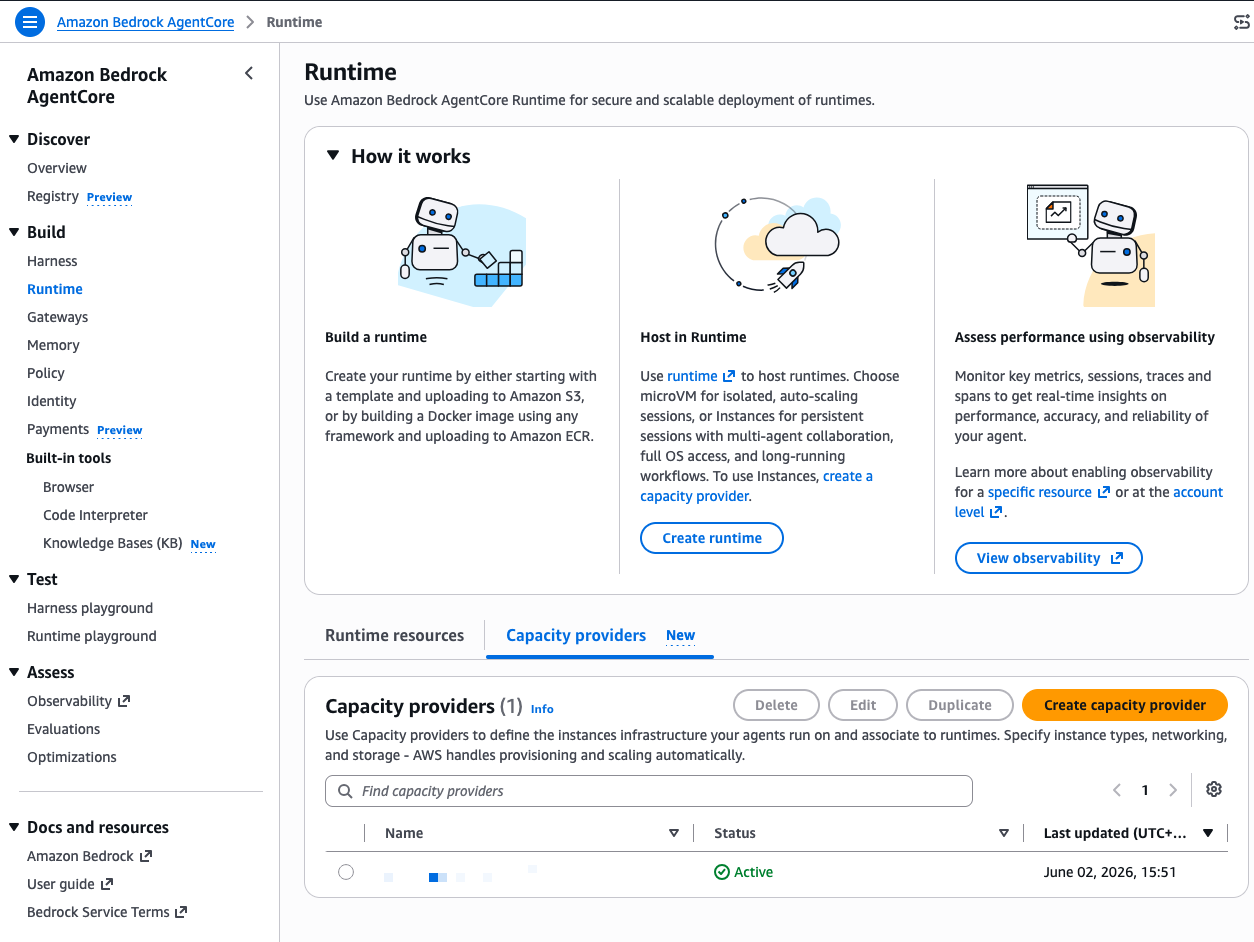
Deploying this multi-agent architecture involves three straightforward steps:
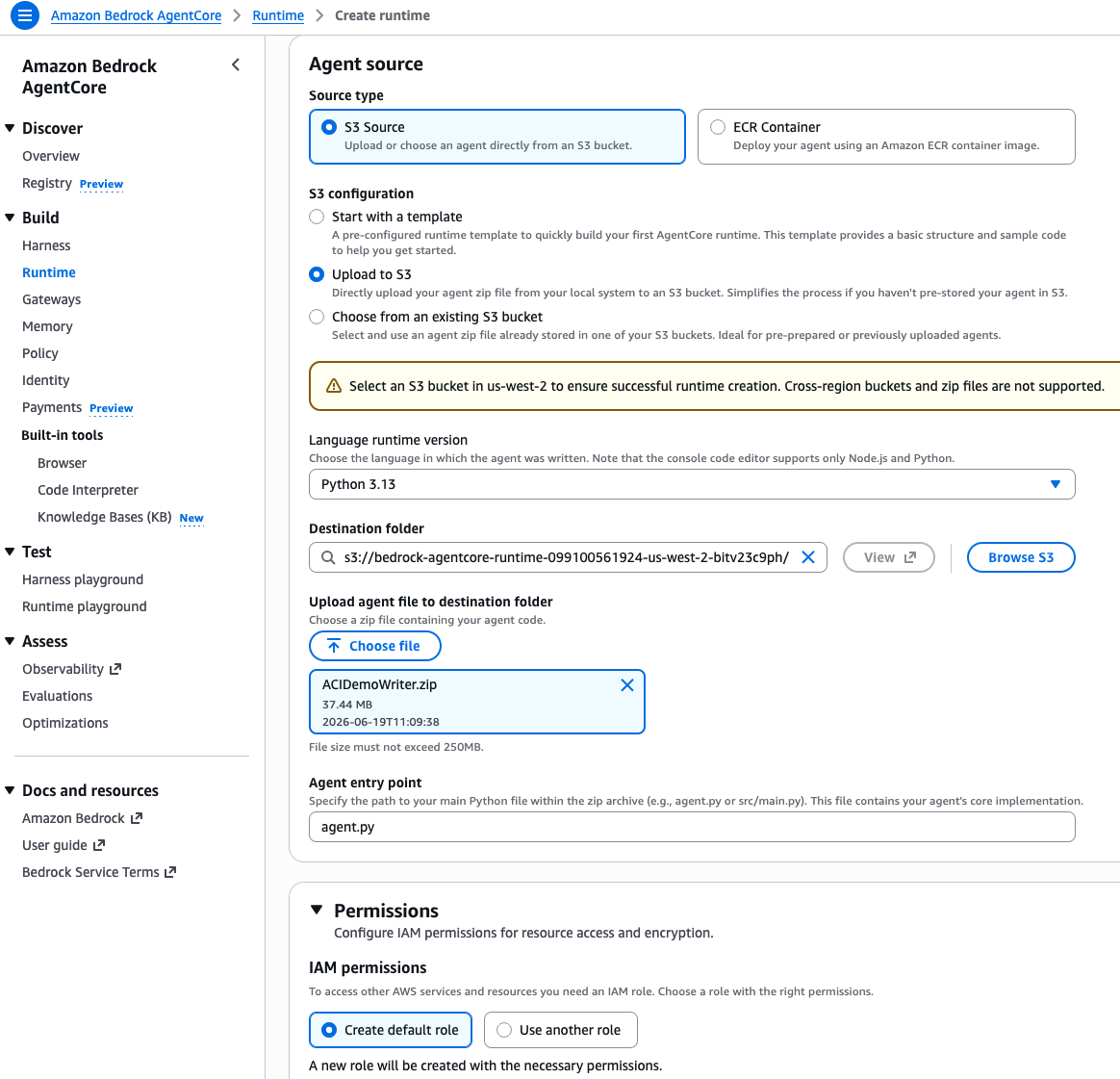
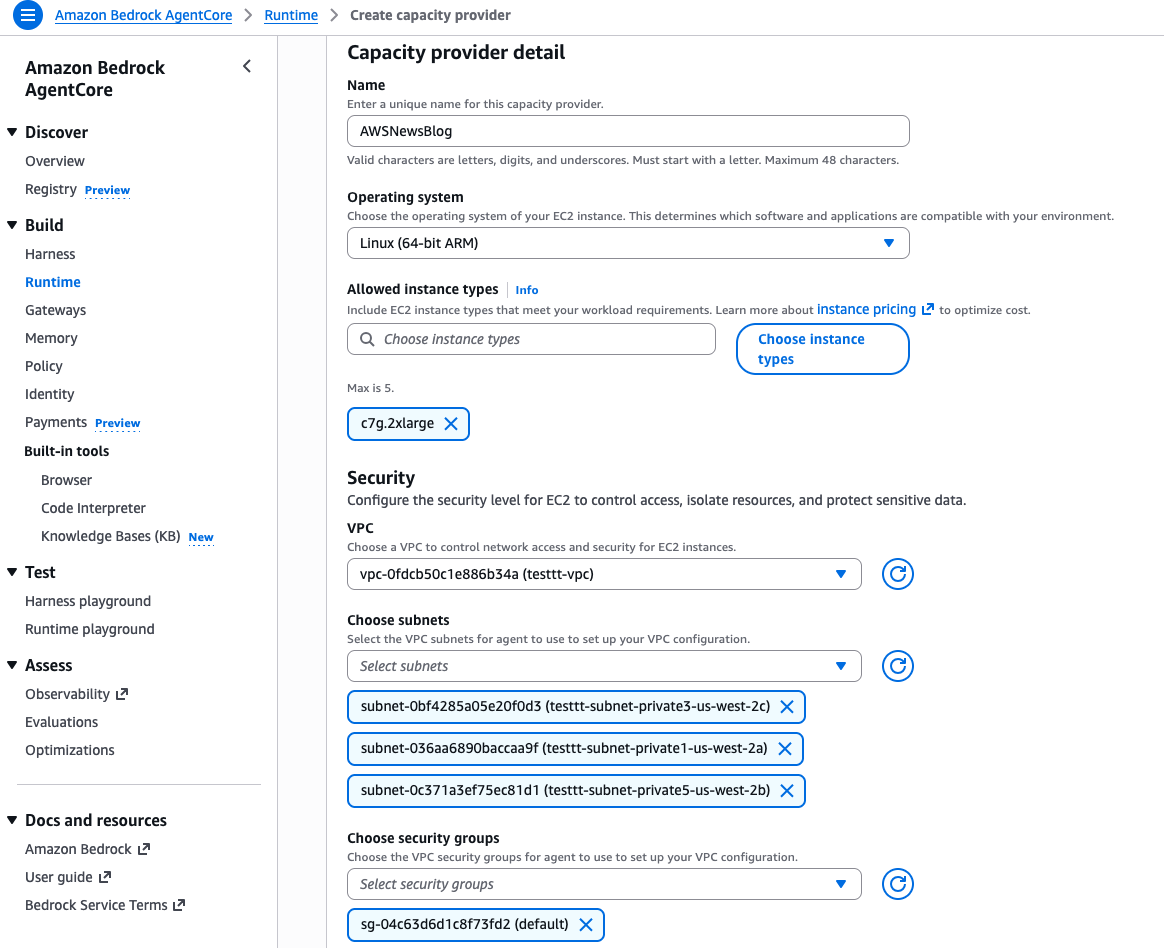
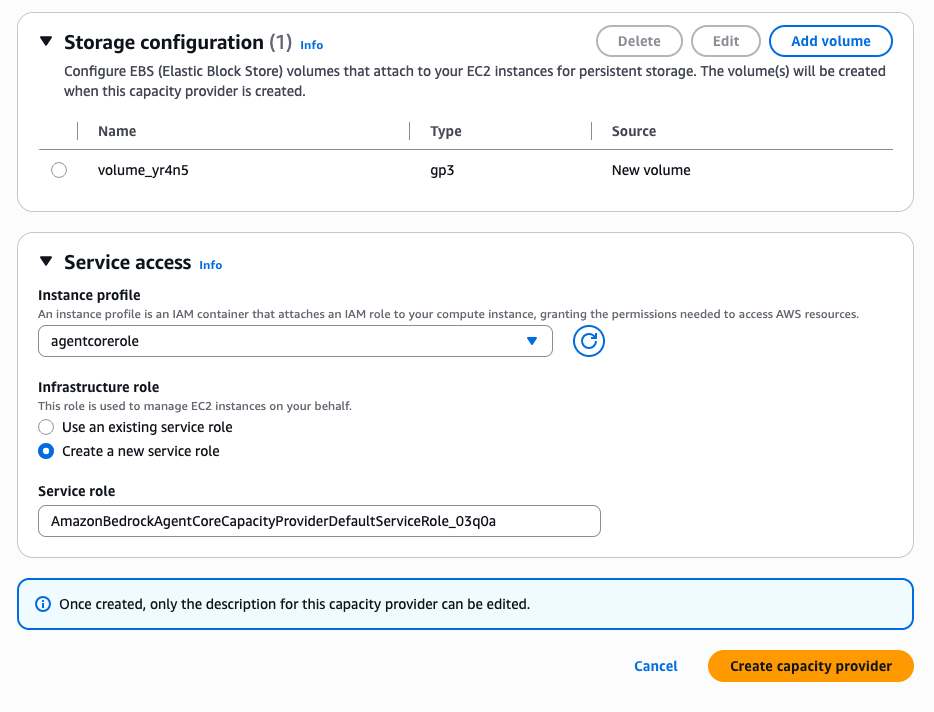
- Create a Capacity Provider: Using the AWS Management Console or AWS CLI, developers define the underlying infrastructure. Selecting a Linux 64-bit ARM operating system alongside an instance type such as
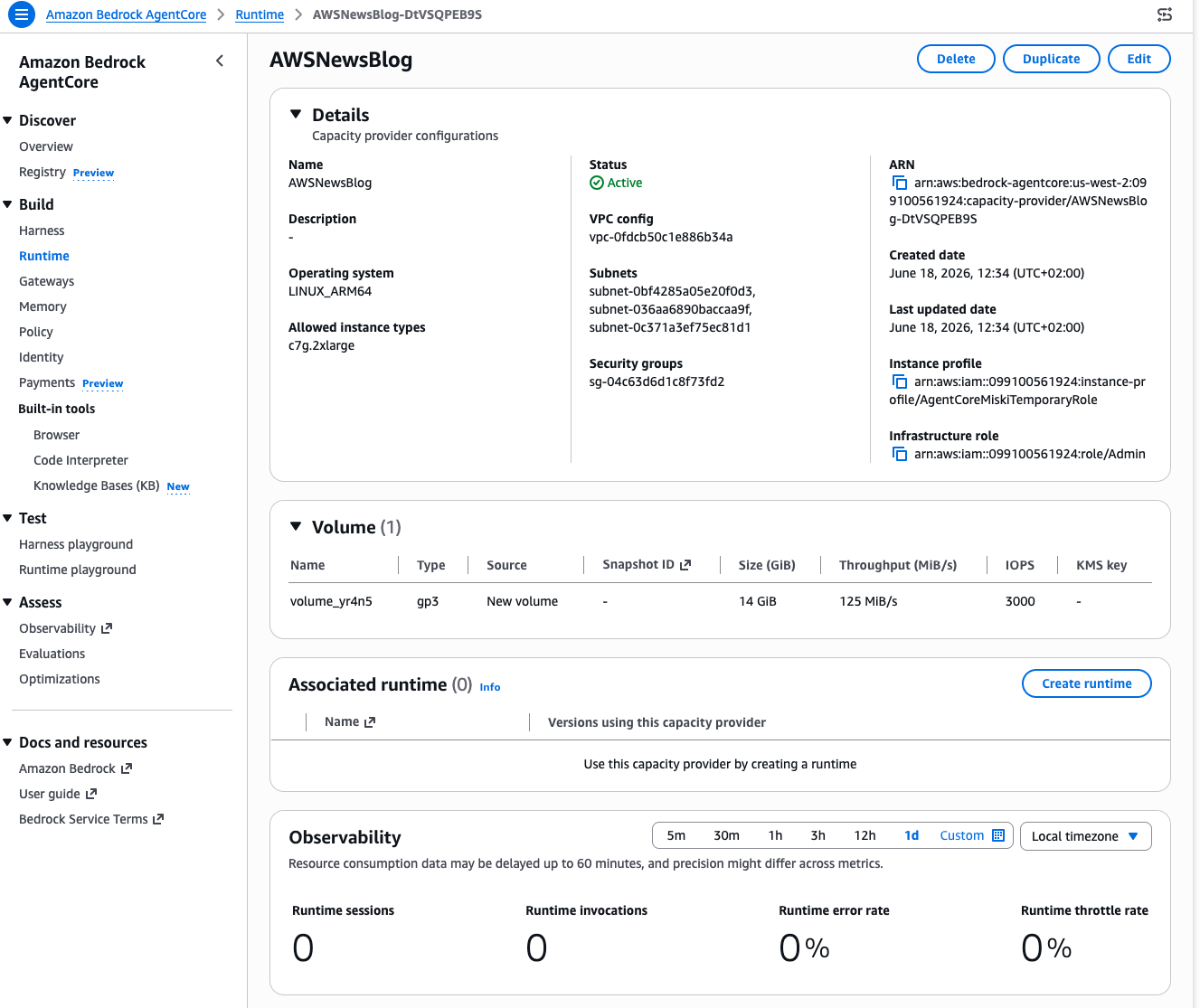
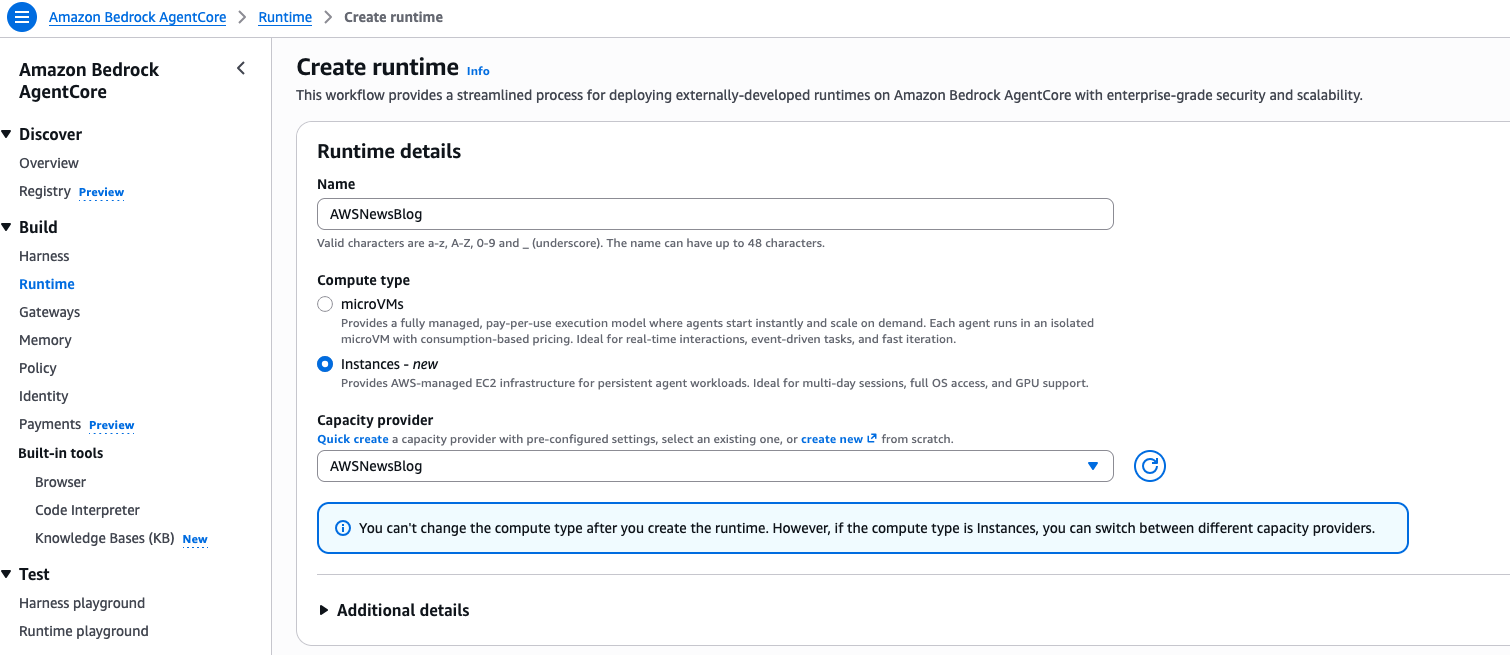
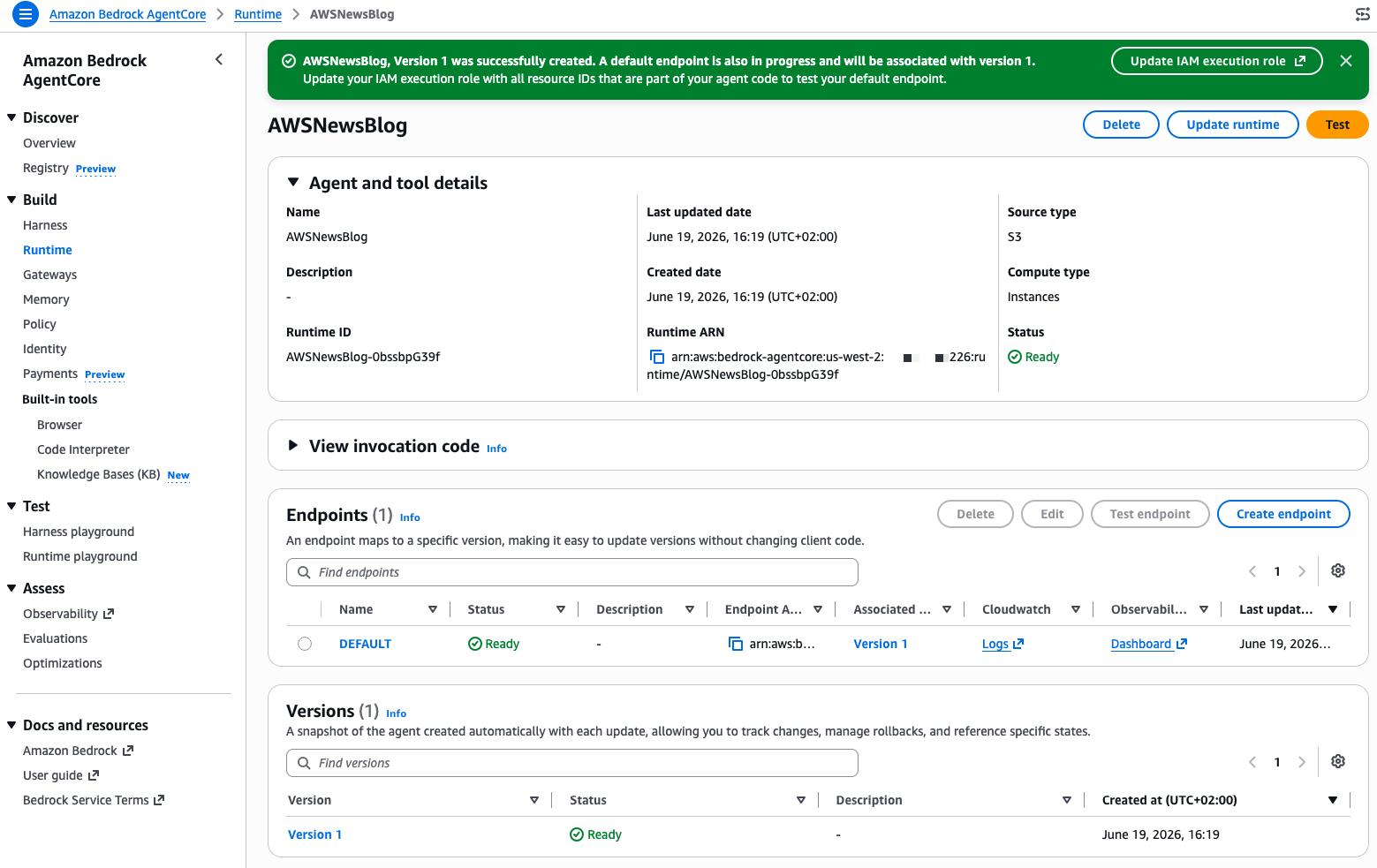
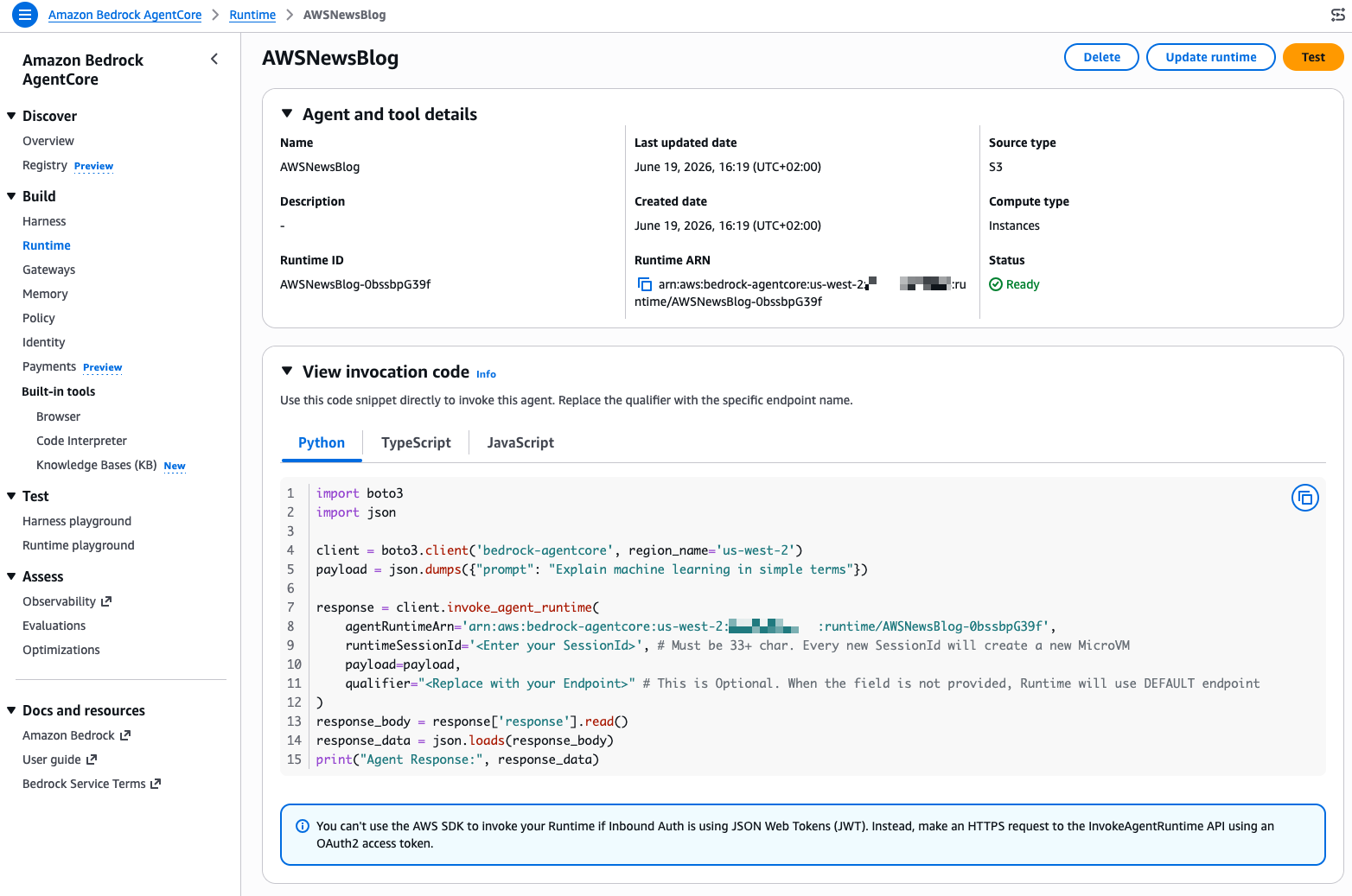
c7g.2xlargeprovides 8 vCPUs and 16 GiB of memory—plenty of overhead to run both agents concurrently. Developers configure their VPC subnets, security groups, and automated service roles, moving the capacity provider status to Active. - Create Runtimes and Deploy Agents: Developers create individual runtimes linked to the capacity provider. By uploading zipped agent artifacts (such as
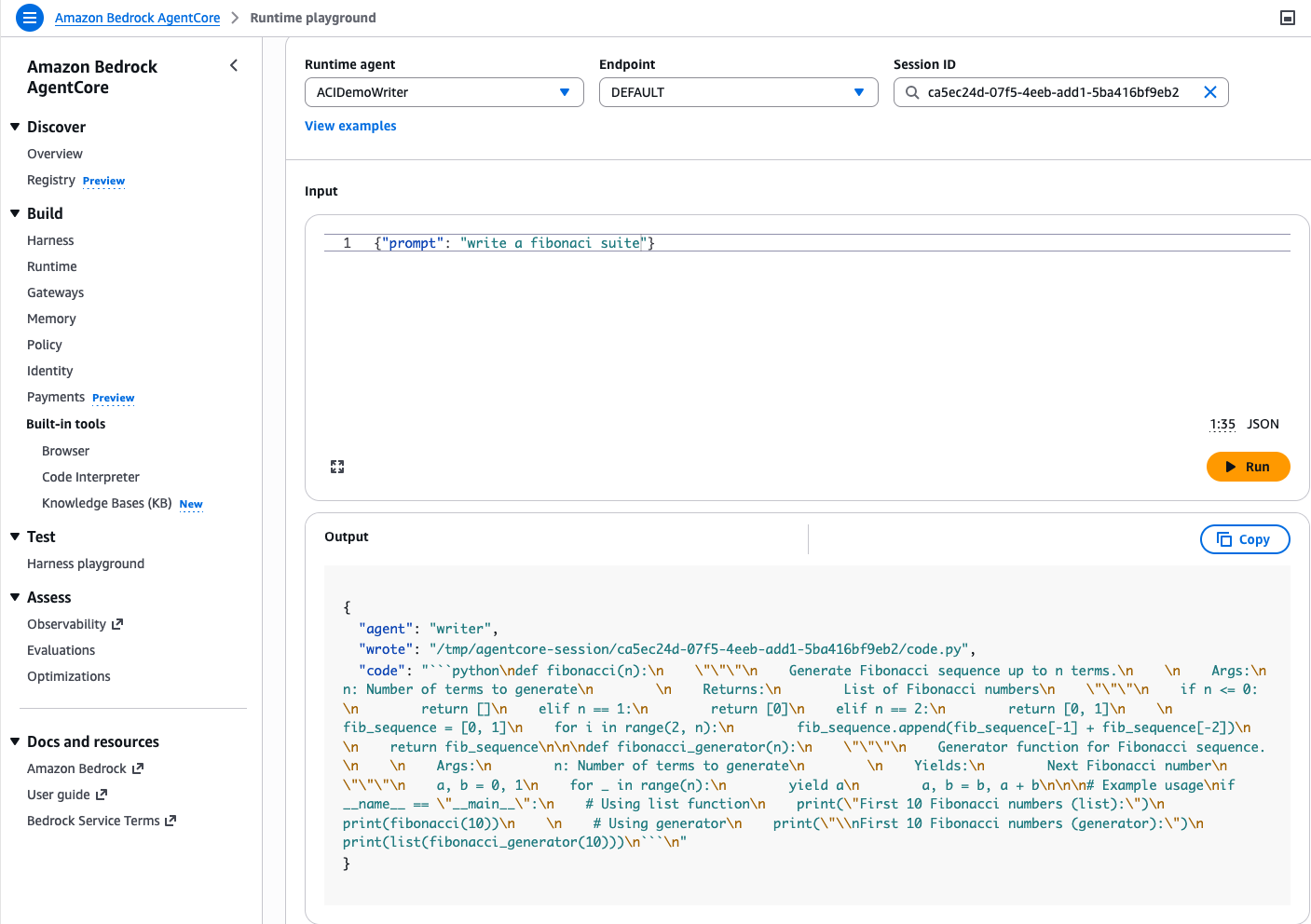
ACIDemoWriter.zipandACIDemoReviewer.zip), specifying Python 3.13, and marking the entry point files containing the@app.entrypointdecorator, AWS provisions the necessary execution environments. - Execute and Observe Collaboration: Utilizing the built-in Runtime Playground, developers initiate a session by passing a prompt (e.g.,
"prompt": "write a fibonacci suite"). The writer agent generates the code and writes it to a designated session path. Switching the active agent to the reviewer while retaining the identical Session ID allows the reviewer to instantly access, evaluate, and return feedback on the generated codebase.
Supporting Context & Metrics: Overcoming Production Roadblocks
The release of Amazon Bedrock AgentCore Runtime Instances addresses several core friction points that have historically hindered enterprise AI adoption:
- Operational Overhead Reduction: Previously, maintaining multi-day agent operations required engineers to manually provision Amazon EC2 clusters, write custom auto-scaling scripts, build bespoke session-state databases, and stitch together disparate monitoring tools. AgentCore Runtime Instances automate 100% of this infrastructure lifecycle management.
- Framework Agnosticism: Engineering teams are not locked into proprietary development stacks. Runtime Instances fully support popular agent frameworks including CrewAI, LangGraph, LlamaIndex, and Strands, allowing developers to migrate existing codebases with minimal modifications.
- Cost Optimization: By introducing granular session control—such as the ability to hibernate active workflows overnight and instantly resume them the following morning—AWS ensures that organizations only pay for active computational cycles, significantly lowering the Total Cost of Ownership (TCO) for long-running autonomous operations.
Official Statements and Industry Implications
Industry analysts and early enterprise adopters have praised the flexibility and power of the new compute tier. AWS engineering leaders emphasize that Runtime Instances represent a vital maturation step in bridging the gap between standard cloud computing and autonomous agentic workflows.
"When building advanced multi-agent systems, the hardest problems are rarely about the models themselves—they are about state synchronization, infrastructure management, and resource allocation. With Runtime Instances, we are handing developers the heavy-duty machinery they need to let autonomous agents run reliably for days, collaborate over shared file systems, and scale without operational nightmares."
— AWS Bedrock Engineering Team
Enterprise software architects note that this announcement allows financial institutions, healthcare providers, and logistics firms to deploy autonomous agents capable of handling long-running, multi-step compliance checks, autonomous research tasks, and complex software refactoring pipelines with unprecedented reliability.
Future Outlook: The Next Wave of Autonomous Enterprise Systems
As artificial intelligence models grow increasingly autonomous, the infrastructure supporting them must evolve from simple request-response mechanisms into persistent, resilient digital operating environments.
The introduction of Amazon Bedrock AgentCore Runtime Instances signals a clear trajectory for enterprise AI. By uniting managed EC2 capacity, GPU acceleration, multi-day session persistence, and frictionless multi-agent collaboration into a single, unified runtime API, AWS has set a new benchmark for production-grade agentic infrastructure.
Looking ahead, we can expect to see enterprise architectures shift heavily toward autonomous agent swarms operating continuously in the background of major cloud platforms—writing code, auditing security, conducting market research, and executing complex business logic with minimal human intervention. For developers looking to move beyond the constraints of ephemeral serverless functions, Amazon Bedrock AgentCore Runtime Instances provide the solid foundation required to build the autonomous enterprise of tomorrow.