Executive Overview
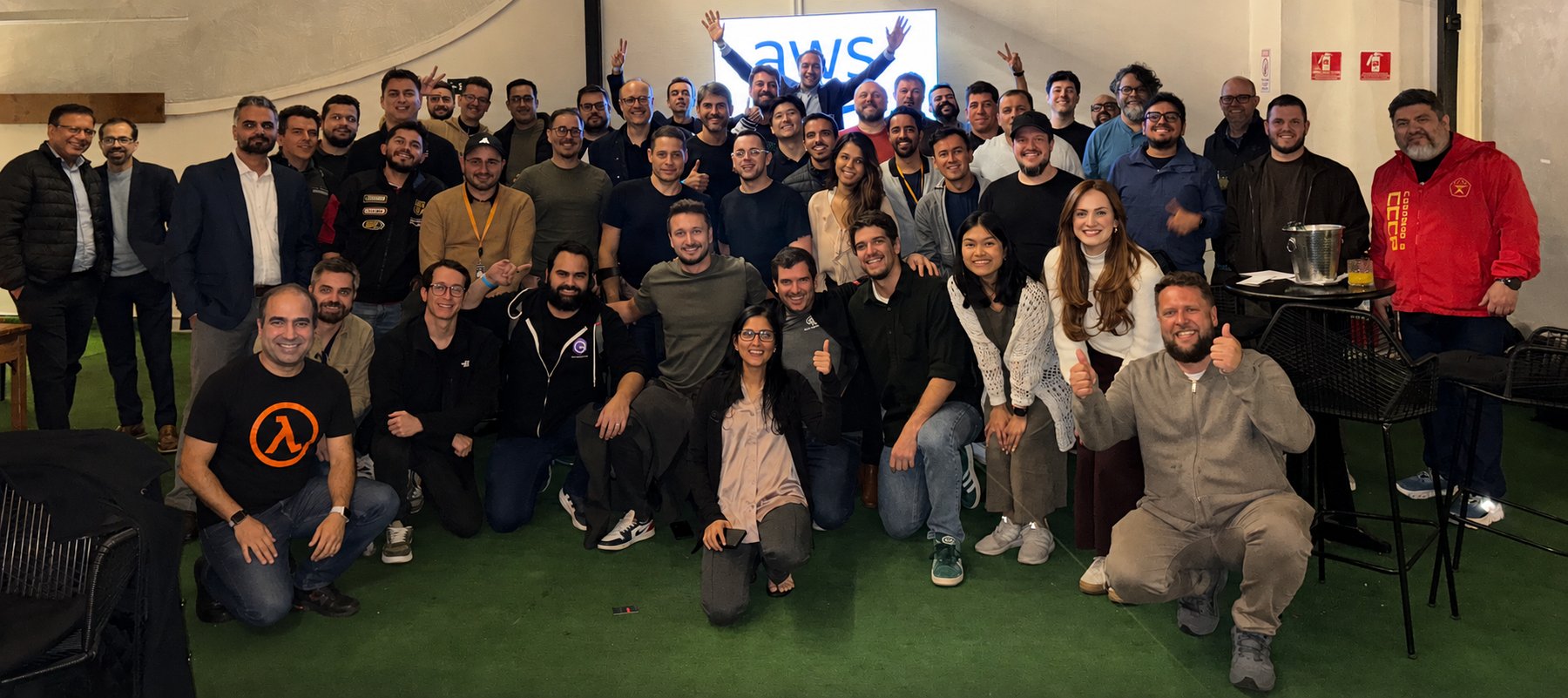
Amazon Web Services (AWS) continues to accelerate its dual mission of fostering global developer communities and expanding high-performance infrastructure to the world’s most dynamic economic hubs. In a recent three-day technical gathering in São Paulo, Brazil, software engineers, cloud architects, and technology leaders from across Latin America convened to trade deep-dive insights, test new cloud architectures, and engage in collaborative workshops. This vibrant human element—the shared passion of technical builders—remains the fundamental bedrock of modern cloud computing innovation.
Simultaneously, AWS has taken a massive leap forward in its regional infrastructure roadmap with the official launch of the AWS Local Zone in Athens, Greece. Designed to bridge the gap between high-performance cloud computing and stringent regulatory environments, the new Athens facility marks a critical milestone for the EMEA region. It is only the second Local Zone in the region to natively support Amazon S3 and Amazon EBS Local Snapshots. This capability allows enterprises, public sector institutions, and digital-first startups to store and process data strictly within Greek borders, satisfying rigorous data residency mandates while unlocking single-digit millisecond latencies for local end-users.
This report provides a comprehensive, authoritative examination of these pivotal developments, exploring how human-centric developer communities and localized infrastructure converge to shape the future of enterprise cloud adoption.
Detailed Chronology: From São Paulo’s Collaboration Hubs to the Aegean Coast
The Latin American Developer Summit: Igniting Regional Collaboration
The narrative of modern cloud infrastructure is too often reduced to abstract metrics: throughput speeds, region counts, and reduction in latency. However, the human catalyst behind these technologies was vividly displayed last week in São Paulo, Brazil. Bringing together technical builders from every corner of Latin America, the three-day regional tech event served as a crucible for engineering excellence.
Attendees immersed themselves in specialized, deep-dive technical sessions and hands-on workshops that pushed the boundaries of serverless design, microservices, and artificial intelligence integration. Yet, according to participants and organizers alike, the most profound value of the gathering occurred outside the formal presentations. In hallways, over coffee breaks, and across crowded whiteboards, engineers from diverse industries—ranging from fintech disruptors in São Paulo to logistics innovators in Bogotá—traded architecture patterns, debated multi-region failover strategies, and brainstormed novel ways to leverage AWS tooling.
This collaborative energy underscores an essential truth of the technology sector: robust tooling is only as powerful as the community wielding it. By fostering face-to-face interactions, AWS provides regional builders with a shared lexicon and mutual support network, empowering them to tackle complex local challenges with global-scale solutions.
Expanding the Edge: The Launch of the AWS Local Zone in Athens
Directly complementing the momentum of the Latin American builder community is the expansion of AWS’s physical footprint into Southeastern Europe. The inauguration of the AWS Local Zone in Athens, Greece, represents a strategic triumph for organizations operating in the Mediterranean.
For years, Greek enterprises—particularly those in highly regulated sectors such as financial services, healthcare, media production, and real-time multiplayer gaming—faced a persistent architectural dilemma. They needed the immense scalability, security, and advanced feature sets of the AWS cloud, but were constrained by strict data residency regulations and the physical distance to traditional AWS Regions (which often introduced unacceptable network latency for real-time applications).
The Athens Local Zone solves this dilemma by placing compute, storage, database, and other select AWS services directly inside Greece’s primary population and industry hub. By moving cloud infrastructure closer to the end-user, AWS enables local organizations to run latency-sensitive workloads—such as high-frequency trading platforms, telemedicine portals, and interactive media streaming—with single-digit millisecond latency.

Crucially, the Athens facility distinguishes itself as the second Local Zone in the Europe, Middle East, and Africa (EMEA) region to offer robust support for Amazon S3 and Amazon EBS Local Snapshots. This technical integration ensures that data can be ingested, processed, and stored entirely within national boundaries, giving compliance officers and IT directors absolute confidence regarding data sovereignty.
Supporting Context & Infrastructure Metrics
To fully appreciate the significance of the Athens Local Zone deployment, one must examine the specific technical architecture and the broader macroeconomic context driving edge computing across EMEA.
Technical Specifications of the Athens Local Zone
The Athens Local Zone is engineered to support a diverse suite of high-performance AWS services, tailored to the demands of modern cloud-native applications:
- Compute Power: The facility features modern instance families, including Amazon EC2 C7i, M7i, and R7i instances. These processors deliver optimized performance for compute-intensive workloads, general-purpose enterprise applications, and memory-heavy database management systems.
- Storage and Data Protection: Integration with Amazon S3 (utilizing the One Zone-Infrequent Access storage class) and Amazon EBS Local Snapshots guarantees that organizations can execute local backup, recovery, and data processing routines without violating in-country residency mandates.
- Containerization and Orchestration: Support for Amazon ECS (Elastic Container Service) allows development teams to deploy and scale containerized applications seamlessly at the edge, maintaining parity with architectures running in full AWS Regions.
Economic and Regulatory Impetus
Data residency has transformed from a regulatory checkbox into a core business strategy. Across the European Union, frameworks such as GDPR and sector-specific financial mandates require rigorous oversight of where personal and enterprise data resides. By establishing a localized presence in Athens, AWS removes the friction of compliance for Greek enterprises.
Furthermore, the economic impact of reducing latency cannot be overstated. In digital media production—a rapidly growing sector in Southern Europe—rendering and transferring large video files locally saves hours of pipeline latency. In financial services, shaving milliseconds off transaction routing times directly translates to competitive advantage. By decentralizing its infrastructure through Local Zones, AWS bridges the gap between global hyperscale capabilities and local operational autonomy.
Official Statements and Industry Perspectives
The dual thrust of community building in Latin America and infrastructure expansion in Greece highlights a cohesive corporate philosophy: technology must serve people where they live and work.
Reflecting on the São Paulo gathering, technical leaders emphasized the irreplaceable value of human connection in technology development. One participant noted:
"We spend our lives debugging code behind screens, isolated in our home offices or regional branches. Bringing hundreds of Latin American builders into the same room changed everything. We realized we aren’t just writing scripts; we are part of a massive, continental movement of builders solving remarkably similar problems with immense creativity."
Regarding the strategic deployment in Athens, infrastructure experts and local industry stakeholders have praised the move as a long-awaited catalyst for digital transformation in the region. An excerpt from the official AWS Global Infrastructure and Sustainability Blog highlights the core mission of the rollout:
"With this launch, you can process and store data in-country while delivering single-digit millisecond latency to your end users. AWS Local Zones place AWS infrastructure much closer to large population and industry hubs… For builders in Greece, this means running latency-sensitive workloads locally and meeting in-country data residency requirements, without managing your own data center infrastructure."
Industry analysts point out that this strategy allows smaller enterprises and regional government agencies to bypass the capital expenditure of building and maintaining private data centers, leveraging AWS’s secure, reliable infrastructure while maintaining strict regulatory compliance.
Future Outlook: The Road Ahead for AWS Builders and Infrastructure
As we look toward the remainder of 2026 and beyond, the intersection of community empowerment and edge infrastructure will continue to dictate the trajectory of cloud computing.
Deepening Regional Engagement
The success of the São Paulo tech event serves as a blueprint for future regional engagements. AWS has signaled a continued commitment to nurturing localized developer ecosystems through platforms like the AWS Builder Center, virtual hackathons, and in-person meetups. By lowering the barrier to entry for collaborative learning, AWS aims to unearth nascent technological innovations emerging from developing tech hubs across Latin America, Asia, and Africa.
The Next Wave of Infrastructure Decentralization
The rollout of the Athens Local Zone is part of a broader, aggressive global expansion of AWS’s edge network. As edge computing matures, the demand for localized data processing will only intensify, driven by the explosion of generative AI workloads, Internet of Things (IoT) deployments, and real-time analytics.
Moving forward, builders can expect AWS to introduce even more granular edge capabilities, bringing machine learning inference and advanced data analytics closer to end-users. For developers in Greece, Latin America, and worldwide, the message is clear: the cloud is no longer a distant, centralized abstract entity. It is moving closer to your desk, your city, and your community.
Stay tuned to the AWS Weekly Roundup for continuous updates on infrastructure expansions, product launches, and community events as we navigate the evolving landscape of cloud technology.