In the fast-paced ecosystem of global cloud computing, maintaining a symbiotic relationship between platform providers and developer communities is just as critical as shipping groundbreaking infrastructure. Last week offered a masterclass in this dual mandate. From the bustling technology hubs of Seoul, South Korea, where Amazon Web Services (AWS) leadership engaged directly with the nation’s premier cloud developer collective, to the release of high-impact productivity tools designed to supercharge AI-driven software development, AWS continued to aggressively shape the future of modern engineering.
Yet, as the cloud landscape grows increasingly sophisticated, it is not immune to operational friction. Last week’s review also brings to light a critical operational anomaly: a significant reporting glitch in AWS Cost Explorer that sent erroneous billing alerts and displayed inflated expenditure metrics to global users.
This comprehensive report examines the intersection of community advocacy, artificial intelligence integration in serverless architectures, and platform reliability. We break down the latest innovations—including a game-changing one-click setup prompt for AI coding agents and Model Context Protocol (MCP) servers—while providing an investigative look into the billing dashboard incident that tested user trust over the weekend. Through official statements, chronological evaluations, and a forward-looking analysis, we explore how AWS is navigating the complexities of hyper-scale cloud management in an era defined by artificial intelligence and community-driven development.
Detailed Chronology
To fully understand the cadence of developments originating from AWS last week, it is essential to trace the timeline of events, beginning with international developer outreach and culminating in operational recovery.
Mid-Week: Strengthening Ties in Seoul with AWSKRUG
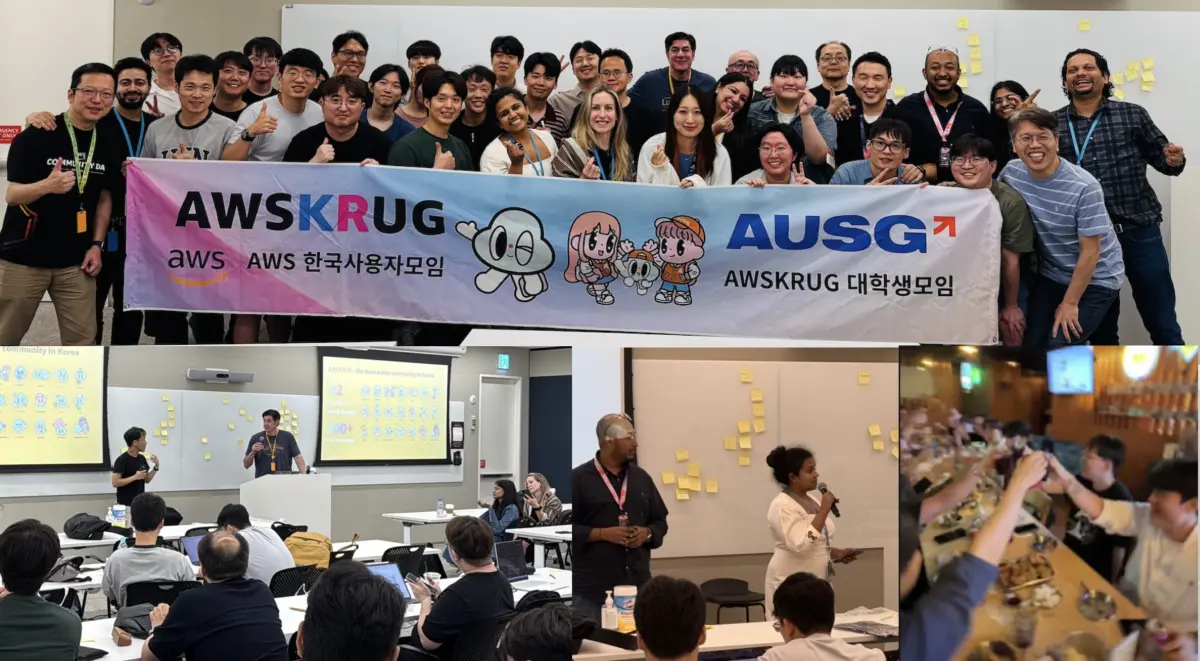
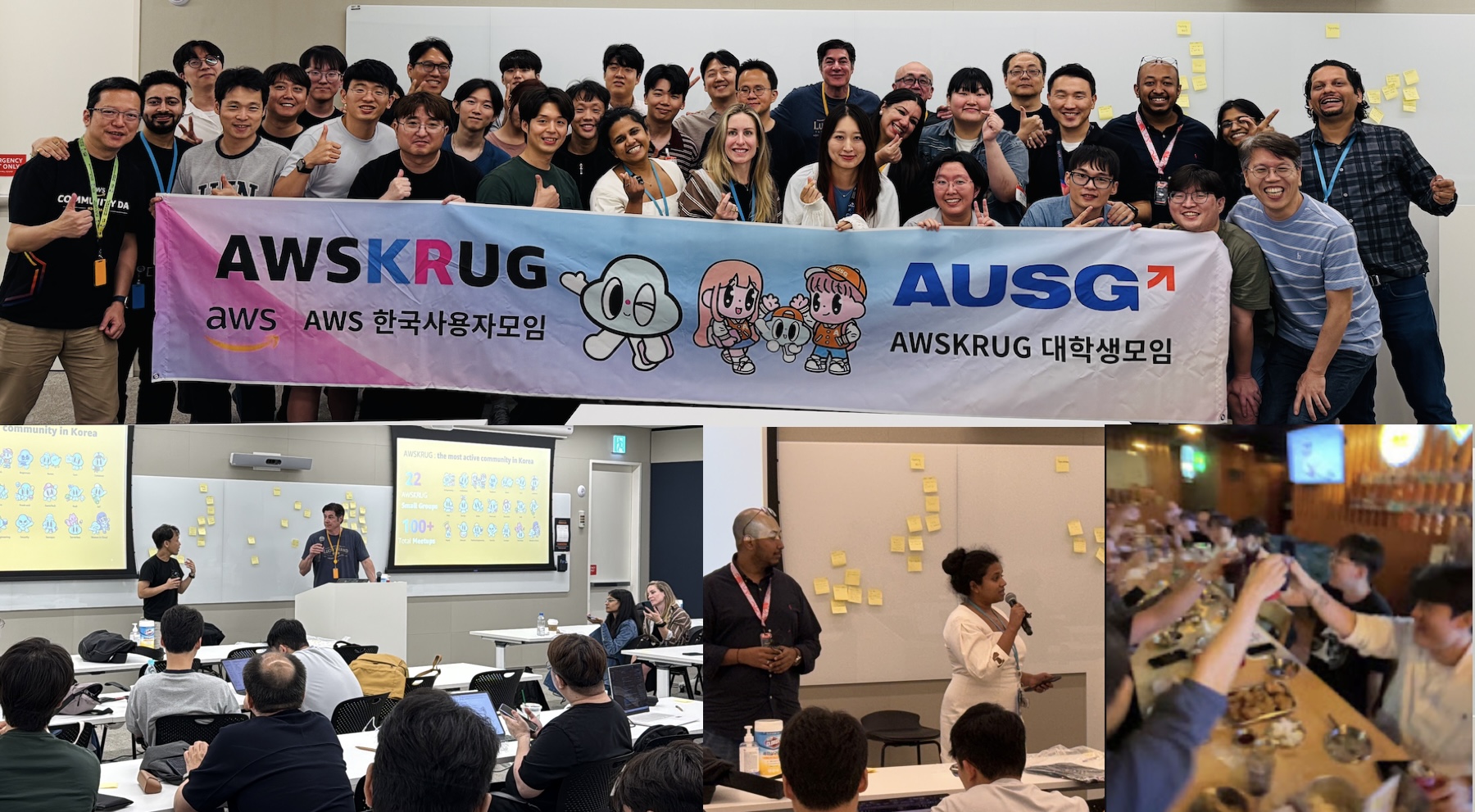
The week’s outreach narrative kicked off in Seoul, where members of the AWS Developer Experience team touched down to meet with the leadership of the AWS Korea User Group (AWSKRUG). Recognized as the largest cloud developer ecosystem in South Korea, AWSKRUG commands a formidable presence with 20 distinct meetup groups organized meticulously by technical domain and geographic region. These collectives host upward of 100 localized events annually, acting as the primary incubator for cloud-native talent on the Korean peninsula.
During these closed-door strategy sessions, community leaders engaged in a transparent retrospective with AWS representatives. Discussions centered on evaluating the successes of the first half of the year, identifying systemic bottlenecks in developer workflows, and directly petitioning the AWS Developer Experience team for targeted feature enhancements. True to tech-industry tradition, the rigorous planning sessions concluded over a round of Chimaek—the beloved South Korean pairing of fried chicken and beer—fostering informal yet vital channels of communication between corporate leadership and grassroots builders.
Mid-to-Late Week: The Advent of One-Click AI Coding Agent Integration
Shifting from interpersonal community building to digital tooling, the engineering landscape experienced a significant shift with the introduction of streamlined artificial intelligence workflows. Last week’s most disruptive launch was the debut of a one-click Lambda setup prompt specifically engineered for AI coding agents.
Historically, configuring an AI agent to build, test, and deploy serverless applications required tedious, manual bootstrapping, often resulting in generated code that violated cloud-native best practices. The new setup prompt addresses this friction point directly. By packaging foundational AWS Serverless skills and the Serverless Model Context Protocol (MCP) server into an easily executable instruction set, the prompt bakes serverless optimization directly into the agent’s operational DNA from its very first query.
The integration natively supports a vast array of modern AI-assisted development environments. According to the official AWS Lambda agent setup guide, developers can seamlessly inject these capabilities using installation commands tailored for:
Claude Code
Kiro
Cursor
GitHub Copilot
Codex
Devin Desktop
OpenCode
Execution Workflow
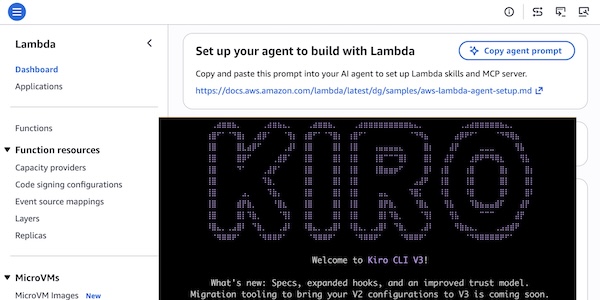
Initiation: Developers navigate to the AWS Lambda console screen and select the newly minted Copy agent prompt button. Alternatively, they can manually fetch the setup documentation via the URI: fetch https://docs.aws.amazon.com/lambda/latest/dg/samples/aws-lambda-agent-setup.md
Injection: Paste the copied URL or instruction set directly into the prompt interface of their preferred AI coding assistant.
Augmentation: Supplement the configuration by leveraging the Agent Toolkit for AWS to endow the coding agent with real-time AWS documentation awareness and secure resource access protocols using the dedicated MCP Server setup command: fetch https://raw.githubusercontent.com/aws/agent-toolkit-for-aws/refs/heads/main/setup-instructions/setup.md
Weekend: The Cost Explorer Anomaly and Emergency Response
The operational rhythm of the week was abruptly tested over the weekend when a severe telemetry glitch rippled across global accounts.
Beginning early Saturday, numerous AWS customers reported jarring discrepancies within the AWS Cost Explorer console. The interface began displaying wildly inaccurate, inflated estimated cost and usage data. Because these distorted metrics fed directly into downstream monitoring mechanisms, many organizations experienced a cascade of false alarms, triggering erroneous budget thresholds and alarming cost anomaly detection alerts across corporate chat channels and incident management systems.
The root cause was isolated to an operational issue within the AWS billing telemetry pipeline. Although the core infrastructure and compute services operated without disruption, the visualization and metric estimation layers failed to accurately parse incoming usage records.
AWS engineering teams mobilized immediately, working around the clock to isolate the reporting anomaly. By Sunday evening, the underlying telemetry bug was remediated, Cost Explorer data was successfully normalized, and all related services were restored to standard operating parameters.
Supporting Context & Metrics
To appreciate the scale of these developments, one must examine the quantitative backdrop of the AWS ecosystem and the strategic implications of these updates.
Metric / Dimension
Detail / Value
Strategic Significance
AWSKRUG Scale
20 specialized meetup groups
Represents a hyper-targeted pipeline for regional developer feedback and cloud adoption in East Asia.
Annual AWSKRUG Events
Over 100 events per year
Ensures continuous, localized touchpoints for cloud education, networking, and product testing.
Supported AI Coding Tools
7 primary agent platforms
Broadens accessibility, ensuring developers are not locked into a single proprietary AI development ecosystem.
Billing Incident Impact Area
Global AWS Billing & Cost Management
Highlighted vulnerabilities in auxiliary telemetry reporting layers during high-volume data ingestion cycles.
The Rise of Model Context Protocol (MCP) in Cloud Development
The integration of serverless capabilities via the Model Context Protocol (MCP) marks a maturation in how developers interact with cloud services. Rather than relying on generic Large Language Models (LLMs) that hallucinate outdated API syntax, the integration of AWS MCP servers provides a secure, context-aware conduit. AI agents can now query real-time documentation, understand granular IAM permission boundaries, and construct AWS Lambda functions that adhere to modern security and performance benchmarks right out of the box.
Official Statements & Institutional Response
In the wake of the weekend billing reporting incident, AWS leadership moved swiftly to maintain transparency and reinforce user trust. Rather than glossing over the telemetry failure, the organization issued a clear, accountable breakdown via the AWS Health Dashboard and accompanying post-incident notes.
An official AWS spokesperson addressed the community:
"We sincerely apologize for the concern and operational friction this billing reporting incident caused our customers over the weekend. While core AWS compute and storage infrastructure remained entirely unaffected, we recognize that accurate financial telemetry is the bedrock of enterprise cloud governance. False budget alerts and inflated cost projections erode trust.
We have successfully resolved the reporting anomaly in Cost Explorer, and all services are operating normally. Our engineering leadership has already initiated a comprehensive, mandatory retrospective to dissect why the telemetry pipeline allowed corrupted estimations to surface in customer dashboards. Moving forward, we are aggressively overhauling our incident response protocols for non-compute operational issues to ensure preemptive isolation before alerts propagate to end users."
Regarding the developer community initiatives in Seoul, a representative from the AWS Developer Experience division highlighted the symbiotic nature of these international visits:
"Cloud infrastructure is ultimately built by humans, for humans. Sitting down with the leaders of AWSKRUG over Chimaek gives us insights that telemetry charts and bug tickets simply cannot capture. When developers tell us where documentation falls short or where CLI workflows feel sluggish, we take those notes straight back to our product engineering teams. The launch of our one-click AI agent setup prompts is a direct manifestation of listening to developers who want to move faster without sacrificing architectural integrity."
Future Outlook
As the cloud computing paradigm transitions deeper into an era defined by generative artificial intelligence and autonomous software agents, the announcements and events from last week signal clear strategic trajectories for AWS and the broader developer community.
1. The Autonomous Agent-Driven Cloud
The introduction of one-click setup prompts for AI coding agents is merely the opening salvo in a broader industry transformation. In the near future, interacting with AWS will likely shift from writing explicit infrastructure-as-code (IaC) templates via Terraform or AWS CloudFormation to conversing with context-aware, specialized agents capable of provisioning entire serverless ecosystems on the fly. By lowering the barrier to entry for secure, best-practice serverless architecture, AWS is democratizing access to hyper-scale cloud engineering.
2. Strengthening Observability and Financial Governance
The Cost Explorer incident serves as a stark reminder that as cloud services proliferate, the reliability of administrative and financial tooling must match the rock-solid availability of core compute engines. Enterprises rely on real-time cost transparency for business continuity and board-level reporting. In the coming months, expect AWS to introduce enhanced validation layers and self-healing telemetry loops within its billing and cost management ecosystems to prevent phantom anomalies from triggering automated enterprise alerts.
3. Deepening Grassroots Engagement
International developer communities will remain the crucible in which future AWS services are tested and refined. The success of the AWSKRUG engagement model in South Korea provides a blueprint that AWS is expected to replicate across Latin America, Europe, and Southeast Asia. By institutionalizing feedback loops between regional user groups and core product developers, AWS aims to ensure that its platform evolution remains closely synchronized with the practical, everyday needs of global builders.
As the ecosystem continues to evolve at a blistering pace, stay tuned to the AWS News Blog, the What’s New with AWS portal, and our weekly roundups every Monday for the latest insights shaping the future of cloud computing.