Executive Overview
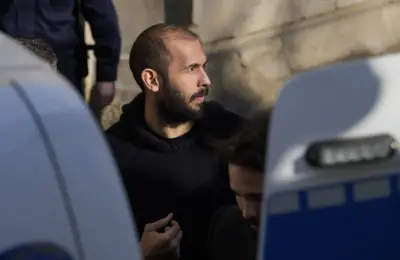
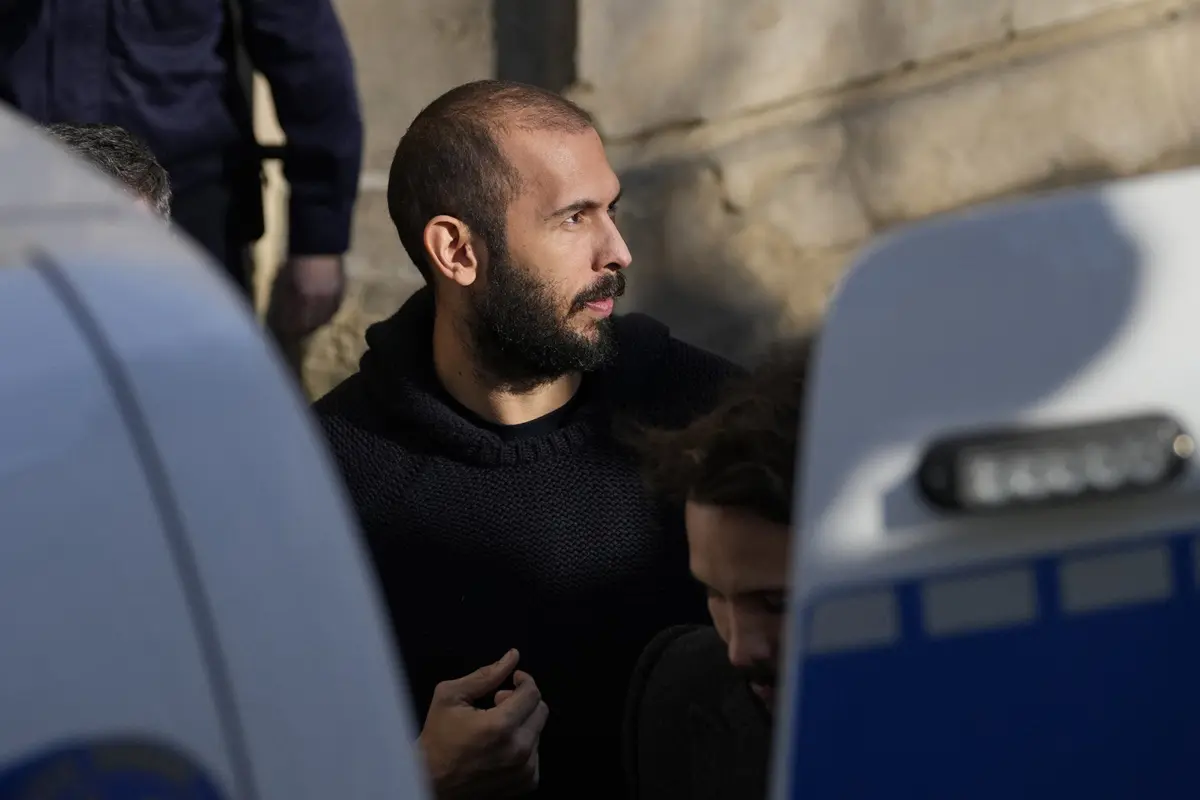
Controversial misogynistic influencer Andrew Tate and his brother, Tristan Tate, achieved a significant legal milestone in late March when they were released from a Romanian detention facility and placed under house arrest. Alongside their two alleged accomplices, Georgiana Naghel and Luana Radu, the siblings transitioned from a high-security jail cell in Bucharest to a heavily monitored compound in an affluent northern suburb.
The transition marked a temporary reprieve from the rigorous conditions of pre-trial confinement that began following their initial arrest on December 29, 2022. The group faces severe allegations of human trafficking, organized crime, and forming an organized criminal group, with their formal trial widely anticipated to commence in late April.
However, an exhaustive review of court documents, freedom of information requests, and confidential disclosures from sources within the Romanian prosecutor’s office reveals a darker reality for the defendants. According to legal experts, judges, and prosecutors, the behavior exhibited by the Tates and their associates during their months in detention has severely compromised their legal standing. Rather than mitigating their circumstances, a series of calculated plots—including attempted witness intimidation, a meticulously planned escape to Dubai under the guise of medical treatment, illicit database breaches, and overt political maneuvering—have deeply alienated the Romanian judiciary.
Legal scholars warn that this continuous accumulation of controversial actions has fostered an environment of judicial hostility. The cumulative weight of these actions suggests that the defendants’ desperate bids for control and public attention may ultimately inflict far more damage on their legal defense than the original criminal charges themselves.
Detailed Chronology: From Arrest to House Arrest
The chronology of the Tate brothers’ legal battle in Romania outlines a persistent campaign by the defendants to subvert the judicial process, culminating in profound frustration among prosecutors and presiding judges.
December 2022: The Initial Arrest and Escalation
On December 29, 2022, Romanian authorities swooped in on the Tates’ compound, arresting Andrew and Tristan Tate, alongside Naghel and Radu. The initial sweep sent shockwaves through the global digital landscape, mobilizing an army of online supporters. Almost immediately, legal pressure began mounting on key witnesses. In late December, a U.S. law firm representing the brothers dispatched a formal cease-and-desist letter to a key witness residing in Palm Beach, Florida. The letter demanded that she retract her statements or face immediate defamation litigation—a move that Romanian prosecutors instantly flagged as an aggressive tactic of witness intimidation.
February 2021 [Contextual Reference]: The Judiciary Clamps Down
As the investigation deepened throughout the winter, jailhouse phone wiretaps uncovered a clandestine plot orchestrated by Andrew Tate. Seeking to evade the jurisdiction of Romanian courts, Tate allegedly formulated a scheme to flee to Dubai under the pretext of seeking urgent medical treatment for a dark spot discovered on his lung. While a Tate representative initially suggested to the media that the anomaly was "most likely a tumor," Andrew later pivoted on social media, claiming the mark was merely scarring "from an old battle." Romanian authorities flatly rejected his travel requests.
In an official summary of a critical court session on February 21, the presiding judge formally cited these emerging infractions as definitive justification for keeping the defendants behind bars. The judge detailed that the accused presented an undeniable danger to public order, actively prepared to evade the criminal investigation by fleeing the country, and systematically pressured victims and witnesses.
Late March 2024: The Shift to House Arrest
Despite the mounting evidence of obstruction, a panel of appeals court judges—reportedly newly assigned to the case—unexpectedly approved the Tates’ transfer from the central arrest facility to house arrest on March 31. While celebrated by the defendants’ legal teams as a major victory, the ruling triggered immediate anxiety and caution within official Romanian law enforcement circles. The suburban compound housing the brothers was placed under unremitting, 24-hour surveillance to ensure compliance and prevent any sudden escape attempts.
Supporting Context & Metrics: The Anatomy of Obstruction
The prosecution’s case extends far beyond the core allegations of human trafficking, encompassing a sprawling web of auxiliary offenses allegedly committed while the primary investigation was already active.
The Breach of Classified Police Databases
Among the most alarming discoveries detailed in court documents is the conduct of Luana Radu, a former police officer and alleged accomplice. Between April 2022 and December 2022—while the state’s preliminary investigation into the group was actively underway—Radu allegedly gained unlawful access to a classified database managed by the Romanian Ministry of Internal Affairs.
Judicial notes emphasize that such an infiltration would have been functionally impossible without external assistance from unidentified insiders. This unauthorized access potentially provided the defense team with strategic advantages, early warnings, or sensitive personal data regarding key witnesses and investigators. Radu has thus far declined to comment on these specific allegations, and her legal representatives have largely avoided addressing this facet of the indictment.
Unresolved Historical Complaints
Compounding the current charges, prosecutors revealed they have obtained new intelligence from local law enforcement units near the Tates’ compound. Several women had previously filed formal complaints detailing instances of physical violence, coercion, and abuse predating the December 2022 raids. Investigators suspect that Radu’s alleged utilization of police databases and prior law enforcement connections may have suppressed these earlier complaints, leaving them stalled and unresolved within the local precinct.
The Political Outreach Gambit
In what prosecutors characterize as a desperate bid to manipulate public sentiment and political pressure, Andrew Tate allegedly instructed an assistant to approach two prominent Romanian right-wing politicians: George Simion and Diana Șoșoacă. Known for their anti-Western rhetoric, provocative stances on gender and sex, and vocal opposition to COVID-19 vaccines, both figures represented potential mouthpieces for the influencers’ narrative. Șoșoacă had notably been added to Ukraine’s sanctions list on March 24 due to perceived threats to national security.
According to a translated wiretap of Tate’s instructions to his aide:
"If you take the side of the guys, when they get out of prison they will make sure you are rewarded for telling the truth."
Ultimately, both politicians publicly refused to champion the Tates’ cause when approached by local media outlets, leaving the political maneuver as yet another failed attempt to sway public opinion through transactional promises.
Official Statements and Legal Perspectives
The divergence between the defense teams’ public relations strategy and the harsh assessments of Romanian legal scholars highlights the precarious nature of the Tates’ current legal posture.
The Defense’s Position
Representatives for the Tate brothers have consistently downplayed the severity of the auxiliary allegations, framing them as standard legal maneuvers misinterpreted by prosecutors. Eugen Vidineac, defense counsel for the Tates, sought to dispel rumors of an impending flight risk in statements to local media:
"They have a home and children in Romania, they are under criminal investigation, there is no reason to run away."
Mateea Petrescu, spokesperson for the brothers, defended the controversial Dubai communications by arguing that the wiretaps were selectively edited:
"Regarding their departure from the country, the partially published wiretaps omitted the context, [namely] Andrew discussing leaving to Dubai for medical inquiries only in the case that his status allows it."
Regarding the U.S.-issued cease-and-desist letter sent to the Florida witness, Petrescu maintained it was entirely legitimate, asserting:
"These suspicions are obsolete given that the judges from the appeals court decided to place them in house arrest." Tina Glandian, a U.S. lawyer serving on the broader international team, similarly distanced the local Romanian defense apparatus from the letter, emphasizing that her specific firm had no hand in its dispatch.
The Judicial Backlash
In stark contrast, Romanian legal experts argue that the defense’s aggressive posturing has created an irreversible psychological bias against the defendants within the courtroom. Mihai Mareș, a prominent criminal defense lawyer in Bucharest and a law lecturer at the Alexandru Ioan Cuza University of Iași, explained the tangible dangers of these tactics to journalists:
"Any subsequent statements they may give will be viewed with a certain amount of skepticism by the judicial bodies."
Mareș specifically highlighted the legal peril posed by the U.S. cease-and-desist notification:
"If the notification concerned a withdrawal of the criminal complaint, it could lead to a widening of the criminal investigation scope under the aspect of a new crime — that of influencing statements."
An anonymous insider within the Romanian justice system offered a more blunt psychological assessment of Andrew Tate’s behavior throughout his detention:
"I think Andrew Tate is not the most intelligent guy, but he probably can’t help himself."
According to this source, the influencer’s compulsive need for continuous public controversy and digital validation overrides basic self-preservation instincts, leading him to sabotage his own defense from behind bars.
Future Outlook
As the Tates and their co-defendants bide their time under strict house arrest, the legal horizon grows increasingly perilous. With the formal trial expected to begin in late April, prosecutors are actively weighing whether to formally expand the scope of the indictment to include additional charges related to witness tampering, obstruction of justice, and the alleged illegal exploitation of state databases.
While securing house arrest was hailed by their supporters as a triumph, legal analysts agree that the goodwill of the Romanian judiciary has been thoroughly exhausted. The constant surveillance of their suburban compound reflects a state apparatus acutely aware of the defendants’ attempts to evade accountability.
Ultimately, the Tates’ digital empire and aggressive public relations playbook—designed to intimidate, distract, and polarize—have collided with a rigid European judicial system. As the courtroom doors open for trial next month, the brothers will discover whether the relentless pursuit of online notoriety was worth the catastrophic erosion of their defense in a court of law.