Executive Overview
In the high-stakes landscape of mid-2000s first-person shooters, Halo and Call of Duty were locked in a fierce, generational console war. To the public, Bungie and Infinity Ward stood as uncompromising rivals, spearheading entirely different philosophies of game design. Bungie commanded the sandbox arena shooter with sweeping alien vistas, advanced artificial intelligence, and revolutionary vehicle combat. Meanwhile, Infinity Ward dominated the linear cinematic blockbuster space, redefining modern military shooters through relentless pacing, gritty realism, and scripted Hollywood-style spectacle.
However, the reality behind closed doors was far more nuanced—and collaborative in spirit—than fans ever realized.
New revelations from Halo: Reach designer Niles Sankey have brought to light a fascinating historical crossover: Bungie’s gritty, emotional swan song to the franchise was heavily influenced by the narrative pacing and tonal execution of the first two Call of Duty: Modern Warfare titles. Far from being too proud to learn from their primary market competitor, Bungie’s design team actively studied Infinity Ward’s breakthroughs. They recognized that while Halo reigned supreme in systemic sandbox mechanics and emergent combat encounters, Modern Warfare had mastered emotional framing, squad dynamics, and cinematic despair.
This retrospective look explores how cross-pollination between two of the industry’s fiercest competitors birthed one of the most beloved campaigns in video game history. It examines the intense rivalry of the era, the secret design philosophies shared between the studios, and the enduring legacy of Halo: Reach over a decade and a half after its initial release.
Detailed Chronology: The Parallel Paths of Halo and Modern Warfare
To fully understand how Modern Warfare ended up shaping Halo: Reach, one must revisit the turbulent landscape of the mid-to-late 2000s. It was a golden era for the FPS genre, defined by rapid technological leaps, the transition to high-definition gaming, and fierce competition for the hearts and minds of millions of players.
2007: The Seismic Shift of Call of Duty 4
In November 2007, Infinity Ward released Call of Duty 4: Modern Warfare. The game revolutionized the industry by abandoning World War II tropes in favor of a contemporary, high-stakes geopolitical conflict. Crucially, it introduced mainstream audiences to aggressive, cinematic script-writing within a first-person perspective.
The game’s most infamous moment—the nuclear detonation sequence in the mission "Shock and Awe"—sent shockwaves through the gaming community. Players experienced the helpless aftermath of a tactical nuke blast through the eyes of Sergeant Paul Jackson, stumbling through radioactive ruins before succumbing to their wounds. It was a shocking subversion of the traditional "power fantasy" typical of action games, proving that a first-person shooter could evoke genuine dread, sorrow, and helplessness.
2007–2009: Bungie’s Final Hurrah
While Infinity Ward was redefining the contemporary military shooter, Bungie was wrapping up its foundational contract with Microsoft. Having completed the core Master Chief trilogy with Halo 3 (2007) and the cooperative expansion Halo 3: ODST (2009), the studio turned its attention to a prequel. Halo: Reach would chronicle the tragic, futile defense of the human colony Reach against an overwhelming Covenant armada.
Bungie knew from the outset that Reach needed to feel different. The writing was already on the wall: the protagonists were marked for death, and the planet was doomed to fall. To capture the appropriate sense of impending doom and military camaraderie, the development team looked outside their own walls for inspiration. They didn’t have to look far. Infinity Ward’s Modern Warfare series was setting the gold standard for dramatic, boots-on-the-ground storytelling.
2010: The Release of Halo: Reach
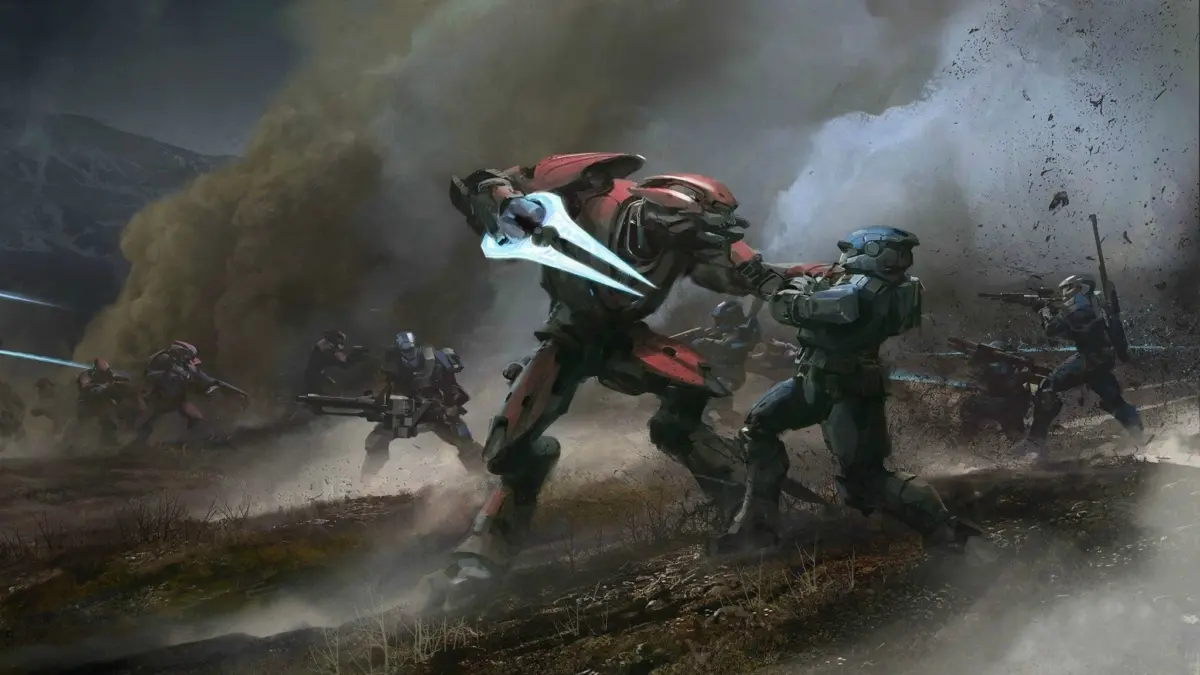
Released in September 2010, Halo: Reach blended Bungie’s trademark sandbox gameplay with a bleak, cinematic narrative structure. Featuring squad-based interactions within Noble Team and the haunting, inescapable final objective—"Survive"—the game struck a profound chord with fans. It served as a fitting farewell to Bungie’s tenure as the stewards of the Halo universe, forever altering how players viewed the human-Covenant war.
Supporting Context & Metrics: The Anatomy of a Cross-Pollinated Masterpiece
When Niles Sankey took to social media to discuss the development of Halo: Reach, he offered a rare, candid peek behind the curtain of AAA game design. Responding to a discussion regarding Call of Duty 4‘s devastating nuke sequence, Sankey detailed how Infinity Ward’s design philosophy fundamentally shifted Bungie’s approach to their campaign.
+--------------------------------------------------------------------------+
                    BUNGIE VS. INFINITY WARD DESIGN PILLARS
+------------------------------+-------------------------------------------+
|      BUNGIE STRENGTHS        |           INFINITY WARD STRENGTHS         |
+------------------------------+-------------------------------------------+
| • Advanced Enemy AI          | • Gritty, Grounded Tonal Execution        |
| • Emergent Sandbox Combat    | • Cinematic Pacing & Scripted Spectacle   |
| • Fluid Vehicle Mechanics    | • Compelling Squad Dynamics & Dialogue    |
| • Multiplayer Balance        | • Emotional, High-Stakes Narrative Beats  |
+------------------------------+-------------------------------------------+
Deconstructing the Inspiration: Noble Team and "Objective: Survive"
According to Sankey, Bungie was acutely aware of its own strengths and weaknesses. The studio possessed unmatched expertise in systemic combat—crafting intelligent enemy AI that reacted dynamically to player tactics, alongside tightly tuned vehicle physics that made driving a Warthog or piloting a Banshee feel exhilarating.

However, they also recognized that Infinity Ward was outpacing them in other critical categories. The Modern Warfare games excelled at tonal consistency, immersing players in high-stakes military operations alongside memorable, grounded squadmates like Captain Price and "Soap" MacTavish.
Bungie sought to bridge this gap for Reach.
- Noble Team Dynamics: The interactions between Spartan squadmates—Carter, Kat, Jun, Emile, Jorge, and the player-character Noble Six—were heavily influenced by the camaraderie and interpersonal friction seen in Infinity Ward’s Task Force 141 and Marine units. Bungie wanted players to feel like part of a cohesive, professional military unit facing impossible odds.
- The "Objective: Survive" Climax: Perhaps the most direct homage to Modern Warfare manifested in the game’s harrowing final mission, "Lone Wolf." Tasked with the bleak objective to "Survive," the player’s Spartan is left entirely alone on the glassed surface of Reach, fighting wave after wave of Covenant forces until inevitable death claims them. Sankey noted that this sequence was spiritually inspired by the tragic nuke sequence in Call of Duty 4. Bungie took the concept of an unwinnable, fatal struggle and pushed it one step further into an interactive, hopeless final stand.
The Irony of the "Halo Killer"
The revelation of mutual respect between the two studios carries a delicious layer of historical irony. During the mid-2000s, Call of Duty and Halo were locked in a perceived platform-defining war. The rivalry ran so deep that Infinity Ward at one point quietly prototyped a sci-fi shooter codenamed "HK"—short for "Halo Killer."
Conceived during the development of Call of Duty 4, "HK" was designed to feature aliens, advanced technology, and futuristic combat settings explicitly intended to dethrone Halo as the undisputed king of sci-fi shooters. Ultimately, Infinity Ward abandoned the sci-fi route, choosing instead to lean into contemporary military fiction with Modern Warfare—a pivot that catapulted the franchise into unprecedented global success.
It wasn’t until 2016 that Infinity Ward finally released a sci-fi title, Infinite Warfare. Ironically, by that time, the pendulum had swung back, with Infinite Warfare trading colorful alien adversaries for gritty, human-on-human space warfare—earning widespread acclaim for its campaign while alienating traditional arcade-shooter fans. Yet, long before Infinity Ward ventured into space, the lessons they learned on Earth had already stealthily journeyed to the Ring worlds via Halo: Reach.
Official Statements & Industry Reflections
The openness with which developers like Niles Sankey discuss cross-studio inspirations highlights a maturing industry. The old paradigm of fierce, isolationist studio rivalries has increasingly given way to an appreciation for peer innovation.
"Modern Warfare 1 and 2 were huge influences on Halo Reach’s campaign. The tonal execution in those games was (and still is) absolutely brilliant. We knew that Halo did some things better (AI combat, vehicles, etc), but we also knew the MW games were beating us in other…"
— Niles Sankey, Designer on Halo: Reach
Sankey’s willingness to credit a direct competitor underscores an essential truth of game development: greatness often borrows fearlessly, provided the borrowing studio understands how to elevate the concept to fit its own identity. By studying Modern Warfare, Bungie did not compromise its identity; rather, it weaponized cinematic pacing to enhance the emotional weight of a story whose tragic ending was predetermined.
Future Outlook: The Endless Pursuit of Gritty Immersion
As the video game industry marches deeper into the 2020s, the legacy of Halo: Reach continues to cast a long shadow over both the Halo franchise and the broader shooter genre.
More than fifteen years after its release, fans and creators alike look back at Reach as the pinnacle of Bungie’s narrative maturity. The appetite for a darker, more grounded military science fiction story has not waned. In fact, prominent industry figures have recently echoed these sentiments; notably, Halo co-creator Marcus Leitch has openly mused that if he were to make a new game in the series today, he would intentionally push the franchise back toward an even darker, more visceral tone.
Whether the Halo franchise will ever fully return to the somber, boots-on-the-ground military tragedy seen in Reach remains to be seen. Modern gaming trends fluctuate between hyper-competitive live-service multiplayer experiences and expansive open-world epics. Yet, the enduring success of Halo: Reach and the timeless brilliance of the original Modern Warfare trilogies serve as a powerful reminder: at the heart of every great shooter is a compelling human story, memorable companions, and the courage to look your players in the eye and make them feel the gravity of the fight.