Nearly two decades after its theatrical debut, J.J. Abrams’ Cloverfield remains a watershed moment in modern blockbuster cinema. Released in January 2008, the film successfully fused the scale and spectacle of classic Japanese kaiju cinema—typified by Godzilla—with the raw, intimate terror of foundational found-footage horror like The Blair Witch Project. Directed by Matt Reeves and written by Drew Goddard, Cloverfield abandoned traditional Hollywood framing devices to chronicle a catastrophic attack on New York City entirely through the lens of a personal consumer camcorder.
Spawned from a chance encounter in a Tokyo toy store and incubated under Abrams’ trademark secrecy at Bad Robot, the film arrived during a golden era of high-concept mystery marketing. Its guerrilla-style promotional campaign, kicked off by a cryptic teaser trailer attached to Transformers, set a new standard for viral Hollywood marketing. Today, as Cloverfield finds a fresh lease on life via streaming platforms like Peacock, Paramount+, and Pluto TV, its prescient look at human behavior during a crisis—where capturing the event often overrides the instinct to flee—feels less like speculative fiction and more like a mirror of modern reality.
Detailed Chronology: From Tokyo Toy Stores to Central Park Ruins
The Genesis of "Our Own Monster" (Early 2006)
In early 2006, producer and creator J.J. Abrams was riding an unprecedented wave of creative momentum. His spy thriller series Alias was nearing its dramatic conclusion, Lost had firmly entrenched itself as a global cultural phenomenon, and he was traversing the globe promoting his feature directorial debut, Mission: Impossible 3.
During a promotional stop in Tokyo, Abrams visited a local toy store with his young son. Browsing the aisles, he found himself drawn to the merchandise of iconic movie monsters. While he appreciated the cinematic history of King Kong, whom he later affectionately described as "adorable," Abrams realized that American cinema lacked a truly homegrown, terrifying titan. He wanted to create an entity that was "insane and intense"—a terrifying force of nature unique to the modern American consciousness. The seed for Cloverfield was planted.
The Recruitment of Talent and the Birth of a Strategy
Upon returning to the United States, Abrams mobilized his trusted creative network. He enlisted Lost writer Drew Goddard to script the project and tapped Matt Reeves, a longtime collaborator, to direct. To maintain absolute control over the narrative and build unbridled audience anticipation, Abrams instituted a shroud of secrecy. The project was developed under code names (including Slusho and Cloverfield) before a single frame of footage was made public.
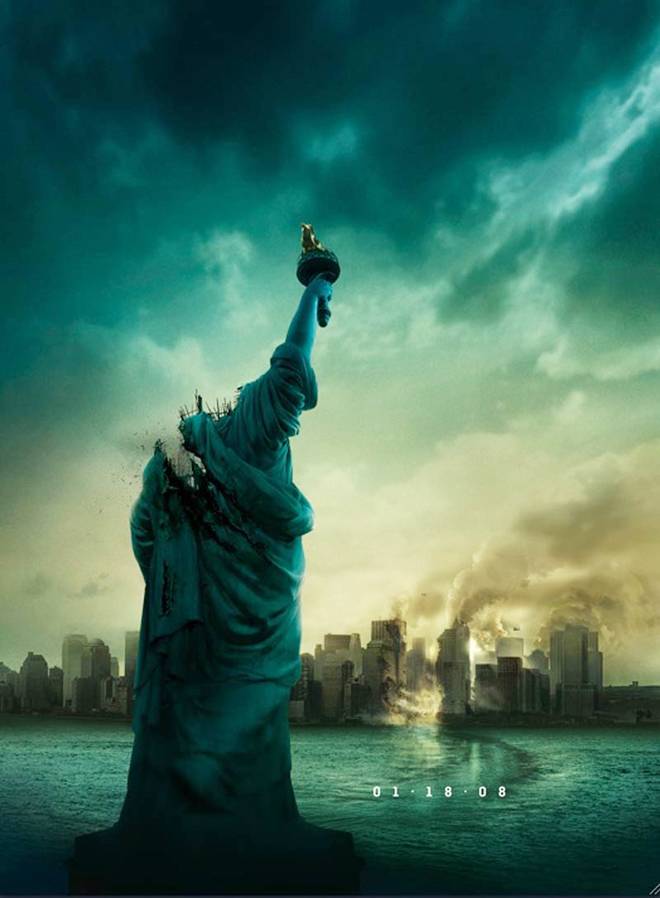
The marketing blitz officially commenced in July 2007, when a mysterious teaser trailer attached prints of Michael Bay’s Transformers. The trailer featured no title, no recognizable actors, and no exposition—only a chaotic going-away party abruptly interrupted by a massive tremor, culminating in a scene where the severed head of the Statue of Liberty is hurled down a crowded Manhattan street.
Later that month, at Paramount’s San Diego Comic-Con panel—shared alongside heavy-hitters like Iron Man, Indiana Jones and the Kingdom of the Crystal Skull, and Abrams’ own live-action Star Trek—Abrams unveiled a striking, un-titled poster of the decapitated landmark looming over a smoke-choked skyline. At the bottom, a single date appeared: January 18, 2008.
The Night of the Incident
The narrative mechanics of Cloverfield unfold as a grim archival document. The film opens with a framing device stating that the following footage is Department of Defense-confiscated material recovered from an incident site formerly known as Central Park, cataloged under the designation "Cloverfield."
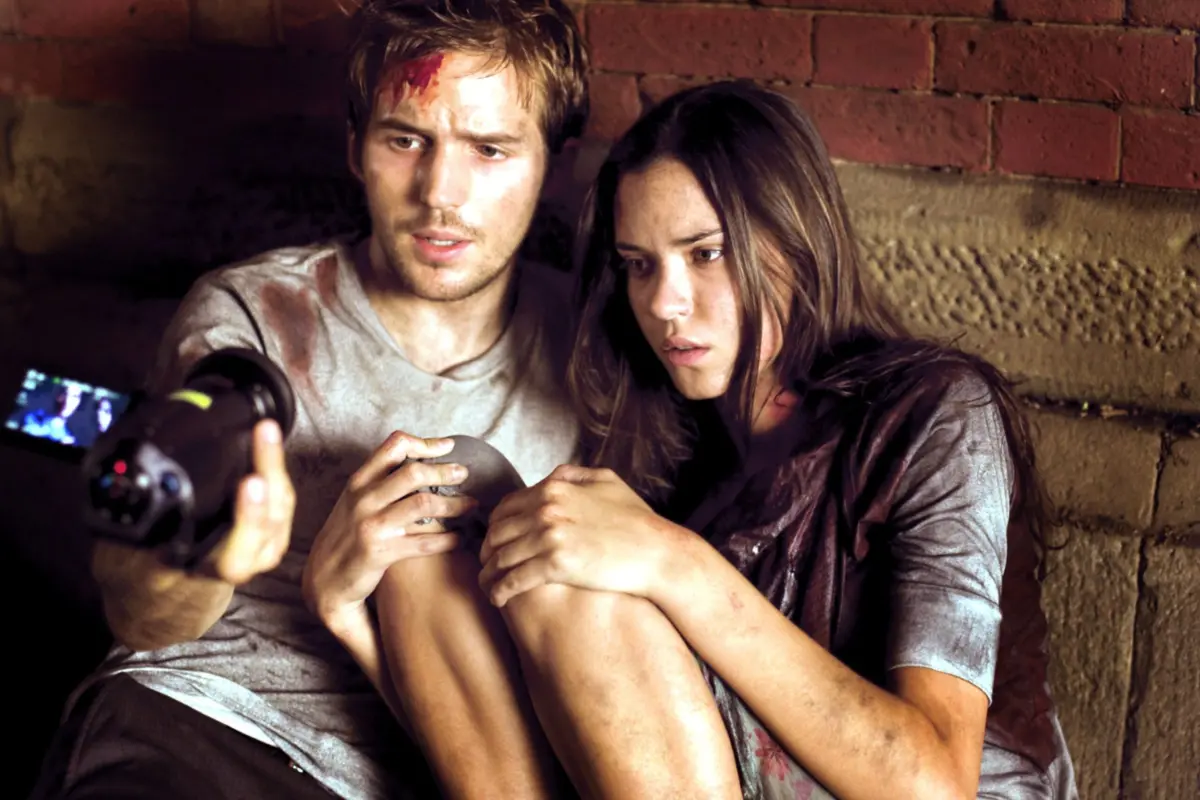
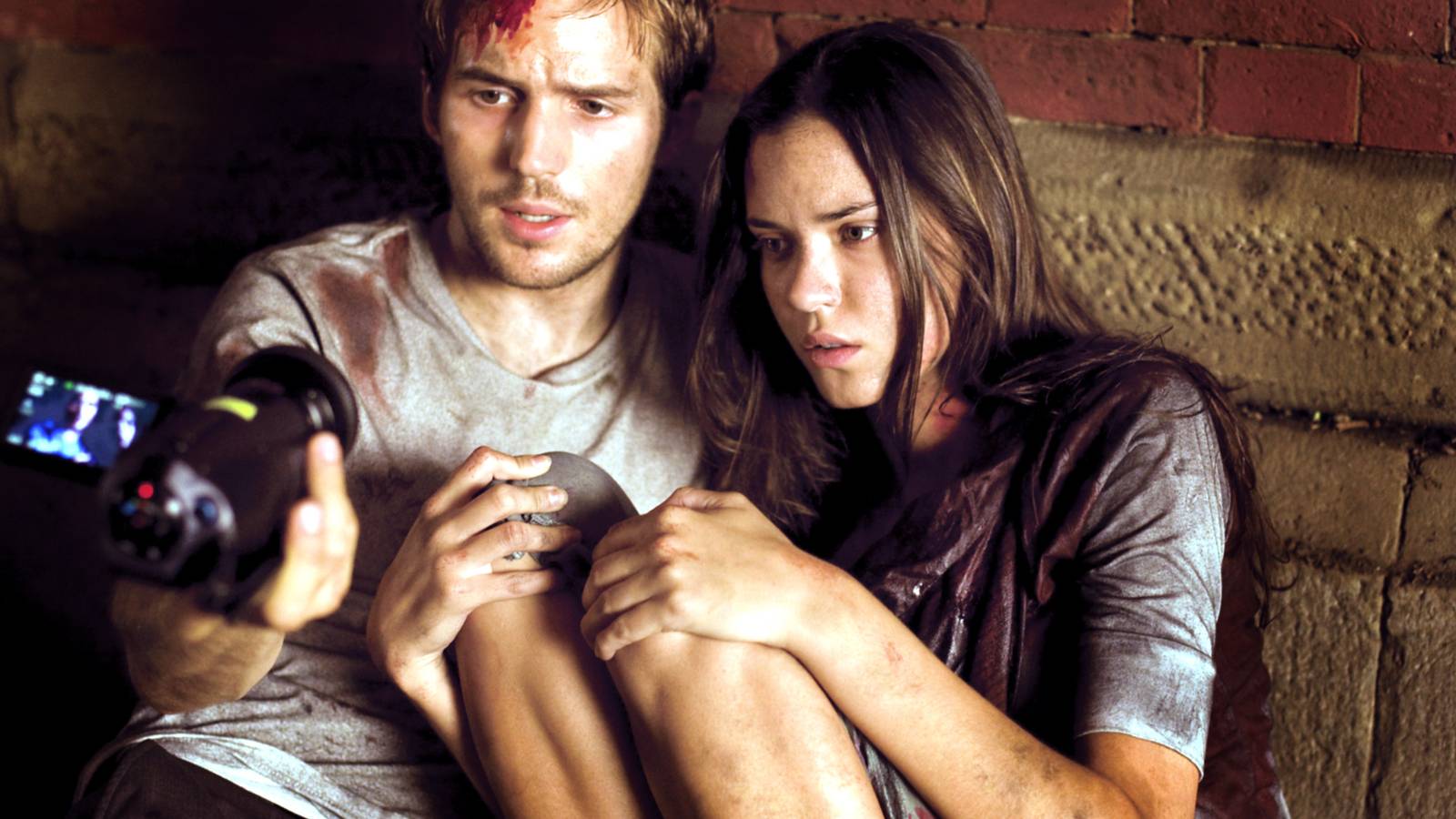
The story proper begins weeks earlier with a bright, albeit tense, vignette: a daytime trip to Coney Island shared by Rob (Michael Stahl-David) and Beth (Odette Annable). Fast-forwarding a month, Rob is preparing to leave New York City for a prestigious new job in Tokyo. His friends throw him a surprise farewell party, during which attendees record candid video messages on a consumer digital camcorder. An unresolved romantic tension lingers between Rob and Beth, culminating in Beth leaving the party early, visibly frustrated.
Shortly after her departure, a catastrophic explosion rocks the New York skyline. As bridges collapse and the city plunges into chaos, Rob and his remaining friends—including Hud (T.J. Miller), who has been tasked with operating the camera—venture out into the smoking ruins to locate Beth. The resulting journey marries intimate emotional stakes with citywide annihilation, all viewed through the jumpy, unstable optic of a panicked civilian.
Supporting Context & Metrics: Box Office, Production, and Cultural Impact
To fully understand Cloverfield, one must examine the economic and structural metrics that governed its production and release. Operating on a relatively modest budget for a disaster film—estimated between $25 million and $30 million—Paramount Pictures took a calculated gamble on an untested, unbranded property led by a relatively unknown cast.
Metric / Detail
Value / Description
Production Budget
~$25 million – $30 million
Domestic Box Office
~$80 million
Worldwide Box Office
~$172 million
Release Date
January 18, 2008
Runtime
85 minutes
Primary Platforms (Current)
Peacock, Paramount+, Pluto TV
The Economy of Scale
By restricting the narrative strictly to the subjective viewpoint of Hud’s camcorder, Reeves and cinematographer Michael Bonvillain bypassed the need for continuous, wide-scale computer-generated vistas of destruction. Instead, the visual effects budget was strategically deployed for maximum impact during key moments: the rooftop debris shower, the collapse of the Woolworth Building, the subterranean subway tunnel attack, and brief, terrifying glimpses of the creature and its parasitic symbiotes.
At a brisk 85 minutes, the film operates with ruthless efficiency. It refuses to bog down the runtime with cumbersome scientific exposition or prolonged military strategy meetings. The audience learns about the creature only as fast as the panicked characters do, reinforcing an authentic sense of claustrophobia and helplessness.
Official Statements and Industry Reception
Upon its release, Cloverfield polarized traditional critics while captivating mainstream audiences hungry for an original cinematic experience.
In retrospective commentary regarding the film’s genesis, J.J. Abrams noted the distinct philosophy behind the monster’s design and presentation:
"We wanted something that felt terrifying and unpredictable, not just an animal stomping on buildings, but an organism completely unsuited to our world, lashing out in blind terror and confusion."
Director Matt Reeves emphasized the intentionality of the shaky-camera aesthetic, arguing that the technical limitations of a consumer camcorder served a vital emotional purpose:
"The camera isn’t just a device to capture the monster; it’s an anchor for the human relationships. As the world falls apart around them, the lens forces these characters to confront things they left unsaid, capturing a deeply personal tragedy inside a global catastrophe."
Film historians have frequently noted that Cloverfield arrived at the precipice of the smartphone era. While critics in 2008 occasionally questioned why characters would continue filming amidst mortal peril—most notably Hud’s insistence on documenting the unfolding apocalypse—cultural analysts two decades later view this behavior as prophetically accurate. The impulse to record extraordinary, life-threatening events for digital posterity has since become a defining characteristic of modern human behavior.
Future Outlook: The Legacy of the Cloverfield Universe
In the years following the 2008 original, the Cloverfield moniker evolved from a single title into an anthology brand under Bad Robot and Paramount. Subsequent entries—most notably 2016’s psychological thriller 10 Cloverfield Lane and 2018’s sci-fi horror The Cloverfield Paradox—demonstrated Abrams’ penchant for surprise branding, attaching unrelated screenplays to the overarching thematic universe.
Yet, despite the expansion of the franchise into multiverse territory and psychological paranoia, the original 2008 film remains the definitive standard bearer. Its brilliance lies not in answering every lingering question about the monster’s origins or the government’s containment protocols, but in its refusal to offer closure.
As Cloverfield cycles back into prominence through modern streaming libraries, it continues to influence a new generation of filmmakers exploring interactive horror, found-footage mechanics, and high-concept mystery marketing. By shrinking an apocalyptic monster attack down to the heartbreaking scale of a lost relationship in New York City, Cloverfield secured its enduring place in the modern sci-fi horror pantheon—proving that sometimes, what you don’t see on camera is far more terrifying than what you do.