Executive Overview
When Tesla formally reintroduced its long-awaited, repeatedly delayed second-generation Roadster, the automotive world braced for extraordinary performance metrics. Promising a 0-to-60 mph sprint in under one second and an angular, Cybertruck-inspired aesthetic, Elon Musk’s flagship supercar managed to shock an industry already desensitized to hyper-performance claims. Yet, the feature dominating headlines—and sparking fierce engineering debates—was not its acceleration, but its capability to "fly."
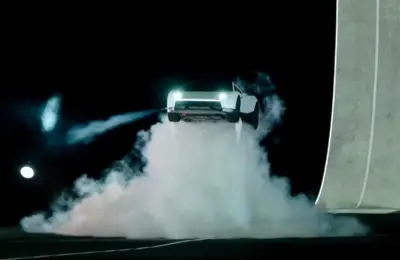
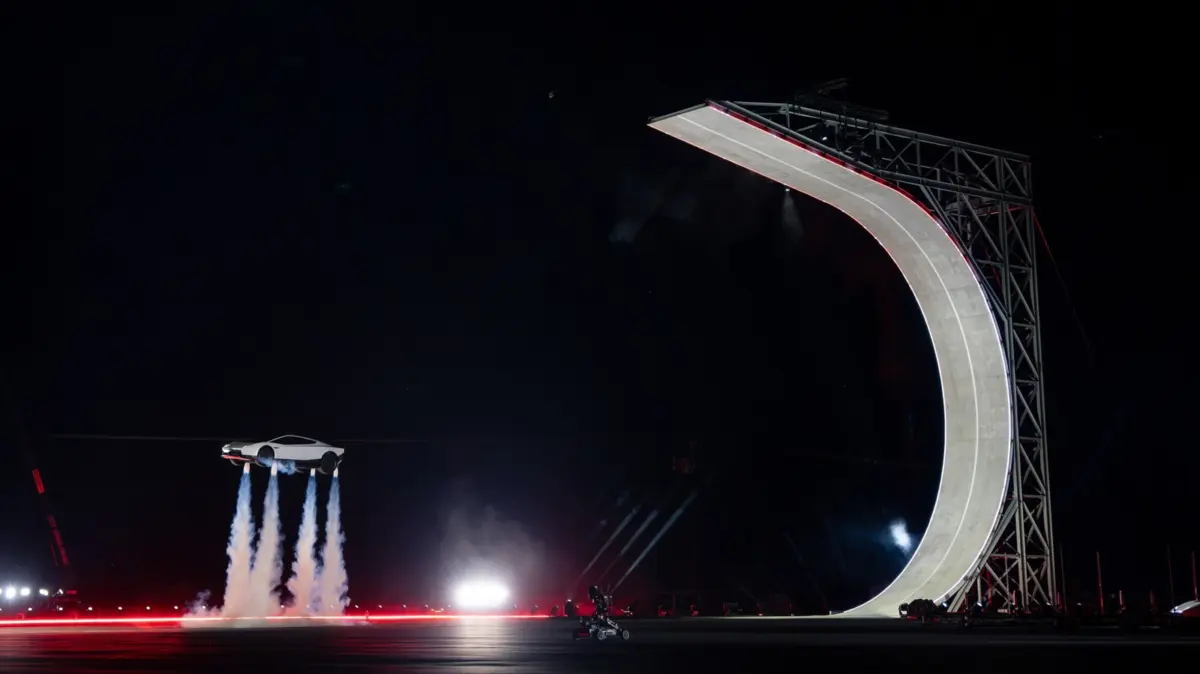
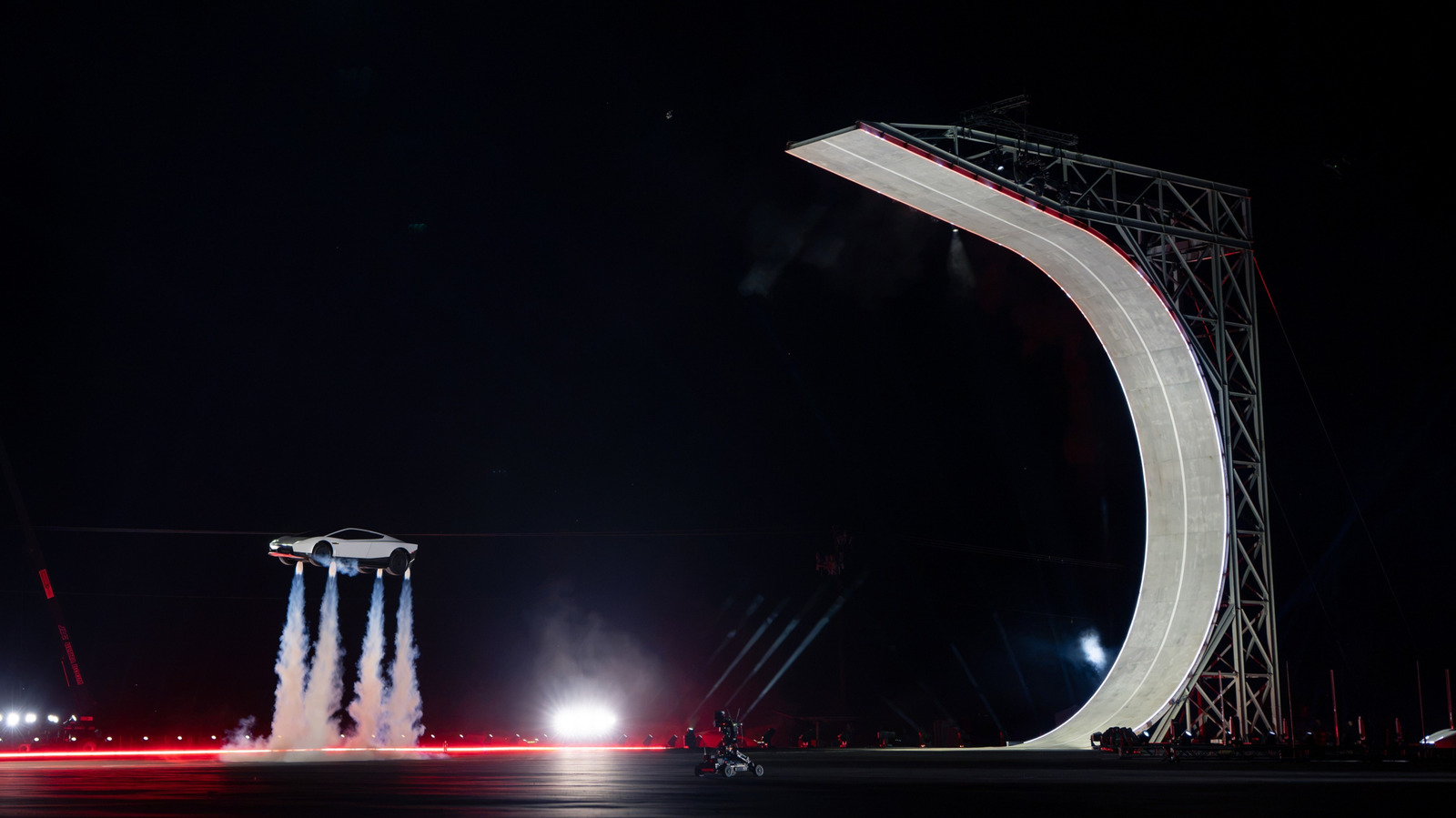
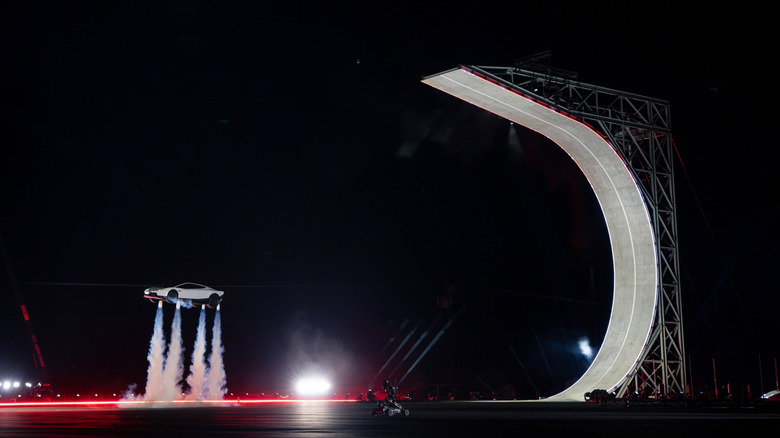
While the car cannot achieve sustained aerodynamic flight in the tradition of Back to the Future, it achieves a form of vehicular acrobatics through controlled jumping, falling, and flipping maneuvers. Tesla achieves this by integrating high-pressure air tanks and a network of nozzles strategically placed across the chassis.
However, this application of directional propulsion to violently reorient a vehicle in mid-air is far from unprecedented. Decades before Tesla conceptualized a supercar performing kickflips, defense contractors—most notably Lockheed Martin—pioneered virtually identical physics for a vastly different and deadlier purpose: intercepting and destroying incoming intercontinental ballistic missiles (ICBMs).
This investigation explores the fascinating technological convergence between high-end consumer supercars and Cold War-born missile defense architectures. By examining the mechanics of cold-gas thrusters, the history of the military’s Multiple Kill Vehicle (MKV) program, and the fundamental differences between hot-fire and cold-gas propulsion, we uncover how aerospace engineering principles from the turn of the millennium are finding a second life in consumer-grade automotive theater.
Detailed Chronology: From Star Wars to Supercars
To understand how a technology designed to neutralize nuclear threats found its way into a high-performance luxury vehicle, we must trace a technological timeline spanning more than four decades.
The Strategic Defense Initiative and Early Concepts (1980s)
The ideological genesis of precision mid-course maneuvering dates back to the Reagan administration’s Strategic Defense Initiative (SDI), colloquially dubbed the "Star Wars" program. Tasked with creating a multi-layered shield against Soviet nuclear attacks, military researchers realized that hitting a high-speed intercontinental ballistic missile in the vacuum of space required more than just traditional aerodynamic control surfaces. Because air is virtually non-existent in the upper thermosphere and exosphere, steering required direct reaction control systems (RCS)—thrusters capable of imparting instant directional force regardless of atmospheric density.
The Rise of the Multiple Kill Vehicle (2004–2009)
The conceptual ancestor of the modern thruster-controlled vehicle took a concrete form in 2004, when the United States Missile Defense Agency (MDA) awarded Lockheed Martin a staggering $760 million contract. The objective was to develop the Multiple Kill Vehicle (MKV), a next-generation interceptor designed to carry several smaller kill vehicles aboard a single booster.
Once deployed in space, these individual kill vehicles needed to independently maneuver to distinguish real nuclear warheads from sophisticated decoys, slamming into their targets at hyper-velocities. Lockheed Martin successfully tested propulsion and attitude control components for the MKV-L variant throughout the mid-2000s. However, shifting defense priorities, budgetary constraints, and changing geopolitical landscapes ultimately led to the cancellation of the MKV program in 2009.
Tesla’s Roadster Re-emergence and Thruster Integration (2017–Present)
When Tesla first unveiled the Roadster prototype in late 2017, Elon Musk casually mentioned that the vehicle would feature "SpaceX option packages," hinting at rocket technology derived from aerospace operations. For years, this was largely dismissed as marketing hyperbole or vaporware.
That narrative shifted on October 15, when Tesla formally updated the automotive landscape. The company confirmed that the upcoming Roadster—specifically within its range-topping "Rocket" trim—would utilize a sophisticated network of ten compressed-air nozzles connected to two high-pressure storage tanks. These systems allow the vehicle to execute stabilized jumps, short-duration hovers, and mid-air rotations, bridging the gap between automotive engineering and aerospace rocketry.
Supporting Context & Metrics: The Engineering of Direct Reaction Control
At the core of both the Lockheed Martin MKV and the Tesla Roadster lies a foundational branch of physics: momentum transfer via Reaction Control Systems (RCS). To fully grasp how these systems operate, one must examine the operational parameters, hardware configurations, and performance thresholds that separate them.
Hardware Architecture: Tesla Roadster vs. Lockheed Martin MKV
| Metric / Feature | Tesla Roadster ("Rocket" Trim) | Lockheed Martin MKV (Multiple Kill Vehicle) |
|---|---|---|
| Primary Domain | Terrestrial / Track (Non-road legal) | Upper Atmosphere / Outer Space |
| Propulsion Medium | Compressed Air (Cold-gas) | Solid/Liquid Chemical Propellant (Hot-fire) |
| Storage Mechanism | Dual high-pressure onboard air tanks | High-pressure propellant manifolds & combustion chambers |
| Nozzle Configuration | 10 distributed nozzles across the chassis | Multiple divert and attitude control system (DACS) thrusters |
| Operational Lifetime | Variable (dependent on onboard compressor refills) | Single-use, mission-critical termination |
| Primary Objective | Stunt maneuvers, stabilization, enhanced agility | Interception of ICBMs and decoys |
The Mechanics of Cold-Gas vs. Hot-Fire Propulsion
The most critical engineering divergence between the two systems lies in how they generate thrust.
Tesla is explicit that the Roadster utilizes a cold-gas thruster architecture. In a cold-gas system, no combustion takes place. Instead, inert gas (in this case, compressed air) is stored under immense pressure within reinforced tanks. When a digital command is executed, solenoid valves rapidly open, releasing the high-pressure gas through precisely angled nozzles. As the gas expands violently through the nozzle, it converts potential pressure energy into kinetic momentum, pushing the car in the opposite direction.
Conversely, historical documentation and press releases from Lockheed Martin confirm that the MKV utilized hot-fire propulsion components. Hot-fire systems involve the chemical combustion of liquid or solid propellants within a combustion chamber. This creates high-temperature, high-velocity exhaust gases that generate significantly more specific impulse ($I_sp$) and raw thrust than cold-gas systems.
While hot-fire systems are exceptionally powerful—making them ideal for intercepting fast-moving ballistic threats—they are also volatile, generating extreme heat and requiring complex thermal management. Tesla’s choice of a cold-gas system is inherently safer for consumer applications, avoiding the risks associated with carrying reactive, combustible rocket fuels on a passenger-adjacent chassis. Furthermore, Tesla’s integration includes an onboard compressor mechanism capable of replenishing the air tanks, a luxury an interstellar or sub-orbital kill vehicle does not possess.
Official Statements and Industry Perspectives
The convergence of military-grade attitude control and consumer automotive engineering has elicited varied reactions from aerospace engineers, automotive safety regulators, and defense analysts.
Tesla’s Positioning on Utility and Safety
Tesla has been careful to manage expectations regarding the practical application of the Roadster’s thrusters. In technical briefings accompanying the October rollout, company representatives emphasized that the system is designed strictly for closed-circuit performance optimization and demonstration purposes.
"The thruster configuration on the Rocket trim is engineered to push the boundaries of vehicular dynamics, offering unprecedented stabilization and agility," a Tesla engineering briefing noted. However, the company explicitly added a crucial caveat: the thrusters "aren’t approved for public road use."
This regulatory hurdle is unsurprising. A vehicle venting high-pressure air streams in heavy traffic or parking lots poses severe safety hazards to pedestrians, cyclists, and nearby motorists.
Aerospace and Defense Commentary
Defense historians and aerospace engineers have expressed a mixture of fascination and amusement at how military technology trickles down into consumer culture. Dr. Aris Thorne, a propulsion specialist who worked on tactical missile defense systems during the 2000s, notes the striking mechanical parallels.
"When you look at the physical placement of nozzles on the MKV test units, you see a multi-axis philosophy: pitch, yaw, and roll managed by discrete impulse thrusters," Dr. Thorne explains. "Tesla has essentially downscaled that exact control logic for a heavy ground vehicle. The math doesn’t change just because you’re swapping a warhead for an electric powertrain. Newton’s third law remains undefeated."
At the same time, defense analysts point out the vast disparity in engineering constraints. While Lockheed Martin’s engineers were tasked with creating a device capable of operating in zero gravity against erratic targets moving at Mach 20, Tesla’s team had to solve the problem of packaging air tanks and high-speed valves inside a sleek, road-legal sports car frame without compromising structural integrity or battery safety.
Future Outlook: What Next for Thruster-Assisted Transportation?
As the automotive industry looks toward the remainder of the decade, the integration of aerospace technology into consumer vehicles raises profound questions about the future of performance engineering, regulatory frameworks, and market viability.
Regulatory and Legal Roadblocks
The immediate future of "flying" or thruster-equipped cars will be dictated almost entirely by regulatory bodies like the National Highway Traffic Safety Administration (NHTSA) and international equivalents. Currently, no legal framework exists to certify passenger vehicles equipped with active directional thrusters for public highways.
Even if manufacturers successfully lobby for testing exemptions, liability concerns regarding accidental discharges, mechanical failures, or structural stress on public roads will likely confine these features to race tracks, private testing grounds, and controlled exhibition spaces for the foreseeable future.
The Evolution of Vehicle Dynamics
Beyond the novelty of flipping a car, the underlying technology—Reaction Control Systems integrated with advanced vehicle dynamics software—could find practical applications in high-end motorsport. Traditional braking, steering, and aerodynamic downforce have physical limits imposed by tire-to-road traction. By introducing instantaneous directional thrust, vehicles could theoretically execute emergency evasive maneuvers, stabilize during high-speed loss-of-traction events, or optimize cornering forces far beyond the limits of conventional mechanical grip.
Conclusion: From Warheads to Wheels
The journey of cold-gas thrusters from the cutting-edge missile defense laboratories of the early 2000s to Tesla’s long-awaited Roadster demonstrates a timeless truth of technological evolution: brilliant engineering solutions frequently transcend their original domains.
Whether the Tesla Roadster ultimately delivers on its staggering performance promises, its utilization of military-inspired attitude control highlights an ongoing blurring of lines between automotive design and aerospace engineering. As engineers continue to push the boundaries of what vehicles can do—both on the ground and in the air—the legacy of programs like Lockheed Martin’s Multiple Kill Vehicle will quietly live on, proving that whether you are hunting an ICBM or executing a track-day stunt, physics remains the ultimate equalizer.