Executive Overview
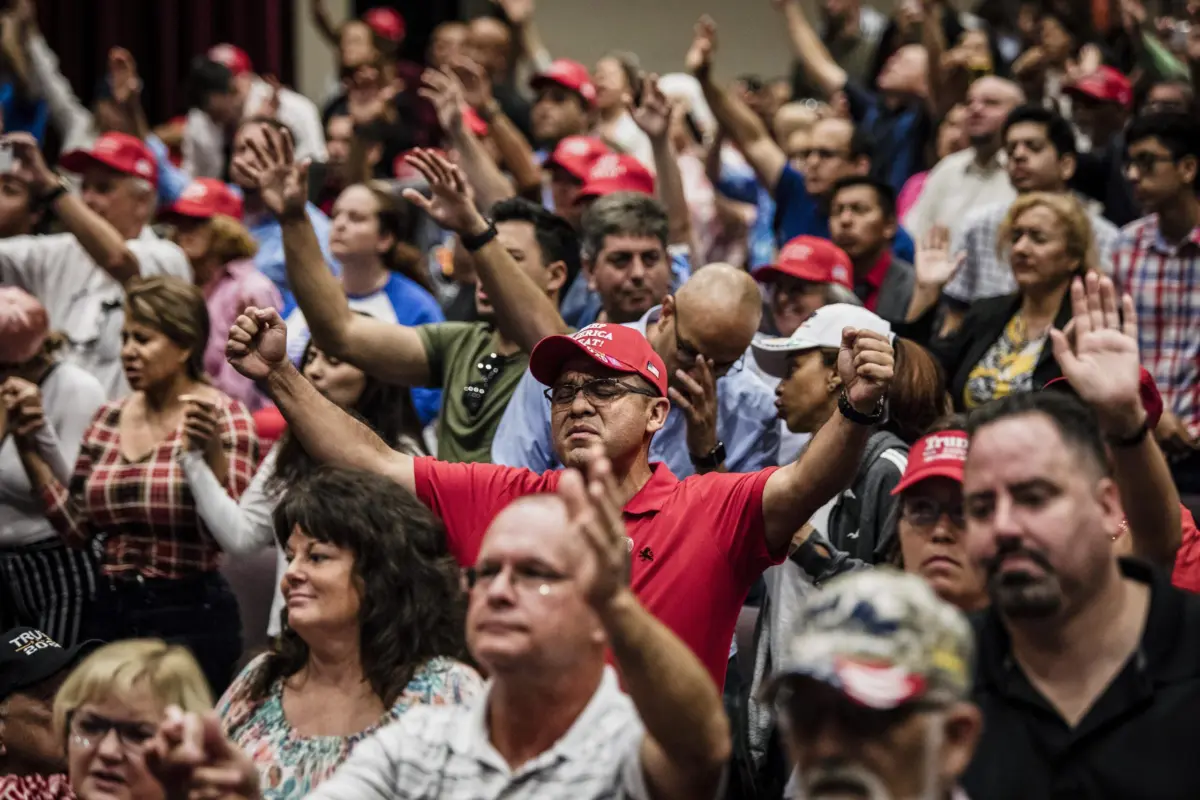
For the past decade, the American political and cultural landscape has been defined by an unyielding friction point: the enduring alliance between white evangelical Christians and Donald Trump. As the country navigates a shifting political era, pollsters and political analysts note that while support has experienced slight fluctuations, the foundational bedrock of evangelical backing for the MAGA movement remains remarkably stable.
To much of the mainstream media, elite academic spaces, and non-evangelical communities, this enduring loyalty has created a deeply entrenched archetype. In the popular imagination, the American evangelical is frequently painted with a broad brush—visualized as a politically aggressive culture-warrior, deeply hypocritical, media-obsessed, and entirely subsumed by partisan identity.
However, a growing body of counter-narratives and new intellectual works are challenging this flattening of a massive religious demographic. Among the most prominent voices urging a fundamental reassessment is Bonnie Kristian, a deputy editor at Christianity Today and fellow at the foreign policy think tank Defense Priorities. In her new book, In Defense of Evangelicalism, Kristian argues that the prevailing media caricature relies on a dangerous conflation: mistaking a loud, politically vocal subset of white evangelical voters for the entire, global breadth of the historic faith tradition.
This comprehensive reporting examines the state of modern evangelicalism, dissects the tension between pulpit politics and grassroots reality, explores the sociological data behind church attendance and civic cynicism, and asks hard questions about the future of religious engagement in American democracy.
Detailed Chronology: The Evolution of the Evangelical-Political Alignment
To understand where American evangelicalism stands today, it is necessary to trace how the movement’s relationship with electoral politics has evolved over recent decades, moving from a distinct cultural subculture to a formidable voting bloc.
The Late 20th Century: The Moral Majority and Institutional Consolidation
In the 1970s and 1980s, the modern religious right took formal shape under organizations like the Moral Majority. Evangelical leaders began mobilizing congregants around specific social issues—most notably abortion, prayer in schools, and traditional family structures. While this era cemented a strong alignment with the Republican Party, churches largely maintained a theological boundary, even if pulpit endorsements occasionally blurred the lines. Debates within the movement during this period were frequently theological or cultural, revolving around issues such as biblical literalism, creationism, and the secularization of public education.
The 2016 Paradigm Shift and the Trump Era
The nomination and election of Donald Trump in 2016 marked a watershed moment. Despite personal lifestyles and rhetoric that historically clashed with traditional evangelical values, roughly 81% of white evangelicals cast their ballots for Trump. Over the subsequent years, this allegiance solidified, transforming from a pragmatic political choice into a deep-seated cultural identity for many within the movement.
As media coverage zeroed in on high-profile, pro-Trump pastors and digital media influencers, public perception hardened. Critics argued that the movement had traded its spiritual integrity for political proximity and raw cultural power.
The Mid-2020s: Polarization, Policy Friction, and the Search for Nuance
By the mid-2020s, amidst record-low overall approval ratings for political institutions and heated national debates over immigration, nationalism, and foreign policy, the internal fractures within evangelicalism became more visible. While polling continued to show strong structural support for Republican candidates among white evangelicals, scholars and journalists began interrogating the gap between elite political noise and the day-to-day realities of local congregations.
Kristian’s 2026 release of In Defense of Evangelicalism represents a critical intellectual pushback against this era, seeking to separate the spiritual convictions of tens of millions of ordinary believers from the sensationalized actions of a few viral personalities.
Supporting Context & Metrics: Data, Demographics, and Real-World Nuance
When evaluating a movement comprising tens of millions of individuals, broad generalizations inevitably fail to capture the ground-level reality. Quantitative data from organizations like the Pew Research Center and the Public Religion Research Institute (PRRI) offer a more granular—and often surprising—picture of modern evangelicalism.
The Pulpit vs. The Pew
A common criticism leveled against evangelical churches is that Sunday services have devolved into partisan rallies. However, empirical assessments challenge this assumption. Large-scale analyses of online sermons conducted by researchers over recent election cycles reveal that the vast majority of evangelical pastors do not preach explicitly political sermons.
Furthermore, survey data consistently shows that both clergy and congregants actively resist political integration into worship. When asked by pollsters whether they want politics in their churches, the overwhelming response from average churchgoers is a definitive "no." They view the Sunday service as a space for worship, fellowship, and spiritual formation, not electoral mobilization.
The "Obligation Voter" Theory
To explain why approximately 8 in 10 white evangelicals continue to vote for Republican nominees election after election, Kristian posits the "obligation voter" framework. Rather than viewing every evangelical voter as an ardent, unconditional admirer of every candidate’s personal conduct or aggressive rhetoric, this theory breaks down the decision-making process into three core civic steps:
- The Civic Duty to Vote: Many evangelicals hold a strong theological and civic conviction that participating in elections is an ethical obligation.
- The Reality of a Two-Party System: Recognizing the structural limitations of American politics, these voters focus exclusively on viable major-party candidates.
- Moral Core Issues: Given foundational beliefs—such as a pro-life stance on abortion—and the stark policy divergence between the major parties, voters logically arrive at a Republican ballot.
This pragmatic calculus is fundamentally different from uncritical hero worship, offering an intelligible explanation for why voting patterns remain remarkably steady despite deep discomfort with individual political figures.
The Paradox of Secularization and Cynicism
Fascinating sociological research highlights another critical dimension of the evangelical landscape: the consequences of individuals leaving the faith. Data from studies on Southern evangelicals indicates that when members leave the church, they do not necessarily transition into more gentle, progressive, or civic-minded citizens. Instead, lapsed churchgoers often exhibit increased levels of cynicism and individualism.
This finding suggests that active participation in evangelical communities—despite their flaws—plays a measurable role in fostering local care, neighborly accountability, and social cohesion. When those institutional ties dissolve, the resulting vacuum can pose unique challenges to democratic health.
Official Statements & Expert Perspectives
In conversations surrounding In Defense of Evangelicalism, experts emphasize the necessity of distinguishing between institutional excess and authentic faith.
"This is a movement of tens of millions of people. You can’t have any collection of people that size and not have some unsavory stuff in there," Bonnie Kristian noted in recent discussions. "But I do really want to emphasize that what gets caricatured in media coverage is not typical evangelicalism."
Kristian’s work specifically tackles five persistent criticisms of the movement: that it is insincere, advances evil, is hypocritical, imposes itself on others, and seeks unchecked political control. By unpacking these charges, she argues that the media frequently collapses diverse theological traditions into a single, homogenized political stereotype.
At the same time, scholars do not shy away from internal critiques. Discussions surrounding racial reconciliation, Christian nationalism, and immigration policy reveal genuine friction points. For instance, while some demographic areas have made measurable strides in racial diversity and community engagement, others face structural and geographical limitations that hinder multi-ethnic integration.
On the issue of immigration—where polling often indicates that white evangelicals hold some of the most restrictive views on enforcement policies like border barriers—observers point to a complex dichotomy. It is entirely possible to find congregants who support strict federal border enforcement while simultaneously dedicating their personal time and resources to providing tangible legal, financial, and housing assistance to migrants within their local communities.
Future Outlook: Navigating a Post-Trump Era
As the United States looks toward the horizon of a post-Trump political reality, the future trajectory of American evangelicalism remains a vital question for theologians, sociologists, and political scientists alike.
The Danger of Partisan Capture
Religious leaders and thinkers increasingly recognize that total alignment with any single political party or politician carries severe spiritual and institutional costs. When a faith tradition becomes inextricably linked with partisan machinery, its prophetic voice is compromised, and its witness to outsiders is distorted. Moving forward, a central challenge for evangelical institutions will be reasserting their primary allegiance to the gospel rather than political platforms.
Coalition-Building and Issue-Based Engagement
Rather than engaging in top-down political lobbying or uncritical party loyalty, the path forward may lie in issue-based civic participation. Christians from diverse theological backgrounds reading the same scripture can—and do—arrive at different policy conclusions in good faith. Encouraging a diversity of coalitions and fostering respectful dialogue across political divides will be essential for reducing polarization.
Global Growth and Domestic Resilience
While American evangelicalism faces domestic headwinds, including broader cultural trends toward declining religiosity, the movement’s center of gravity is increasingly shifting to the Global South, with explosive growth across Africa, Latin America, and Asia. Domestically, the survival and moral credibility of the movement will depend on its ability to match its theological words with tangible deeds—fostering communities of grace, humility, and genuine care for the marginalized.
Ultimately, breaking through the media caricatures requires a willingness to look past viral internet personalities and examine the quiet, local faithful who make up the heart of the tradition. Only by understanding the complex, often contradictory reality of ordinary believers can observers accurately gauge the enduring power—and future trajectory—of American evangelicalism.