Executive Overview
For decades, popular culture has peddled a singular, frictionless narrative regarding matters of the heart. In the quintessential romantic comedy, television drama, or bestselling novel, the climax inevitably arrives with a grand, cinematic confession. One protagonist finally articulates the exact configuration of feelings that the audience has watched meticulously simmer across a two-hour runtime or a multi-season arc. Once all the cards are laid squarely on the table, the atmospheric tension that characterized the narrative dissolves into ether. The lovers embrace, sprint toward a sun-drenched horizon, and the screen cuts to black. The implication is absolute: the confession is the final hurdle, the ultimate key that unlocks an immutable, everlasting "happily ever after."
In the stark, labyrinthine reality of twenty-first-century courtship, however, "saying the thing" rarely follows a neat, scripted trajectory. Modern dating—navigated through the pixelated haze of dating applications, shifting socio-cultural expectations, and an acute cultural fatigue with emotional ambiguity—demands a radical reframing of vulnerability. Far from being a mere transactional gatekeeper designed to secure a relationship status, emotional risk-taking is an ongoing, messy, and deeply courageous act. Whether executed through monumental life choices or micro-gestures, putting one’s cards on the table in today’s murky dating climate offers an invaluable gift: absolute clarity, regardless of where the conversation ultimately leads.
Recognizing this cultural shift, dating platform Hinge has spearheaded a timely exploration of modern intimacy through its newly launched project, No Ordinary Love. Available now on Spotify and Substack, this immersive audiobook features an anthology of raw, real-life love stories penned and narrated by a stellar roster of contemporary literary voices, including Tembe Denton-Hurst, Nicola Dinan, Curtis Garner, Raven Smith, and Rufi Thorpe.
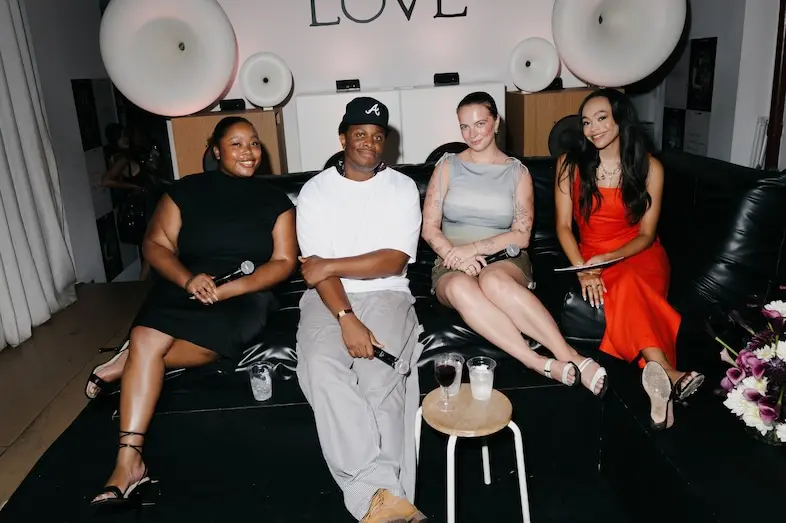
The themes central to No Ordinary Love recently transitioned from the digital airwaves into physical space during an intimate evening of conversation co-hosted by Hinge and Dazed magazine. Held at Silence Please, an atmospheric listening room nestled in New York City’s Lower East Side, the event brought together cultural critics, writers, and comedians—including Hunter Harris, Tembe Denton-Hurst, Nina Haines, and Devon Walker—to dissect the mechanics of modern honesty. The panel explored how radical candor serves as the foundational architecture not only for romantic partnerships, but for platonic friendships and creative collaborations alike.
As part of the evening’s interactive engagement, attendees were invited to drop their most intimate admissions into a dedicated "confession box," answering a deceptively simple question: “What’s the bravest thing you’ve ever done for a crush?” The resulting mosaic of anonymous confessions—ranging from the profound to the profoundly absurd—paints a vivid portrait of what it actually means to risk rejection in the pursuit of genuine human connection.
Detailed Chronology of the Cultural Discourse
To understand the current cultural appetite for unvarnished emotional candor, one must examine the timeline of events that brought this discourse to the forefront of contemporary lifestyle journalism. The conversation surrounding modern vulnerability did not materialize in a vacuum; rather, it is the cumulative result of changing consumer attitudes toward digital matchmaking and parasocial exhaustion.
Phase One: The Diagnostic Era of Digital Dating
Over the past decade, the proliferation of swipe-based applications transformed the dating landscape into a hyper-efficient marketplace. While this democratization of access initially promised an endless horizon of romantic possibilities, it simultaneously birthed phenomena such as ghosting, breadcrumbing, and the chronic avoidance of direct communication. Users became trapped in endless loops of low-stakes interaction, paralyzed by the fear that expressing genuine interest would signal a lack of "coolness" or detachment. The cultural pendulum swung so far toward emotional preservation that basic sincerity began to feel radical.
Phase Two: The Conceptualization of No Ordinary Love
In response to this pervasive emotional paralysis, Hinge sought to pivot the cultural narrative away from the fatigue of endless swiping and toward the transformative power of articulation. Conceptualized as an antidote to surface-level modern romance, the No Ordinary Love project was designed to chronicle the messy, unvarnished realities of falling and staying in love. By commissioning literary talents known for their psychological acuity—such as Rufi Thorpe and Nicola Dinan—the platform aimed to validate the anxiety, awkwardness, and ultimate liberation inherent in modern emotional disclosures.
Phase Three: The Lower East Side Gathering (August 11)
The discourse culminated on Tuesday, August 11, inside Silence Please on the Lower East Side. The venue—characterized by its dim, acoustic-friendly interior and intimate seating arrangements—provided an ideal backdrop for a candid autopsy of modern dating dynamics.
Moderated and driven by voices at the intersection of culture and comedy, the panel featured Hunter Harris, Tembe Denton-Hurst, Nina Haines, and Devon Walker. The speakers systematically deconstructed the societal pressures that penalize sincerity. They argued that contemporary culture has erroneously conflated emotional detachment with self-respect, training individuals to treat affection as a liability rather than an asset.
Crucially, the panel expanded the definition of "emotional risk." The speakers posited that society places an undue burden on grand gestures—public declarations of love, sweeping cross-country moves, or cinematic airport chases—while ignoring the quiet, everyday bravery required to sustain modern relationships. True vulnerability, they noted, often manifests in the mundane: initiating a random FaceTime call, meticulously planning a date without hiding behind irony, following up after a period of ambiguity, or simply telling someone how their actions made you feel in real time.
Supporting Context & Metrics: The Anatomy of Modern Bravery
The emotional stakes of modern dating are underscored by a growing body of sociological research indicating that younger generations—particularly Millennials and Gen Z—are experiencing unprecedented levels of dating burnout. According to internal data and broader sociological studies on modern courtship, the fear of rejection has been exponentially magnified by the public, digital nature of our social lives, where missteps can feel permanently cataloged.
It is against this backdrop of heightened anxiety that the anonymous confessions collected at the Hinge x Dazed event acquire profound analytical value. Categorized by the attendees and archived within the venue’s confession box, these micro-narratives offer a fascinating cross-section of human psychology when confronted with romantic desire.
The Spectrum of Risk: From Micro-Gestures to Existential Leaps
An analysis of the collected confessions reveals that emotional bravery exists on a sliding scale, categorized roughly by the perceived threat to the ego:
-
The Internal Battle (The Cognitive Shift):
- “Ignore the voices making me second-guess my decision to full send.”
- “Opened up to them about my worries!”
For many daters, the primary obstacle to romance is not the external object of affection, but internal self-sabotage. The act of silencing the internal critic—the voice whispering that vulnerability is synonymous with humiliation—represents the foundational first step of emotional risk.
-
The Micro-Calculus of Presence:
- “Looked in their direction.”
- “Watched the extended version of [The] Lord of the Rings.”
Vulnerability often demands enduring mild-to-moderate personal discomfort or tedium in the service of another person’s world. Whether enduring a cinematic epic one would ordinarily abhor or simply making sustained eye contact, these micro-actions signal a willingness to de-center the self.
-
The Strategic Ambiguity Breaker:
- “Cold emailed him with the subject line ‘beers?’”
- “I told him I didn’t want to just be a temp hold on his calendar.”
In an era dominated by ambiguous dating app protocols, refusing to accept "situationships" or tentative scheduling requires immense fortitude. These confessions highlight the transition from passive acceptance of circumstantial dating to demanding active, intentional investment.
-
The High-Stakes Absolute:
- “Told my best friend that I liked them, at the risk of losing the most special friendship I’d ever had (we’ve been together for three-plus years).”
- “Told him I liked him even though I knew it wasn’t mutual.”
At the apex of the bravery spectrum lie confessions characterized by complete asymmetry of risk. Whether risking an established platonic foundation or stepping into the glaring light of unrequited affection, these acts embody the ultimate thesis of No Ordinary Love: the articulation of truth is valuable for its own sake, regardless of the outcome.
Official Statements and Critical Insights
The discourse generated by the Hinge and Dazed collaboration illuminates a broader philosophical realignment within the dating industry. No longer content to market romance as a frictionless algorithmic match, industry leaders are increasingly acknowledging the psychological labor required to navigate human intimacy.
During the panel discussion, cultural critic and writer Hunter Harris emphasized the necessity of dismantling the irony-poisoned detachment that characterizes much of modern dating culture. "We have built entire defensive architectures around our feelings," Harris noted during the conversation. "To be earnest is perceived as uncool, as if caring too much hands over all your power. But the reality is that withholding your feelings doesn’t protect you; it just isolates you."
Writer and contributor Tembe Denton-Hurst echoed this sentiment, drawing from her literary work featured in the No Ordinary Love audio anthology. Denton-Hurst pointed out that modern storytelling has done a disservice to audiences by framing vulnerability as a single, terminal event rather than an ongoing practice. "In movies, once you confess your love, the story ends because the hard part is supposedly over," Denton-Hurst explained. "In real life, confessing your feelings isn’t the end of the story—it’s the messy, terrifying table-of-contents page."
Furthermore, comedian Devon Walker brought a levity to the proceedings, reminding the audience that emotional risk is frequently accompanied by profound awkwardness and misfire. Referencing confessions that ranged from eating a ghost pepper to impress a crush to suffering through catastrophic public reactions, Walker underscored that the human element of dating is inherently comedic. "If you aren’t willing to look slightly foolish, or occasionally throw up after eating a ghost pepper because your brain short-circuited in the presence of someone attractive, you aren’t really playing the game," Walker joked, drawing knowing laughter from the room.
Future Outlook: The Evolution of Intimacy in the Algorithmic Age
As we look toward the future of modern romance, the cultural dialogue ignited by initiatives like No Ordinary Love and events like the Hinge x Dazed gathering points toward a necessary evolution. The exhaustion associated with surface-level digital dating has catalyzed a counter-movement: a collective hunger for depth, radical honesty, and emotional literacy.
The traditional metrics of dating success—number of matches, frequency of validation, and the maintenance of an unassailable aura of nonchalance—are steadily losing cultural currency. In their place, a new paradigm is emerging, one that champions emotional transparency as a core competency.
This shift suggests several key trajectories for the future of courtship:
- The Reclamation of the Sincere Gesture: As cultural fatigue with irony deepens, micro-sincerity—unabashedly expressing enthusiasm, planning deliberate dates, and communicating intentions without playing games—is poised to become the ultimate social currency.
- Redefining Resilience in Dating: Rather than viewing rejection as a catastrophic failure of the ego, modern daters are increasingly learning to reframe it as a successful data point. To articulate one’s feelings and receive a "no" is no longer viewed as a waste of time, but as the achievement of clarity—a liberation from the purgatory of ambiguity.
- The Integration of Art and Intimacy: Projects like No Ordinary Love demonstrate that consumers are hungry for media that reflects the complex, literary reality of their emotional lives. By embedding real, messy human narratives into audio platforms and literary formats, brands and creators are validating the internal landscapes of modern daters.
Ultimately, the lesson echoing from the listening room on the Lower East Side, through the confession boxes, and across the digital airwaves is remarkably simple: modern love does not require a cinematic script or a grand, sweeping gesture to be valid. It merely requires the quiet, everyday courage to drop the armor, step out from behind the screen, and speak the truth of one’s own heart.