Executive Overview
The announcement of a new StarCraft title sent shockwaves through the global gaming community at Blizzcon 2026, instantly revitalizing one of the most storied and influential universes in science-fiction gaming history. However, the revelation came with a massive caveat: Blizzard Entertainment has pinned a firm, distant release window of 2030 on the project. Four years out from its initial unveiling, the game is shrouded in both anticipation and skepticism regarding why a studio would pull back the curtain so early in a development cycle.
Even more disruptive than the timeline is the genre shift. Abandoning the legendary real-time strategy (RTS) framework that defined its predecessors (StarCraft, StarCraft II, and their iconic expansions), this new entry plunges headfirst into the realm of open-world shooters. Stepping away from the detached, god-like vantage point of base-building and unit micro-management, Blizzard is putting players directly into the dirt, the mud, and the terrifying chaos of close-quarters sci-fi warfare.
During Blizzcon 2026, key figures behind the project—General Manager and Vice President of StarCraft Dan Hay and Associate Director AnaLee Haertling—sat down to discuss the monumental creative risk they are taking. Addressing everything from the controversial 2030 release date to the visceral design philosophy of facing towering Zerg horrors on foot, the leadership team offered a rare, transparent look into how Blizzard plans to reinvent StarCraft for a modern era without alienating its deeply passionate legacy fanbase.
Detailed Chronology: The Journey to Blizzcon 2026 and the 2030 Horizon
To understand the magnitude of the StarCraft open-world shooter announcement, one must look at the historical timeline of the franchise and the grueling path Blizzard has walked to bring the Koprulu Sector back to life. For over a decade, StarCraft II served as the pinnacle of competitive and cooperative real-time strategy, anchoring esports circuits worldwide. Yet, following the conclusion of the Legacy of the Void expansion arc, the franchise largely fell dormant, relegated to occasional balance patches, cooperative commanders, and a yearning community keeping lore alive through fan projects and custom maps.
Rumors of a revival had swirled for years, with community speculation constantly ping-ponging between a potential StarCraft III RTS, a tactical spin-off, or a completely unannounced survival game. Those rumors crystallized into reality during the opening ceremonies of Blizzcon 2026. Blizzard didn’t just confirm that a new game was in production; they provided a first-look visual suite showcasing dropships deploying structures onto hostile alien biomes, towering biomass sprawling across corrupted terrain, and the unmistakable, gritty aesthetic of classic Terran machinery.
Yet, the elephant in the room remained the release target: 2030.
In an industry heavily scarred by premature announcements, studio restructuring, and over-promising, setting a definitive milestone four years in advance is a calculated and daring maneuver. When pressed by press and fans alike about why they chose to unveil the title with such a massive runway remaining, executive leadership doubled down on their reasoning. The decision was not made lightly, but rather as an intentional psychological and structural anchor for the development team.
By locking in 2030, Blizzard has cast a die. The announcement serves as a public beacon, drawing a definitive line in the sand that ensures every iteration, gameplay loop, and narrative beat built between now and then is marching toward a unified, concrete finish line.
Supporting Context & Metrics: The Paradigm Shift from RTS to Open-World Survival
The transition from a top-down tactical RTS to a first- or third-person open-world shooter represents one of the most drastic genre pivots in modern gaming history. Historically, Blizzard has maintained strict genre boundaries for its tentpole franchises—Diablo owns action-RPG, World of Warcraft anchors MMORPGs, and Overwatch commands hero-shooters. StarCraft, by all accounts, was RTS.
Stepping away from that legacy is an immense gamble, but it reflects a broader industry recognition that players are yearning for immersive, ground-level perspectives within beloved sci-fi universes. The core appeal of StarCraft has always rested on its rich, industrial-gothic atmosphere: the cigar-chomping Terran marines in heavy power armor, the relentless, swarming terror of the Zerg hive mind, and the sleek, lethal mystique of the Protoss.
Until now, fans could only view these elements from a high-altitude camera, ordering formations of units to their doom. The open-world shooter framework changes the psychological contract between the player and the game world entirely. Metrics and early conceptual breakdowns from the development team point toward several key design pillars:
- Scale and Verticality: Abandoning fixed-screen bases in favor of open-world exploration means rendering massive, contiguous ecosystems where faction conflicts unfold dynamically across diverse planetary biomes.
- Tactical Disruption: Rather than building massive armies, gameplay centers on small-unit survival, scavenging, and utilizing environmental hazards and rival factions against one another.
- Visceral Combat Realism: The contrast between high-tech military hardware and organic, nightmarish alien biology is amplified exponentially when viewed from eye-level rather than a thousand feet in the air.
Official Statements: Inside the Minds of the Developers
The creative visionaries steering the franchise through this unprecedented evolution provided profound insights into the philosophy driving the project. Dan Hay and AnaLee Haertling spoke candidly about the tightrope walk of honoring legacy while forging entirely new gameplay ground.
Addressing the distant 2030 release date, Hay explained that having a firm target is essential for creative discipline and team morale:
"You walk a funny line, because it’s like, you wanna tease, and we wanna say, ‘Hey, this is where we wanna land.’ The reason why I love a really good date, is because the reality is that it puts a target. It allows us to say to a team that that’s what we’re going for. It’s a rallying cry, and we’re focused on that. We wanna make sure we deliver something that is fun, something that is powerful, and something that allows you to explore. But I also like the idea that there’s a frame that keeps us honest. And it says, ‘2030, let’s go.’"
When asked directly if 2030 was a flexible target or merely a placeholder, Hay confirmed without hesitation that the date is entirely "solid."
While keeping exact development timelines under wraps, Hay offered a humorous perspective on how long the project has spiritually been in motion:

"I can’t tell you how long it’s been in development with the team, but I can tell you how long it’s been in development in my head, and it’s probably about 25 years. For us, I think what’s important is that we’ve gone out to find people who really love the brand. We’ve gone out to people who know the brand, who come back and really feel the love of the legacy. We’ve taken great pains and great care to make something that feels authentic, that when you walk through this world, you recognize it."
Maintaining authenticity while shifting genres is notoriously difficult. Hay described the challenge as walking a "knife’s edge":
"You wanna build something that is welcoming and inviting to new players but you wanna make sure it feels real. That when you walk into a bar it feels like a bar from the original world. When you meet players and characters and you see them, they’ve got the weapons and the armor and it feels authentic and it feels real."
Dropping into the Mud: The Power of Perspective
One of the most compelling aspects of the developer interview was the emphasis on how perspective shapes fear, tension, and agency. Hay painted a vivid picture of the emotional shift that occurs when a player trades a tactical commander’s cursor for a infantryman’s rifle:
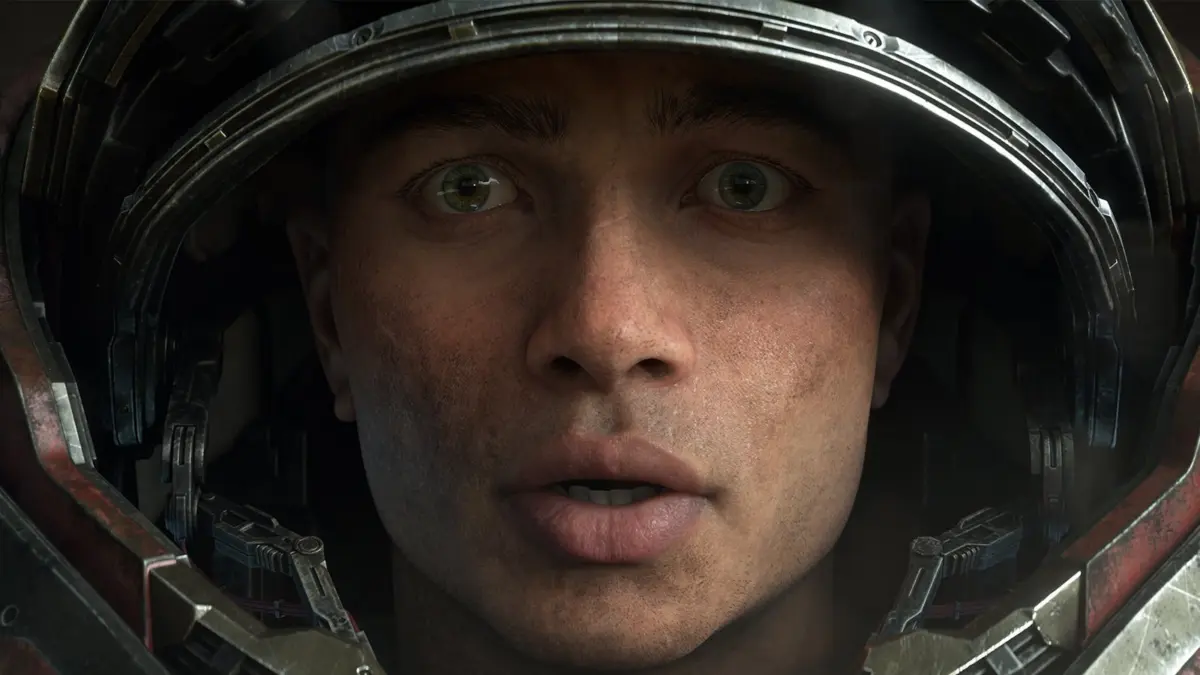
"When you think about what StarCraft will allow you to do, and we thought about how we tell this story — this is the way to tell that story. To be boots on the ground, to be down in the muck and the dirt, and to feel the tension of it. There was something really powerful — and I have to be careful not to give too much away here — I remember seeing the first time that a Hydralisk was 10 feet tall, and it was basically snapping at me. And I’ve got a gun and I’ve got armor, and I’m feeling like I’m down in the dirt and I’m feeling the weight of it."
This shift in scale transforms familiar units from simple tactical assets into terrifying environmental threats. Haertling’s observations regarding the deployment of structures like the Terran barracks further highlight this thematic shift:
"What’s super powerful about it is the moment you drop down on the ground, your perspective changes. It doesn’t feel like you’re a god looking down at this and you’re detached. It feels like, ‘My God, I’m in the middle of this. Every decision matters. Everything I do feels like it has gravitas.’"
Faction Warfare and the "Tool" Mechanics
Moving away from strict base-building does not mean abandoning the rich tapestry of factional conflict that defines the Koprulu Sector. In fact, Blizzard is leaning harder into the ideological and biological friction between groups, introducing mechanics that encourage tactical manipulation rather than brute-force elimination.
Hay hinted strongly at environmental storytelling and the organic horrors waiting on untamed worlds:
"We wanna show that it’s rough tools out there, it’s a difficult world, it’s filled with warfare and different factions and different groups of people, and they don’t always get along, and we wanted to bring that to bear from the very beginning. I have imagery in my head right now that I can be careful not to describe, but I’m seeing an awful lot of biomass, and I’m seeing a lot of stuff we were hinting at. If you look at the teaser and you start to see that moment where the barracks is flying in and you look at the planet, you’ll actually see all the things that are alive on that planet and get a sense of that feel."
Crucially, Hay dropped a major conceptual teaser regarding sandbox mechanics: the idea of weaponizing enemy factions against one another. Rather than facing every threat alone, players will be able to exploit the volatile politics and biology of the galaxy:
"For us, when we think about the themes and we think about the opportunity for you to be on the battlefield and for you to go out and think about the vista, the opportunity to explore, and then to discover, and then to disrupt. It’s incredibly unique… This feeling of, ‘The enemy of my enemy is a tool to be used.’ We felt like the open world and the opportunity to explore and to discover and of course to disrupt and to use my enemy against another enemy felt really powerful."
Future Outlook: What Lies Ahead on the Road to 2030
As the gaming world digests the monumental news coming out of Blizzcon 2026, the reality of a four-year wait sets in. A 2030 release window means that fans will experience a protracted cycle of developer updates, conceptual deep-dives, closed technical alphas, and inevitable speculation.
For Blizzard, the pressure is unprecedented. The studio is taking a beloved intellectual property that has laid dormant in its traditional genre for years and reimagining it within one of the industry’s most competitive spaces: open-world action shooters. Success relies entirely on whether the studio can capture the gritty, industrial soul of the Terran Dominion, the relentless terror of the Zerg swarms, and the enigmatic majesty of the Protoss from a ground-level perspective.
If Dan Hay, AnaLee Haertling, and the development team can successfully translate the claustrophobic tension of facing a ten-foot-tall Hydralisk into a compelling, expansive open-world gameplay loop, the wait until 2030 may very well prove to be worth every single day. Until then, the Koprulu Sector calls once more—not from the safety of a command chair, but from deep within the mud and the dirt of the front lines.