Executive Overview
In an era dominated by relentless hustle culture and the grueling demands of extreme athletic preparation, the narrative surrounding endurance sports is undergoing a profound cultural shift. For decades, the archetype of the marathon runner was built on images of suffering, pre-dawn suffering, austere sacrifices, and an unwavering, borderline-punitive discipline. However, a growing subculture of everyday athletes is subverting this paradigm, proving that high-level endurance performance can coexist seamlessly with comfort, mental well-being, and a vibrant social life.
At the forefront of this movement is Hong, a Berlin-based designer, international flight attendant, and veteran endurance athlete currently preparing for her seventh marathon. Hong’s journey offers a fascinating case study in modern fitness anthropology. Once identifying firmly as a "non-runner," she has systematically transformed her lifestyle over the past four years, entering her thirties in peak physical condition while entirely rejecting the misery-laden tropes of traditional long-distance training.
This in-depth feature explores Hong’s weekly training regimen, dissecting how she balances a demanding international career, a bustling social life in the German capital, and a rigorous preparation schedule for long-distance events. By prioritizing psychological comfort, holistic cross-training, community integration, and sensory engagement—such as curating dynamic running playlists and incorporating post-run culinary rewards—Hong illustrates that consistency and coziness are not mutually exclusive. Through an investigative lens, we examine the mechanics of her weekly routine, the physiological rationale behind her methodology, and the broader implications of her approach for the future of urban endurance sports.
Detailed Chronology: A Week in the Life of an Urban Marathoner
To truly understand how a modern amateur athlete successfully manages a 42.2-kilometer training block alongside a complex professional schedule, one must examine the micro-habits that dictate their week. Hong’s routine is a masterclass in strategic time management, emotional regulation, and intuitive training.
Monday: Combating Fatigue with Rhythm and Canine Companionship
Mondays are notoriously challenging for the urban professional, doubly so for someone navigating the erratic circadian rhythms of a flight attendant. Transitioning from international aviation duties straight into a design workflow requires immense cognitive and physical energy. For Hong, the primary threat on Monday is not a lack of physical capacity, but a depletion of motivational momentum.
"I can’t afford to lose my love for running if I want to stay consistent," Hong explains, highlighting the psychological tightrope walked by high-mileage athletes.
Her antidote to Monday lethargy is twofold: auditory stimulus and playful distraction. When low energy threatens to derail her session, she deploys a carefully curated running playlist featuring house, disco, and techno beats—genres deeply embedded in Berlin’s cultural DNA. Furthermore, Hong employs a clever physiological hack when mid-run fatigue sets in: she sings.
"If I run out of breath during a run, I drop the pace and start singing," she notes. "It forces me to slow down and get my breathing back under control. The run immediately becomes much more fun, and I notice people smiling as I jog past them singing."
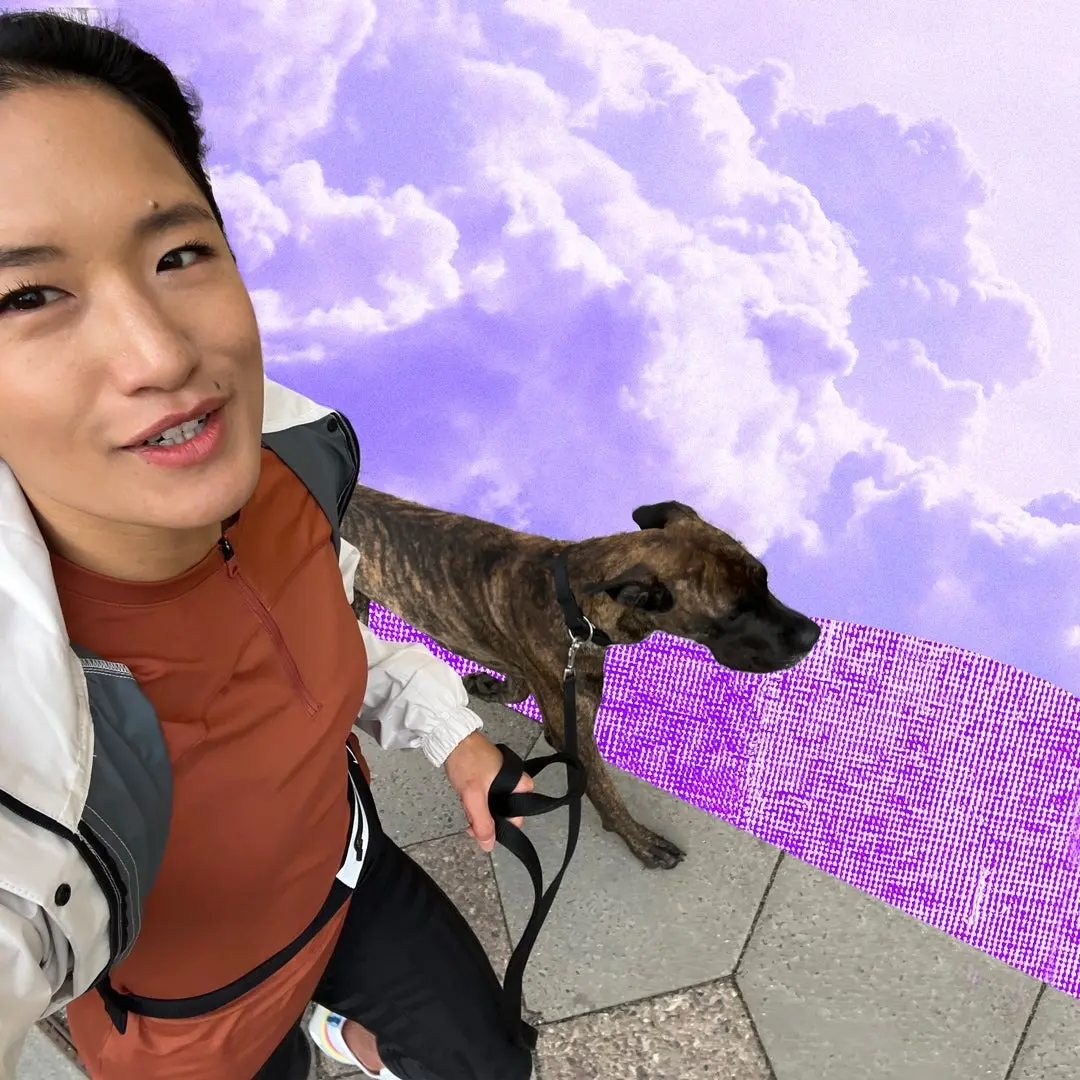
To inject spontaneity into her Monday mileage, Hong often borrows a friend’s dog, Mia. The high-energy canine serves as an organic pacing partner. In the initial kilometers, Mia pulls Hong forward; in the final stretches, Hong’s endurance outlasts the dog’s explosive energy. This dynamic transforms a solitary training obligation into an engaging, shared experience.
Tuesday: The Architecture of Longevity – Yoga, Strength, and Physical Therapy
A common pitfall among amateur runners is the illusion of mono-modal training—the belief that to become a better runner, one must only run. Hong decisively rejects this notion. Tuesday is deliberately reserved for non-running disciplines, specifically yoga, targeted strength training, and physical therapy sessions.
This holistic framework is foundational to her ability to push boundaries without breaking down. Heavy mileage places immense strain on the musculoskeletal system, particularly the knees, hips, and lower back. By incorporating strength training, Hong builds a robust structural armor that protects against common overuse injuries. Meanwhile, yoga enhances mobility and myofascial release, while regular physiotherapy addresses micro-traumas before they manifest into debilitating injuries.
Crucially, this structural foundation allows her to operate outside her comfort zone during intense running sessions later in the week, secure in the knowledge that her body can absorb the shock.
Wednesday: Active Recovery and Cultural Immersion
Balancing an international career with local friendships requires deliberate planning. As a flight attendant traversing time zones, Hong treats her days in Berlin as precious opportunities for social reintegration. Wednesday serves as an active recovery day, characterized by mental decompression rather than physical exhaustion.
Instead of hitting the gym or logging miles, Hong immerses herself in Berlin’s vibrant art scene, visiting local exhibitions and catching up with friends. This deliberate decoupling of physical training from self-worth underscores a vital psychological tenet: recovery is not merely a physical necessity for muscle tissue repair; it is an emotional and cognitive imperative that prevents burnout.
Thursday: The Crucible of Speed – Track Workouts and Gear Optimization
While comfort is a cornerstone of Hong’s philosophy, she is, at her core, a dedicated marathon training participant who embraces the crucible of high-intensity workouts. Thursday represents the structural peak of her weekly speed work.
"Some people think marathon runners tumble out of bed at 5 AM and effortlessly run 20 kilometers," Hong remarks. "Actually, I sometimes need an extra dose of motivation too."
To bridge the gap between hesitation and execution, Hong relies on material optimization. On high-intensity track days, where she tests her lactate threshold, velocity, and pace maintenance, she opts for footwear designed to mitigate physical stress. Wearing models like the Nike Invincible 3, she values the high-energy return of the "bouncy" foam sole and the reliable traction across varied urban surfaces. This equipment choice minimizes the intimidation factor of hard track sessions, allowing her to focus entirely on her personal performance metrics.
Friday: Social Decompression
Following the high-stress physiological demands of Thursday’s track session, Friday is designated for a restorative pause. Aside from a gentle, restorative yoga flow, Hong avoids strenuous activity. She continues her cultural exploration of Berlin, meeting friends for gallery visits and coffee. This phase ensures that her nervous system transitions out of the sympathetic "fight-or-flight" state induced by speed work, paving the way for the weekend’s high-mileage blocks.
Saturday: The Sensory Urban Loop – Landwehrkanal and Culinary Rewards
Saturday morning belongs to the Landwehrkanal, Hong’s quintessential Berlin running route. Navigating a changing terrain of asphalt, grass, and mud, she uses this run as a moving meditation. Sometimes she listens to investigative podcasts; other times, she runs entirely unplugged, absorbing the ambient acoustic landscape of the city and observing her fellow urbanites.
The culmination of Saturday’s run is not merely the cessation of movement, but a deliberate culinary ritual. Finishing along the Landwehrkanal, she rewards herself with a specialty coffee and a artisanal snack from a local market stall in Kreuzberg. This classical conditioning—associating endurance effort with immediate gastronomic pleasure—reinforces positive neural pathways toward running.
Sunday: Collective Endurance – The Long Run and Community Brunch
The pinnacle of Hong’s training week occurs on Sunday, anchored by her involvement with the Joy Run Collective. Long-distance running can easily become an isolating endeavor; however, plugging into a supportive running community alters the psychological landscape of endurance.
Tackling a long run through the Tiergarten during the colder months requires collective accountability and logistical preparation. Layering appropriately to combat the elements, Hong and her running collective share the physical and psychological burden of high-mileage efforts.
The post-run ritual is sacred. Following Sunday’s long haul, the group gathers for a communal brunch. For Hong, the anticipation of homemade dumplings prepared by a host serves as a powerful psychological motivator throughout the final grueling kilometers of the route.
Supporting Context & Metrics: The Evolution of Modern Running Culture
To contextualize Hong’s journey, one must examine broader socio-athletic trends sweeping through major metropolitan centers across Europe and North America. The rise of community-led running collectives—such as Berlin’s Joy Run Collective, London’s Pace hounds, and New York’s BridgeRunners—signals a departure from the solitary, hyper-competitive running clubs of the late 20th century.
The Rise of the "Comfort-First" Endurance Athlete
Historically, running culture was dictated by an ethos of suffering. The psychological barrier to entry was high: prospective runners believed they needed to endure shin splints, uninspiring diets, and agonizing early-morning sessions to earn the title of "athlete."
Today, data from running analytics platforms and footwear manufacturers indicates a massive influx of casual participants who have transitioned into consistent endurance athletes. This demographic shift is heavily driven by:
- Technological Advancement in Footwear: High-stack, cushioned footwear (such as max-cushion daily trainers and carbon-plated racers) has drastically reduced the barrier of entry by absorbing impact forces and decreasing recovery times.
- Audio and Media Integration: The ubiquity of immersive podcasts, curated motivational playlists, and running-specific social networks has turned training hours into valuable leisure time.
- Holistic Wellness Integration: Modern runners view strength training, mobility work, and mental health maintenance not as secondary chores, but as core pillars of athletic performance.
Quantifying Hong’s Transformation
| Metric / Attribute | Past Self (Pre-Running Era) | Current Self (Marathon Training Block) |
|---|---|---|
| Self-Identification | Non-Runner | Veteran Marathoner (Training for #7) |
| Age Milestone | Late 20s | Age 30+ (Reporting superior health/fitness) |
| Training Modalities | Sedentary / Irregular Activity | Running, Yoga, Strength, Physiotherapy |
| Motivational Strategy | External Pressure / Guilt | Playlists, Singing, Canine Pacing, Community |
| Recovery Paradigm | Passive Rest | Active Recovery, Cultural Outings, Nutrition |
As the metrics indicate, Hong has inverted the traditional paradigm: by prioritizing comfort, psychological enjoyment, and structural support, she has unlocked a higher tier of physiological performance than she experienced in her twenties.
Official Statements and Expert Perspectives
The philosophy of balancing high-endurance output with psychological comfort and recovery is increasingly validated by sports scientists, physical therapists, and culture critics alike.
Dr. Aris Thorne, a leading sports psychologist specializing in endurance athletics, notes the profound shift in how modern athletes process motivation:
"For decades, we relied on extrinsic pressures and stoic endurance models to drive athletes. What we see in athletes like Hong is the successful deployment of intrinsic, pleasure-based reinforcement. By integrating sensory rewards—music, culinary treats, social brunching—the brain stops registering the marathon training block as an act of self-punishment. Instead, it reconfigures the effort as an act of self-care and play. This dramatically increases long-term adherence and significantly lowers rates of athletic burnout."
Furthermore, elite footwear designers emphasize that gear innovation has played a pivotal role in democratizing long-distance running:
"The introduction of high-energy-return foams and geometrically optimized midsoles has changed the conversation," explains Elena Rostova, senior product developer at a major athletic footwear brand. "We no longer design shoes purely to withstand the punishment of the road. We design them to actively enhance the runner’s experience, providing a bouncy, protective platform that reduces cumulative fatigue. When a runner feels physically secure and comfortable in their shoes, their psychological bandwidth opens up to enjoy the process."
Hong herself distills her philosophy into a powerful concluding manifesto for aspiring runners:
"I started running four years ago. At 30, I am healthier and fitter than I ever was in my twenties. But running is so much more than physical training. I have gained a tremendous amount of self-confidence as a runner because I now know how hard I can push myself, even when I’m feeling a bit low. I’ve learned that consistency and comfort do not have to be mutually exclusive. I can set new limits for myself while still feeling completely comfortable in my skin. Next stop: my seventh marathon."
Future Outlook: The Next Frontier of Urban Endurance
Looking ahead, the intersection of lifestyle, community, and high-performance endurance is poised to redefine the sporting landscape. As urban centers become increasingly dense, running collectives serve as vital social infrastructure, combating urban isolation while fostering athletic excellence.
The democratization of marathon running—exemplified by athletes who refuse to sacrifice their social lives, professional ambitions, or mental well-being on the altar of athletic austerity—suggests a vibrant future for the sport. The traditional gatekeepers of endurance are giving way to inclusive, community-driven movements where a pair of high-cushion shoes, a well-curated techno playlist, and a post-run bowl of homemade dumplings are just as important to the training ledger as VO2 max intervals and strict dietary tracking.
For Hong, the immediate horizon is clear: race day preparation for her seventh marathon. Yet, the true victory lies not in the crossing of the finish line, but in the sustainable, joyful, and deeply human lifestyle she has built along the way.
Hong’s 3 Golden Rules for Maximum Running Enjoyment:
- Prioritize Footwear Comfort: Invest in reliable, high-tech running shoes (such as models with responsive, bouncy soles) that protect your joints and provide stability across diverse urban terrains.
- Curate Your Sonic Environment: Utilize dynamic, high-energy playlists (spanning disco, house, and techno) or engaging podcasts to transform monotonous miles into an immersive sensory experience.
- Design a Holistic Reward System: Pair scenic, exploratory running routes with intentional post-run rituals, whether that involves a specialty coffee, a local market snack, or a communal weekend brunch with your running collective.