Executive Overview
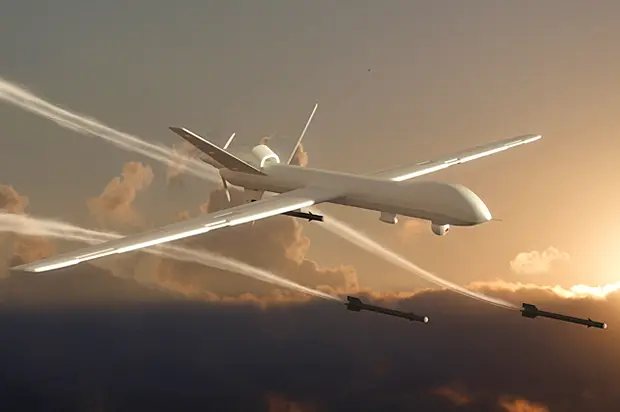
Over the past sixteen years, the architecture of the United States’ global counterterrorism operations has undergone a radical transformation. Moving away from massive, boots-on-the-ground troop deployments, the U.S. military increasingly relies on Unmanned Aerial Vehicles (UAVs)—commonly known as drones. Marketed to the public as the pinnacle of clinical, surgical precision, these remote-controlled systems project an image of a sanitized conflict where high-value targets are neutralized with minimal risk to American lives and zero collateral damage.
However, a landmark report titled “Drone, Inc.: Marketing the Illusion of Precision Killing,” authored by award-winning investigative journalist and CorpWatch Executive Director Pratap Chatterjee, strips away this high-tech gloss. The report exposes a sobering reality: far from being an infallible weapon of absolute precision, the modern drone is merely a precarious assembly of flawed sensors, cameras, radar systems, and algorithms.
When these technological components fail—as they frequently do—decisions with lethal consequences default to human operators working under conditions of extreme cognitive bias and incomplete information. The resulting human cost, disproportionately borne by civilians in nations like Pakistan, Yemen, Afghanistan, and Somalia, exposes a profound systemic failure. As former military technicians and geopolitical analysts warn, the illusion of clean, remote warfare does not eliminate violence; rather, it sanitizes its presentation while fueling the very cycles of radicalization and blowback it seeks to prevent.
Detailed Chronology: The Evolution and Exposure of the Drone Program
The Illusion Takes Root (2001–2015)
Following the September 11 attacks, the utilization of UAVs transitioned rapidly from an experimental reconnaissance platform to an active assassination and strike weapon. Throughout successive administrations, the executive branch leaned heavily on drones to project power into sovereign nations without formally declaring war.
The public narrative surrounding these weapons emphasized "signature strikes" and targeted killings directed by operators sitting thousands of miles away in comfortable command centers. The prevailing narrative suggested that high-definition video feeds and advanced thermal optics afforded operators an omniscient view of the battlefield, ensuring that only verified combatants were targeted.
The Catalyst of Failure: The 2015 Pakistan Strike
The true fragility of this technological premise was brutally laid bare in January 2015, during a CIA-administered drone strike in the tribal regions of Pakistan near the Afghan border. The operation targeted a compound suspected of housing four al-Qaeda militants. Despite more than 400 hours of persistent surveillance prior to the strike, the intelligence apparatus failed to detect two civilian hostages held inside the building: Warren Weinstein, an American aid worker, and Giovanni Lo Porto, an Italian aid worker.
When the strike was authorized, the missiles obliterated the compound, killing all six occupants. The subsequent investigations revealed a staggering cascading failure of technology. The primary video feed failed to pick up the presence of the hostages, and the backup thermal-imaging equipment—supposedly capable of tracking human heat signatures—simultaneously failed to distinguish the captives from the suspected militants. This high-profile catastrophe pierced the carefully cultivated myth of technological infallibility, prompting reluctant admissions from the Obama administration regarding civilian casualties.
Leaks and Whistleblower Disclosures (2015–2017)
Public understanding of the drone campaign’s systemic flaws expanded dramatically thanks to institutional whistleblowers and investigative reporting. In 2015, investigative journalist Jeremy Scahill published The Drone Papers via The Intercept, leaking internal military documents that exposed critical technical shortfalls, deeply flawed intelligence-gathering methodologies, and administrative apathy toward soaring civilian death tolls in Afghanistan, Somalia, and Yemen.
Concurrently, former military personnel began breaking their silence. Lisa Ling, a former Distributed Common Ground System (DCGS) technician who served within the intelligence architecture of the drone program, stepped forward. Featured prominently in Sonia Kennebeck’s critically acclaimed documentary National Bird, Ling and other whistleblowers revealed the immense psychological toll placed on young operators and underscored how technological limitations, combined with a profound cultural disconnect, consistently led to erroneous lethal targeting decisions.
Supporting Context & Metrics: The Anatomy of Technological Failure
To understand why drone warfare so frequently results in civilian casualties, one must examine the mechanics of the technology itself. As Pratap Chatterjee explained in interviews surrounding his report, a drone is not a singular, autonomous weapon of intellect; it is merely an aggregate of disparate electronic sensors.
[Target Area / Ground Level]
       │ (Body Heat, Thermal Shadows, Foliage, Basements)
       ▼
[UAV Sensors at 10,000+ Feet]
       │ (FLIR Heat Sensors, Radar, Phone Trackers, Optical Cameras)
       ▼
[Data Transmission Pipeline]
       │ (Vulnerable to lag, algorithmic distortion, and blind spots)
       ▼
[Human Operator / 18–24 Years Old]
       │ (Subject to Confirmation Bias, Cultural Disconnect, Command Pressure)
       ▼
[Lethal Decision / Strike Execution]
The Fallibility of Sensors and Optics
Drones like the MQ-1 Predator and MQ-9 Reaper rely heavily on Forward-Looking Infrared (FLIR) sensors to track thermal radiation. However, these systems possess severe, inherent physical limitations:
- Resolution and Distinction: FLIR sensors are notoriously poor at distinguishing one human being from another, particularly when viewed from an altitude of 10,000 feet.
- Environmental Interference: Thermal sensors cannot penetrate solid barriers such as heavy foliage, dense forest canopies, concrete walls, underground bunkers, or basements.
- Thermal Disruption: On hot days, or within densely populated urban environments saturated with competing thermal outputs (such as vehicle engines, air conditioning units, and industrial machinery), the sensors are easily thrown off. Even a simple, well-placed blanket can successfully dissipate human body heat, rendering a target invisible to infrared detection.
The Algorithmic Trap and Confirmation Bias
Because physical sensors frequently provide degraded or ambiguous data, operators must rely heavily on software driven by complex algorithms. These systems attempt to interpret fragmented data streams to predict human behavior and identity.
When sensors fail to provide clear imagery, human psychological vulnerabilities inevitably take over. Operators and commanders working with incomplete data fall prey to confirmation bias. If an intelligence analyst suspects a gathering of individuals belongs to a hostile network, ambiguous movements or innocent gatherings are routinely reinterpreted to fit that pre-existing hypothesis.
Official Statements and Insider Perspectives
The institutional inertia driving the expansion of drone warfare relies heavily on a veil of classification and political expediency. Insiders and investigators have repeatedly criticized the lack of transparency across multiple presidential administrations.
Reflecting on the transition from the Obama administration to the Trump administration, former drone technician Lisa Ling noted a stark deterioration in accountability:
"There’s no way that there can be serious oversight, that there can be any significant changes made to a program that’s going to be primarily run by a clandestine agency… First of all, there’s no way to really know who’s going to live and who’s going to die, and there’s no equivalency of force."
Ling also highlighted the impossible cultural burdens placed on young service members—typically between the ages of 18 and 24—who are tasked with making life-or-death determinations based on two-dimensional video feeds from societies and cultures they have never lived within or understood:
"We’re asking young people… to recognize something in cultures that anybody from the outside really can’t understand fully from the ground, let alone a two-dimensional screen. How can it not be problematic?"
Furthermore, Chatterjee emphasizes that the entire paradigm represents an unexamined, large-scale experiment conducted on populations in countries like Pakistan and Yemen:
"What is the technology? Was it evaluated? Does it work? How much evaluation have we done of the failures? Because clearly there have been failures; the Obama administration admitted it."
Rather than mitigating conflict, the widespread deployment of remote-controlled kinetic strikes appears to generate the very threat it aims to eradicate. Citing historical public records, an FBI intelligence assessment from 2011 concluded with "high confidence" that a broadening U.S. military presence overseas and aggressive remote strikes directly correlated with an 11 percent increase in Islamist-inspired attack plots globally. As Ling starkly summarizes: "This is terror, and we’re seeing the blowback."
Future Outlook: Accountability and the Path Forward
The enduring appeal of drone warfare for policymakers lies in its political expediency. It allows governments to project an illusion of decisive action while shielding domestic electorates from the human costs of war. In the Western world, citizens maintain the supreme privilege of engaging with these distant conflicts through keyboards and television screens—with the absolute luxury of simply changing the channel when uncomfortable realities surface.
However, as Drone, Inc. and the testimonies of military whistleblowers demonstrate, this willful blindness carries a catastrophic moral and strategic cost. If the success of a counterterrorism campaign is measured purely by the raw body count of suspected targets neutralized, the United States’ UAV program has proven efficient. But if success is measured by the stabilization of regions, the containment of extremism, and the long-term security of the international community, the drone program represents a systemic failure.
To break this cycle, comprehensive reform requires:
- Unprecedented Transparency: Dismantling the clandestine barriers that shield drone programs from rigorous congressional oversight and independent judicial review.
- Technological Realism: Recognizing the profound physical and optical limitations of UAV sensors rather than marketing them as infallible instruments of surgical precision.
- Public Engagement: Fostering a robust, unvarnished public discourse that weighs the ethical, legal, and humanitarian fallout of perpetual remote warfare.
Until policymakers and the public confront the grim realities hidden beneath the pixelated optics of drone warfare, automated targeted killings will remain a self-perpetuating engine of destruction—ensuring that innocent lives continue to pay the ultimate price for an illusion of absolute precision.