Executive Overview
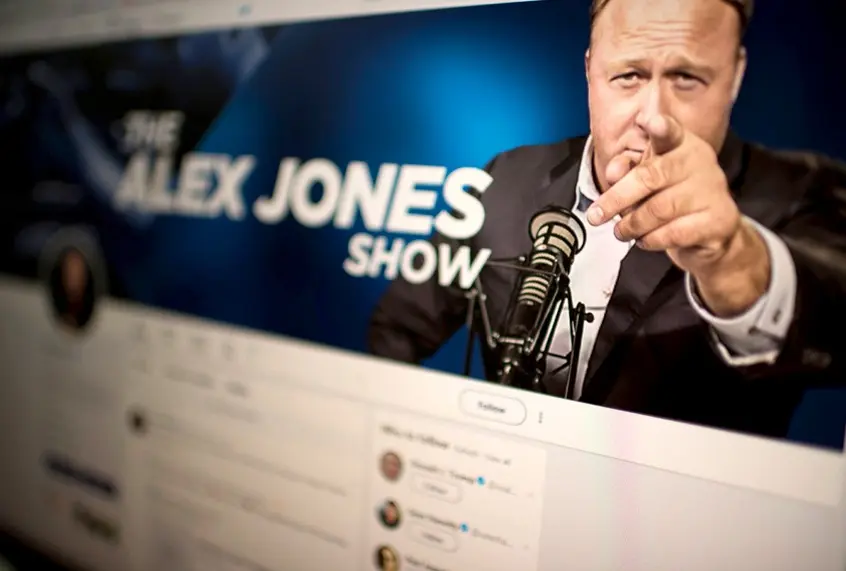
In a watershed moment for content moderation in the digital age, Twitter executed a sharp policy reversal in August 2018 by imposing a seven-day suspension on far-right conspiracy theorist and Infowars founder Alex Jones. The decision marked a significant departure from the platform’s earlier, staunchly defended hands-off approach to Jones’s inflammatory rhetoric. For months, Twitter had resisted mounting public and political pressure to ban the controversial broadcaster, arguing that his posts—while deeply divisive and often offensive—did not explicitly violate the company’s terms of service.
However, a breaking point was reached when Jones used his personal account to urge his supporters to ready "battle rifles" against mainstream media organizations and other perceived adversaries. This direct call to arms crossed a definitive red line, breaching Twitter’s core policies against inciting violence. The move placed Twitter at the center of an intense national debate regarding free speech, corporate responsibility, and the immense power wielded by a handful of Silicon Valley executives.
This in-depth report examines the sequence of events leading up to Twitter’s disciplinary action, the rationale provided by CEO Jack Dorsey, the broader industry-wide crackdown that isolated Infowars, and the long-term implications for digital platform governance.
Detailed Chronology: From Resistance to Reversal
The Mounting Pressure
Throughout mid-2018, Silicon Valley faced an unprecedented wave of scrutiny regarding the amplification of misinformation, hate speech, and conspiracy theories. While platforms like Facebook, Apple, Spotify, and YouTube moved swiftly to ban or restrict Alex Jones and Infowars content for violating hate speech guidelines, Twitter initially stood apart.
Platform executives, including CEO Jack Dorsey, maintained that maintaining an open network meant tolerating speech that was disagreeable or factually dubious, provided it fell short of direct incitement, harassment, or threats. Dorsey frequently articulated a philosophy rooted in open dialogue, asserting that premature censorship could lead down a slippery slope of subjective enforcement driven by political whims or public outcry.
The Catalyst: The "Battle Rifles" Tweet
The defensive posture crumbled on Tuesday, August 14, 2018. Following a contentious encounter with journalists outside a congressional hearing, Alex Jones posted a video to Twitter and encouraged his followers to get their "battle rifles" ready against various opponents, specifically targeting the mainstream media.
This statement triggered an immediate red flag within Twitter’s trust and safety operations. The post violated explicit guidelines prohibiting individuals or organizations from using or promoting violence against civilians to advance their political, ideological, or social causes. Consequently, Twitter locked two accounts maintained by Jones and Infowars in a seven-day "timeout," effectively stripping him of his posting privileges for a week.
The Immediate Aftermath and Dorsey’s Clarification
As news of the suspension rippled across the media landscape, Twitter CEO Jack Dorsey defended the action in an exclusive interview with NBC News anchor Lester Holt. Dorsey emphasized that the penalty was designed to prompt reflection and alter behavior, aligning with standardized enforcement protocols rather than reactionary impulse.
However, recognizing potential ambiguity in his televised remarks, Dorsey took to Twitter later that day to clarify his stance:
"To clarify: I was speaking broadly about our range of enforcement actions, when asked why we timeout functionality on Twitter. I don’t assume everyone will change their actions. Enforcement gets tougher with further reported violations."
Supporting Context & Metrics: The Anatomy of Infowars’ Digital Exile
To fully understand the gravity of Twitter’s seven-day suspension, one must examine the broader digital ecosystem surrounding Alex Jones at the time. By August 2018, a coordinated industry-wide exclusion had effectively dismantled the infrastructure that allowed Infowars to broadcast its messaging to tens of millions of people globally.
Industry-Wide Deplatforming (August 2018)
- Apple: Removed the vast majority of The Alex Jones Show podcasts from iTunes and the Apple Podcasts directory, citing rules against hate speech.
- Facebook: Took down four primary pages associated with Jones and Infowars, citing violations of community standards regarding hate speech and glorifying violence.
- Spotify: Removed multiple episodes of Jones’s podcasts for violating policies prohibiting content that incites hatred or violence against groups.
- YouTube (Google): Terminated the primary Infowars channel—which boasted over 2.4 million subscribers—alongside several secondary channels, pointing to repeated violations of harassment and hate speech policies.
- Pinterest: Erased boards and accounts linked to Jones for spreading hate speech and false information.
A Legacy of Deception and Legal Fallout
The crackdown by tech giants did not occur in a vacuum; it was catalyzed by years of escalating falsehoods peddled by Jones. As noted by civil rights advocates and digital media researchers, Jones’s career was built upon a foundation of damaging hoaxes:
- 9/11 Truther Conspiracies: Promoting theories claiming the September 11 terrorist attacks were orchestrated or permitted by the U.S. government.
- Targeted Harassment: Directing false accusations of pedophilia toward various public figures, including special counsel Robert Mueller and tech executives like Mark Zuckerberg.
- Sandy Hook Denial: Repeatedly claiming that the massacre at Sandy Hook Elementary School was a hoax staged by "crisis actors" and that grieving parents were complicit actors.
The Sandy Hook denial campaigns proved particularly catastrophic for Jones. Defamation lawsuits filed by multiple victims’ families in Texas and Connecticut exposed Infowars to tens of millions of dollars in potential liabilities, forcing the enterprise onto the defensive both legally and financially.
Official Statements and Leadership Perspectives
The debate surrounding Alex Jones brought executive decision-making into sharp focus. The tension between absolute free expression and corporate duty to public safety defined the discourse among tech leaders.
Jack Dorsey’s Rationale
During his interview with Lester Holt, Dorsey laid bare the philosophical tightrope Twitter attempted to walk:
"We can’t build a service that is subjective just to the whims of what we personally believe… I feel any suspension, whether it be a permanent or a temporary one, makes someone think about their actions and their behaviors."
When pressed on whether a weeklong timeout would genuinely reform a seasoned conspiracy theorist, Dorsey remained pragmatic and noncommittal:
"Whether it works within this case to change some of those behaviors and change some of those actions, I don’t know. But this is consistent with how we enforce."
Critics and Civil Rights Advocates
Digital rights watchdogs and media accountability groups, such as Media Matters for America, argued that tech platforms delayed action for far too long, allowing harassment campaigns to flourish under the banner of free speech protections. Analysts pointed out that platforms like Twitter derived substantial user engagement—and consequently, advertising revenue—from the controversy generated by high-profile rabble-rousers like Jones, creating a perverse financial incentive for lax moderation.
Future Outlook: The Precedent Set by the 2018 Suspension
The decision to temporarily suspend Alex Jones in August 2018 served as a crucial stepping stone toward more aggressive content moderation across the digital landscape. While a seven-day suspension was viewed by critics as a mere slap on the wrist for a chronic rule-breaker, it established an essential institutional precedent: no user, regardless of follower count or media notoriety, was entirely immune to enforcement actions if they explicitly threatened violence.
Furthermore, the episode exposed the limitations of traditional "timeouts" in dealing with bad actors who command cross-platform syndication networks. Even as major streaming and social media giants locked him out of their primary domains, Jones retained alternative avenues for broadcasting, including Periscope (owned by Twitter) and independent video-hosting websites.
Ultimately, the Twitter suspension of Alex Jones marked the beginning of a new era in platform governance—one where tech companies were forced to abandon the myth of pure neutrality and actively grapple with the real-world harms generated by digital misinformation and incitement. The repercussions of this policy evolution continue to shape the contours of online discourse, legal accountability, and the ongoing struggle to balance free expression with public safety in the modern digital age.