Executive Overview
Electronic music, by its very design, has always kept its gaze fixed firmly on the horizon. Whether it is the relentless cultural rush to define an emerging sub-genre, the breathless adoption of pioneering hardware and software, or the frantic hype surrounding the newest subterranean club space on the international circuit, club culture is fundamentally preoccupied with what comes next. Yet, as cultural historians and veteran selectors frequently note, the scene’s most profound evolutionary leaps are rarely born in a vacuum; they are tethered to the past, drawing deeply from the foundational blueprints laid down decades prior.
Few institutions understand this symbiotic exchange between heritage and innovation quite like Amsterdam’s Dekmantel Festival. Since its inception in 2013, the event has deliberately carved out a unique space within the global festival landscape. By pairing iconic, generation-defining architects of electronic music with the vanguard of contemporary talent pushing the sonic envelope forward, Dekmantel has avoided the trap of becoming a pure nostalgia act or an ungrounded trend-chaser.
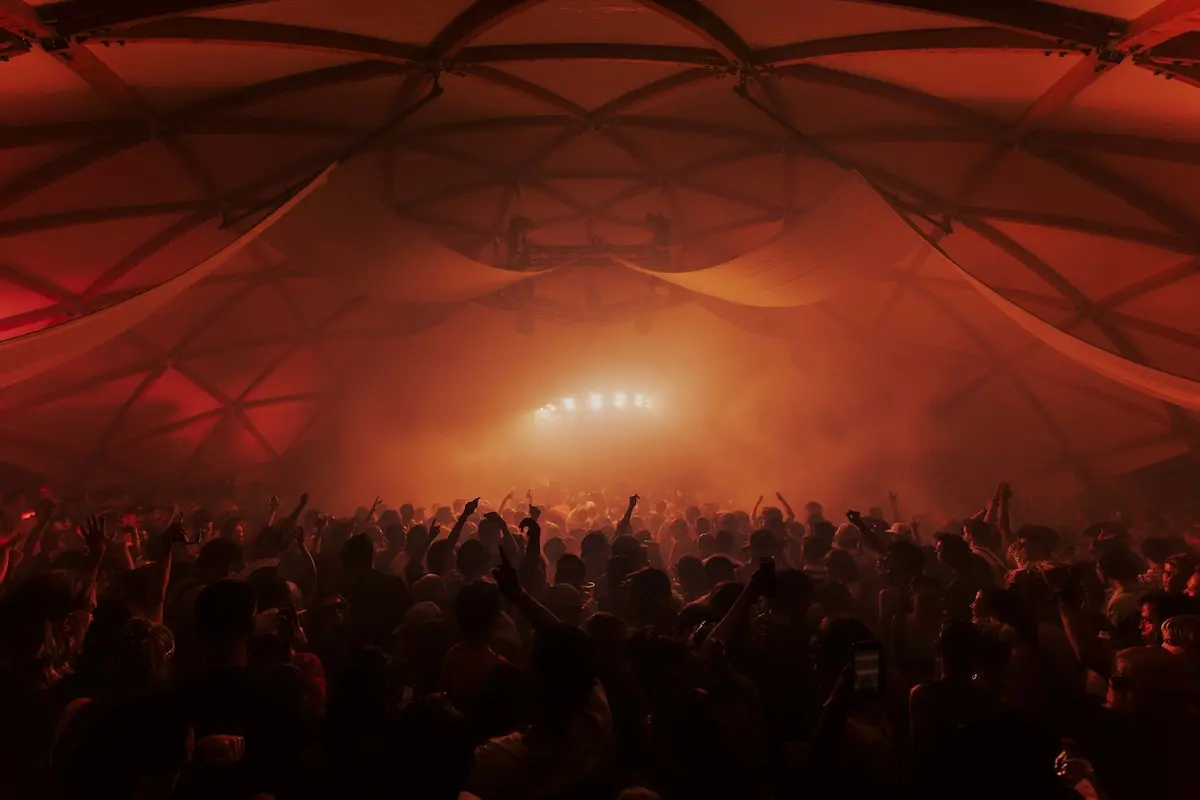
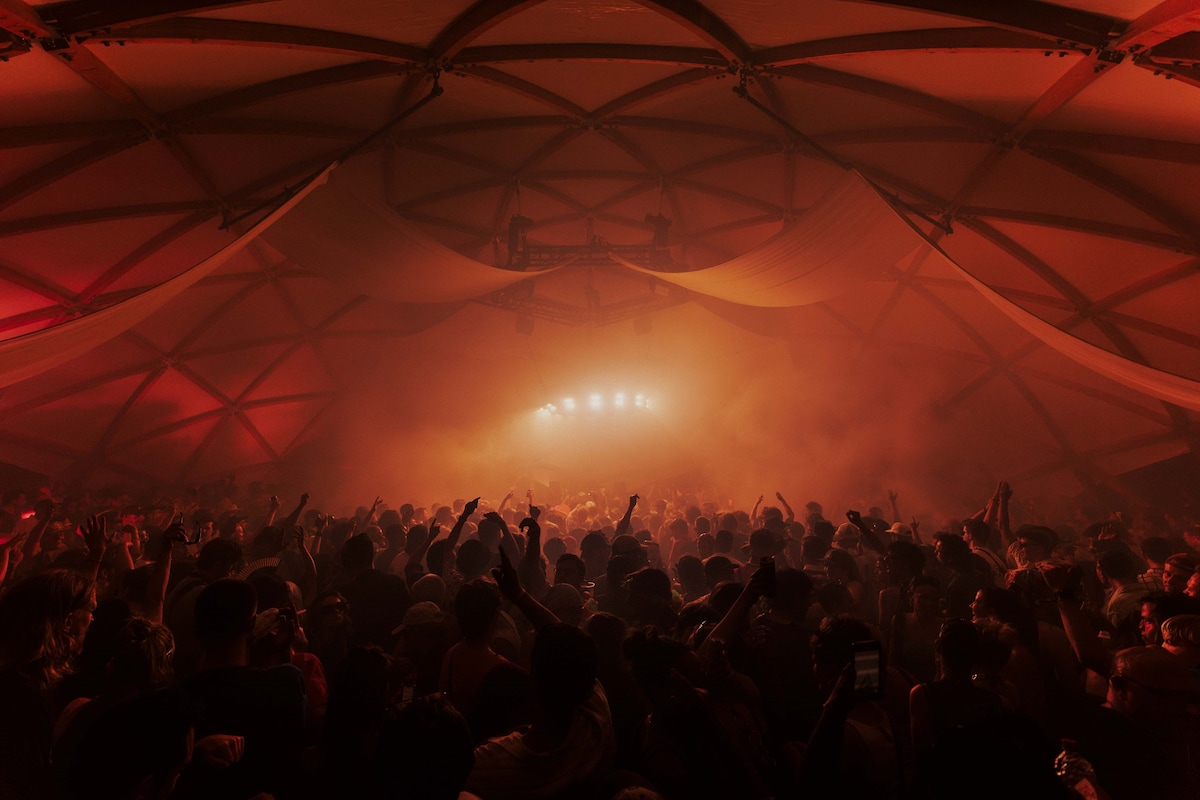
This ethos was on full display during the festival’s 12th landmark edition, which transformed the sprawling, forested expanse of the Amsterdamse Bos into a vibrant, three-day sanctuary for rhythm and sound. Featuring a meticulously curated line-up spanning seismic names like Skrillex, DJ Sprinkles, and upsammy, the festival once again proved that electronic music is not a monolith, but a continuous, living lineage.
To explore this dynamic further, we stepped back and let the artists themselves take the microphone. By pairing Detroit techno royalty Carl Craig with British experimentalist Actress, Berlin hypnotic techno veteran Efdemin with Munich’s genre-fluid artist Polygonia, and Chicago rave pioneer Eris Drew with cross-continental selector CCL, we orchestrated a series of rare, intergenerational dialogues. The result is a profound cross-examination of how dance music survives, evolves, and maintains its vital human spirit across generations.
Detailed Chronology: The Evolution of Dekmantel and Intergenerational Exchange
The Genesis of a Modern Institution (2013–2018)
When Dekmantel launched its flagship festival in the Amsterdamse Bos in 2013, the European festival circuit was saturated with commercial EDM expansion and homogenous line-ups. Dekmantel positioned itself as an antidote—an uncompromising celebration of underground electronic music curated with genuine reverence for its history. From its earliest days, the festival made a conscious curatorial choice: book the originators alongside the contemporary innovators they directly inspired.
During these formative years, the festival established a reputation not just as a party, but as an educational cultural touchstone. Younger producers who grew up listening to records from the late 80s and 90s suddenly found themselves sharing stages with the very artists whose tracks formed the bedrocks of their record bags. This proximity fostered an unspoken mentorship network, bridging the geographical and chronological divides that often plague electronic music scenes.
The Pandemic Pivot and Structural Maturation (2019–2023)
As the global landscape shifted dramatically through the early 2020s, Dekmantel used periods of operational pause to re-evaluate its role in the global community. Rather than simply returning to business as usual, the festival doubled down on its commitment to platforming diverse, non-linear sounds and narratives.
By its 10th and 11th editions, the festival had expanded its ideological footprint. It was no longer just about showcasing legendary status; it was about interrogating how music travels through time. The inclusion of academic-leaning ambient stages, immersive sound installations, and unhurried extended back-to-back sets created an environment uniquely suited for deep intellectual and artistic exchange.
The 12th Edition and the Dialogue of Eras (Current Era)
The 12th edition of Dekmantel in the Amsterdamse Bos served as a physical manifestation of this generational continuum. Across multiple stages, festival-goers witnessed a living history of club culture. Mainstream boundary-pushers like Skrillex shared an ecosystem with radical underground thinkers like DJ Sprinkles and textural voyagers like upsammy.
It was within this charged atmosphere that our intergenerational interviews took place. By stepping out of the traditional journalistic interview format and allowing the artists to interview one another, deep structural truths about the culture began to surface—revealing that the anxieties, inspirations, and spiritual motivations of electronic music artists remain remarkably consistent, regardless of the decade in which they first touched a turntable.
Supporting Context & Metrics: Voices from Across the Decades
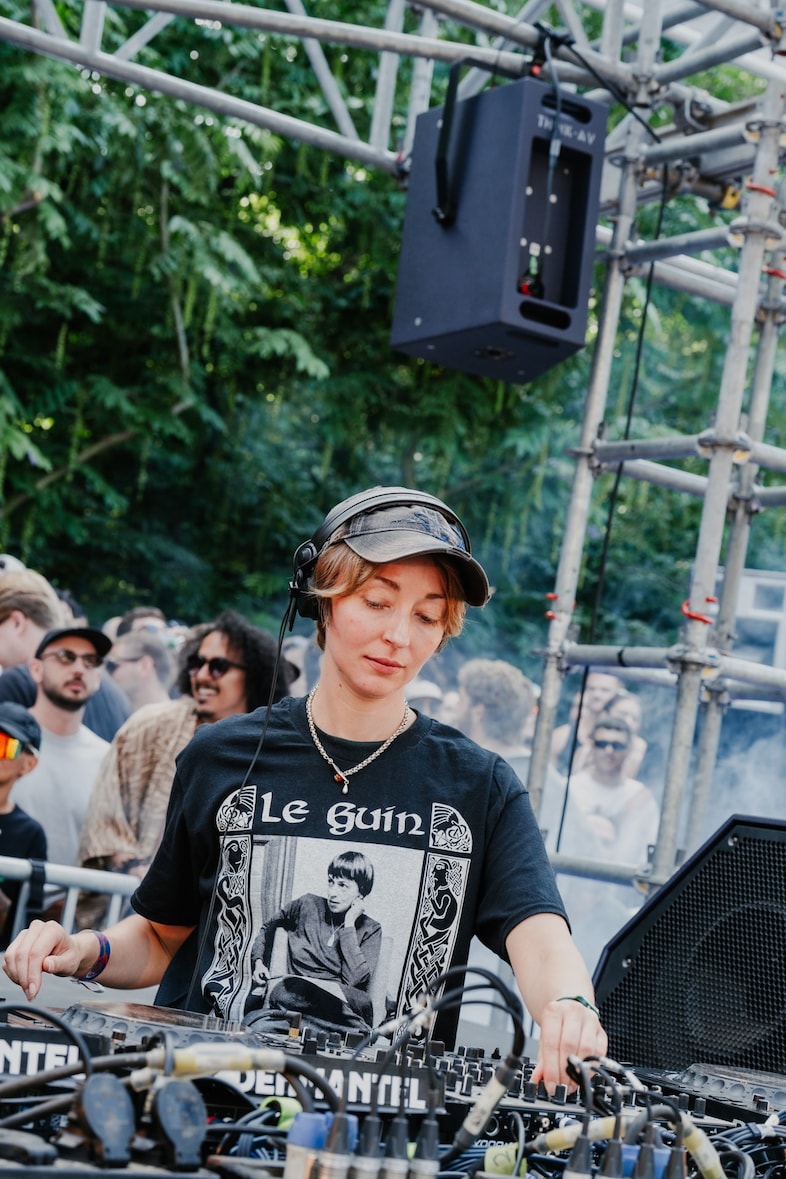
Eris Drew & CCL: The Lineage of the Floor
Chicago-based DJ and producer Eris Drew has been an indomitable force in rave culture since the early 1990s, renowned for her psychedelic mixing style and spiritual approach to the dancefloor. CCL, conversely, came up through North America’s fiercely independent DIY club scene before cementing themselves as a vital fixture of Berlin’s experimental electronic underground.
When CCL asked Eris Drew about the most intergenerational dancefloor she had ever experienced, Drew recounted a transcendent afternoon in Chicago’s Millennium Park before the passing of house music icon Frankie Knuckles.
"Dancers who had been there in the 80s showed up with their grandkids, getting down alongside the house heads of my generation and people who were completely new to the music," Drew shared. "It felt like a family picnic, but on a grand scale. Older dancers from the Warehouse were there… and they moved with an energy and dynamism that put people 40 years their junior to shame. But it never felt competitive. It felt like a reminder that this music we love is, fundamentally, dance music."
Drew’s reflections challenge the youth-obsessed narrative that often dominates modern club culture. Addressing her own longevity at age 50, she noted: "People sometimes ask me how I can still play with the physicality and intensity that I do… and I think: how could I not? That’s the power of this music. It moves through us. It compels us. I’m just a vessel for an energy that was here before me."
The mutual respect between the two selectors runs deep. When discussing mentorship, Drew revealed that CCL had fundamentally altered her trajectory: "You believed in me at a time when I had almost stopped believing in myself. Booking me for TUF till Dawn in Seattle in 2017 changed my life and set me on a path toward sharing my music with others."
In response, CCL reflected on the profound lesson learned from Drew: "I’ve learned from you… that there isn’t an expiration date on being yourself, finding your people and your sound, and that it’s a process you will continue throughout your life. I feel like there’s a lot of pressure on everyone to define themselves early on… which then leads them to live lives that aren’t truly them."
Carl Craig & Actress: Technology, Tradition, and Timelessness
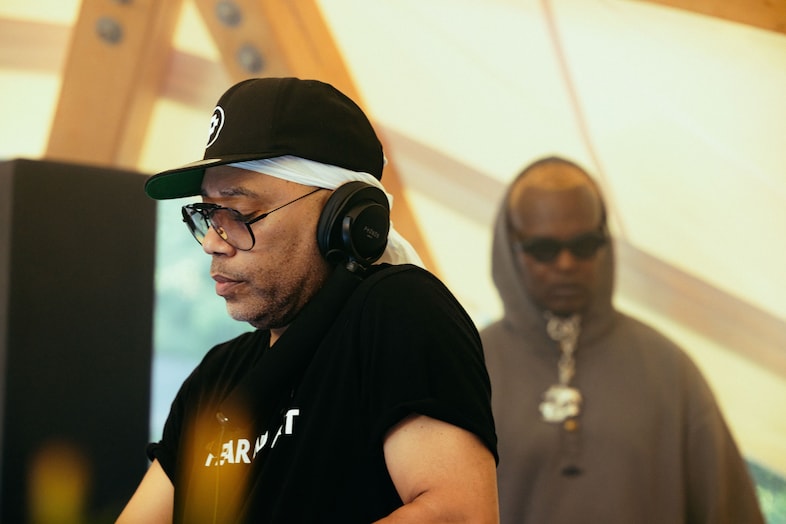
British experimental producer Actress—known for two decades of unclassifiable, cinematic club music—sat down with Detroit techno second-generation pioneer Carl Craig to discuss the breakneck speed of modern technological shifts in music production.
Actress opened the dialogue by questioning how an artist maintains their core artistic spirit amidst endless technological upgrades and shifting generational tastes. Craig’s response grounded the conversation in a broader historical framework:
"I always try to stay true to myself. Technology is young. We’ve been living in this golden age of technology that’s actually a very new evolution, so getting used to the technology and the changes of technology is just part of everyday life… As far as younger generations and how they receive the music, I always go back to the jazz greats. They’ve been able to survive musically for decades. That’s just the cycle of the entertainment industry, fashion, and everything we’re involved with."
Reflecting on his legendary 1997 work under his various monikers and his balance of mechanical precision with deep emotional resonance, Craig dismantled the very notion of genre boundaries: "There’s nothing traditional about electronic music, so the rules can be broken. You can write any rule that you want… I’ve always said that I felt ‘Papa Was a Rollin’ Stone’ is a techno record, and there’s not one electronic instrument in it. I started out as a guitar player, and there’s something inside me that wants to put emotion into whatever I do."
Efdemin & Polygonia: Interdisciplinary Cross-Pollination
Berlin-based producer and DJ Efdemin has spent decades forging hypnotic, intricate techno, while Munich’s Polygonia represents a new breed of multidisciplinary, genre-fluid artists working across sound installations and immersive club sets.
Polygonia zeroed in on Efdemin’s classical training and multidisciplinary approach, asking how his various artistic outlets influence one another. Efdemin admitted that he spent years attempting to rigorously compartmentalize his work:
"At first, I spent a long time trying to keep my different areas of work separate. Sound installations were something completely different from club music… For some time now, I’ve been relaxing more and more and watching as everything comes together. That’s reassuring, and I’m realising that the drive and the interest are one and the same, no matter whether I’m composing a piece for an ensemble or producing a club track."
Efdemin also offered a fascinating counter-intuitive perspective on musical education: "I think this musical background is both a blessing and a curse. I often hear tracks by other producers that I could never make myself, because my knowledge of harmony tends to steer me in different directions. That’s sometimes a real shame, since a certain lack of knowledge can actually be very interesting in this context."
Official Statements & Cultural Impact
The overarching philosophy championed by platforms like Dekmantel and articulated by its roster points to a maturing electronic music ecosystem. No longer viewed as a transient youth movement destined to burn out, underground club culture is increasingly understood as an enduring art form possessing its own classical canon, historical friction, and intergenerational language.
Key takeaways from this year’s dialogues emphasize:
- The Erasure of Chronological Divides: Dancefloors function best when age, background, and era are flattened by the unifying physical compulsion of rhythm.
- Technology as a Medium, Not a Master: Veteran producers stress that while tools evolve from hardware to software, the core human impulse—storytelling, emotion, and community—remains static.
- The Value of Unlearning: Cross-pollination between formally trained veterans and instinctive, DIY-nurtured newcomers yields the most innovative sonic textures in contemporary club spaces.
Future Outlook: Looking Toward Dekmantel 2027
As the electronic music landscape continues to grapple with commercial pressures, gentrification of nightlife spaces, and the rapid acceleration of digital consumption, events that anchor themselves in genuine community and historical awareness are more vital than ever.
Dekmantel has officially announced its return for a massive multi-day convergence. Dekmantel Festival will take place from July 28 to August 1, 2027, returning to its spiritual home in the lush, tree-lined amphitheaters of the Amsterdamse Bos, alongside newly integrated satellite locations scattered across the cultural heart of Amsterdam.
For a scene perpetually racing toward the next digital frontier, festivals like Dekmantel—and the profound, unfiltered conversations happening between the artists who shape them—serve as an essential reminder: to know where electronic music is going, we must continually listen to those who paved the ground beneath our feet.
Pre-registration for Dekmantel 2027 is currently open via the festival’s official channels.