Executive Overview
In the high-stakes theater of modern medicine, a single mistranslated word can mean the difference between an accurate diagnosis and a fatal mistake. As healthcare systems globally face chronic staffing shortages, towering administrative burdens, and an increasingly diverse patient demographic, physicians are turning to a quick, seemingly effortless solution sitting right in their lab coat pockets: generative artificial intelligence and machine translation apps like Google Translate and ChatGPT.
However, a growing body of clinical research, legal shifts, and frontline accounts reveals an alarming reality. While off-the-shelf AI tools promise to democratize language access and save time, they are riddled with dangerous inaccuracies, semantic misfires, and cultural blind spots. From medical instructions that inadvertently tell patients to consume harmful substances to critical medication regimens being completely reversed, unsupervised AI translation has become an open secret in hospitals—and a silent hazard.
This investigative report examines the driving forces behind the adoption of AI translation in healthcare, the structural policy shifts scaling back human language access, the alarming technical failures documented by recent medical studies, and the enduring truth that in medicine, true comprehension still relies fundamentally on human time, empathy, and expertise.
Detailed Chronology: From Tragedy to Tech and Back
The Genesis of a Naive Hope
The complex intersection of language barriers and medical error hit blood-cancer specialist Dr. Stephen Hibbs hard following a devastating clinical loss in East London. A young Albanian patient, recovering from a complex bone marrow transplant, was discharged with a strict, life-saving medication regimen designed to suppress his immune system and stave off fatal infections. Tragically, the patient stopped taking one of the essential drugs too soon and passed away before he could explain why.
He was not fluent in English. Hibbs was left haunted by a persistent, agonizing question: Would discharge instructions written in native Albanian have changed the outcome? Could this death—and countless others like it—have been prevented?
At the dawn of the smooth-talking chatbot era in the early 2020s, Hibbs experienced what he now calls a "fairly naive hope." Watching the rapid evolution of large language models (LLMs), he wondered if artificial intelligence could finally provide a scalable, off-the-shelf solution to bridge critical language gaps in clinical settings. He brought the concept to Federico M. Federici, director of University College London’s Centre for Translation Studies.
While Federici, whose field has studied machine translation since the 1950s, suspected the technology would not be as quick or easy as advertised, both men launched a formal academic investigation to see if AI translation could be trusted in high-stakes oncology care.
The Emergency Room "Bounce Back"
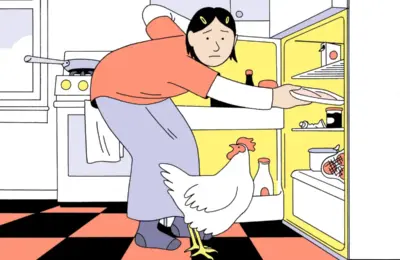
Thousands of miles away in a Denver emergency room, Dr. William Mundo was witnessing similar systemic failures. A Spanish-speaking patient arrived terrified he was suffering a heart attack, clutching discharge papers from a previous ER visit just 24 hours prior. Mundo recognized a classic "bounce back"—a phenomenon heavily documented in medical literature showing that patients with limited English proficiency (LEP) face a significantly higher risk of unplanned hospital readmissions following emergency care.
Upon inspecting the patient’s paperwork, Mundo found the root cause of the false alarm: the Spanish translation of how to distinguish expected acid reflux from actual cardiac distress was clumsy, confusing, and clearly generated by unvetted automated software.
Mundo understood why his colleagues resorted to these tools. Hospital culture thrives on pressure to "move the meat"—a cynical medical slang for moving patients quickly through beds to keep the facility operational. Professional translation services, when they are even available, demand time that overburdened clinicians feel they simply do not possess.
"I did what everybody else would do: copy, paste, throw it onto Google Translate and hope that it was somewhat accurate," Mundo admitted.
Supporting Context & Metrics: The Scale of the Crisis
The Demographic Reality and Legal Protections
The scope of the problem is immense. In the United States alone, approximately 27 million individuals possess limited English proficiency. Federal law has historically mandated that healthcare providers receiving federal funding must make medical communication meaningfully available in languages patients understand, relying on human interpreters for spoken dialogue and rigorous reviews for written materials.
Yet, a 2024 research review published in the journal Healthcare highlighted a grim disparity: patients with LEP experience a disproportionately higher rate of severe harm from medical errors and receive markedly lower-quality care.
Compounding this crisis is a severe labor shortage. The entire U.S. translation and interpretation profession numbers fewer than 74,000 individuals across all industries, according to the Bureau of Labor Statistics. Finding a certified medical interpreter in real-time within a chaotic emergency department is often logistically impossible.
Policy Shifts and the Rise of "English Only"
The vulnerability of LEP patients worsened following political and administrative shifts. Legal scholar Lynette Martins of DePaul University notes that while executive actions designating English as the official language of the United States could not unilaterally repeal healthcare translation laws, they effectively deprioritized enforcement and dismantled critical institutional support networks.
For years, the U.S. Department of Justice’s Civil Rights division maintained LEP.gov, a comprehensive resource hub offering guidance on supporting non-English speakers across more than 20 languages. Today, the site has been largely gutted, directing visitors instead to executive orders and implementation memos that explicitly champion "artificial intelligence and machine translation" as cost-effective methods to phase out "unnecessary multilingual offerings."
The AMA Sentiment and the Open Secret
Despite hospitals officially forbidding unvetted consumer AI, an American Medical Association (AMA) report revealed that 57 percent of physicians are currently using—or actively planning to use—AI translation tools.
Many doctors rationalize the practice through the lens of harm reduction: At least the patient has something to read. However, as Dr. Mundo points out, this creates an ongoing ethical dilemma. Without standardized benchmarks, hospitals evaluate translation accuracy by blindly trusting the claims of commercial software vendors—effectively letting the industry grade its own homework.
Official Statements and Empirical Findings
Academic Investigations into AI Translation Accuracy
To evaluate whether LLMs can be trusted in oncology, Hibbs and Federici teamed up for a groundbreaking study published in March 2026 in the journal Supportive Care in Cancer.
The researchers took a standard patient information booklet, Easy Read: How is Myeloma Treated?, and translated it from English into Bengali using two methods:
- The AI Version: Processed entirely via Google Translate by a non-Bengali-speaking researcher.
- The Human Version: Handled by professional translators using best practices, including dual-translator cross-checking and a third proofreader for readability.
When evaluated by blind assessors using a 100-point scale from the Chartered Institute of Linguists, the human-translated text scored a respectable 73, losing points primarily on minor stylistic clarity. The AI-generated translation scored a dismal 51.
More concerning than the numerical score were the nature of the errors.
- The phrase, "The medicine will help you to: Kill as many myeloma cells as possible," was mistranslated to instruct the patient to somehow figure out how to kill the cells themselves.
- The standard medical term for "side effects" was rendered as "harmful side."
- Crucial human-support lines, such as "We can put you in touch with another myeloma patient to talk to," morphed into bizarre gibberish: "We can contact other patients for us to talk to you."
Test subjects reviewing the AI output noted that the text was so incoherent it made them lose trust in the clinic and the medical staff entirely.
Semantic Traps and Negation Failures
Other recent studies published in BMJ Quality & Safety and BMC Health Services Research reveal systemic technical flaws built into foundational language models:
- The "Hold" Paradox: In medical jargon, a doctor might tell a patient to "hold" a medication as a temporary pause. However, in other linguistic contexts, "hold your course" implies maintaining action. An AI model translating English instructions into Russian dangerously inverted this meaning, telling a patient to actively continue a kidney medication they were supposed to suspend.
- Negation Failures: Models consistently trip over negative syntax, confusing phrases like "take with food" versus "do not take with food."
- High-Stakes Vocabulary Disasters: In pediatric emergency room trials, automated tools have mistranslated verbs regarding liquid intake in Urdu, making it sound as though a child had consumed alcohol—an error with terrifying potential consequences involving child protective services.
The Cultural Bias of Large Language Models
Beyond literal translation, a 2025 study in Nature Human Behaviour led by MIT professor Jackson G. Lu demonstrated that changing the language of a prompt fundamentally shifts an AI model’s cognitive framing. When prompted in English, models leaned toward individualistic and analytical outputs; when prompted in Chinese, they prioritized collective relationships and broad contexts.
As Lu noted, "I doubt that we could remove every cultural tendency from a model, because language and culture are deeply intertwined." This introduces profound unpredictability into medical settings where patients and physicians rely on culturally neutral, uniform clinical communication.
Future Outlook: The Indispensable Role of Human Oversight
As the medical community grapples with the proliferation of artificial intelligence, the consensus among leading clinicians and translation researchers is clear: unsupervised AI translation is fundamentally dangerous.
While human translators increasingly rely on AI as a drafting aid to manage overwhelming global demand, human oversight remains non-negotiable. Technology can accelerate the mechanical conversion of text, but only human empathy, clinical intuition, and bilingual dialogue can preserve true meaning and secure informed consent.
Reflecting on his journey from hopeful technophile to staunch skeptic, Dr. Stephen Hibbs draws a stark ethical parallel. He states that without rigorous human review, he would refuse to use an AI translation tool—even if no alternative existed. In his view, handing a patient an unverified translation that carries a high risk of lethal misinterpretation is ethically worse than providing no written text at all.
Comparing it to sending an untrained medical student to perform major surgery solo, Hibbs concludes: "In almost every case, it’d be better to avoid the surgery than to expose the patient to the risk of a botched operation."