Executive Overview
The landscape of artificial intelligence is undergoing a profound paradigm shift. For years, users have relied on conversational chatbots—such as ChatGPT and Claude—as interactive assistants. These platforms excel at brainstorming, drafting text, and answering complex queries, but they ultimately leave the heavy lifting to the human operator. The typical interaction follows a predictable pattern: the AI asks, "How can I help you?" which implicitly means, "Tell me what you want, I’ll show you what to do, but you still have to do the work."
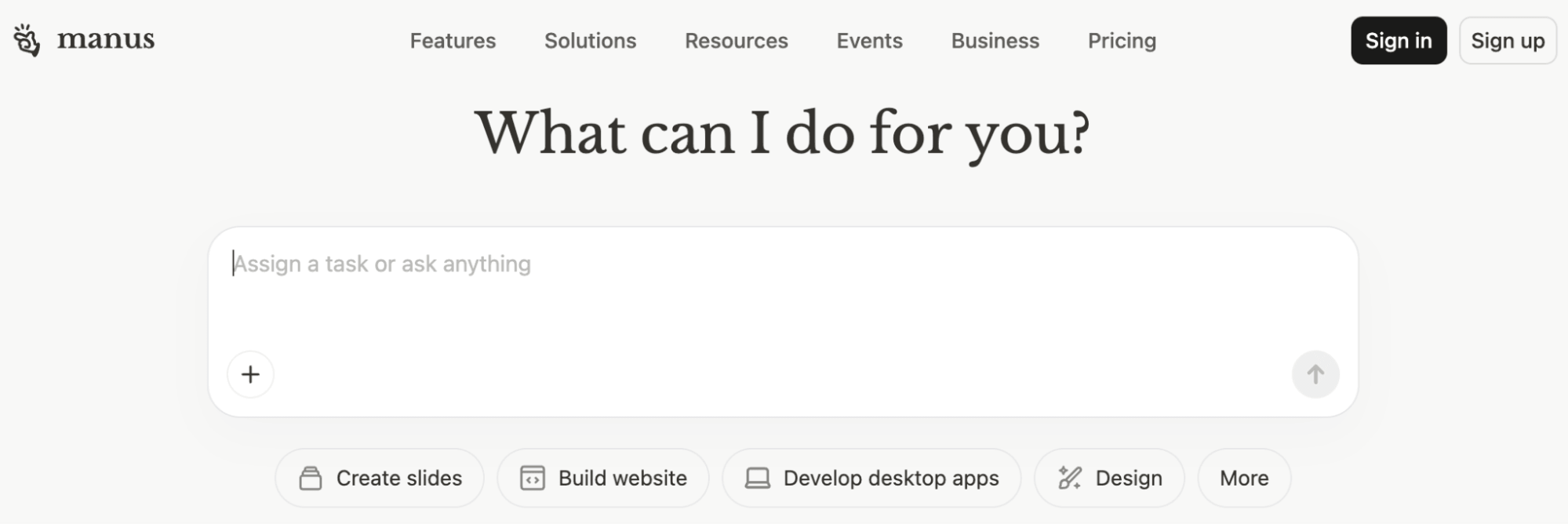
Enter Manus, an advanced agentic AI platform designed to bridge the gap between prompt generation and end-to-end execution. Co-created by marketing and communications expert Kate vanderVoort and media entrepreneur Michael Stelzner, Manus represents a fundamental evolution in software capability. Instead of asking how it can assist, Manus asks, "What can I do for you?"—and then proceeds to execute multi-step sequences independently. By interacting directly with external tools, browsing the web autonomously, and managing complex workflows without constant human intervention, Manus shifts AI from a passive brainstorming partner to an active autonomous agent.
This article explores the mechanics of Manus, detailing its subscription models, four distinct operational modes, real-world applications in proposal and training generation, prompt engineering strategies, and the transformative power of reusable agent "skills."
Detailed Chronology: How Manus Redefines Task Delegation
To truly understand the value proposition of Manus, it is necessary to examine how everyday workflows transform when shifted from standard generative AI tools to an agentic architecture.
The Evolution from Chatbots to Autonomous Agents
Standard LLMs require users to manually copy and paste data across multiple platforms. For instance, compiling a comprehensive client proposal traditionally involves using Perplexity for initial research, transferring findings into a deep research tool to gather dozens of pages of company background, structuring a discovery framework in a specialized canvas, and finally feeding a call transcript into Claude to draft the proposal. Each handoff requires human intervention, resulting in a fragmented process that can consume three to four hours per client.
Manus eliminates these administrative friction points by executing multi-step operational sequences as a single cohesive workflow. Users provide a comprehensive brief, and the agent orchestrates the entire sequence—researching, synthesizing, and formatting the final output—requiring human oversight only at critical milestones.
Exploring the Four Access Modes of Manus
To accommodate diverse organizational needs and technical requirements, Manus provides four distinct access methodologies:
- Browser-Based Access: Functioning similarly to conventional web-based AI tools, this mode allows Manus to securely log into and interact with online platforms (such as CRM systems, LinkedIn, or enterprise software suites) on behalf of the user, executing web tasks without exposing underlying login credentials.
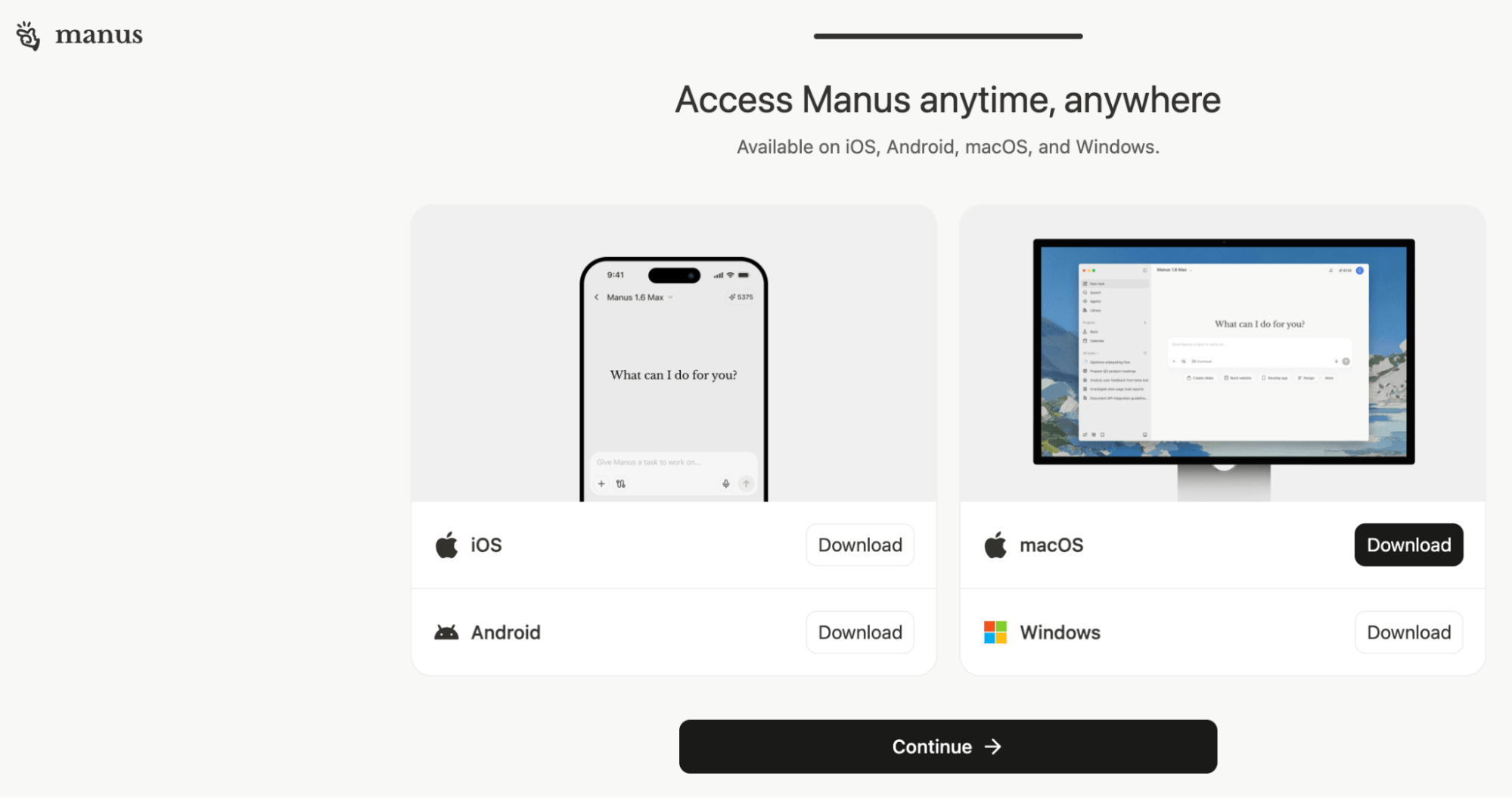
- My Computer (Desktop Application): Installed directly on a local machine, this desktop client grants the AI direct read and write access to local files and directories, mirroring advanced workspace integrations like Claude Cowork or Perplexity Computer.
- Manus Agent via Telegram: Designed for remote oversight, this integration establishes a dedicated Telegram chat channel. Users can monitor the progress of long-running desktop tasks and provide necessary inputs directly from their mobile devices while away from their workstations.
- Manus Cloud Computer: Operating as a persistent, 24/7 cloud-hosted virtual environment, this advanced tier maintains continuous databases and handles command-line interface (CLI) configurations autonomously based on natural language instructions. It serves as an around-the-clock digital operations center capable of managing continuous competitor scans, social media monitoring, and customer communication channels.
Supporting Context & Metrics: Subscription Economics and Real-World Impact
Implementing agentic workflows requires an understanding of operational costs, resource allocation, and measurable productivity gains.
Understanding the Credit-Based Model
Manus employs a flexible credit-based pricing structure designed to scale with task complexity:
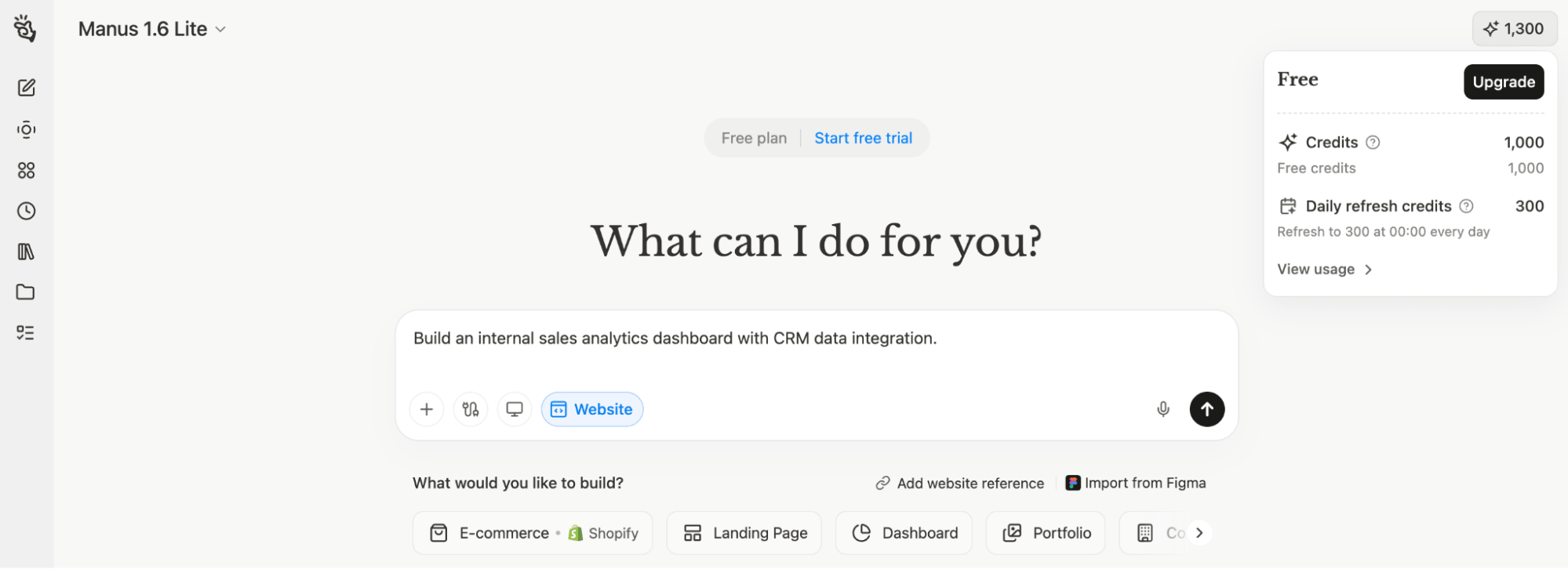
- Base Tiers: Paid subscriptions start at $20 per month for 4,000 credits, with higher tiers offering 8,000 credits ($40/month) and 40,000 credits ($200/month).
- Daily Refresh Allotment: All users—including those on free plans—receive 300 refresh credits that reset every 24 hours.
- Task Consumption: Quick queries typically consume between 5 and 10 credits. Conversely, deep autonomous workflows involving multi-site web scraping, data synthesis, and comprehensive report generation can burn 900 or more credits in a single run. Notably, unused monthly credits do not roll over to the next billing cycle.
Real-World Use Cases and Efficiency Gains
The practical efficacy of Manus is best demonstrated through enterprise deployment examples:
- Proposal Generation: Kate vanderVoort’s consulting business streamlined its client intake pipeline using Manus. What was once a multi-platform, four-hour manual ordeal was compressed into a nearly hands-free automated workflow. After an initial setup cost of roughly $15 in credits, subsequent client proposal runs cost approximately $5 in credits, saving hours of billable administrative time per engagement.
- Corporate Training Program Generation: During a workshop with a major food and beverage manufacturer, Manus was tasked with designing a comprehensive employee training program. Operating autonomously across a 42-step task list for nearly 50 minutes, the agent identified content requirements, structured a seven-module curriculum with experiential exercises, generated a 150-page training manual, and built interactive grading quizzes. The company’s internal learning and development team noted that the AI accomplished in under an hour what had stalled out after two years of manual planning—work that an external agency had previously quoted at $150,000.
Official Statements and Methodological Best Practices
Deploying an autonomous agent requires a shift in mindset. Treating Manus like a standard brainstorming chatbot results in wasted resources and inefficient credit consumption.
The Professional Briefing Methodology
When hiring a high-level consultant, professionals do not spend billable hours figuring out the scope in real time; they arrive with a fully realized brief. Manus operates under the exact same principle. Interactive real-time prompt engineering inside Manus burns valuable credits while the agent waits idly.
Experts recommend drafting and refining prompts in an external language model (such as Perplexity) before ever opening Manus. Using voice-to-text tools like Wispr Flow, users can perform a verbal brain dump and instruct the external LLM with a specific directive:
"Please write a highly optimized prompt for Manus AI agent. Do not do the task."
By explicitly commanding the model not to execute the task, the user obtains a structured, highly optimized operational brief ready for direct deployment in Manus. Furthermore, asking the intermediary LLM to ask clarifying questions before drafting the brief helps uncover hidden operational gaps.
Mastering Reusable Workflows Through "Skills"
To eliminate repetitive prompting, Manus utilizes Skills—modular packages containing descriptive metadata, step-by-step execution instructions, and foundational context files (such as brand voice documents, style guides, and successful output examples).
- Token Efficiency: Manus reads only the name and description of available skills to determine relevance, loading the full context package only when invoked.
- Creation and Customization: Users can instantly convert successful task outcomes into reusable skills with a single click, or invoke them manually using a forward slash (
/) followed by the skill name. - Business Intelligence Centers: By transforming Standard Operating Procedures (SOPs) into structured skill zip folders encompassing 14 distinct operational categories, organizations can build a centralized knowledge repository that ensures AI outputs consistently reflect institutional standards and internal logic.
Future Outlook
The introduction of agentic workflow platforms like Manus marks the transition from AI as a conversational novelty to AI as an autonomous digital workforce. As cloud computing environments become more persistent and agent architectures grow increasingly sophisticated, organizations that master prompt structuring, skill modularization, and process automation will achieve unprecedented operational efficiency.
By delegating repeatable, predictable multi-step processes to intelligent agents, professionals are liberated from administrative bottlenecks, paving the way for a future where human ingenuity is focused entirely on strategy, creativity, and high-level decision-making.