Federal investigators in the United States have uncovered a sprawling nexus of corporate cyber-consultancy, extortion syndicates, and transnational crime. At the epicenter of this probe is ShinyHunters, a notorious hacking collective that has extracted upwards of $70 million from corporate and government targets in 2026 alone.
Following a series of high-profile cyberattacks—including the brazen infiltration of the Federal Bureau of Investigation’s recruitment portal—law enforcement agencies across the globe have launched aggressive crackdowns. These efforts have yielded stunning revelations: sources close to the investigation reveal that executives at multiple Western ransomware negotiation firms maintained unusually close, illicit relationships with the extortion group. In at least one instance, a U.S.-based executive allegedly helped operate a dedicated pressure website designed to coerce victims into paying ransoms.
The widening investigation highlights deep structural vulnerabilities within the multi-billion-dollar cybersecurity incident response ecosystem. It exposes a troubling convergence of interests where certain negotiators, allegedly compromised by greed or coercion, may have crossed the line from defense to active collaboration with malicious cybercriminals.
Detailed Chronology of the Crackdown
The rapid unraveling of the ShinyHunters network represents one of the most significant law enforcement triumphs against modern cyber extortion groups since the dismantling of older criminal syndicates.
The Evolution of Leadership: From France to Jordan
Operating since 2019, ShinyHunters initially functioned under the direction of cybercriminals based in France. As European and international authorities arrested or jailed those original members one by one, operational control of the "ShinyHunters" brand transitioned. By late 2025, investigators identified the new administrative mastermind as "Rey," a teenage hacker operating out of Amman, Jordan. Under Rey’s management, the group scaled its operations, culminating in over $70 million in extorted funds through the first ten months of 2026.
The Infiltration of the FBI
The turning point for U.S. law enforcement occurred in late September 2026. ShinyHunters successfully hacked fbijobs.gov, the official FBI recruitment portal. The cybercriminals taunted federal authorities by threatening to publish sensitive employee files, including home addresses, Social Security numbers, medical records, and unit specializations.
This direct assault on federal infrastructure spurred an unprecedentedly swift counter-offensive. On October 3, Reuters reported that Rey had been detained by Jordanian authorities and was actively cooperating with the FBI.
The Arrest of Pepijn van der Stap
Rey’s ascension to leadership had been facilitated by the vacuum left following the arrest of a senior ShinyHunters member. On September 15, 2026, Dutch police executed a dramatic takedown of reformed hacker and ShinyHunters suspect Pepijn van der Stap, deploying flash-bang grenades to apprehend him while he was actively logged into his online accounts.
Crucially, authorities seized Van der Stap while he was using his Signal instant messaging account. This allowed investigators to harvest a real-time log of communications with high-frequency contacts, including ransomware negotiators based in Canada and the United States.
Sources close to the investigation indicate that these Signal chats revealed more than just data-sharing agreements; they reportedly contained evidence pointing to a thwarted murder-for-hire plot directed by Van der Stap against targets abroad, though no attacks were ultimately carried out.
The Downfall of Edward Dubrovsky
Building on the intelligence harvested from Van der Stap’s messaging history, the FBI arrested 54-year-old Canadian cybersecurity executive Edward Dubrovsky on October 9, 2026. Dubrovsky, who had recently published a book on navigating cyber extortion that advocated for engaging with hackers, was charged with threatening to disclose stolen data and interfering with interstate commerce through extortion.
Court records and investigative leaks suggest that Dubrovsky’s communications with Van der Stap showed he had advance knowledge of breaches—including the high-profile theft of FBI personnel data—yet failed to notify the bureau before the hackers went public.
Supporting Context & Metrics: The Extortion Ecosystem
The federal probe has brought to light systemic issues within the ransomware remediation market. Investigators and independent security experts are scrutinizing how certain advisory firms monetize cyberattacks.
The Anatomy of "Shinywire"
According to sources close to the ShinyHunters investigation, federal investigators believe at least one executive at a prominent U.S.-based consulting firm played an active role in operating shinywire[.]com, a now-defunct extortion portal. Active between May 3 and October 16, 2026, the site featured profiles on nearly 100 organizations breached by ShinyHunters.
Each listing pressured victims to negotiate terms, displayed samples of stolen data, and threatened public dissemination via Tor-based shaming blogs if payments were not remitted within a strict seven-day window. Among the corporate victims cataloged on the site was Intuitive Surgical, an American medical technology company breached earlier in the year via a targeted phishing campaign.
The Shadow of "Ghostbyte"
The investigation has also cast a long shadow over historical actors in the Canadian cybersecurity landscape. Former colleagues of Daniel Tobok, the former chief executive of Cypfer, revealed that years prior, ransomware purveyors referred to him by the moniker "Ghostbyte."
During a 2018 extortion incident involving the Dharma ransomware group, victims seeking guarantees of file restoration were directed by Russian-speaking affiliates to contact an email address linked to Tobok. While Tobok has not responded to multiple requests for comment, threat-intelligence mapping by Constella Intelligence tied one of Tobok’s frequent email addresses ([email protected]) to online accounts bearing the username "ghostbyte."
Furthermore, legal battles have exposed deep fractures within the executive ranks of these firms. Dubrovsky previously filed a lawsuit in Ontario against Tobok, alleging he was squeezed out of Cypfer after a bitter falling-out, while Tobok filed counterclaims alleging unfair competition and intellectual property misuse.
Conflict of Interest: Percentage-Based Ransoms
The financial mechanics of ransom negotiation have come under intense public and regulatory scrutiny. While paying ransoms to non-sanctioned groups like ShinyHunters is not strictly illegal in the United States, the fee structures utilized by certain advisory firms create severe perverse incentives.
Many incident response firms charge a flat retainer, but others operate on a percentage-based commission tied to the final ransom payout. Industry leaders argue this structure misaligns the negotiator’s goals with those of the client. As Mark Camillo, CEO of CyberAcuView, noted:
"This makes no sense if they are also the negotiator. There needs to be more transparency in the process as no one in the ecosystem should be profiting purely on the size of the ransomware transaction or payment itself."
When negotiators stand to gain financially from larger payouts, they lose the incentive to drive down settlement costs or aggressively push back against hacker demands. In extreme cases, investigators allege some actors crossed the line from negotiating on behalf of clients to conspiring directly with the threat actors.
This trend is evidenced by recent Department of Justice actions, including the October 7 indictment of MonsterCloud CEO Zohar Pinhasi for allegedly overcharging clients while secretly paying hackers behind their backs, and the July sentencing of Florida-based negotiator Angelo Martino to 70 months in prison for collaborating with the Blackcat/ALPHV syndicate.
Official Statements and Industry Fallout
The unfolding scandal has triggered defensive positioning across the cybersecurity consulting sector.
In a public statement released on October 14, Cypfer distanced itself from the ongoing legal proceedings, stating:
"We had no prior knowledge of Mr. Dubrovsky’s arrest. CYPFER has not received any outreach from law enforcement and, to our knowledge, is not the target of any law enforcement investigation."
Cypfer further clarified that its operations are entirely separate from CyberSteward Inc.—a firm linked to previous ransomware remediation work, such as the PowerSchool data breach response—and emphasized that Cypfer was recently acquired by the Apros Group, led by former FBI special agent Jason Hogg.
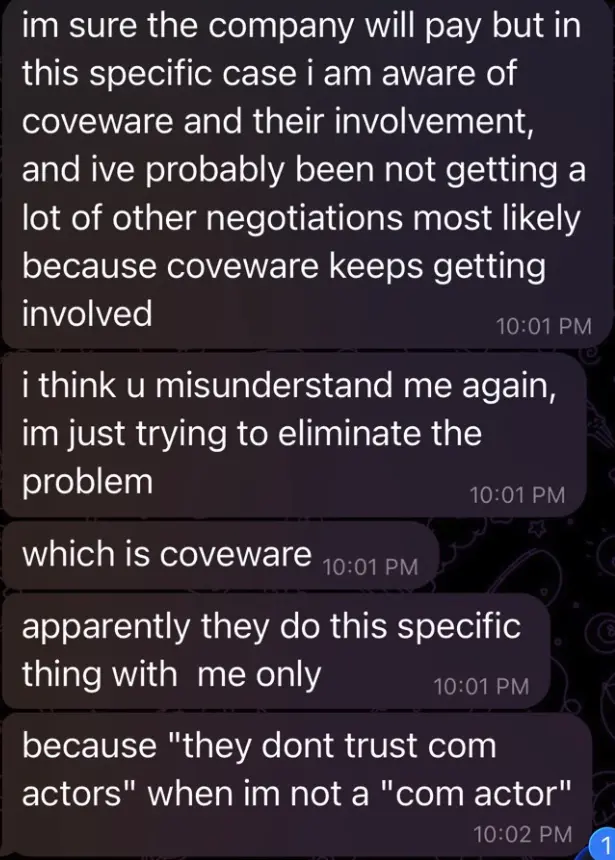
Meanwhile, frontline incident response firms that have consistently warned victims against paying ShinyHunters—such as Coveware and Unit 221B—found themselves targeted for harassment by the hackers themselves. Leaked Telegram chats from April and May 2026 revealed ShinyHunters leadership complaining bitterly that Coveware’s public advisories were tanking their extortion revenue.
"Go on my website, majority of those companies would’ve paid if it weren’t for Coveware giving them misinformation," the ShinyHunters administrator lamented in a private message, vowing to "eliminate the problem."
Future Outlook
The arrest of high-profile negotiators and the exposure of executives entangled with ShinyHunters mark a watershed moment for the cybersecurity industry.
Stricter Regulatory Oversight: Governments are expected to increase scrutiny on the unvetted, largely unregulated ransomware negotiation market. Mandatory transparency regarding fee structures, cryptocurrency flows, and negotiation tactics will likely become a legislative priority.
Erosion of Trust: Corporate boards and insurance carriers will face mounting pressure to vet incident response partners rigorously, ensuring that firms engaged for remediation do not maintain undisclosed backchannels with cybercriminal syndicates.
Decimation of Extortion Networks: With key administrative figures like "Rey" detained, foreign affiliates arrested in Europe, and corporate facilitators facing federal indictments, the infrastructure supporting groups like ShinyHunters is suffering unprecedented strain.
However, security analysts warn that the underlying economic incentives of ransomware remain intact. Until the international community can effectively disrupt the illicit cryptocurrency channels and enforce unified legal standards against extortion payouts, opportunistic actors will continue to find new ways to exploit the corporate vulnerability market.