Executive Overview
In the mid-2010s, the intersection of technology, finance, and media birthed a cultural phenomenon defined by boundless optimism. Smartphones were reshaping global infrastructure, electric vehicles were redefining heavy industry, and social media platforms were connecting billions. Into this hyper-accelerated ecosystem stepped Elizabeth Holmes, a nineteen-year-old Stanford dropout who promised to revolutionize the oldest, most entrenched sector of human health: diagnostics.
Promoted with the fervor of a religious revival, Holmes’s startup, Theranos, claimed it could run dozens of complex medical tests from a single, painless drop of blood. It was a narrative custom-built for an era that worshipped the archetype of the young, iconoclast tech founder. Mainstream publications, influential business magazines, and leading tech outlets rushed to anoint her as "the next Steve Jobs."
Yet, beneath the polished black turtlenecks, the intimidatingly high-profile board of directors, and the breathless media profiles lay an elaborate, multi-billion-dollar fraud. The technology did not work; the revolutionary blood analyzers were a mirage; and the corporate culture was built on intimidation, secrecy, and deception.
This retrospective examines the complex ecosystem that allowed Theranos to flourish. It unpacks how elite journalism, venture capital incentives, and the cultural compulsion to "fake it till you make it" blinded otherwise sophisticated observers to glaring red flags. From early glowing write-ups in The Wall Street Journal’s opinion pages to long-form profiles in WIRED, the media acted as both a chronicler and a catalyst of the hype cycle. Ultimately, the Theranos saga stands as a cautionary tale for modern science and technology reporting—a stark reminder that the stakes of unchecked innovation are measured not just in financial losses, but in human lives.
Detailed Chronology: The Rise, Fall, and Reckoning of Theranos
2013: The National Press Debut
The public trajectory of Elizabeth Holmes shifted from stealth-mode startup founder to national media darling in September 2013. Rather than debuting in a specialized biotech journal or a rigorous financial publication, Holmes made her national press debut in The Wall Street Journal’s Opinion section.
Penned by editorial board writer Joseph Rago—who would later win a Pulitzer Prize for critiques of the Affordable Care Act—the piece was titled "A Drop of Blood, an Instant Diagnosis." Rago was captivated by the libertarian-leaning promise of giving individuals direct control over their healthcare data. To bolster credibility, Rago cited former Secretary of State George Shultz, a Theranos board member, who unhesitatingly declared Holmes to be the spiritual successor to Steve Jobs and Bill Gates.
2014: The Media Avalanche and the WIRED Q&A
By 2014, Holmes had ascended to the ranks of global fame, briefly holding the title of the world’s youngest self-made female billionaire. At WIRED, editors recognized that Theranos felt tailor-made for the magazine’s ethos. The publication had long championed the "quantified self" movement, validating the premise that individuals could master their own biology through consumer-accessible tech and data pipelines.
Looking to capture this zeitgeist, WIRED editor Caitlin Roper traveled to Silicon Valley to interview Holmes. Published in the March 2014 issue under the headline "One Drop, Infinite Data: How Elizabeth Holmes Built a Better Blood Test," the piece was framed as a Q&A rather than a traditional investigative deep dive.
Roper experienced firsthand the carefully curated Theranos performance: the deliberate low-register voice, the Steve Jobs-style black turtleneck, and the impenetrable corporate secrecy. Though Roper was barred from seeing the proprietary testing device (the "Edison" box), she was taken to a Palo Alto Walgreens where a Theranos wellness center was ostensibly set up—though the booth remained non-operational. A subsequent blood test panel administered to Roper yielded results that matched her previous baseline, temporarily allaying skepticism and reinforcing the illusion of legitimacy.
2015: Cover Stories and the Crumbling Facade
Throughout 2015, the media machine operated at peak velocity. Fortune placed Holmes on its cover; The New Yorker published an extensive profile; and in October 2015, Inc. featured her with the explicit label: "The next Steve Jobs."
However, the foundation was already cracking. Just weeks after the Inc. profile, The Wall Street Journal published a blockbuster investigative report by journalist John Carreyrou. Utilizing the deceptively mild headline "Theranos Has Struggled with Blood Tests," Carreyrou exposed the core deception: the proprietary machines did not work, the company was quietly using commercial off-the-shelf analyzers from third-party manufacturers, and patient results had been dangerously compromised.
2016–2022: The Collapse, Indictment, and Conviction
The fallout was swift. Major commercial partner Walgreens terminated its multi-million-dollar partnership. Federal regulators launched sweeping investigations into laboratory safety violations, leading to sanctions that effectively dismantled the company’s operational capacity.
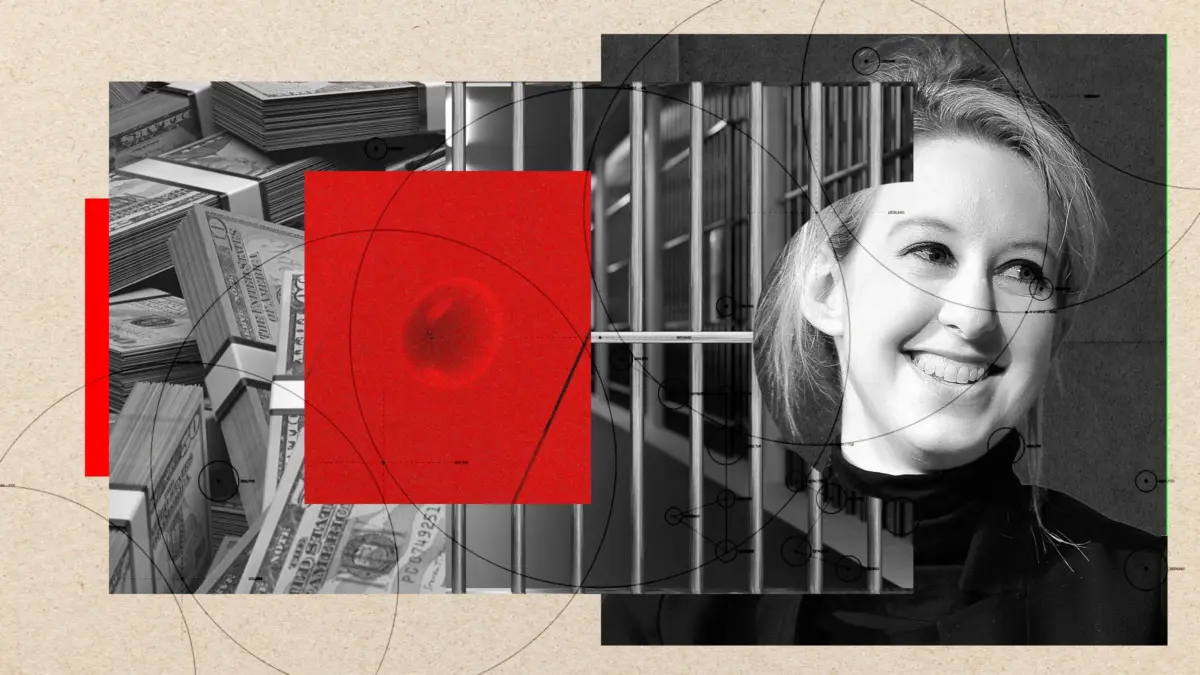
As civil lawsuits mounted and criminal investigations deepened, the U.S. Department of Justice indicted Holmes and former Theranos President Ramesh "Sunny" Balwani on multiple counts of wire fraud and conspiracy. Following a high-profile trial that captivated the global public, Holmes was convicted in January 2022 on four counts of fraud and subsequently sentenced to over eleven years in federal prison.
Supporting Context & Metrics: Gender, Venture Capital, and the Illusion of Rigor
To understand how Theranos evaded institutional scrutiny for over a decade, analysts must examine the systemic biases and financial architectures governing Silicon Valley during the mid-2010s.
The Venture Capital Gender Dynamic
The fact that Holmes was a female founder operating in a heavily male-dominated venture capital ecosystem complicated early efforts to evaluate her claims critically. At the time of Theranos’s peak fundraising, venture capital firms were overwhelmingly staffed by men. Academic research published around the time of Roper’s WIRED interview—including a landmark study by researchers at Harvard Business School and the Massachusetts Institute of Technology (MIT) Sloan School—demonstrated that investors were statistically far more likely to fund pitches presented by men than identical pitches presented by women.
This dynamic created an inadvertent protective shield around Holmes. Journalists and commentators who were eager to champion female leadership in technology sometimes hesitated to apply the same aggressive skepticism to female founders that they routinely directed toward their male counterparts, fearing that rigorous pushback might inadvertently reinforce systemic sexism.
The Fallacy of the Iconoclast Dropout
Silicon Valley’s mythology has long revered the collegiate dropout who upends legacy industries through sheer willpower and unyielding self-belief. From Steve Jobs to Mark Zuckerberg, the tech industry taught investors and media outlets to equate lack of formal credentialism with visionary genius.
Holmes weaponized this cultural trope. By dropping out of Stanford at nineteen, she framed her scientific ignorance not as a disqualifier, but as proof that she was thinking outside the traditional confines of academic pathology and microfluidics. As academic observers noted, had Holmes possessed a traditional graduate degree in biochemistry or medicine, venture capitalists might have demanded rigorous, peer-reviewed clinical data far earlier. Instead, the investment community relied on an extraordinary board of directors—comprising seasoned political and military figures such as George Shultz, Henry Kissinger, and James Mattis—none of whom possessed the technical expertise required to audit a clinical diagnostics laboratory.
Official Statements and Institutional Reflections
In the wake of Holmes’s conviction, media organizations, academic institutions, and former journalists underwent a period of profound institutional soul-searching.
Reflecting on her 2014 interview, Caitlin Roper acknowledged the seductive nature of the narrative:
"I was interested in this female founder, but also the idea that her actual goal was disruption of health care, that there there could be more transparency and reduced costs… I was going through some medical stuff at the time and having constant blood tests, and I was curious about what this could do. If she had not been a woman, I would have been less motivated. That was part of what compelled me. I felt sympathetic to the idea of her outfit and her weirdness, because I related to the idea that she was passing in some way in that environment, needing to assert herself."
Dave Karpf, an associate professor at George Washington University who studies Silicon Valley culture and media messaging, emphasized that the failure extended far beyond individual journalists:
"It wasn’t a new, untested claim. It was an active fraud. Partially, yes, it’s a woman founder, and that’s a nice change of pace. It would’ve been nice if you guys could have beaten John Carreyrou and figured it out… But it’s the people promoting it who, I think, have a bunch of answering to do."
Future Outlook: Rebuilding Armor for Science and Technology Journalism
The Theranos scandal permanently altered the landscape of tech and science journalism. Outlets that once functioned as cheerleaders for techno-optimism have systematically retooled their editorial processes to prioritize institutional skepticism over promotional narrative-building.
Evolving Editorial Heuristics
Modern science and technology desks have discarded the passive acceptance of corporate press releases and charismatic founder pitches. Standardized evaluation metrics now govern editorial gatekeeping:
- Physical Verification: For hardware, mobility, and infrastructure startups, digital renders and promotional mockups are deemed insufficient. Ground must be broken, physical prototypes must exist in operational spaces, and journalists must be granted unrestricted access to inspect machinery.
- Clinical and Scientific Rigor: In biotechnology and medical devices, the prevailing rule has shifted decisively toward demanding peer-reviewed data, regulatory clearance documentation, and adherence to rigorous clinical trial phases (such as Phase 3 validation) before granting editorial validation.
- Interrogating the Motives of Scale: Contemporary tech journalism routinely investigates the personal politics, financial structures, and governance practices of billionaire founders, recognizing that unchecked capital accumulation and surveillance capitalism pose direct threats to democratic institutions.
Conclusion
The legacy of Elizabeth Holmes and Theranos is a sobering reminder that the future of technology is too important, and the stakes are too high, to be driven by unverified optimism and charismatic storytelling. The ultimate cost of the fraud extended beyond billions of dollars in lost venture capital and shattered partnerships; it compromised patient care and undermined public trust in scientific innovation. As journalism continues to adapt, the enduring lesson of the Theranos era remains clear: true technological progress requires not the suspension of disbelief, but the unwavering application of rigorous, independent scrutiny.