

Published May 24, 2025
By the Investigative Desk
Executive Overview
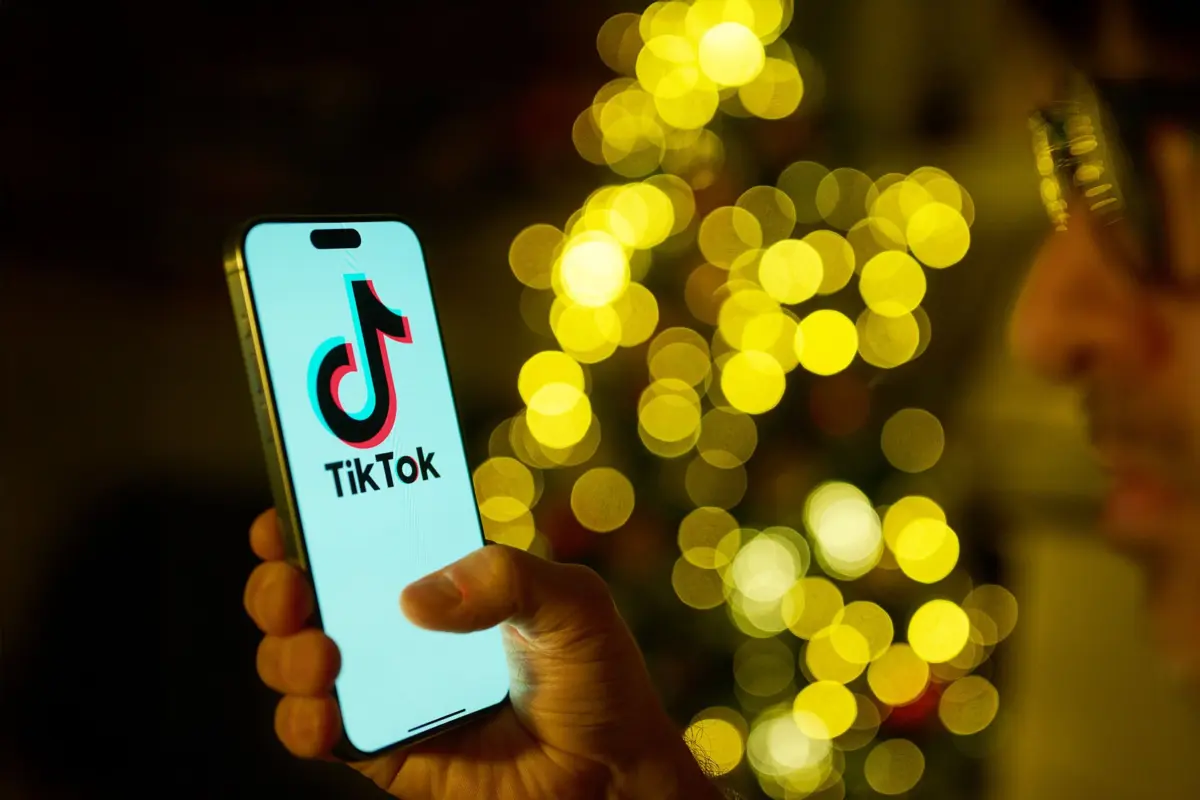
TikTok is a clear and present danger to national security—at least, that is the official stance of more than 30 U.S. states that have barred the application from state-issued devices, government networks, and public university servers. Governors have lined up to sign sweeping legislation, painting the short-form video platform as a digital Trojan horse engineered by Beijing to harvest sensitive metadata and surveil American citizens.
Yet, open the application today, and you will find a glaring paradox.
Scroll through your feed, and state-funded tourism boards—entities operating directly under the umbrella of those very same skeptical governors—are cheerfully promoting weekend getaways, scenic highway drives, and family beach vacations. From Texas to Florida and Montana, government-backed marketing agencies are thumbing their noses at cybersecurity directives in pursuit of a more pressing state interest: tourist dollars.
This deep contradiction exposes a profound fracture between political rhetoric and economic reality. When national security imperatives collide with the voracious appetite of Gen Z consumers and the fierce competition of the domestic tourism economy, economic pragmatism almost always wins. TikTok may be a geopolitical pariah in state capitals, but when it comes to selling sunshine, state parks, and local hospitality, it remains too valuable to ignore.
Detailed Chronology: From Legislative Bans to Marketing Campaigns
To understand how state governments arrived at this awkward crossroads, it is necessary to trace the rapid escalation of the TikTok prohibition movement alongside the parallel, unbated growth of state-sponsored social media marketing.
2022–2023: The Wave of State-Level Restrictions
The narrative surrounding TikTok’s security risks shifted from speculative debate to formal policy in late 2022. Driven by warnings from the Federal Bureau of Investigation (FBI) and the Federal Communications Commission (FCC) regarding ByteDance’s legal obligations under Chinese national intelligence laws, state executives took matters into their own hands.
- December 2022: Texas Governor Greg Abbott directed state agencies to ban TikTok on all state-issued devices, declaring that the platform “poses significant risks to the cybersecurity of the state of Texas” by offering a “trove of potentially sensitive information to the Chinese government.”
- Late 2022 to Early 2023: More than 30 states followed suit. Governors in Florida, Montana, South Dakota, and beyond enacted strict executive orders or legislation prohibiting the application on government infrastructure. Universities cut off access to campus Wi-Fi networks, and public employees scrubbed the software from their state-owned phones.
2023–2024: The Federal Pressures and Deadlines
While states fortified their internal perimeters, federal lawmakers amplified the pressure.
- April 2024: President Joe Biden signed a bipartisan bill mandating that TikTok’s parent company, ByteDance, divest its U.S. assets within a strict timeline or face a nationwide ban. Proponents of the legislation argued that foreign ownership of an algorithm wielding such immense cultural influence over 135 million Americans was an unacceptable risk.
- The Aftermath of the Deadline: As legal battles ensued and deadlines lapsed without a forced sale, the predicted nationwide blackout failed to materialize. TikTok remained fully operational, woven deeply into the fabric of American digital culture.
2024–2025: The Business-As-Usual Paradox
With the federal ban stalled in legal limbo, state tourism boards faced a critical strategic choice. Bound by regional mandates not to use official state hardware for personal or agency operations, these marketing arms found creative workarounds. Using personal devices, third-party marketing contractors, or isolated workarounds, accounts like @VisitCentralFL, @VisitMontana, and Texas tourism handles continued to post viral trends, scenic montages, and travel giveaways. The firewall meant to protect state secrets stopped abruptly at the marketing department’s doorstep.
Supporting Context & Metrics: The Undeniable Power of the Algorithm
Why are state governments willing to look the other way on security warnings to maintain a presence on TikTok? The answer lies in hard, unassailable metrics.
Despite regulatory crosshairs, TikTok’s growth engine has refused to sputter. In 2024 alone, the platform added approximately 100 million new users, ballooning its global active user base to roughly 1.6 billion. Domestically, the platform commands an audience of over 135 million Americans. More importantly, its demographic footprint skews heavily toward the exact cohorts tourism boards desperately need to capture: Millennials and Generation Z.
+------------------------------------------------------------+
|                TikTok Growth & Reach Metrics               |
+------------------------------------------------------------+
| Global Active Users (2024)        | ~1.6 Billion           |
| U.S. User Base                    | 135+ Million           |
| New Users Added Globally (2024)   | ~100 Million           |
| Primary Demographic               | Gen Z & Millennials    |
+------------------------------------------------------------+
Traditional advertising channels—such as print travel magazines, cable television commercials, and static banner ads—fail to capture the attention spans of younger travelers who consume media via algorithmic feeds. TikTok’s recommendation engine is uniquely potent at driving consumer behavior. A single viral video showcasing a hidden swimming hole in Central Texas or a scenic overlook in Montana can generate millions of impressions overnight, translating directly into hotel bookings, rental car reservations, and restaurant spending.
For state tourism offices, which rely on visitor spending to generate billions in state tax revenue and support hundreds of thousands of hospitality jobs, voluntarily abandoning TikTok would be economic self-sabotage. The platform is no longer just a social network; it is the modern digital equivalent of a high-traffic interstate billboard.
Official Statements and Political Rationalizations
The juxtaposition between state security bans and tourism marketing has not gone unnoticed by watchdogs, civil liberties groups, and political opponents, leading to a scramble for justification from state officials.
The Cybersecurity Defense
Governors who championed the bans maintain that there is a fundamental difference between an employee downloading TikTok onto a secure state government database and a marketing contractor utilizing the platform to reach the public.
"Our directive was clear: state-owned infrastructure and sensitive government databases cannot be compromised by foreign adversaries," a spokesperson for a major southern governor noted anonymously regarding their state’s policy. "Public-facing marketing initiatives operate within designated parameters that protect core state networks while allowing our agencies to communicate where our constituents spend their time."
Critics, however, dismiss this distinction as semantic gymnastics. Cybersecurity experts point out that if TikTok truly represents an intelligence-gathering threat capable of exfiltrating device data, the individuals managing tourism accounts—often using personal devices connected to home or commercial internet—are still susceptible to the same underlying risks.
The Economic Necessity Argument
Other officials are less defensive, leaning directly into economic pragmatism. In budget hearings, tourism directors have openly testified that their statutory obligation is to maximize return on investment (ROI) for state taxpayers.
When a platform commands the attention of tens of millions of potential tourists free of charge—aside from content creation costs—failing to utilize it would be a dereliction of promotional duty. State legislators who vote to restrict the app on state laptops often quietly approve marketing budgets that task external advertising agencies with maintaining an active, aggressive footprint on ByteDance’s flagship property.
Future Outlook: Navigating the Digital Cold War
As the legal and political landscape surrounding foreign-owned technology platforms continues to evolve, the state-level hypocrisy regarding TikTok highlights a deeper systemic challenge for the United States: the friction between national security policy and a globally integrated digital economy.
Several trajectories are likely to unfold over the coming years:
- Continued Legal Maneuvering: Legal challenges regarding federal divestment mandates and state-level First Amendment concerns will likely wind their way through appellate courts, leaving the platform in a prolonged state of regulatory limbo.
- Diversification of Channels: Wary of sudden regulatory changes, state tourism boards are increasingly hedging their bets, cross-posting their short-form video content to competing platforms like Instagram Reels and YouTube Shorts. However, industry analysts note that these alternatives have yet to fully replicate the algorithmic serendipity that drives viral tourism trends on TikTok.
- Normalized Cognitive Dissonance: Until a definitive nationwide prohibition is enacted and successfully enforced—or until domestic alternatives entirely eclipse foreign platforms—state governments will likely continue to walk this tightrope. They will legislate against the perceived threat with one hand while leveraging its commercial power with the other.
Ultimately, the story of state tourism boards defying their own governors’ security warnings is a modern parable of realpolitik. In the digital age, moral panics and geopolitical posturing make for powerful headlines, but when the bottom line depends on filling hotel rooms and museum galleries, cash registers speak louder than cybersecurity alerts.




