The landscape of cloud computing is undergoing a structural evolution, driven by an increasing demand for ultra-low latency, localized data processing, and strict regulatory compliance. As enterprises accelerate their digital transformation strategies, the proximity of compute and storage resources to end-users has transitioned from a competitive advantage to a fundamental operational requirement.
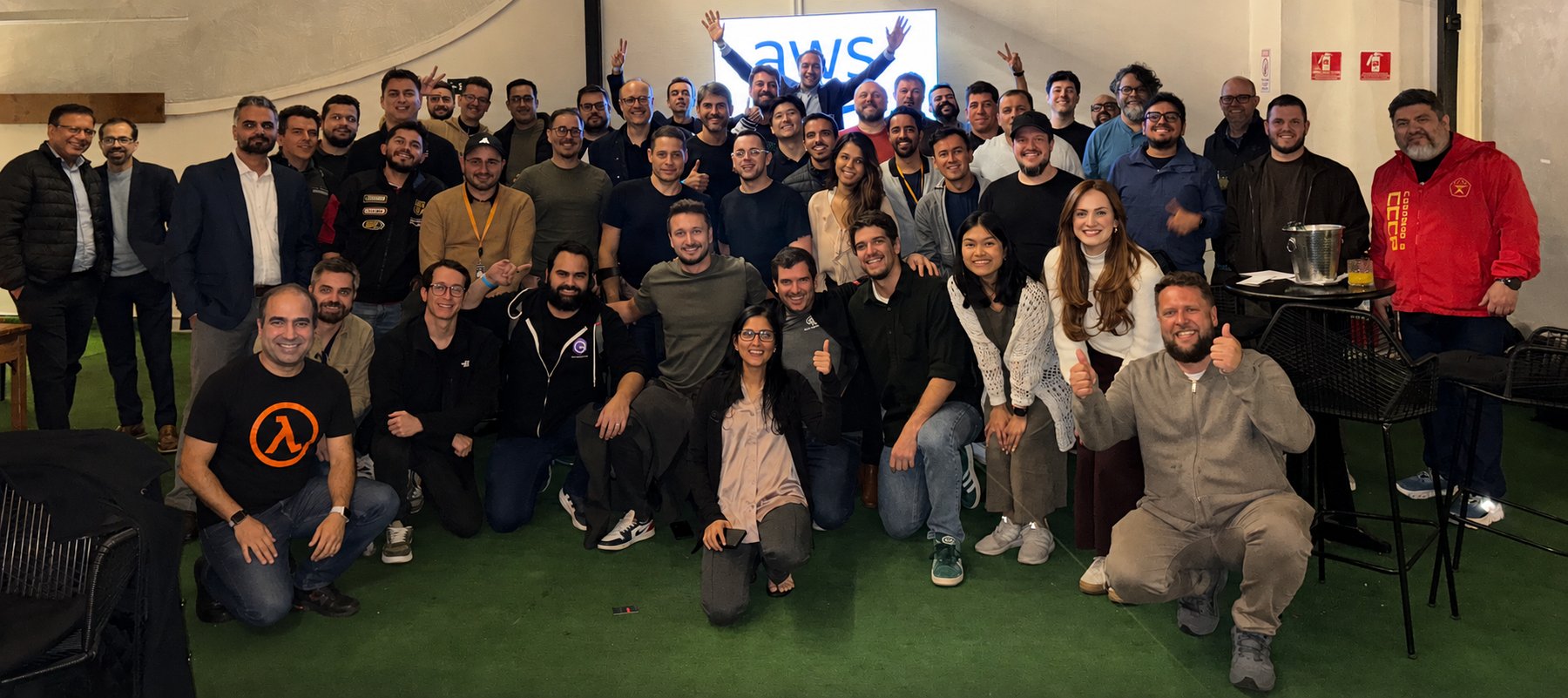
In a recent demonstration of this paradigm shift, Amazon Web Services (AWS) has advanced its global infrastructure footprint while simultaneously deepening its engagement with regional technical communities. Last week, leadership and technical evangelists convened in São Paulo, Brazil, bringing together hundreds of builders from across Latin America for an intensive regional summit featuring deep-dive technical sessions, collaborative workshops, and direct dialogue with engineering teams.
Simultaneously, AWS announced a major addition to its European edge portfolio with the official launch of a new AWS Local Zone in Athens, Greece. This strategic deployment bridges a critical gap for organizations operating in Southern Europe, combining single-digit millisecond latency with advanced in-country data residency capabilities. Featuring native support for core computing, container management, and advanced storage solutions—including Amazon S3 and Amazon EBS Local Snapshots—the Athens Local Zone represents a pivotal milestone in bringing cloud infrastructure closer to major industry hubs. This report examines the technical implications of the Athens launch, the broader significance of community-driven cloud adoption, and the future trajectory of edge computing within the AWS ecosystem.
Detailed Chronology & Infrastructure Deployment
Bridging the Distance: The São Paulo Technical Summit
The operational week began in the vibrant economic hub of São Paulo, Brazil, where AWS hosted a three-day regional technical gathering. Designed to foster collaboration among Latin American developers, cloud architects, and IT leaders, the event served as a crucible for architectural innovation.
Throughout the multi-day engagement, participants engaged in hands-on workshops that tackled complex distributed systems challenges, modernized legacy applications, and optimized serverless workflows. According to attendees, the true value of the summit extended beyond the formal presentations. The convergence of regional talent facilitated organic brainstorming sessions, whiteboard architecture reviews, and cross-industry knowledge sharing that highlighted the maturity and ingenuity of the Latin American technical community.
Industry analysts note that such regional engagements are vital for hyperscale cloud providers. By investing in localized technical ecosystems, AWS not only accelerates developer adoption but also gains critical feedback regarding localized architectural bottlenecks, regulatory nuances, and regional workload requirements.
Expanding the European Edge: The Athens Local Zone Launch
Directly complementing the themes of accessibility and community enablement, AWS announced the official opening of the AWS Local Zone in Athens, Greece.
This deployment marks the second Local Zone in the Europe, Middle East, and Africa (EMEA) region equipped with advanced native support for Amazon Simple Storage Service (Amazon S3) and Amazon Elastic Block Store (Amazon EBS) Local Snapshots. This specific capability is paramount for enterprises operating under rigorous European data protection frameworks, allowing them to store, process, and snapshot data entirely within Greek borders.
Technical Specifications of the Athens Local Zone
The new facility is architected to support high-performance, latency-sensitive workloads by extending AWS infrastructure directly into a major metropolitan and industrial center. Key technical elements include:
Compute Capabilities: The Local Zone supports modern Amazon EC2 instance families, specifically C7i, M7i, and R7i instances, providing optimized compute, memory, and high-performance processing tailored for demanding enterprise applications.
Storage and Data Protection: Integration with Amazon S3 (utilizing the One Zone-Infrequent Access storage class) and Amazon EBS ensures robust, scalable data persistence. Crucially, the inclusion of EBS Local Snapshots allows developers to back up block storage data locally without violating in-country residency mandates.
Containerization and Orchestration: Native support for Amazon Elastic Container Service (Amazon ECS) enables teams to deploy and scale containerized microservices at the edge with operational consistency mirroring core AWS Regions.
Supporting Context & Metrics: The Imperative of Edge Computing
To understand the strategic significance of the Athens Local Zone, one must examine the macro-level shifts in enterprise cloud consumption. Traditional cloud architectures relied heavily on centralized Availability Zones (AZs) and regions. While highly resilient and scalable, centralized regions often introduce network latency ranging from 20 to over 100 milliseconds depending on geographic distance from the end-user.
Overcoming Latency Barriers
For modern applications, a latency threshold of 10 milliseconds represents the dividing line between seamless user experiences and operational failure. Industries such as real-time multi-player gaming, high-frequency financial trading, remote healthcare diagnostics, and live media production require deterministic, ultra-low latency execution.
By placing AWS compute and storage infrastructure within major population centers like Athens, AWS reduces network hops, effectively delivering single-digit millisecond latency to end-users across the region. This architectural proximity is particularly transformative for:
Financial Services: Executing low-latency transactions and fraud-detection algorithms locally while complying with national financial regulatory bodies.
Healthcare & Public Sector: Processing sensitive patient records, imaging data, and municipal workflows within jurisdictional boundaries to adhere to strict data privacy laws (such as GDPR and national equivalents).
Media Production & Broadcasting: Rendering, editing, and streaming high-definition media assets in real-time without the bottlenecks associated with transcontinental data transit.
Official Statements and Industry Perspectives
While official communications regarding the Latin American summit and the Athens Local Zone deployment emphasize technical enablement, industry leaders and regional participants have underscored the broader cultural and economic impact of these developments.
"What struck me most wasn’t any single session, it was the energy of a technical community that so rarely gets to be in the same room," noted an AWS technical evangelist reflecting on the São Paulo gathering. "People traded architecture ideas over coffee, sketched out solutions on whiteboards, and left with a longer list of things to try than they arrived with. It’s a good reminder that, for all the tooling we build, the community around it is what makes the technology stick."
Regarding infrastructure deployment, infrastructure architects have highlighted the operational simplicity introduced by Local Zones. Organizations no longer need to provision, maintain, and secure disparate on-premises data centers to achieve low-latency performance. Instead, they can leverage the same familiar AWS Management Console, APIs, and infrastructure-as-code (IaC) tooling to manage workloads deployed at the edge.
For enterprises operating in Greece and the broader EMEA theater, the Athens Local Zone eliminates the traditional compromise between regulatory compliance and cloud agility. Enterprises can now modernize core infrastructure, deploy containerized microservices, and ensure localized data sovereignty without sacrificing the elasticity and automation inherent to cloud-native paradigms.
Future Outlook: The Convergence of Community and Edge Infrastructure
As cloud computing matures, the industry is transitioning into an era where infrastructure must be ubiquitous, invisible, and hyper-localized. The events of the past week—spanning from the collaborative energy of the São Paulo technical summit to the tactical precision of the Athens Local Zone launch—illustrate a unified strategic vision: empowering builders wherever they are located.
What Lies Ahead for AWS Builders
Looking forward, several key trends are expected to shape the AWS ecosystem:
Proliferation of Edge Infrastructure: As 5G networks mature and Internet of Things (IoT) deployments scale, demand for localized compute nodes will intensify. AWS is expected to continue expanding its Local Zone and Outposts footprints into emerging economic corridors.
Community-Led Innovation: Platforms such as the AWS Builder Center will play an increasingly critical role in democratizing cloud knowledge. By connecting developers across borders, AWS aims to accelerate the adoption of advanced cloud-native architectures, including generative AI pipelines, serverless microservices, and distributed data meshes.
Regulatory Harmonization: With governments worldwide tightening data sovereignty laws, the ability to execute compute tasks and store snapshots within national borders will remain a primary purchase criterion for enterprise cloud buyers.
In conclusion, the combination of community-focused enablement and targeted infrastructure expansion underscores the dynamic nature of modern cloud engineering. Whether sketching out distributed systems on a whiteboard in Brazil or provisioning low-latency compute instances in Greece, builders are utilizing an ever-expanding toolkit to solve complex real-world challenges.
Stay tuned to the AWS Weekly Roundup for ongoing updates, technical deep-dives, and comprehensive coverage of emerging cloud technologies.