Executive Overview
In an era where digital literacy is as fundamental as reading and writing, the barrier to entry for mastering the modern web has historically been financial. From securing domain names to paying for reliable hosting, students venturing into web development, digital media, and online portfolios have routinely faced hurdles that stifle creativity before it even begins.
Addressing this long-standing industry bottleneck, WordPress.com has officially rolled out a dedicated pricing tier aimed directly at students: a comprehensive, zero-cost hosting plan designed to eliminate financial friction. Offering a full year of free managed hosting, the initiative seeks to ensure that cost is never a barrier to acquiring vital digital skills. The overarching vision is ambitious yet remarkably simple: to empower learners across all academic disciplines—from computer science to fine arts—to create, curate, and share their work online, ultimately helping them own their digital footprint from the very beginning of their academic journeys.
For educators who have spent years navigating the logistical nightmares of student hosting, this announcement is not just a welcome update; it is a long-overdue paradigm shift. Teaching modern web development requires hands-on application. For years, educators have relied on a WordPress site as the ultimate cumulative project—a capstone assignment capable of demonstrating a myriad of cross-disciplinary skills, including HTML, CSS, user interface design, and server management. However, bridging the gap between local development and a live, accessible web presence has consistently served as the primary point of failure for students and instructors alike.
This investigative report explores the implications of the new WordPress.com Student Plan, examining the history of student hosting challenges, the technical capabilities of the platform, the strategic positioning of the .blog and .art domains, and what this means for the future of digital education.
Detailed Chronology: The Quest for Accessible Student Web Hosting
To understand the magnitude of the WordPress.com Student Plan, one must look back at the arduous evolutionary path educators and students have traversed to find reliable, low-cost, or free web hosting. For decades, the landscape of student web publishing has been plagued by ephemeral solutions, rising costs, and steep technical learning curves.
Phase One: The Era of Shared Hosting and Out-of-Pocket Expenses
In the early days of modern web curriculum design, instructors routinely turned to shared hosting providers. While these platforms offered robust environments capable of running WordPress via standard .org installations, they introduced severe administrative and financial complications.
For cash-strapped educators, subsidizing student hosting accounts out of pocket quickly became financially unsustainable. Conversely, passing the cost directly onto students introduced equity issues, penalizing those for whom a $50-to-$100 annual hosting fee represented an insurmountable hurdle. Furthermore, navigating complex control panels (such as cPanel), managing databases, and configuring FTP access often proved overly intimidating for beginners, shifting instructional focus away from coding and design toward systems administration.
Phase Two: The Rise and Fall of Sandbox Environments
As the educational tech sector sought more streamlined alternatives, third-party sandboxing platforms emerged. Services like WPSandbox.io gained traction by allowing users to spin up temporary WordPress instances with a single click, completely bypassing the need for traditional hosting setups.
While these tools were revolutionary for in-class demonstrations and short-term assignments, they suffered from a fatal flaw: longevity. As venture capital shifted and maintenance costs mounted, many of these dedicated sandbox environments eventually went offline or altered their business models, leaving educators scrambling for replacements. Other emerging tools, such as the browser-based WordPress Playground, offered incredible technological innovation by running WordPress entirely via WebAssembly in the browser. However, saving, exporting, and securely sharing student work remained unnecessarily complicated for non-technical users.
Phase Three: Corporate Sponsorships and Institutional Red Tape
In an effort to bypass commercial hosting fees, many instructors turned to corporate outreach, securing educational grants or direct sponsorships from hosting companies. While well-intentioned, this approach introduced a new administrative burden.
Securing institutional or corporate sponsorship is rarely a one-time affair; it is an exhausting, semester-by-semester negotiation. Instructors found themselves spending valuable office hours managing coupon codes, troubleshooting partner-platform account lockouts, and rewriting syllabi whenever a corporate partner changed its pricing structure or discontinued its educational program.
Phase Four: The Direct-from-Source Solution
Recognizing these recurring systemic failures, the introduction of a native student plan directly from WordPress.com represents the culmination of years of industry feedback. By offering a year-long, zero-cost leash straight from the source, the platform has effectively cut out the middlemen, third-party brokers, and unstable sandbox hacks. It provides a stable, professional, and officially supported ecosystem where students can build, test, and showcase their work without worrying about sudden platform shutdowns or unexpected credit card charges.
Supporting Context & Metrics: The Technical Reality of Modern WordPress.com
A common criticism leveled by purists against WordPress.com (the managed, commercial arm of the WordPress ecosystem) in favor of self-hosted WordPress.org sites has historically been its perceived lack of flexibility. Critics often argue that point-and-click platforms infantilize developers, shielding them from the raw code required to truly master web development.
However, the modern infrastructure of WordPress.com has evolved dramatically. Today, the platform offers the exact same developer affordances found in self-hosted environments.
Bridging the Gap: Point-and-Click vs. Direct Code Access
For students learning front-end development, the contemporary WordPress.com ecosystem strikes an ideal balance between usability and advanced customization.
- Accessibility for Beginners: Students who are new to web design can leverage intuitive block editors and site-building tools to quickly lay out content, understand visual hierarchy, and grasp fundamental design principles.
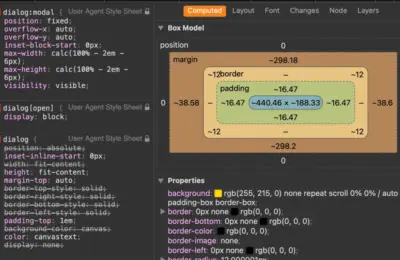
- Direct Code Affordances: As students progress through a semester, they are not walled off from the underlying architecture. The platform supports direct CSS manipulation, theme file editing, and integrations with modern development workflows. This means students can write custom style sheets, implement responsive design media queries, and observe how their raw code directly alters a live, production-grade website.
Domain Restrictions: A Strategic and Practical Choice
A notable stipulation of the new student tier is that the free year of hosting is explicitly tied to specific domain extensions: .blog and .art.
From an analytical standpoint, this is a brilliant strategic and pedagogical move. For the vast majority of academic portfolios, journalism projects, creative writing blogs, and visual art showcases, these domain extensions are not only entirely appropriate—they often carry specialized thematic weight. A graphic design student presenting a digital portfolio under a .art domain enjoys a professional branding advantage that a generic .com or cluttered subdomain cannot replicate.
Furthermore, these domains function as fully realized web addresses rather than restrictive subdomains (such as studentname.wordpress.com). This ensures that students truly own their digital presence, learning the psychological and professional value of personal branding from day one. Should a student graduate, secure funding, or wish to transition their site to a custom top-level domain (.com, .net, or personal branding variants) down the line, the migration path is straightforward. They can easily point their established site to a new domain for a nominal fee, preserving all of their hard work and accumulated search engine equity.
Official Statements and Industry Impact
The announcement has sent positive ripples through the global web development and educational communities. While corporate philanthropy in the tech sector is often met with cynicism, industry analysts and computer science educators have praised the execution and intent behind the WordPress.com Student Plan.
In official documentation supporting the initiative, the company emphasizes the philosophical core of the project:
"WordPress.com offers the Student plan free, so cost is never a barrier to learning web skills. The goal is for students of any subject to create and share their thoughts and work online, and to own their online presence from the start."
This sentiment resonates deeply with educational reformers who argue that digital citizenship should be treated as a fundamental pillar of modern education. In an age dominated by closed-garden social media platforms—where users rent space on feeds controlled by proprietary algorithms—teaching students how to build, maintain, and truly own an independent website is a radical act of digital empowerment.
Pedagogical Endorsements
Educators across various disciplines have lauded the initiative for removing administrative friction from the classroom. Dr. Elena Vance, a professor of Interactive Media and Web Design, noted the immediate impact of the program on curriculum planning:
"In the past, the first three weeks of my semester were entirely consumed by IT troubleshooting. Students couldn’t connect to FTP servers, their free trial hosting expired mid-grading period, or they accidentally incurred hidden fees. By partnering with an ecosystem that provides a reliable, year-long foundation out of the box, we can finally focus 100% of our energy on teaching code, accessibility standards, and responsive design."
Similarly, fine arts instructors have praised the inclusion of the .art domain option, noting that it validates digital portfolios as legitimate, professional-grade artistic mediums deserving of the same institutional respect as physical galleries.
Future Outlook: What the Student Plan Means for the Web
As the dust settles on the rollout of the WordPress.com Student Plan, industry observers are left to consider the broader implications for web development education and the open-source community at large.
1. Democratizing Digital Literacy Across Disciplines
Historically, web development has been siloed within computer science and dedicated digital media departments. However, the modern workforce demands digital fluency across all majors. History students publishing digital archives, business majors launching entrepreneurial landing pages, and sociology majors creating data-journalism blogs all require accessible web infrastructure. By removing cost and complexity as barriers, this initiative democratizes web publishing, turning the internet back into a canvas for multi-disciplinary scholarship.
2. Safeguarding the Open Web
There is also a profound philosophical victory embedded in this initiative. For years, tech giants have lured younger demographics into building their digital identities exclusively on centralized, ad-driven social media platforms. These platforms offer immediate gratification but strip users of data ownership, customization freedom, and long-term stability. By introducing students to the WordPress ecosystem—a platform that powers over forty percent of the web and is rooted in open-source principles—this plan introduces the next generation of creators to the concept of the indie web. Students learn early on that they do not have to live inside a rented corporate feed; they can build, customize, and inhabit their own independent corner of the internet.
3. Long-Term Growth and Ecosystem Sustainability
From a business perspective, cultivating student loyalty early in an academic career is a proven long-term strategy. By introducing learners to the managed WordPress environment during their formative educational years, the platform builds brand affinity that extends far beyond graduation. As these students enter the workforce, start businesses, or launch freelance careers, they are statistically more likely to rely on professional managed hosting solutions they already know and trust.
Conclusion
The introduction of the WordPress.com Student Plan marks a pivotal milestone in the intersection of technology and education. By neutralizing the financial and logistical barriers that have historically plagued student web projects, WordPress.com has provided a vital public service to educators and learners alike.
As instructors draft their syllabi for upcoming semesters, they can finally do so with the confidence that their students have access to a stable, professional, and code-friendly environment. More importantly, thousands of students will take their first steps onto the web not as renters in someone else’s algorithmic domain, but as proud, autonomous owners of their own digital presence.
For those interested in exploring the initiative further, direct access to the program and its eligibility guidelines can be found via the Official WordPress.com Student Plan Support Page.