Executive Overview
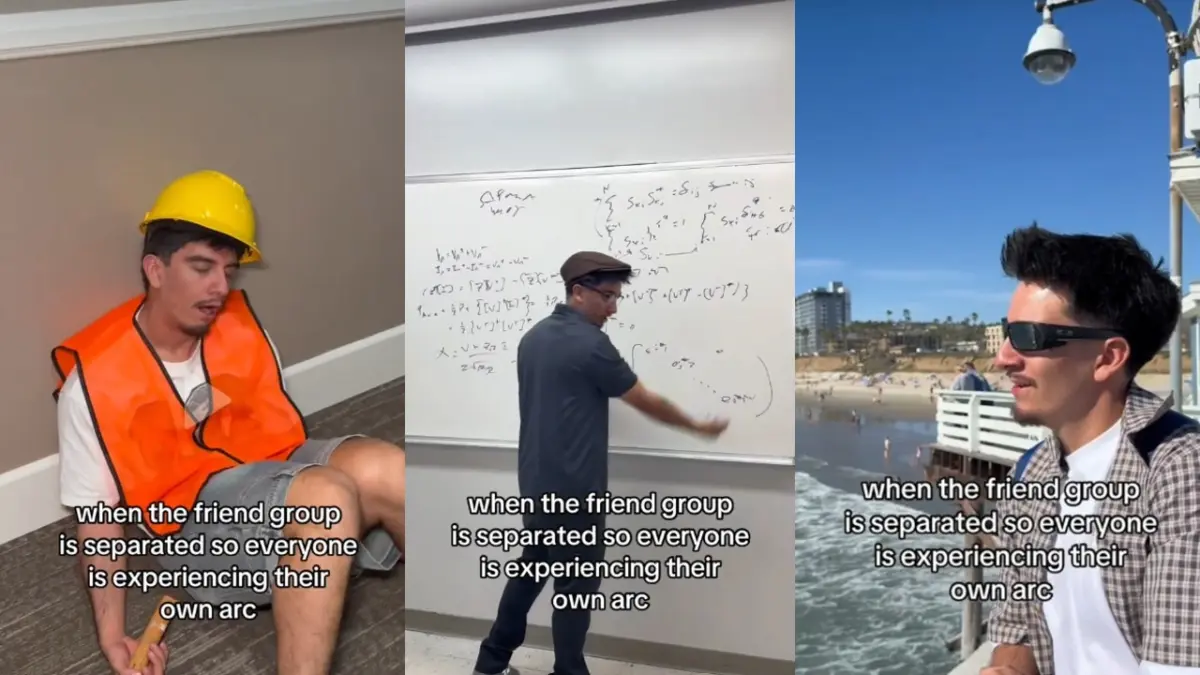
In the hyper-connected digital landscape of the mid-2020s, internet culture has increasingly turned its lens inward, satirizing the cinematic narrative structures that govern contemporary media consumption. Among the most pervasive and culturally resonant formats to emerge from this self-reflective wave is the viral meme phenomenon encapsulated by the catchphrase: "When the Friend Group Is Separated So Everyone Is Experiencing Their Own Arc."
Spanning TikTok, Instagram Reels, and YouTube Shorts, this burgeoning trend playfully parodies the "solo sequence" trope commonly found in long-running television series, anime, and epic cinema. In these traditional narratives, a tightly knit ensemble of characters inevitably splits up, plunging each individual into divergent, high-stakes parallel plotlines before an eventual, highly anticipated reunion.
On social media, creators have weaponized this trope to describe the very real, often jarring fragmentation of young adult and adolescent social circles. Whether driven by college graduations, career shifts, geographical relocation, or simply the natural drift of time, the meme highlights a universal rite of passage: the moment a unified collective dissolves into isolated, idiosyncratic personal journeys. What began in late 2024 as a niche comedy sketch has metastasized into a multi-platform cultural touchstone, drawing millions of views, inspiring countless variations—from engineering student grinds to Minions movie mashups—and providing an ironic, comforting framework for modern young adult isolation.
Detailed Chronology: From Niche TikTok Sketch to Global Cultural Meme
Genesis: The Late 2024 Catalyst
The conceptual roots of the "separated friend group arc" trace back to the shifting digital content landscape of late 2024, a period characterized by fatigue with hyper-polished lifestyle vlogs and a pivot toward absurdist, deeply relatable micro-narratives.
The definitive spark occurred on December 18th, 2024, when TikTok creator @solosin uploaded a deceptively simple comedy video. Captioned, "POV: everyone in the friend group is now doing their own thing (timeskip arc)," the video featured the creator portraying multiple distinct characters. Each persona represented a former member of a single friend group who had abruptly embarked on disparate, bizarrely specialized life paths following a symbolic separation.
The video struck an immediate, visceral chord with audiences. Within two years of its posting, the original clip amassed over 12 million views, establishing a blueprint for narrative-driven short-form comedy. By mapping the cinematic device of a "timeskip" onto the mundane or eccentric realities of early-twenties life trajectories, @solosin inadvertently birthed a new subgenre of internet satire.
The 2026 Resurgence and Expansion
While early iterations in late 2024 established the format, the meme experienced a massive, exponential resurgence throughout 2026. As algorithms on TikTok and Instagram Reels grew increasingly hospitable to multi-part skits and high-concept observational humor, creators expanded the scope of the trend far beyond simple friend group breakups.
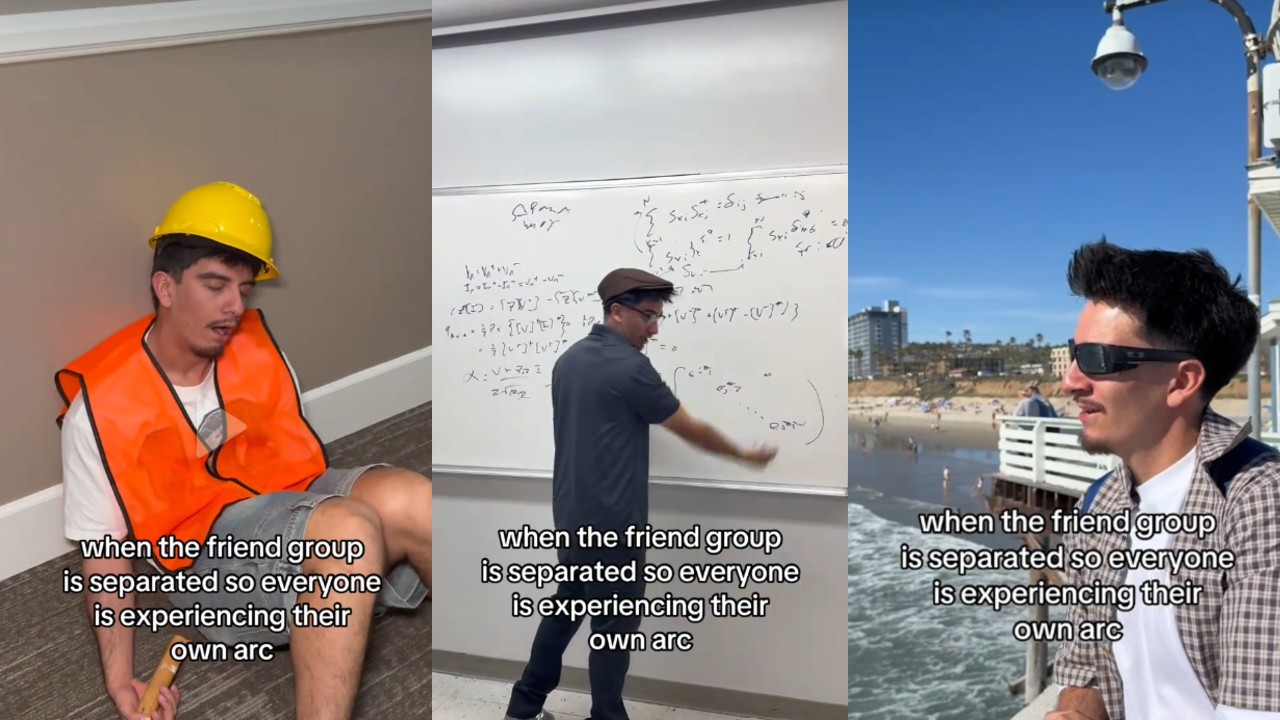
- April 2026: TikToker @juiceditup injected a dose of hyper-specific vocational humor into the trend, posting a variation centered around engineering students and technical specialists parting ways. The video quickly captured millions of views within months, proving that the format could accommodate specialized subcultures.
- June 2026: Expanding the meme beyond vertical video platforms, YouTuber Linquito published a long-form structural take on June 5th, 2026, pulling over 1.1 million views in a three-month span and cementing the trend’s migration into traditional video-sharing ecosystems.
- September 2026: Pushing the meme into the realm of pure absurdist surrealism, TikToker @lazycps leveraged archival footage from the Minions franchise on September 19th, 2026. By framing the chaotic, globe-spanning exploits of the yellow henchmen as a "friend group separation arc," the video skyrocketed to over 4.5 million views in a single week, demonstrating the extreme adaptability of the core joke.
Throughout this period, the format diversified. Creators like @jacoblibonao, @ariaaisdelux, @healthwithdylan, and @bobbys_best contributed viral variations incorporating Gym culture, true-crime aesthetics (utilizing atmospheric audio cues like True Detective theme music), and existential dread about how rapidly once-inseparable cliques can drift into complete alienation.
Supporting Context & Metrics: Analyzing the Virality
To understand the mechanics behind the "separated friend group" phenomenon, one must examine the intersection of platform algorithms, demographic shifts, and psychological resonance.
Quantitative Metrics of Engagement
The aggregate engagement surrounding the meme highlights its sustained cultural footprint:
- The Pioneer (December 2024): @solosin’s foundational TikTok crossed the 12 million view threshold, proving the longevity of the concept across multi-year viewing cycles.
- Mid-Tier and Niche Scaling (2026): Secondary iterations—such as @juiceditup’s April 2026 post and Linquito’s June 2026 YouTube feature—regularly cleared the 1 to 2 million view marks within weeks of publication.
- Outlier Successes: High-concept meme mashups, such as @lazycps’s Minions edit in September 2026, demonstrated viral velocities exceeding 4.5 million views in just seven days, showing that the meme could bridge generational and fandom boundaries.
The Psychology of the "Solo Sequence"
Psychologically, the meme resonates because it reframes a melancholic life transition—growing apart from close friends—into an epic, cinematic narrative. In media studies, the "bottle episode" or "solo training arc" serves to isolate characters so they can undergo mandatory personal growth, face unique trials, and return to the main cast fundamentally transformed.
When applied to real life, young adults facing the daunting realities of post-grad life, career changes, or shifting social dynamics often experience profound anxiety regarding isolation. By labeling these periods as a "character arc," the meme offers a coping mechanism. It transforms the loneliness of eating a solitary meal, grinding away at a midnight study session, or picking up a strange new hobby from a sign of social failure into an essential, heroic narrative phase.
Furthermore, the trend taps into the "Main Character Syndrome" irony pervasive in contemporary youth culture. Everyone is simultaneously the protagonist of their own micro-story and a background extra in someone else’s distant memories.
Industry and Creator Perspectives
While internet memes are rarely born from centralized corporate strategies, the adoption of the "friend group arc" format by independent creators, digital marketing strategists, and pop-culture commentators sheds light on how digital narratives evolve.
The Creator Economy Viewpoint
Content creators who have leaned into the format note that its success relies on structural familiarity mixed with unpredictable punchlines. Speaking on the mechanics of character-driven skits, digital media analysts point out that the viewer’s prior knowledge of cinematic tropes does the heavy lifting. The creator does not need to spend precious seconds establishing why the characters are separated; the caption does it instantly.
"When you use a phrase like ‘everyone is experiencing their own arc,’ you immediately activate the viewer’s media literacy," notes a digital content strategist specializing in short-form video trends. "The audience already knows the beats: the brooding gym montage, the corporate desk drone sequence, the mysterious hermit phase. You just have to lean into the archetype."
Cultural Commentary and the Loneliness Epidemic
Sociologically, cultural critics have observed that memes like this serve as a humorous defense mechanism against modern isolation. In an era frequently described by public health officials as suffering from a "loneliness epidemic," younger demographics utilize irony and self-deprecation to process the fracturing of traditional community structures. By treating alienation as a shared script—a trope that happens to everyone—the internet successfully converts individual anxiety into collective humor.
Future Outlook: Where Does the Arc Lead?
As the digital ecosystem moves deeper into late 2026 and looks toward the horizon, the trajectory of the "separated friend group arc" meme offers insights into the future of internet humor.
1. Saturation and Meta-Irony
Like many hyper-specific narrative formats, the trend risks standard saturation. However, its inherent flexibility—capable of absorbing everything from highbrow literary metaphors to absurd cartoon clips (Minions)—suggests it may mutate rather than die out. Future iterations are likely to lean further into meta-irony, parodying the very concept of "character development" and subverting expected reunion tropes.
2. Cross-Media Adaptations
Given the success of long-form video essays and multi-part TikTok series exploring the concept, we can anticipate independent creators attempting serialized fiction based on the premise. The idea of tracking multiple fictionalized friends across entirely separate narrative genres (e.g., one friend in a gritty neo-noir detective thriller, another in a slice-of-life romance, a third in an absurdist comedy) provides a rich sandbox for upcoming digital filmmakers.
3. The Ultimate Resolution: The Crossover Event
As the meme matures, the natural conclusion of the trend lies in parodying the ultimate cinematic cliché: The Crossover Event. Creators have already begun gesturing toward the inevitable day when the separated friends must reunite. Future viral milestones will undoubtedly focus on the awkward, hilarious reality of trying to merge vastly different "character arcs" back into a single, cohesive social group chat—proving that while character arcs are great for personal growth, getting everyone to agree on brunch is the ultimate boss battle.