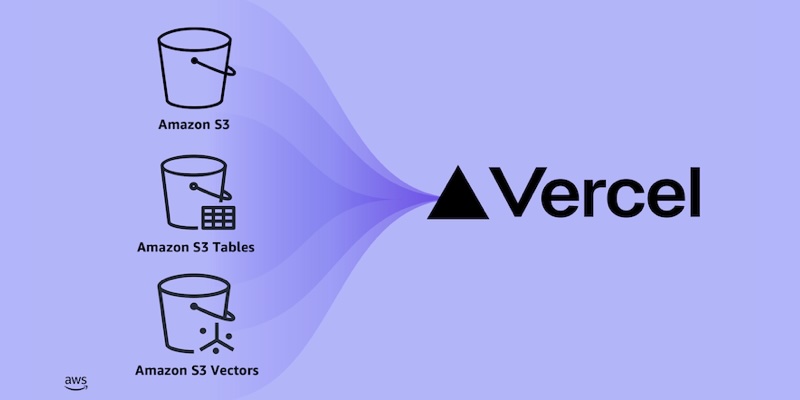
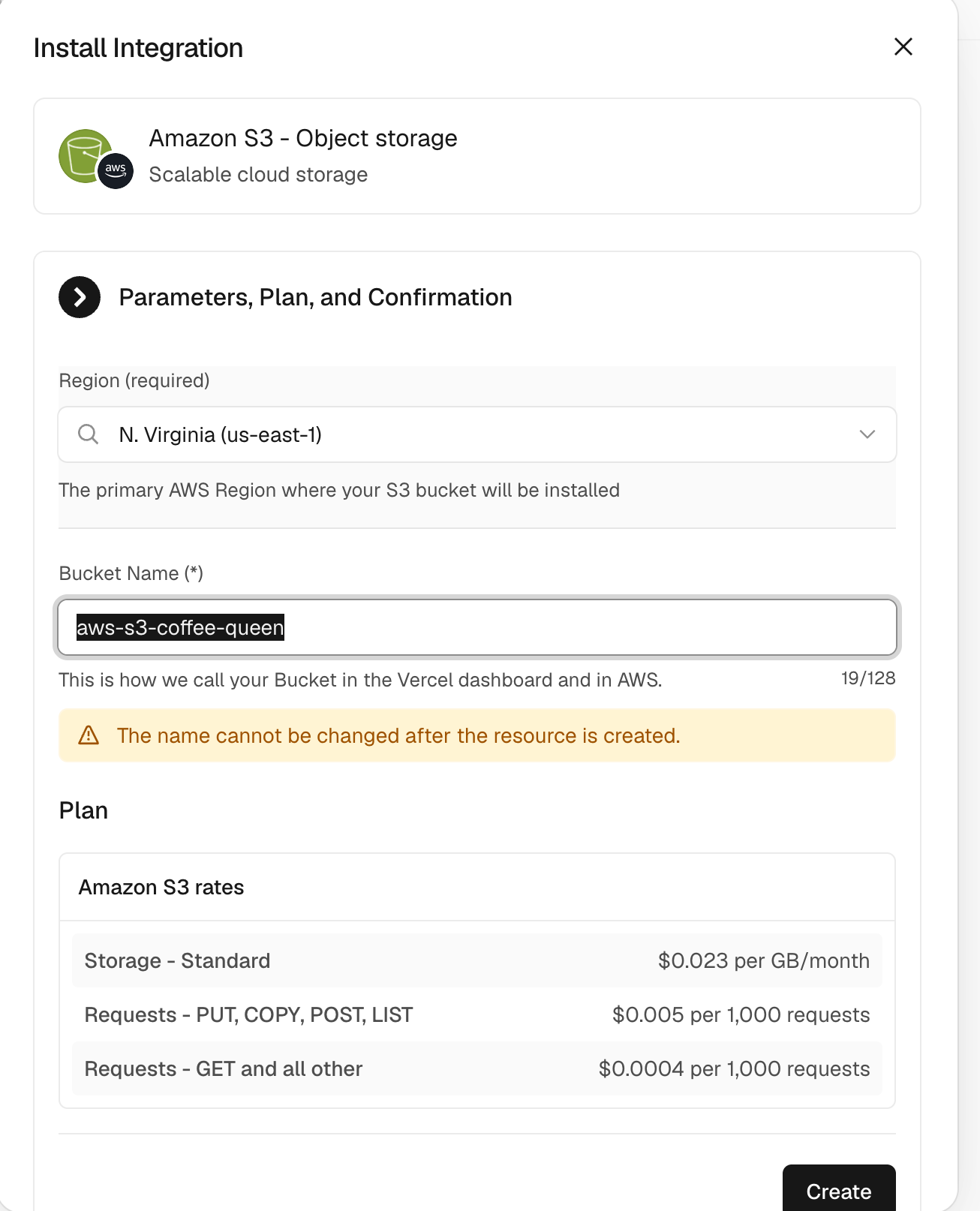
In a significant convergence of cloud infrastructure and frontend development ecosystems, Vercel and Amazon Web Services (AWS) have announced a strategic integration that fundamentally streamlines how modern engineering teams handle data storage. As of today, developers building web applications and artificial intelligence solutions on Vercel can seamlessly provision, configure, and manage Amazon Simple Storage Service (Amazon S3)—including advanced workloads like Amazon S3 Tables and Amazon S3 Vectors—directly from the Vercel Marketplace and the generative AI UI creation tool, v0.
Historically, provisioning enterprise-grade object storage meant stepping outside the rapid deployment workflows of platforms like Vercel. Developers were forced to log into the AWS Management Console, meticulously configure Identity and Access Management (IAM) policies, generate long-lived static access keys, and manually inject environment variables into their deployment pipelines. This context-switching introduced friction, security overhead, and cognitive load for teams striving to ship code rapidly.
The new native integration bridges this gap. By blending the high performance, infinite scalability, and battle-tested durability of Amazon S3 with Vercel’s frictionless provisioning workflow, developers can now deploy a complete, enterprise-ready application stack within seconds. Furthermore, the architecture eliminates the risk of compromised static credentials by leveraging OpenID Connect (OIDC) token exchange via AWS Security Token Service (AWS STS), issuing ephemeral, highly scoped temporary credentials at runtime.
Complementing existing Vercel integrations for Amazon Aurora, Amazon DynamoDB, and Amazon OpenSearch Serverless, the arrival of S3, S3 Tables, and S3 Vectors means teams can now orchestrate databases, object storage, transactional tables, and vector embeddings entirely within a unified Vercel dashboard. All resources map directly back to a single AWS account under a consolidated billing structure. Whether building a simple media gallery, an analytical dashboard using Apache Iceberg, or a sophisticated Retrieval-Augmented Generation (RAG) AI assistant, developers now possess an uninterrupted, end-to-end development loop.
Detailed Chronology
The path toward unifying serverless deployment environments with hyper-scale cloud storage has evolved rapidly over recent years, driven by the explosive growth of edge computing and generative AI applications.
Phase 1: The Emergence of Serverless Architectures and Early Database Integrations
For years, Vercel established itself as the preeminent platform for frontend-driven development, particularly through the popularization of Next.js. However, as web applications grew more dynamic, developers demanded tightly integrated data layers. AWS and Vercel responded by introducing native support for database primitives such as Amazon Aurora (for relational data) and Amazon DynamoDB (for NoSQL workloads).
While these integrations solved the operational hurdles of database connectivity, static asset storage, unstructured data lakes, and vector embeddings remained disjointed. Developers building AI features or data-heavy analytics pipelines were still forced to manually wire up AWS S3 buckets through custom scripts and external configurations, breaking the native developer experience.
Phase 2: The Rise of Specialized S3 Workloads (Tables and Vectors)
Recognizing that modern workloads demand more than basic key-value object storage, AWS continuously evolved Amazon S3. The introduction of Amazon S3 Tables brought fully managed Apache Iceberg tables natively to object storage, automating table compaction, maintenance, and query optimization for massive analytical datasets. Concurrently, the launch of Amazon S3 Vectors introduced cost-optimized, purpose-built vector storage directly within S3, empowering developers to perform semantic search and power AI agents without spinning up standalone, dedicated vector databases.
Despite their immense power, these specialized data structures added another layer of configuration complexity. Bridging them into fast-moving frontend frameworks like React and Next.js required specialized client setup, careful credential management, and intricate plumbing.
Phase 3: Native Convergence on the Vercel Marketplace and v0
The milestone integration announced today marks the culmination of this architectural evolution. By embedding Amazon S3, S3 Tables, and S3 Vectors directly into the Vercel Marketplace and the v0 generative AI engine, AWS and Vercel have dismantled the traditional barriers separating application hosting from deep cloud storage.

Through v0, developers can now use natural language prompts—such as "Build a support bot that answers questions from my PDFs" or "Create a real-time analytics dashboard for clickstream data"—and watch as the system automatically provisions the correct S3 storage backend, links the environment variables, and generates functional, production-ready code.
Supporting Context & Metrics
To fully appreciate the impact of this integration, one must examine the operational bottlenecks it resolves and the architectural depth of the underlying technologies now accessible via a single click.
Architectural Harmony: A Complete Application Stack
With the addition of Amazon S3, Vercel users now command a comprehensive AWS data architecture without leaving their preferred developer dashboard. The platform supports three distinct storage modalities:
- Everyday Object Storage (Amazon S3): Ideal for media uploads, user-generated content, static site assets, and general document handling. Through the
@aws-sdk/client-s3library paired with Vercel’s OIDC credentials provider, handling file uploads in a Next.js API route is streamlined:
import  S3Client, PutObjectCommand  from "@aws-sdk/client-s3";
import  awsCredentialsProvider  from "@vercel/functions/oidc";

const s3 = new S3Client(
  region: process.env.AWS_REGION,
  credentials: awsCredentialsProvider(
    roleArn: process.env.AWS_ROLE_ARN,
  ),
);

export async function POST(request)
  const formData = await request.formData();
  const file = formData.get("file");

  await s3.send(new PutObjectCommand(
    Bucket: process.env.S3_BUCKET_NAME,
    Key: file.name,
    Body: Buffer.from(await file.arrayBuffer()),
    ContentType: file.type,
  ));

  return Response.json( success: true );
-
Analytical Workloads (Amazon S3 Tables): Designed for heavy data volumes, S3 Tables deliver fully managed Apache Iceberg tables. Developers can leverage lightweight query engines like DuckDB directly inside Vercel Functions to execute complex aggregations over massive data lakes without maintaining dedicated cluster infrastructure.
-
AI and Semantic Search (Amazon S3 Vectors): Purpose-built for AI agents and Retrieval-Augmented Generation (RAG) pipelines, S3 Vectors allow developers to store and query high-dimensional embeddings natively in S3. Using
@aws-sdk/client-s3vectors, querying an index for semantic similarity requires minimal boilerplate: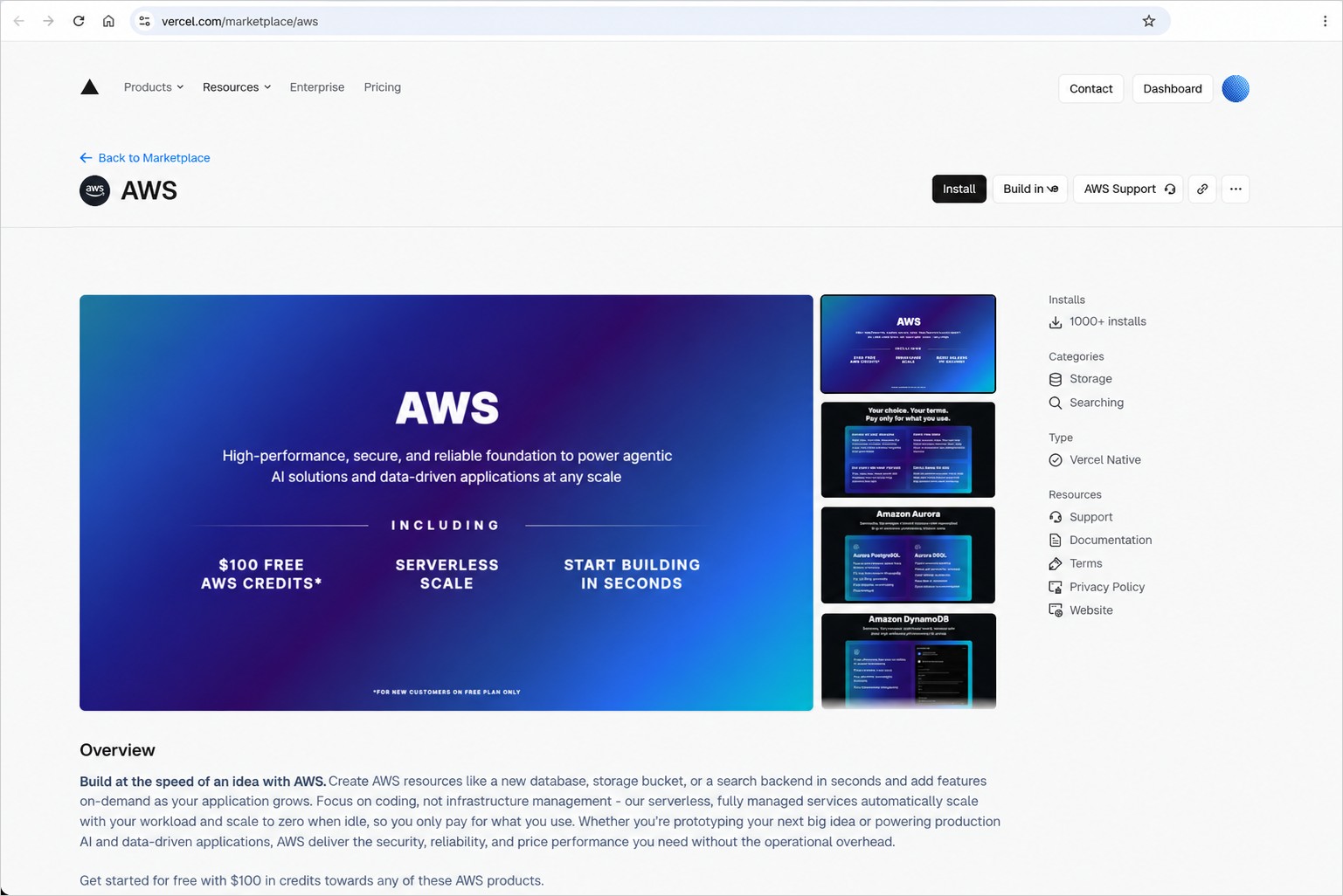
import  S3VectorsClient, QueryVectorsCommand  from "@aws-sdk/client-s3vectors";
import  awsCredentialsProvider  from "@vercel/functions/oidc";

const vectors = new S3VectorsClient(
  region: process.env.AWS_REGION,
  credentials: awsCredentialsProvider(
    roleArn: process.env.AWS_ROLE_ARN,
  ),
);

export async function POST(request)
  const  embedding  = await request.json();

  const result = await vectors.send(new QueryVectorsCommand(
    vectorBucketName: process.env.S3_VECTOR_BUCKET_NAME,
    indexName: "documents",
    queryVector:  float32: embedding ,
    topK: 5,
    returnMetadata: true,
  ));

  return Response.json( matches: result.vectors );
Security by Design: Eradicating Static Keys
A critical advancement in this integration is its rejection of static credentials. Traditional cloud integrations often rely on permanent IAM access keys stored in environment variables—a practice frequently cited in security vulnerabilities and accidental leaks.
Vercel and AWS have resolved this by injecting OpenID Connect (OIDC) parameters (AWS_REGION, AWS_ROLE_ARN, AWS_RESOURCE_ARN) into the deployment environment. At runtime, Vercel’s native awsCredentialsProvider exchanges a short-lived OIDC token with AWS STS for temporary, highly scoped security credentials. This zero-trust approach ensures that no static secrets ever sit idle on servers or source control repositories.
Flexible Account Management and Financial Incentives
Teams can adopt this workflow in one of two ways:
- Greenfield Projects: Spin up a brand-new AWS account directly through the Vercel interface, receiving an introductory $100 in AWS credits valid for the first six months.
- Brownfield Integration: Link an existing enterprise AWS account to utilize current billing arrangements and established infrastructure, with Vercel seamlessly managing newly provisioned buckets created through the platform.
Crucially, there is no additional platform markup charged by Vercel for the integration itself; users pay standard, transparent Amazon S3 pricing for the resources they consume.
Official Statements
Industry leaders from both organizations have emphasized the transformative nature of this collaboration, highlighting its potential to accelerate product delivery while maintaining enterprise-grade security and scalability.
"Developers want to focus on building features, not wrestling with cloud configuration and IAM policies," noted a leading product spokesperson during the rollout. "By bringing Amazon S3, S3 Tables, and S3 Vectors directly into the Vercel Marketplace and v0, we are removing the friction between frontend deployment and hyper-scale cloud infrastructure. Teams can now spin up robust web apps, analytical data pipelines, and AI agents within seconds, all backed by the security of OIDC and the unmatched reliability of AWS."
Engineers and architects echoing these sentiments on community channels have praised the elimination of credential management overhead. By unifying object storage, relational databases, and vector search under a single ecosystem roof, technical leads report a dramatic reduction in boilerplate code and onboarding time for new developers.
Future Outlook
The integration of Amazon S3 into the Vercel ecosystem signals a broader, industry-wide shift toward hyper-integrated developer environments. As generative AI and edge computing continue to mature, the boundary lines separating application code from data infrastructure are increasingly dissolving.
Looking ahead, we can anticipate several key developments:
- Deeper v0 Autonomy: Generative UI tools like v0 will likely evolve to handle increasingly complex data migrations, schema adjustments, and multi-region bucket configurations entirely through natural language orchestration.
- Advanced Analytics at the Edge: With S3 Tables and serverless query engines like DuckDB running smoothly within Vercel Functions, real-time edge analytics will become standard practice even for smaller engineering teams.
- Pervasive Zero-Trust Standards: The OIDC-based authentication model pioneered here will likely serve as a blueprint for future cloud integrations across the broader software development lifecycle, setting a new benchmark for secure, keyless cloud connectivity.
Ultimately, this partnership demonstrates that developers no longer have to choose between the rapid velocity of modern frontend platforms and the deep, industrial-strength capabilities of hyper-scale cloud providers. By harmonizing Vercel’s deployment agility with the unmatched versatility of Amazon S3, the organizations have established a powerful new standard for how modern applications are architected, secured, and scaled.