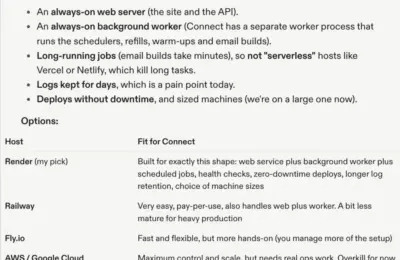
In a significant milestone for cloud-native software architecture, Vercel and Amazon Web Services (AWS) have announced a deep native integration that bridges the gap between high-performance frontend hosting and enterprise-grade cloud storage. Developers building web applications and artificial intelligence systems on Vercel can now provision and manage Amazon Simple Storage Service (Amazon S3) resources directly from the Vercel Marketplace and v0 by Vercel.
This strategic alignment eliminates historic friction points in cloud infrastructure deployment. Previously, orchestrating storage meant stepping outside of Vercel’s streamlined developer workflow to manually configure AWS Identity and Access Management (IAM) policies, access keys, and security credentials within the AWS Management Console. Today, that administrative overhead is replaced by automated provisioning.
The integration encompasses the full spectrum of modern cloud data requirements by introducing native support for three distinct workloads: everyday object storage, high-performance analytics via Amazon S3 Tables, and specialized semantic storage via Amazon S3 Vectors. By combining these capabilities with existing Vercel integrations for Amazon Aurora, Amazon DynamoDB, and Amazon OpenSearch Serverless, development teams can now assemble an entire modern, serverless application stack inside the Vercel dashboard. All components operate seamlessly under a single AWS account and a unified billing model, cementing a powerful symbiotic relationship between the world’s leading frontend platform and the industry’s most robust cloud infrastructure provider.
Detailed Chronology
The rollout of native Amazon S3 support on Vercel is the culmination of a multi-year convergence between frontend deployment agility and backend storage elasticity.
The Shift Toward Unified Stacks
Historically, frontend-as-a-service (FEaaS) providers like Vercel focused on optimizing the delivery of static and server-rendered web assets, leaving backend storage orchestration entirely up to the developer. While tools like Next.js radically simplified application logic, configuring secure connections to AWS S3 buckets required generating long-lived IAM credentials, hardcoding environment variables, and manually maintaining security boundaries.
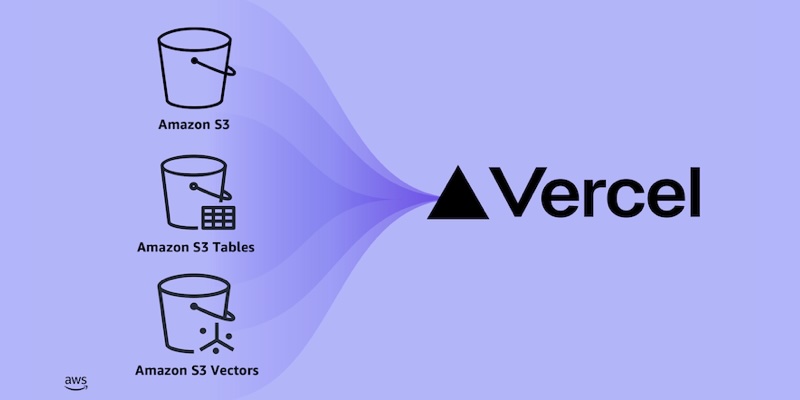
Recognizing that modern web apps—especially those driven by generative AI—require tightly integrated data layers, Vercel and AWS began laying the groundwork for native data integrations. Initial phases introduced database connectors for Amazon Aurora and DynamoDB. However, object storage, analytical data lakes, and vector embeddings remained out of reach for direct, one-click provisioning inside the Vercel ecosystem.
The Launch of Native S3 and v0 Integration
The modern paradigm shifts with the simultaneous release of Amazon S3, S3 Tables, and S3 Vectors on the Vercel Marketplace and v0.
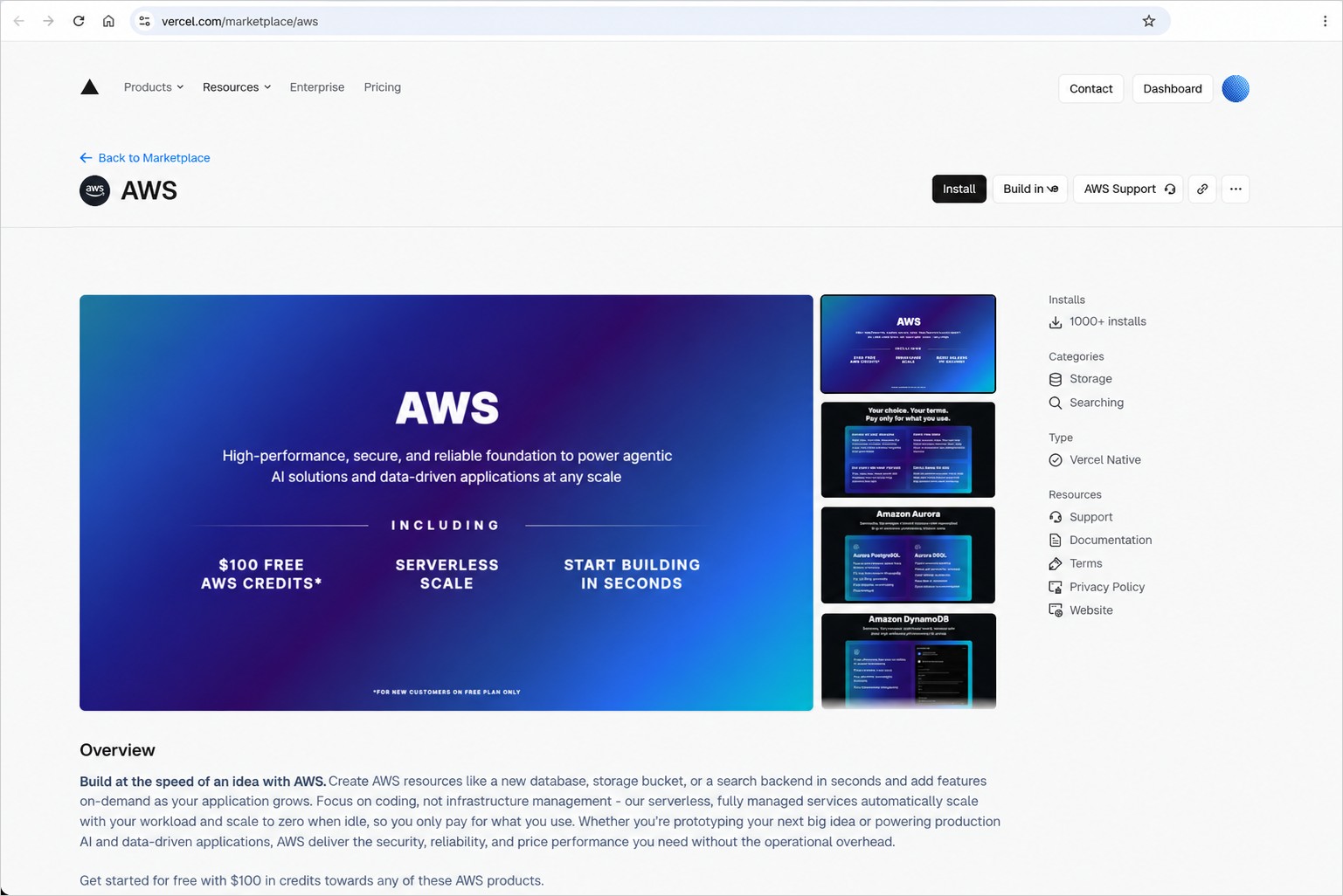
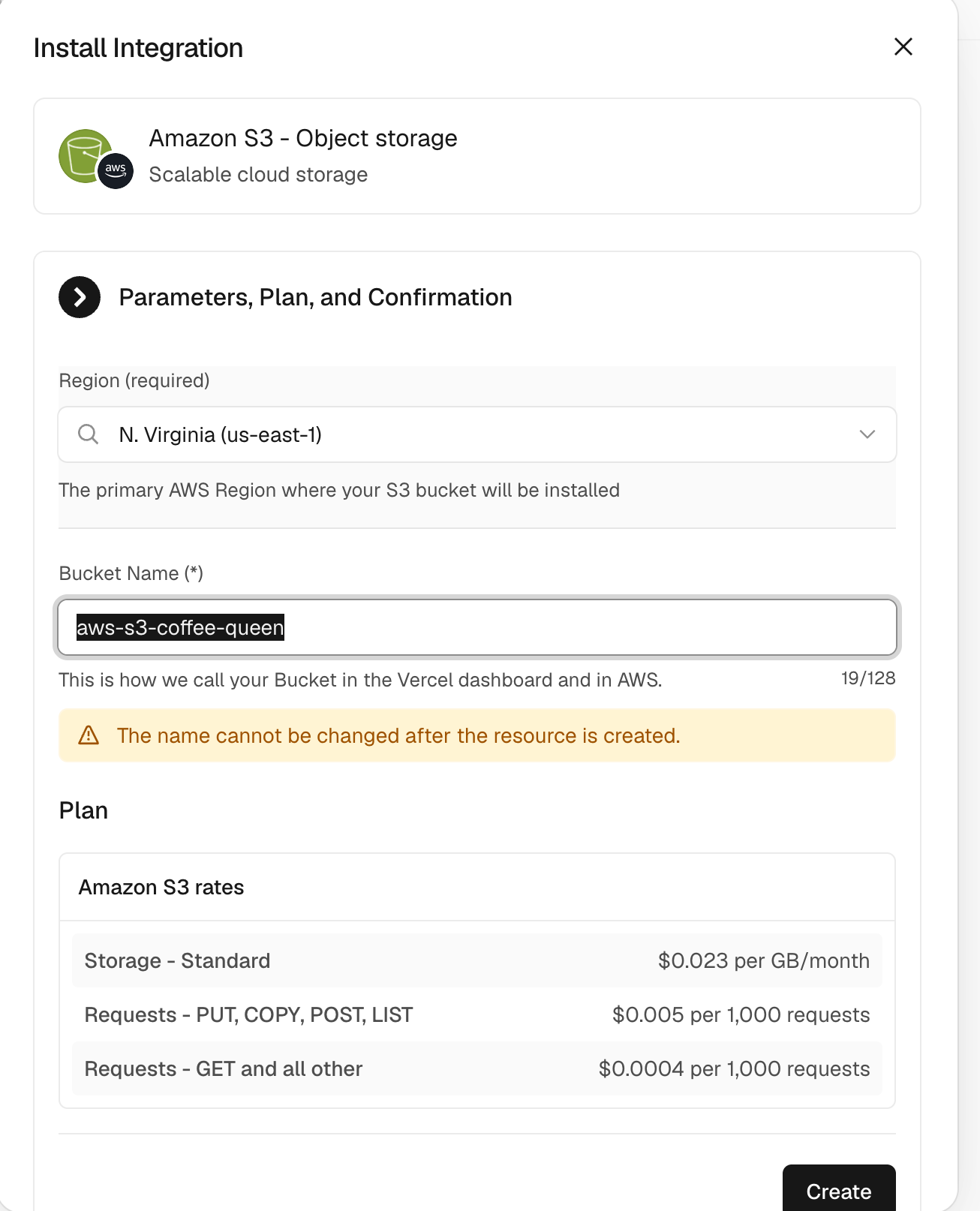
- Provisioning Automation: Developers navigate to the Storage tab within the Vercel dashboard, select AWS, and choose their bucket type, region, and naming parameters. Provisioning is completed within seconds.
- OIDC-Powered Security: Rather than relying on static, vulnerable access keys, the integration utilizes OpenID Connect (OIDC). At runtime, Vercel functions leverage
awsCredentialsProviderfrom@vercel/functions/oidcto dynamically exchange short-lived tokens with AWS Security Token Service (AWS STS). - AI-Driven Infrastructure via v0: In a leap forward for natural language software development,
v0users can now prompt the system to build fully functional applications—such as a PDF-backed support bot or an image recognition gallery—and havev0automatically provision the underlying S3 vector or object storage buckets, wire up environment variables, and output production-ready code.
Supporting Context & Metrics
To fully appreciate the gravity of this integration, one must examine the architectural mechanics and operational metrics driving modern web and AI development.
Architectural Blueprint: Three Workloads, One Unified Platform
The integration addresses three distinct tiers of data storage and processing:
| Workload Type | AWS Service | Primary Use Case | Key Integration Tech |
|---|---|---|---|
| Object Storage | Amazon S3 (General Purpose) | User-uploaded media, static assets, document repositories | @aws-sdk/client-s3, Next.js API Routes |
| Analytics | Amazon S3 Tables | Apache Iceberg-compliant data lakes, query optimization at scale | DuckDB Node API, S3 Tables REST Catalog |
| Vector Search | Amazon S3 Vectors | RAG (Retrieval-Augmented Generation), semantic search, AI agents | @aws-sdk/client-s3vectors, Custom Embeddings |
Security Architecture Without Compromise
Security misconfigurations in cloud storage remain one of the leading vectors for data exposure. The Vercel-AWS S3 integration neutralizes this risk by completely abstracting away static keys.

When a project is linked via the Vercel CLI (vercel link and vercel env pull .env.local), the platform injects minimal necessary identifiers: AWS_REGION, AWS_ROLE_ARN, AWS_RESOURCE_ARN, and bucket-specific references. At runtime, temporary, scoped credentials are fetched via OIDC token exchange. This ensures that even if application-level code is compromised, the blast radius is strictly contained, and credentials expire automatically.
Code Implementation Mechanics
1. Object Storage Operations (Next.js)
Handling file uploads no longer requires complex intermediary microservices. A standard Next.js route can securely stream files directly into an S3 bucket:
import  S3Client, PutObjectCommand  from "@aws-sdk/client-s3";
import  awsCredentialsProvider  from "@vercel/functions/oidc";

const s3 = new S3Client(
  region: process.env.AWS_REGION,
  credentials: awsCredentialsProvider(
    roleArn: process.env.AWS_ROLE_ARN,
  ),
);

export async function POST(request)
  const formData = await request.formData();
  const file = formData.get("file");

  await s3.send(new PutObjectCommand(
    Bucket: process.env.S3_BUCKET_NAME,
    Key: file.name,
    Body: Buffer.from(await file.arrayBuffer()),
    ContentType: file.type,
  ));

  return Response.json( success: true );
2. High-Performance Analytics with S3 Tables and DuckDB
For analytical workloads, S3 Tables provide fully managed Apache Iceberg tables that automatically optimize storage layouts as data volumes swell. Developers can query these tables directly within Vercel Functions using lightweight engines like DuckDB:
import  DuckDBInstance  from "@duckdb/node-api";
import  awsCredentialsProvider  from "@vercel/functions/oidc";

const creds = await awsCredentialsProvider(
  roleArn: process.env.AWS_ROLE_ARN,
)();

const db = await DuckDBInstance.create();
const conn = await db.connect();

await conn.run("INSTALL aws; LOAD aws; INSTALL httpfs; LOAD httpfs; INSTALL iceberg; LOAD iceberg;");

await conn.run(`
  CREATE SECRET s3cred (
    TYPE s3,
    KEY_ID '$creds.accessKeyId',
    SECRET '$creds.secretAccessKey',
    SESSION_TOKEN '$creds.sessionToken',
    REGION '$process.env.AWS_REGION'
  );
`);

await conn.run(`
  ATTACH '$process.env.AWS_RESOURCE_ARN' AS s3tables (
    TYPE iceberg,
    ENDPOINT_TYPE s3_tables
  );
`);

const rows = await (await conn.run(`
  SELECT town_city, AVG(median_price) AS avg_price
  FROM s3tables."$process.env.S3_TABLES_NAMESPACE".town_monthly
  GROUP BY town_city
  ORDER BY avg_price DESC
  LIMIT 10
`)).getRowObjects();
(Note: When deploying DuckDB inside a Next.js environment, developers must register @duckdb/node-api under serverExternalPackages in next.config.mjs to prevent bundling conflicts with native node bindings.)
3. Semantic Search via S3 Vectors
Building Retrieval-Augmented Generation (RAG) applications typically demands maintaining specialized vector database infrastructure. S3 Vectors bypass this requirement by embedding native vector storage and querying capabilities directly into S3:
import  S3VectorsClient, QueryVectorsCommand  from "@aws-sdk/client-s3vectors";
import  awsCredentialsProvider  from "@vercel/functions/oidc";

const vectors = new S3VectorsClient(
  region: process.env.AWS_REGION,
  credentials: awsCredentialsProvider(
    roleArn: process.env.AWS_ROLE_ARN,
  ),
);

export async function POST(request)
  const  embedding  = await request.json();

  const result = await vectors.send(new QueryVectorsCommand(
    vectorBucketName: process.env.S3_VECTOR_BUCKET_NAME,
    indexName: "documents",
    queryVector:  float32: embedding ,
    topK: 5,
    returnMetadata: true,
  ));

  return Response.json( matches: result.vectors );
Official Statements & Ecosystem Impact
Industry reactions to the integration highlight its disruptive potential for full-stack engineering teams. By bridging serverless frontend delivery with massive object stores, architectural silos are dismantled.
Engineering leadership notes that the convergence of Vercel and AWS S3 dramatically shortens the path from prototype to production. Organizations no longer need dedicated DevOps personnel solely tasked with configuring identity federation and storage permissions for every new micro-frontend or AI experiment.
Furthermore, the flexibility regarding account ownership ensures enterprise readiness. Development teams can either instantly spin up a pristine AWS account directly through Vercel—complete with a $100 promotional credit valid for six months to aid testing—or link an existing enterprise AWS account. In the latter scenario, Vercel interacts exclusively with newly provisioned buckets created through its dashboard, ensuring that corporate security policies, compliance frameworks, and existing centralized billing arrangements remain completely undisturbed.
Future Outlook
The integration of Amazon S3 into the Vercel Marketplace and v0 signals a broader evolutionary trajectory in software engineering: the complete abstraction of infrastructure configuration through natural language and intelligent provisioning pipelines.
As generative AI agents become deeply embedded in the software development lifecycle, tools like v0 will increasingly act as autonomous orchestrators. Developers will no longer merely "write code and deploy"—they will conceptualize complex multi-tier systems involving transactional databases, object stores, analytical data lakes, and vector embeddings in plain English, relying on native cloud integrations to instantiate the underlying architecture in seconds.
For enterprises and indie developers alike, this collaboration removes the traditional barriers separating application presentation layers from hyperscale cloud storage. By unifying billing, tightening security through OIDC token exchange, and expanding workload versatility to cover analytics and AI vectors, Vercel and AWS have established a new benchmark for developer velocity and architectural harmony in the cloud era.