For three decades, the Women’s National Basketball Association (WNBA) has operated as a crucible of athletic excellence, social progress, and structural resilience. Today, the league finds itself at an unprecedented zenith and a cultural crossroads. On the court, the WNBA is thriving: historic payouts following a tentative collective bargaining agreement (CBA) overhaul, a monumental media rights distribution deal, and surging attendance figures signal an era of unprecedented financial and commercial viability. Yet, this newfound mainstream visibility has exacted a complex toll.
Off the court, the league has been violently thrust into the hyper-partisan currents of America’s ongoing culture wars. No longer merely a sanctuary for world-class basketball, the WNBA has transformed into a high-stakes proxy battleground for broader societal anxieties regarding race, gender identity, femininity, diversity, equity, and inclusion (DEI), and labor politics.
This collision of sports and ideology reached a recent boiling point when Indiana Fever guard Sophie Cunningham weighed in on the contentious debate surrounding transgender athletes in women’s sports—a debate occurring in a league where no known transgender athletes have ever played. To unpack how a professional sports league became a central fixture of modern political discourse, Today, Explained co-host Noel King spoke with The Ringer staff writer Seerat Sohi. Their dialogue exposes how a combination of explosive on-court talent, historical institutional missteps, and a shifting media landscape have made the WNBA the most culturally modern and fiercely contested sports league in America.
Detailed Chronology: From Margin to Mainstream
To understand how the WNBA became a focal point for national cultural debates, one must trace the historical trajectory of the league and the specific catalysts that accelerated its visibility over the past few years.
1. The Historical Margins and Institutional Timidity
Since its inception, the WNBA has been defined largely by individuals who existed on the cultural margins. Comprising predominantly Black, openly queer, and politically outspoken female athletes, the league operated during an era when women’s sports were routinely marginalized, underfunded, and mocked.
From an institutional perspective, the league’s top leadership historically struggled to champion its own identity. Afraid of alienating a conventional, nuclear-family demographic—the elusive "average American"—league executives often encouraged players to soften their public images. Early icons like Sue Bird, who entered the league in 2002, were subtly and overtly advised to keep their personal lives private. Visual archives of legends like Bird and recently retired star Diana Taurasi reveal an era where players were frequently packaged in hyper-feminine, non-threatening aesthetics to appease conservative commercial interests.
2. The 2023 NCAA Championship Game: The Inciting Incident
The structural powder keg ignited outside the professional ranks during the April 2023 NCAA Women’s Basketball National Championship game. Facing off were two generational talents: Caitlin Clark of the Iowa Hawkeyes and Angel Reese of the LSU Tigers. LSU ultimately claimed the victory, and during the closing moments, Reese mirrored a "You can’t see me" taunt that Clark had deployed earlier in the tournament, punctuating it by pointing to her ring finger.
What should have been standard competitive trash talk exploded into a national lightning rod. Reese faced intense backlash from conservative commentators and media figures alike, with some labeling her behavior "classless." Conversely, WNBA and women’s college basketball fans viewed the disparate treatment of Reese as a racial dog whistle, highlighting a double standard in how Black and white athletes are judged in competitive environments. This single contest forever altered the public profiles of both players and established a blueprint for media pundits and political commentators: women’s basketball could be weaponized to generate engagement through racial and cultural grievance.
3. The Arrival of Caitlin Clark and the "Gateway Drug" Effect
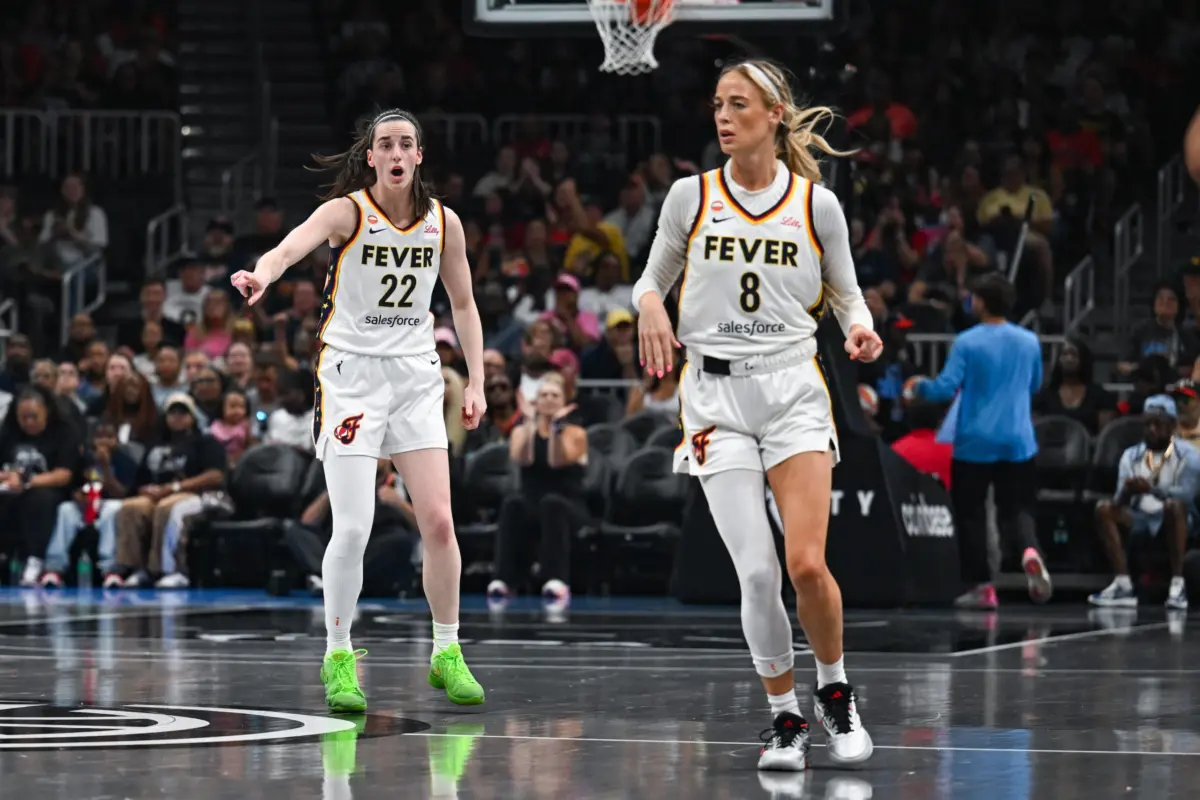
When Caitlin Clark transitioned to the WNBA as the top pick for the Indiana Fever, her impact was seismic. Described by analysts as a "gateway drug" for new sports fans, Clark brought unprecedented television viewership, sold-out arenas, and mainstream media attention. However, her entry coincided with persistent narratives surrounding her reception within the league.
As a white, heterosexual player entering a league historically anchored by Black and queer stars, Clark was occasionally framed by external commentators as an outsider facing resentment from her peers. While veteran players welcomed the revenue, attention, and long-overdue operational improvements—such as the implementation of league-wide charter flights—the media narrative frequently pitted factions of the fan base against one another. Clark’s organic brilliance inadvertently laid bare the historical, manufactured failures of league leadership, proving that the infrastructure required to support a modern sports league had been neglected for years.
4. The Sophie Cunningham Controversy and the Transgender Debate
Most recently, the culture wars penetrated the locker room directly through Indiana Fever guard Sophie Cunningham. Gaining a reputation as an "enforcer" and protector for teammate Caitlin Clark, the 30-year-old Cunningham made headlines in July during an interview with ESPN. Addressing her personal ethos, she stated: "I think that I am here to extend love, but I also think that with love is truth, being honest. And I want to protect young girls in a locker room or young girls in sport who shouldn’t have to go against biological men."
The commentary immediately vaulted the WNBA into the national legislative and cultural debate over transgender participation in women’s sports—despite the stark reality that no known transgender athlete has ever played in the WNBA. Pundits, politicians, and commentators quickly seized upon the remarks, shifting the public discourse away from the hardwood and into legislative talking points.
Supporting Context & Metrics: The Modern American Proxy
The WNBA’s unique positioning as a cultural battleground is rooted in demographics, economics, and political activism. Unlike legacy sports leagues that often attempt to remain politically neutral to preserve broad market shares, the WNBA has historically embraced its political identity.
Political Activism and Corporate Accountability
The league’s players have repeatedly demonstrated their collective political power. Most notably, during the 2020 social justice awakenings, WNBA players actively organized in support of racial justice movements. Players for the Atlanta Dream notably campaigned against then-Senator Kelly Loeffler—who was then the co-owner of the team—vocalizing opposition to her criticism of Black Lives Matter. This player-led mobilization was widely credited with helping flip a crucial Georgia Senate seat, eventually leading to Loeffler’s divestment and sale of the franchise.
Demographic Shifts and the Right-Wing Lens
The modern conservative movement has increasingly recognized sports and cultural institutions as vital territories for ideological influence. Just as debates rage over the cultural messaging in children’s media or corporate DEI initiatives, the WNBA has become a proxy for debates on gender fluidity, femininity, and labor politics.
When right-wing figures latch onto the WNBA through the lens of Caitlin Clark or Sophie Cunningham, they are engaging in a battle over symbolism. Seeing women thrive in high-intensity, high-visibility roles—where they command the spotlight, display physical exertion, and dictate economic value—challenges traditional patriarchal frameworks. The league is viewed by these commentators not merely as an athletic association, but as a vanguard of progressive modernity.
Official Statements & Expert Analysis
The friction between athletic achievement and cultural exploitation has left players, coaches, and analysts searching for ways to insulate the game. Speaking on Today, Explained, Seerat Sohi contextualized the phenomenon:
"The WNBA is a league that invites, frankly, a lot of distraction, both because of its own institutional failures… but I think in general, the WNBA has become fertile ground for the culture wars… because the league has exploded in popularity at the same moment in the country where we are embroiled in this cultural, political, legal fight over what the role of women is in society."
Addressing the historical timidity of league marketing, Sohi noted:
"This has been a league that has been defined by people who have historically existed on the margins. They are female athletes at a time when historically female athletes were not paid much attention to… It’s the league that is primarily Black, that is openly queer, that is politically outspoken. And the league has always tried to toe the line of marketing the faces that feel more like a girl-next-door type of vibe."
Summarizing the broader implications of this cultural friction, Sohi concluded:
"It is a league that you can use as a proxy to talk about race, gender fluidity, femininity, DEI, labor politics. It is probably the most modern American league that we have. And if you look back at the history of sports, I think Americans have always used sports as a proxy to talk about things that aren’t actually about the sport. And the WNBA is really just the latest vessel of that."
Future Outlook
As the WNBA steps into its fourth decade, its trajectory will depend heavily on how league leadership, players, and media partners navigate the dual pressures of commercial expansion and ideological exploitation.
- Navigating the New Media Landscape: With a massive TV distribution deal taking effect, games will be broadcast to wider, more diverse audiences than ever before. This expansion will inevitably bring heightened scrutiny, requiring the league’s communications teams to proactively manage narratives rather than allowing external commentators to define its identity.
- Labor and Institutional Maturation: The implementation of historic payouts and formalized benefits under the tentative CBA indicates that the league is beginning to professionalize its back-end infrastructure. Catching up to the rapid on-court growth will require sustained institutional bravery—embracing the authentic identities of its players rather than retreating into sanitized, historical marketing tropes.
- Shielding Athletes from Exploitation: While players like Sophie Cunningham and Caitlin Clark will continue to draw intense public interest, the overarching challenge for the WNBA ecosystem will be ensuring that athletes are not reduced to talking points in America’s endless culture wars.
Ultimately, the WNBA’s current turbulence is a byproduct of its cultural relevance. By refusing to stay in the sidelines, the league has cemented itself as the most culturally vital sports organization in the United States. Whether it can maintain its athletic integrity while serving as the mirror of a divided nation remains the definitive question of its modern era.