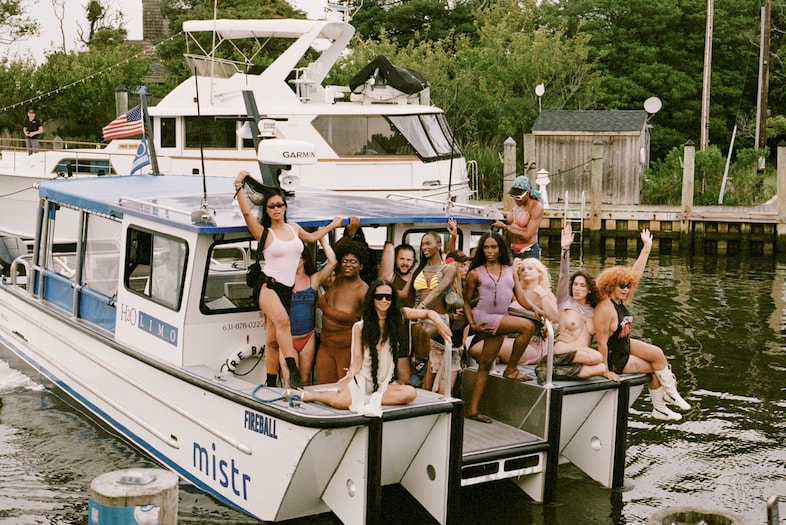
From August 28 to 30, Fire Island Pines—the storied, sun-drenched, and glittering gay enclave historically defined by cisgender homosexual affluence and real estate dominance—bore witness to a paradigm shift. Doll Invasion, a high-concept, trans-led excursion now in its fourth year, descended upon the island with a singular, unapologetic mandate: to occupy, disrupt, and playfully rewrite the social and sexual contracts of a culture built decades ago by gay men.
Functioning as a vibrant “fund-rager” benefiting the non-profit Queer|Art, Doll Invasion is, at its core, a theatrical and political collision of gay guys and dolls. For generations, the physical architecture and social rhythms of the Pines—its manicured mid-century beach houses, lush vegetation, and endless sea of Speedo-clad bodies—were engineered around the specific desires and economic power of gay men. Activist and DJ Chelsea Manning, reflecting on her pre-transition trips to the island in the late 2000s, noted a stark historical reality: the entire ecosystem was designed to exclude trans presence.
Enter the dolls. By deliberately failing the Bechdel Test—a gathering of righteous, mission-driven trans women and allies whose conversations unapologetically center on men, social occupation, and tactical community-building—Doll Invasion operates as an exercise in radical imagination. It asks what happens when a long-established gay circadian rhythm is intentionally interrupted. Through friction, fluid aesthetics, and fierce joy, the event moves beyond private homes and into the hyper-public rituals of the Pines, permanently altering the hearts, habits, and boardwalks of the boys in the sand.
Detailed Chronology: The Anatomy of an Invasion
Friday, August 28: Interrupted Rhythms and Boardwalk Diplomacy
The weekend kicked off with the quiet, structural friction that organizers like fashion designer Willie Norris and writer Kay Gabriel anticipated. The traditional circadian rhythm of the Pines—the sacred weekend ritual of meeting a man on Friday, seducing him on Saturday, and meeting his husband on Sunday—faced an unprecedented variable: an influx of trans attendees arriving for the day, many of whom were entirely unaware of the deep-seated historical tensions humming beneath the boardwalks.
Norris emphasizes that any honest assessment of the Pines must acknowledge its foundational reality: it is a resort town populated and owned by gay men. Yet, as the weekend’s events unfolded, the transactional nature of the island—built on a physical and material economy of sand, sweat, spit, currency, hard dicks on dance floors, and private afterparties—began to loosen. Boardwalk etiquette shifted. Simple gestures, such as a casual greeting or a shared nod while passing a property owner, transformed into acts of relational architecture. Dolls carved out literal and figurative space around dinner tables and shared rentals, weaving themselves into the very fabric of the island’s property-holding class.
Saturday, August 29: The Climax at the Pool
The undeniable zenith of the weekend occurred on the afternoon of August 29, cementing the event’s mythological status. As Hex Hector’s legendary remix of Deborah Cox’s anthem “Nothing’s Supposed to Be Here” thundered through the air, Black trans drag performer and Doll Invasion social media coordinator Cherry Jaymes delivered a moment of pure, catalytic liberation.
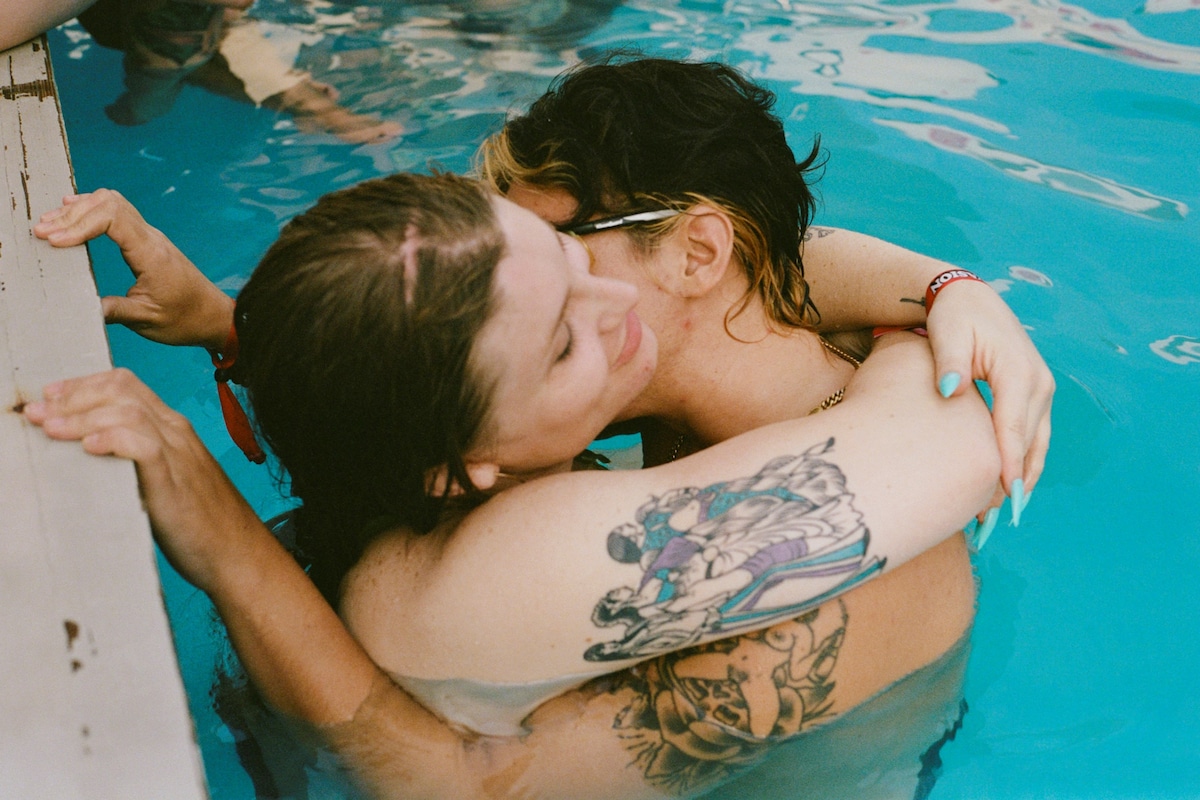
Amidst a gathering crowd of trans people and allies packed inside and around the pool area, Jaymes launched herself mug-first into the water at the song’s emotional climax. The collective reaction—a mixture of ecstatic screams, tears, and absolute disbelief—encapsulated the emotional thesis of the entire weekend. The subtext of Cox’s lyrics was violently and joyfully reclaimed: We are supposed to be here.
The sonic landscape of the day bridged generations of queer nightlife. The spirit of legendary DJ Lina Bradford—who sculpted the sensual and sonic energy of Fire Island’s famed afternoon gathering, Tea, from 2005 onward—hovered over the decks. When DJ Adair later unleashed Aly-Us’s house classic “Follow Me” into the evening air (“Follow me, why don’t you follow me, to a place where we can be free”), the historical continuity between early-2000s gay nightlife and contemporary trans liberation became palpable.
Sunday, August 30: Reflection, Tides, and Kinship
As the weekend drew to a close, the frantic energy of the daytime functions gave way to quiet, intimate moments of reflection. Away from the primary stages of the invasion, attendees partook in the quiet domesticity and romantic fluidity of the island.
One organizer recounted peeling away from the festivities to lie horizontal on the sunset-drenched beach, looking up at a sky painted in shades of blue and pink while a newlywed friend’s wedding band brushed against their inner thigh. Moments later, as the tide lapped gently at their ankles, companions shared kisses against the backdrop of the Atlantic. The absence of immediate sexual consummation was intentional; it was a mutual acknowledgment that the space—and the emotional freedom it afforded—was now permanently accessible. They could, and would, return.
Supporting Context & Metrics
Philanthropic Impact: Entering its fourth consecutive year, Doll Invasion operates as a dedicated fundraiser for Queer|Art, a vital non-profit organization supporting LGBTQ+ artists through mentorship, grants, and public programming.
Historical Timeline: The cultural architecture of Fire Island Pines has been shaped by gay men’s economic and social dominance since the mid-20th century. Key milestones include the institutionalization of public afternoon gatherings (Tea) in the late 20th century and the entry of prominent queer media figures like Lina Bradford in the mid-2000s, paving the way for contemporary intersectional interventions.
Demographic Shift: While historical documentation of the Pines from the 1970s through the 2000s reflects an overwhelmingly cisgender male demographic, events like Doll Invasion represent a measurable demographic and cultural expansion, introducing hundreds of trans women, non-binary artists, and allies into spaces previously walled off by property ownership lines and homogenous social norms.
Official Statements and Perspectives
The philosophical framework of Doll Invasion relies heavily on the articulations of its organizers, artists, and cultural historians who recognize the weight of occupying a legendary enclave.
Kay Gabriel, Writer and Organiser: “It [Doll Invasion] is the face, if you will, of the Pines for this weekend. It is the thesis of what people are on the island to do. If you want to do something else, that’s fab. But this is central… People who understand this place to be for them also believe that we are a part of their project. And we can match that spirit in letting our guard down and allowing the abundance and the goodwill to enter.”
Willie Norris, Fashion Designer and Organiser: “Invading a properly decades-long, established kind of gay circadian rhythm… For this to be real, we need to be real about the fact that this is a place populated by gay men who own the property. A lot of that friction is unsaid, and it boils up to the top in different ways.”
Lina Bradford, DJ and Cultural Pioneer: “I found myself on that island. You just can’t just show up and expect that that’s it… You’ve got to make certain that you’re there and you’re supporting other things and also getting in the underlying part of the community. You show them your way, they show you their way, and hopefully you get somewhere different and better together.”
Echoing the spirit of the late, great trans activist and artist Cecilia Gentili—whose ethos was proudly displayed across the apparel of attendees (“I WANT ALL THE FAGGOTRY. I WANT ALL THE TRANNY BEHAVIOR”)—Bradford summarized the necessary attitude for lasting coexistence in the Pines in six decisive words: “Fiercely bring me into the fold!”
Future Outlook: Building Beyond the Weekend
As Doll Invasion concludes its fourth and most visible iteration to date, the long-term implications for Fire Island Pines are profound. The transition of the event from private house parties to hyper-public venues like the central pool spaces and open boardwalks signals a permanent evolution in how the island functions during peak summer months.
The friction noted by Willie Norris and Kay Gabriel is not a sign of failure, but rather the necessary friction of growth. True integration requires mutual surrender: property-holding gay men must reconcile their historical insularity with the expanding boundaries of queer liberation, while visiting trans communities must continue to embed themselves in the foundational labor, art, and institutional support of the island.
Change requires community, and community requires change. As planners, artists, and lovers look toward future iterations—long before the calendar turns to next year’s Doll Invasion—the objective remains clear. The dolls are no longer visiting an external fantasy; they are actively co-authoring it.