The video game industry has long operated on a knife-edge of creative brilliance and volatile financial realities. Few stories capture this precarious duality quite like the rise and fall of Polyarc. Founded in 2015 by a team of industry veterans, the studio carved out a prestigious reputation by proving that virtual reality (VR) could be a home for emotionally resonant, storybook narrative adventures rather than just fast-paced arcade shooters. Anchored by the universally beloved, sword-wielding mouse protagonist Quill, the Moss franchise captured the imaginations of players worldwide, earning over 160 awards and nominations and establishing a gold standard for third-person VR platforming.
Yet, critical acclaim and a passionate fanbase do not automatically insulate a studio from broader economic headwinds, shifting platform trends, and the brutal calculus of game development financing. Exactly three months after releasing their final title—a non-VR compilation and reimagining titled Moss: The Forgotten Relic—Polyarc announced it is permanently closing its doors.
The studio’s closure marks a heartbreaking conclusion to a 12-year journey. It follows a harrowing year of financial distress, including a failed funding deal for a mid-development project and massive layoffs that gutted two-thirds of the studio’s workforce earlier in 2025. As Polyarc winds down its operations for good, the closure serves as a poignant reminder of the systemic vulnerabilities facing independent developers in the modern gaming landscape, even those responsible for some of the most celebrated virtual reality experiences ever created.
Detailed Chronology: From Indie Upstart to VR Royalty
The Genesis of Polyarc (2015–2018)
Polyarc was established in 2015 by a collective of developers who shared a vision for pushing the boundaries of immersive media. At a time when the modern consumer VR landscape was still in its absolute infancy—defined largely by early developer kits and tethered hardware—the team set out to explore how player presence could be integrated into narrative-driven puzzle platformers.
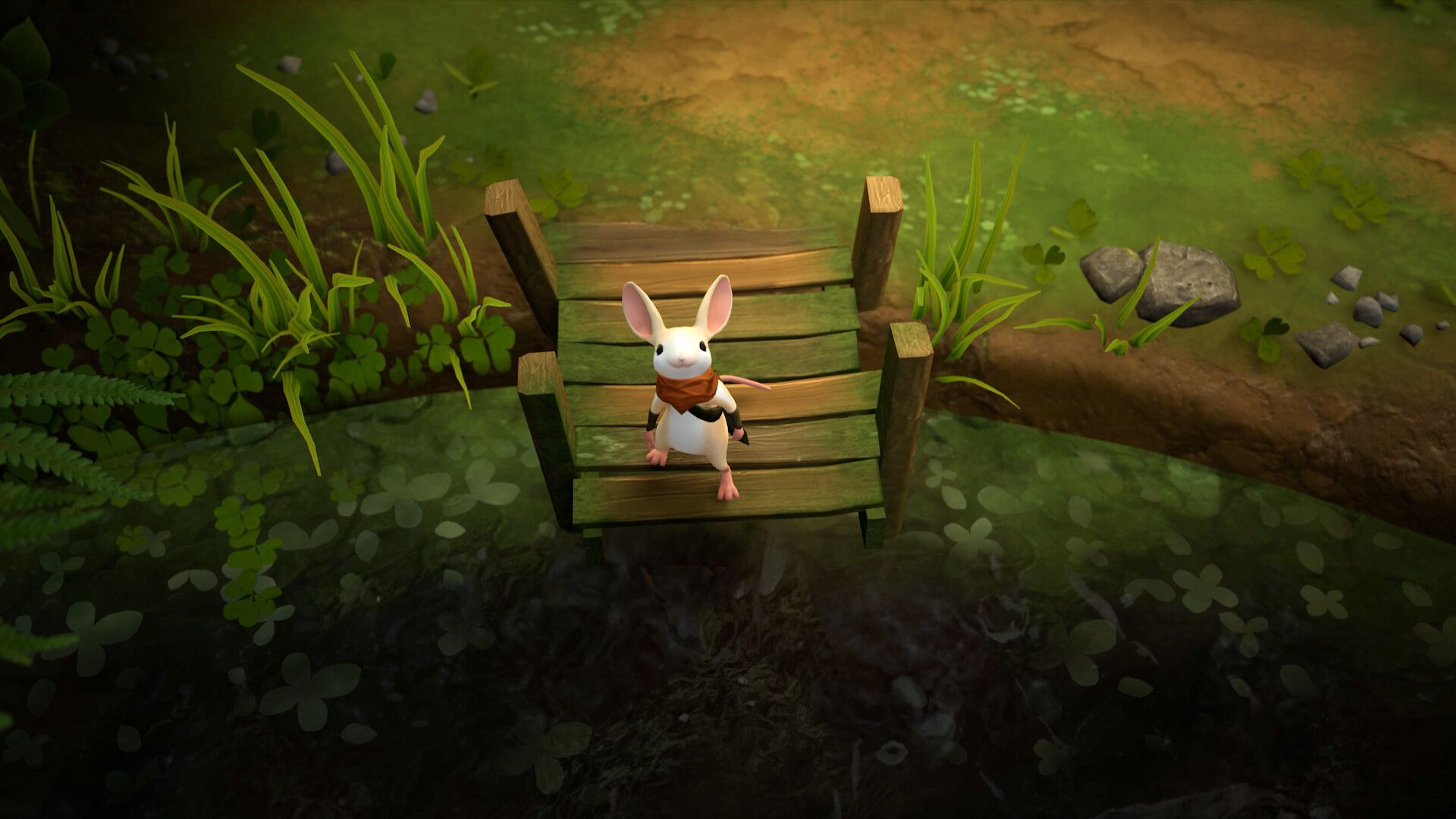
Their debut title, Moss (later referred to as Moss: VR), arrived in 2018 initially as a PlayStation VR exclusive before expanding rapidly to PC VR platforms via Steam. Unlike the vast majority of virtual reality titles that leaned heavily into first-person perspectives to maximize immersion, Moss took a uniquely hybrid approach. Players stepped into the role of "The Reader," a benevolent entity sitting within a magical storybook universe. Simultaneously, players controlled Quill, a brave young mouse, using conventional action-adventure inputs while utilizing VR motion controls to physically manipulate elements of the environment, solve intricate puzzles, and heal Quill during combat encounters.
The game was a triumph of design. The emotional bond forged between the player and Quill—who would gesture directly to the player, celebrate victories with high-fives, and show fear or exhaustion—became an oft-cited masterclass in character connection within interactive media.
Expansion, Innovation, and Critical Acclaim (2019–2022)
Buoyed by the breakout success of the original game, Polyarc expanded its operations, nurturing a dedicated internal culture focused on craftsmanship and player delight. The studio spent several years crafting a direct continuation of Quill’s journey, culminating in the 2022 release of Moss: Book II.
The sequel elevated every aspect of its predecessor: expanding the combat mechanics with new weapons like a heavy hammer and dash abilities, introducing more complex puzzle environments, and deepening the overarching lore of the realm. Moss: Book II received widespread critical acclaim, cementing Polyarc’s status as a premier developer in the VR space. Together, the first two games amassed a staggering collection of over 160 industry awards and nominations, establishing strong commercial footprints primarily on Meta and Sony hardware platforms.
The Pivot, Financial Strain, and Downsizing (2025)
Despite their critical pedigree, the economic realities of the video game market shifted dramatically heading into the mid-2020s. Seeking to diversify its portfolio and capture broader multiplayer audiences, Polyarc launched Glassbreakers: Champions of Moss in early 2025. A real-time PvP strategy spinoff set within the established Moss universe, the game unfortunately failed to capture a sustainable, active player base in a hyper-competitive multiplayer market.
The failure of Glassbreakers to ignite commercial traction triggered a cascade of financial difficulties. Later in 2025, Polyarc suffered a devastating blow when a key financial partner pulled out, causing the studio to lose crucial funding for an unannounced mid-development project. Desperate to keep the studio afloat, leadership pursued a third-party publishing "hail mary" deal, which ultimately fell through.
With capital completely exhausted, Polyarc was forced to enact catastrophic measures, laying off two-thirds of its total staff earlier in the year as a last-ditch effort to preserve a core team capable of shipping their final project.
The Final Chapter: The Forgotten Relic and Closure (Late 2025)
Polyarc’s final release, Moss: The Forgotten Relic, launched in July 2025. Developed in collaboration with external co-development partner Blackbird Interactive, the title was designed as an ambitious pivot: a traditional, non-VR compilation and reimagining of the original Moss, its expansion The Twilight Garden, and Moss: Book II, tailored for flat-screen monitors.
While The Forgotten Relic received warm reviews from players and critics alike who appreciated the chance to experience Quill’s story outside of a headset, the game failed to generate the massive sales volume required to rescue the studio from its mounting debt.
On LinkedIn, the studio officially pulled down the curtain:
"After nearly 12 years riding the joyous rollercoaster of emotions that is making video games, our time together has come to an end. As we wind down active development, we are saying our farewells to each other."
Supporting Context & Metrics
To fully understand the weight of Polyarc’s closure, one must look closely at the quantitative metrics and structural challenges that defined the studio’s lifespan:

- 12 Years of Operation: Founded in 2015, Polyarc survived slightly more than a decade before succumbing to market pressures.
- 160+ Accolades: The Moss franchise collected over 160 industry awards and nominations, reflecting an exceptionally high level of artistic and design execution.
- 30 Displaced Developers: In the wake of the closure, 30 remaining developers found themselves out of work, prompting leadership to compile a public "reverse recruiting" spreadsheet to assist them in finding new employment.
- Portfolio Transition: The studio attempted to pivot across multiple paradigms—from single-player narrative VR exclusives (2018) to multi-platform VR sequels (2022), competitive PvP spinoffs (2025), and finally flat-screen traditional ports (2025).
The broader context highlights a recurring industry pattern: niche excellence does not guarantee immunity from macro-economic trends. As venture capital dried up, hardware adoption plateaus in the standalone VR market created immense friction for premium, story-driven single-player experiences that required significant development budgets.
Official Statements & Community Legacy
In its farewell message published via professional networks, Polyarc expressed deep gratitude to its community, partners, and employees who poured their hearts into the studio’s creations over the past twelve years. The team emphasized the emotional bond forged both within the studio walls and with the players who guided Quill through her perilous journeys:
"Working together over all of these years has been an honor. Bringing surprise and delight to those who played our games has been a privilege. Thank you to everyone at Polyarc, our work is now finished."
To assist the 30 affected developers in navigating the harsh current job market, Polyarc publicly distributed a meticulously maintained Google spreadsheet containing contact information, skill sets, and portfolios of the laid-off staff—a move praised by peers across the games industry as a class-act gesture in a time of profound corporate grief.
Industry figures and fans immediately took to social media to mourn the loss of the studio, sharing artwork of Quill and recounting the magical moments of peering down into dioramas to solve puzzles alongside the heroic mouse.
Future Outlook & Preservation
As Polyarc winds down its corporate existence, questions naturally arise regarding the preservation and future availability of its catalog. Fortunately, digital storefronts remain active. In a parting gesture to fans, the studio discounted its entire legacy portfolio:
- Moss: The Forgotten Relic launched its flat-screen compilation with a 20% introductory discount.
- The original Moss (VR) and Moss: Book II (VR) have been slashed to half-price on Steam and major VR marketplaces.
While Glassbreakers: Champions of Moss may face an uncertain future regarding active server maintenance, the single-player narrative masterpieces that defined Polyarc’s legacy will remain accessible to players. Industry analysts note that while Polyarc as an entity is closing its doors, the design paradigms they established—proving that VR could deliver intimate, character-driven storytelling without relying exclusively on visceral action—will permanently influence spatial computing and game design for decades to come.
For now, the storybook closes on Polyarc, but the footprints left by Quill and her creators remain deeply etched into the history of interactive entertainment.