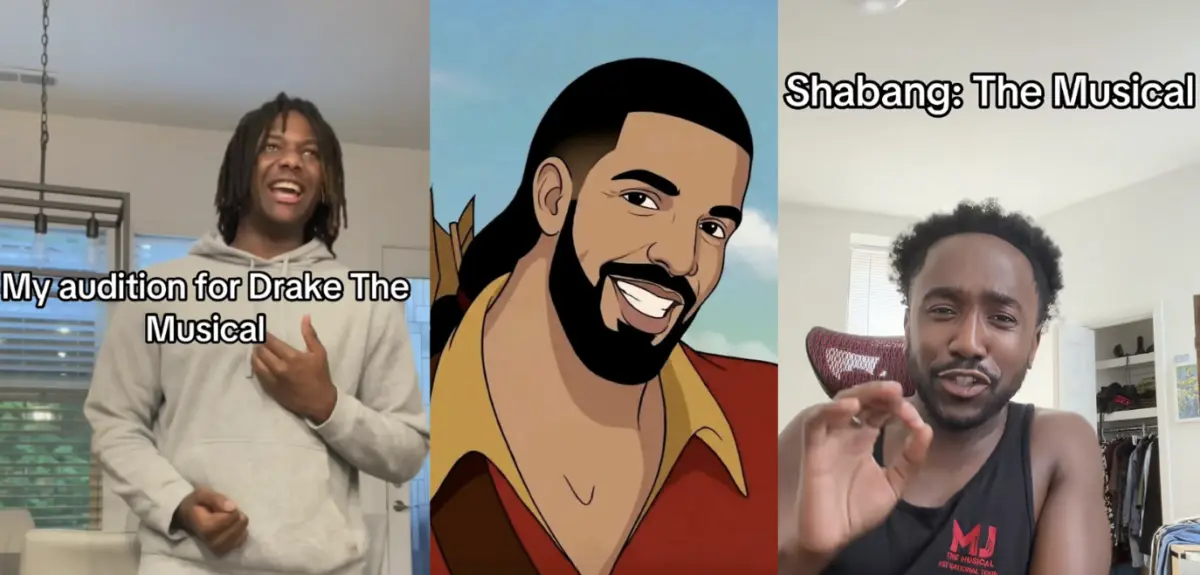
In the ever-evolving landscape of internet culture, the intersection of generative artificial intelligence and organic human creativity has produced some of the most surreal and captivating viral phenomena of the digital age. The latest sensation captivating millions across social media platforms—particularly TikTok—is affectionately known as "Shabang: The Musical", "Drake: The Musical", or simply the "Shabang Trend."
Emerging in late July 2026, this cultural milestone stems from an AI-generated song parodying superstar rapper Drake’s track "Shabang"—specifically honing in on the infectious, meme-ified "Maneesh On the Beat Shabang" section. Reimagined through the grandiose, theatrical lens of a classic Disney or Broadway musical number, the track struck a chord with the internet’s collective sense of the absurd.
What began as a novel demonstration of AI audio generation quickly transcended its technological roots, transforming into a massive participatory performance art trend. Across TikTok, creators, vocalists, and musical theater nerds began treating the fictional production as if it were a legitimate theatrical event, posting elaborate "audition tapes," dramatic choreography, and impassioned vocal covers.
This deep-dive investigative report explores the genesis, viral spread, cultural mechanics, and broader implications of the "Shabang" phenomenon, mapping out how a synthetic track catalyzed one of the summer’s most creative online movements.
Detailed Chronology: From AI Experiment to Viral Phenomenon
The trajectory of "Shabang: The Musical" serves as a textbook case study in modern digital virality, moving rapidly from an isolated creative spark to mainstream algorithmic dominance over the course of a few weeks in the summer of 2026.
Genesis: The Spark on July 21, 2026
The phenomenon trace its roots back to July 21st, 2026, when TikTok creator @kingwillonius published an AI-generated audio track. In the video, the distinctly recognizable digital voice of rapper Drake was seamlessly transposed into a sweeping, dramatic Broadway-style theatrical arrangement. The focal point of the track was the now-iconic lyric, "Maneesh On the Beat Shabang," transformed from a standard rap cadence into an operatic, show-stopping musical refrain.
The video resonated instantly with early viewers. In less than a month, @kingwillonius’s foundational post racked up over 346,500 views, 34,400 likes, and 1,000 comments. More importantly, the audio track was saved, extracted, and primed for replication. The internet had found its new muse, immediately beginning to visualize Drake’s discography as a grand stage production.
The Spread: Frolicking, Flouncing, and the Birth of Audition Tapes
As the audio gained traction, creators began conceptualizing the physical staging of such a musical. On July 24th, 2026, TikTok user @ikeslimster poured fuel on the fire by posting a video of himself playfully frolicking and skipping around to the grandiose AI track, captioned with a tongue-in-cheek plea: "Somebody tag Disney." The visual juxtaposition of high-energy musical theater choreography paired with a Drake-inspired AI trap beat catapulted the post into hyper-virality, garnering over 1.4 million views and 250,800 likes in under a month.
With the premise established—that "Shabang" was destined for the Great White Way—the trend evolved from passive listening to active participation. TikTok users began treating the audio as an official open casting call. Performers across the platform started uploading their own "audition tapes" for the fictional production.
A fascinating paradox emerged: while the source material originated from a crude, low-effort AI prompt, the human covers submitted as "auditions" showcased staggering, genuine musical talent. Creators leaned into the absurdity by delivering powerhouse vocal performances that vastly exceeded what the source material required, treating the comedic lyricism with the gravity of a Shakespearean monologue or a Sondheim masterpiece.
August Peak: Powerhouse Covers Dominate the Algorithm
By early August 2026, the trend reached critical mass, driven by a series of standout viral covers:
- August 4th, 2026: Creator @jahir.hipps uploaded an earnest, pitch-perfect vocal cover under the direct title "My official audition for Shabang: The Musical." The performance pulled in over 1.6 million views and 335,600 likes within nine days.
- August 4th, 2026: On the same day, @calderjamesmusic posted his own dramatic rendition, cheekily titled "Drake: The Musical." Utilizing dynamic vocal control and theatrical expression, his video exploded to over 4.9 million views and 1.1 million likes in a similarly swift timeframe.
- August 7th, 2026: Continuing the momentum, user @nobxndzkevo delivered another soulful, theatrical cover of the "Maneesh on the beat Shabang" refrain, pulling in an additional 1.4 million views and 337,400 likes in less than a week.
Supporting Context & Metrics: Analyzing the "Shabang" Wave
To fully understand why "Shabang: The Musical" captured the cultural zeitgeist, one must examine the metrics and psychological drivers behind its success.
Quantitative Overview
| Date (2026) | Creator / Account | Key Action / Post Type | Approximate Views | Approximate Likes |
|---|---|---|---|---|
| July 21 | @kingwillonius | Original AI Broadway-style track debut | 346,500 | 34,400 |
| July 24 | @ikeslimster | Theatrical "frolicking" choreography video | 1,400,000 | 250,800 |
| August 4 | @jahir.hipps | First wave of serious vocal "audition tapes" | 1,600,000 | 335,600 |
| August 4 | @calderjamesmusic | High-production vocal cover ("Drake: The Musical") | 4,900,000 | 1,100,000 |
| August 7 | @nobxndzkevo | Soulful Broadway rendition | 1,400,000 | 337,400 |
The Psychology of the Trend: Why AI Met Organic Talent
The "Shabang" trend highlights a fascinating shift in how internet communities interact with generative artificial intelligence. In previous years, AI-generated music trends often sparked fierce debates regarding copyright, authenticity, and the displacement of human artists. However, "Shabang: The Musical" inverted this dynamic.
Instead of replacing human artists, the AI track functioned as a catalyst for organic human performance. The synthetic voice of Drake provided an absurd, rigid framework, but the true value of the trend was unlocked by real vocalists, actors, and comedians who used the track as a blank canvas to showcase their talents. By over-delivering on vocal ability for a joke about a rap ad-lib, creators created a comedic contrast that relied entirely on authentic human skill.
Furthermore, the conceit of pitching major corporate entities—such as Disney or Broadway producers—on an absurd hip-hop musical tapped into a shared ironic humor. Comments sections were flooded with users treating the fictional production with extreme bureaucratic and artistic seriousness, casting imaginary actors, discussing set design, and critiquing vocal runs.
Official Statements & Industry Perspectives
While neither Drake nor representatives from major theatrical institutions like Disney have issued formal statements regarding the viral phenomenon, industry insiders and cultural analysts have taken note of the trend’s unique trajectory.
In discussions across music production and social media marketing circles, "Shabang: The Musical" is frequently cited as an evolution of "meme-etic" music marketing. Traditional promotional strategies often rely on predictable challenges or scripted influencer campaigns. In contrast, organic AI-assisted memes like the Shabang trend demonstrate how decentralized communities can autonomously generate high-engagement narratives around an artist’s catalog—even without the artist’s direct participation.
Moreover, vocal coaches and theater professionals on TikTok have informally weighed in on the "audition tapes," praising the technical proficiency of creators like @calderjamesmusic and @jahir.hipps. Many noted that the trend inadvertently served as a showcase for underutilized musical theater talent, proving that digital platforms remain a premier space for spontaneous performance art.
Future Outlook: The Legacy of "Shabang" in Digital Culture
As the immediate algorithmic peak of "Shabang: The Musical" begins to stabilize, its long-term footprint on internet culture is already clear. The trend points toward several emerging trajectories for digital media:
- Collaborative AI and Human Performance: The paradigm of AI-as-a-tool is shifting from standalone creation to collaborative prompting. Future trends will likely continue to use synthetic voices or generative audio as a "backing track" or comedic prompt, leaving the heavy lifting of entertainment to human performers.
- The Rise of Meta-Theatrical Memes: The concept of turning modern pop and rap tracks into faux-Broadway productions has proven to be a durable comedic format. Following the success of the Shabang trend, users have already begun speculating on which artist’s discography will receive the "musical theater treatment" next.
- Platform Longevity: While specific viral sounds eventually cycle out of TikTok’s main feeds, the lore surrounding "Drake: The Musical" and the fictional "Iceman" production has cemented itself in meme history, ensuring that "Maneesh On the Beat Shabang" will long be remembered not just as a lyric, but as the opening number of the internet’s favorite imaginary show.
Ultimately, "Shabang: The Musical" stands as a testament to the unpredictable nature of internet creativity. What started as a synthetic novelty engineered by an AI prompt became a stage for hundreds of thousands of people to sing, dance, and laugh together—proving that even in an age dominated by algorithms, human expression remains the star of the show.