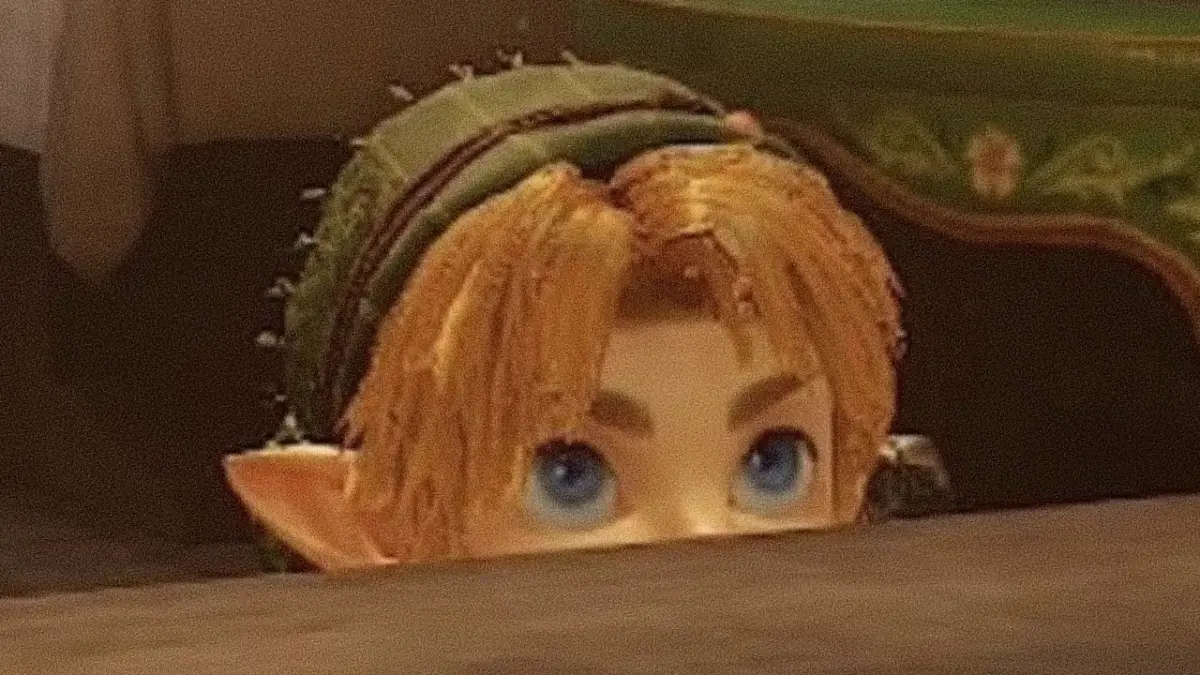
In the fast-paced ecosystem of internet culture, viral phenomena often emerge from the most mundane or unexpected visual details. In early November 2026, the gaming and broader social media communities witnessed the birth of a remarkably resonant and adaptable reaction image: "Young Link Looking Over a Table" (alternatively known as "Link Looking Over Counter"). Originating from a screenshot captured within the heavily anticipated The Legend of Zelda: Ocarina of Time remake, the meme features the iconic protagonist, Young Link, peering just above the edge of a wooden countertop. Due to his diminutive stature, only the upper half of his face—starting precisely below his eyes—is visible, creating an instantly humorous, vulnerable, and intensely scrutinized expression.
What began as a simple, highly relatable joke referencing the ubiquitous "iPad Kid" trope quickly transcended its initial gaming niche. Within days of its debut on X (formerly Twitter), the image proliferated across Instagram, Threads, and various image-board communities, securing tens of thousands of engagements. By cleverly subverting expectations of heroism traditionally associated with the Legend of Zelda franchise, the meme captures universal human anxieties: the awkwardness of childhood, the existential dread of confronting authority figures while vertically challenged, and the innocent desperation of asking a stranger, relative, or cashier for something entirely out of reach.
This report provides a comprehensive examination of the phenomenon. Through a detailed chronology of its origins, an analysis of its rapid spread across multiple social platforms, a breakdown of its various cultural iterations, and a forward-looking assessment of its lasting impact on digital humor, we explore how a single, unassuming camera angle captured the collective imagination of the internet in late 2026.
Detailed Chronology: From Pixel to Public Phenomenon
The trajectory of the "Young Link Looking Over a Table" meme offers a textbook case study in how modern visual formats gain traction through rapid peer-to-peer amplification. The timeline of its ascension spans a mere week in November 2026, yet its cultural footprint expanded exponentially during those few days.
November 5th–6th, 2026: The Genesis
The meme was officially catalyzed on November 6th, 2026, when X user @SILENTPRINCESS published a high-resolution screenshot sourced directly from The Legend of Zelda: Ocarina of Time Remake (slated for release in 2026). The visual composition was striking in its simplicity: Young Link is positioned behind a rustic wooden table, his petite frame rendering him nearly invisible save for his wide, piercing eyes and the very top of his cap peering over the ledge.
Capitalizing on contemporary internet vernacular, @SILENTPRINCESS paired the image with the caption:
"you got games on your phone?"
This text immediately anchored the visual to the modern cultural stereotype of the "iPad Kid"—a hyper-connected, socially uninhibited youngster demanding digital entertainment from unsuspecting adults. The juxtaposition of the classic fantasy hero reduced to an insistent, screen-obsessed child struck an immediate chord. Within the first 24 hours of posting, the original tweet surpassed 40,000 likes and generated over 4,500 reposts. Recognizing the cross-platform potential of the asset, the user promptly shared the screenshot to Instagram on the same day, where it swiftly accumulated an additional 22,500 likes.
November 7th–8th, 2026: Diversification and Early Adaptations
As the visual asset circulated beyond @SILENTPRINCESS’s initial follower base, other prominent social media users began experimenting with the template. On November 7th, user @thebigjohnnyd adapted the format to lean into wholesome, slightly anxious social scenarios, writing: "He is about to show me a picture he drew and I will love it despite not knowing what it is."
The viral velocity accelerated significantly on November 8th. X user @AlexaRayC posted a variation that merged the image with a well-established internet colloquialism, captioning the picture:
"I can’t fight Ganondorf, I frewed up."
This post brilliantly subverted the high-stakes, epic fantasy narrative of Ocarina of Time, reducing the legendary Hero of Time to a toddler experiencing a mundane, embarrassing domestic mishap. The tweet garnered over 14,000 likes in less than 72 hours.
Concurrently, user @TheColeBrew pivoted the meme toward nostalgic, universal childhood experiences, applying the caption:
"How I looked at the cashier as my mom went to get the ziplocks or milk she forgot."
This iteration resonated deeply with millennial and Gen Z audiences who vividly remembered the agonizing vulnerability of standing stranded at a grocery store checkout lane. The post mirrored its success on Instagram, pulling in more than 15,600 likes within three days.
November 9th–10th, 2026: Exploitable Evolution and Cross-Platform Expansion
By the end of its first full week in the digital wild, the meme had evolved past simple caption-based image macros into an exploitable format. Users began physically editing the source image to craft hyper-specific narratives.
On November 10th, Threads user cauldronbrewed shared a heavily modified version of the image in which Link’s tiny hands were edited to hold digital rupees out toward an unseen shopkeeper. The accompanying text read:
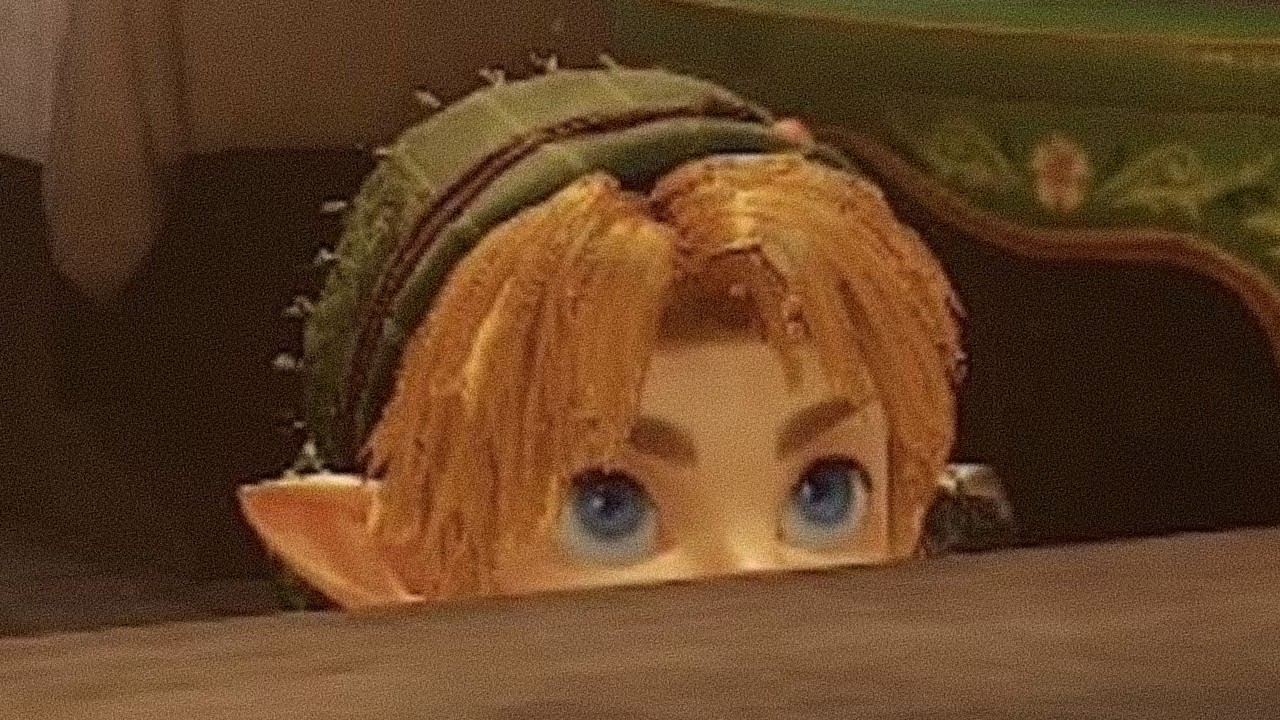
"Me age age 33 and 4’9”, trying to pay for my alcohol."
This post struck a chord with adult users struggling with dwarfism, short stature, or simply the juvenile feeling of navigating bureaucratic or adult spaces while appearing diminutive. The post secured over 9,500 likes within 24 hours.
Simultaneously, the original creator, @SILENTPRINCESS, continued to milk the format for comedic gold, posting a surreal dialogue-based variation:
"- sir i need to buy some clothes
– we only sell soup here
– shirt"
This nod to the legendary "Soup Store" meme format demonstrated the versatility of the Young Link template, proving that it could seamlessly interface with classic internet lore.
Supporting Context & Metrics: Why the Meme Resonated
To fully understand the viral trajectory of "Young Link Looking Over a Table," one must analyze the confluence of technical, psychological, and cultural factors that fueled its rapid adoption.
1. The Nostalgia and Anticipation Synergy
The year 2026 has seen immense excitement surrounding The Legend of Zelda: Ocarina of Time Remake. Because the original Nintendo 64 title holds a foundational place in gaming history, any high-definition visual assets released ahead of or alongside the remake are subjected to intense community scrutiny. By seizing an unassuming background frame from the updated engine, the meme creators tapped directly into the massive, pre-existing search interest and emotional investment of millions of franchise fans.
2. Visual Readability and Compositional Economy
From a design perspective, the image functions exceptionally well as a reaction macro due to its extreme cropping. Because only the top half of Young Link’s head is visible, the viewer’s eye is immediately drawn to his eyes and brow. This visual minimalism strips away distracting background clutter, allowing the image to act as a blank slate or "emotional vessel." Whether the user intends to convey innocent confusion, aggressive insistence, profound sickness, or nervous anxiety, the neutral yet intense gaze of Young Link adapts to fit any emotional tone.
3. Quantitative Engagement Breakdown
While exact cross-platform analytics across all derivative posts are difficult to aggregate fully due to decentralization, early tracking metrics illustrate a clear pattern of high engagement velocity:
- Initial X Post (@SILENTPRINCESS): 40,000+ likes, 4,500+ reposts, ~385,600 views within five days.
- Instagram Cross-Post: 22,500+ likes within the same timeframe.
- Secondary Variations (e.g., @AlexaRayC): 14,000+ likes (128K views) in three days.
- Threads Adaptations (cauldronbrewed): 9,500+ likes in under 24 hours.
These figures indicate an exceptionally high engagement-to-impression ratio, confirming that the meme did not merely pass through users’ feeds—it compelled them to actively stop, read, and share.
Official Statements & Community Reception
While major corporate entities such as Nintendo rarely issue official statements regarding organic internet memes unless intellectual property boundaries are aggressively crossed, the community reception within gaming subcultures has been overwhelmingly positive.
Subreddits dedicated to The Legend of Zelda, alongside dedicated humor hubs on X and Discord, embraced the format as a refreshing break from typical console-war discourse and promotional hype cycles. Critics and digital culture commentators noted that the meme represents a return to "pure character humor"—where a beloved fictional hero is delightfully debased for the sake of everyday relatability.
Commenters across platforms praised the format’s wholesome nature. Unlike cynical or combative internet memes that rely on sarcasm or outrage, "Young Link Looking Over a Table" largely draws its humor from shared vulnerability: the universal memory of being small in a world built for adults, or the timeless awkwardness of human interaction.
Future Outlook: The Longevity of "Young Link Looking Over a Table"
As the initial wave of November 2026 viral saturation settles, digital culture analysts are left evaluating the long-term staying power of the Young Link reaction image.
Unlike fleeting text trends that burn out within 48 hours, image-based macros grounded in classic video game characters tend to achieve permanent residency in internet lexicons. Because The Legend of Zelda: Ocarina of Time Remake remains a tentpole release for the coming months, fresh promotional materials, trailers, and eventual gameplay discoveries will likely supply creators with new reference points, ensuring that the character remains relevant in public discourse.
Furthermore, the template’s inherent adaptability—its status as a quintessential "exploitable"—guarantees that independent artists and meme creators will continue to modify the image. Whether placed behind liquor store counters, pharmacy checkouts, fast-food drive-thrus, or surreal abstract landscapes, Young Link will likely continue to peer over ledges across social media feeds for the foreseeable future.
Ultimately, "Young Link Looking Over a Table" serves as a reminder of the internet’s unique ability to transform high-budget, nostalgic art assets into deeply human, highly democratic expressions of modern life. In a digital world dominated by noise and complexity, sometimes all it takes to capture the global zeitgeist is a small hero, a wooden counter, and a pair of eyes asking the timeless question: "You got games on your phone?"