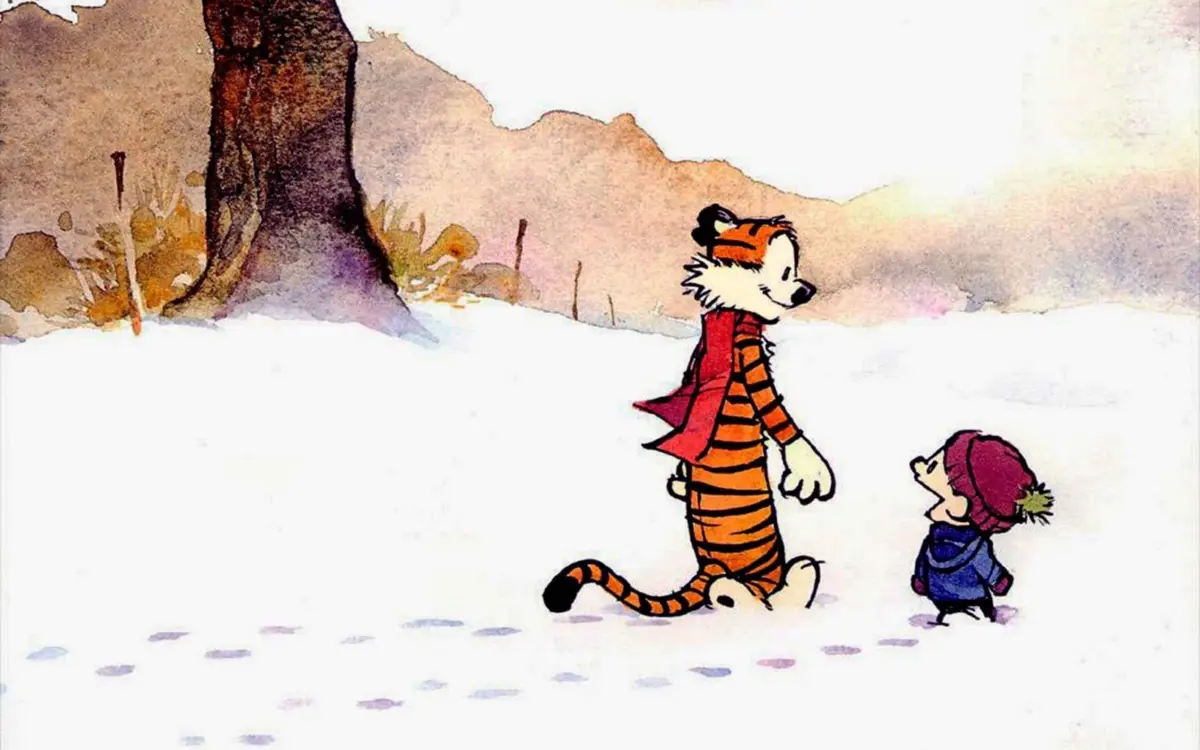
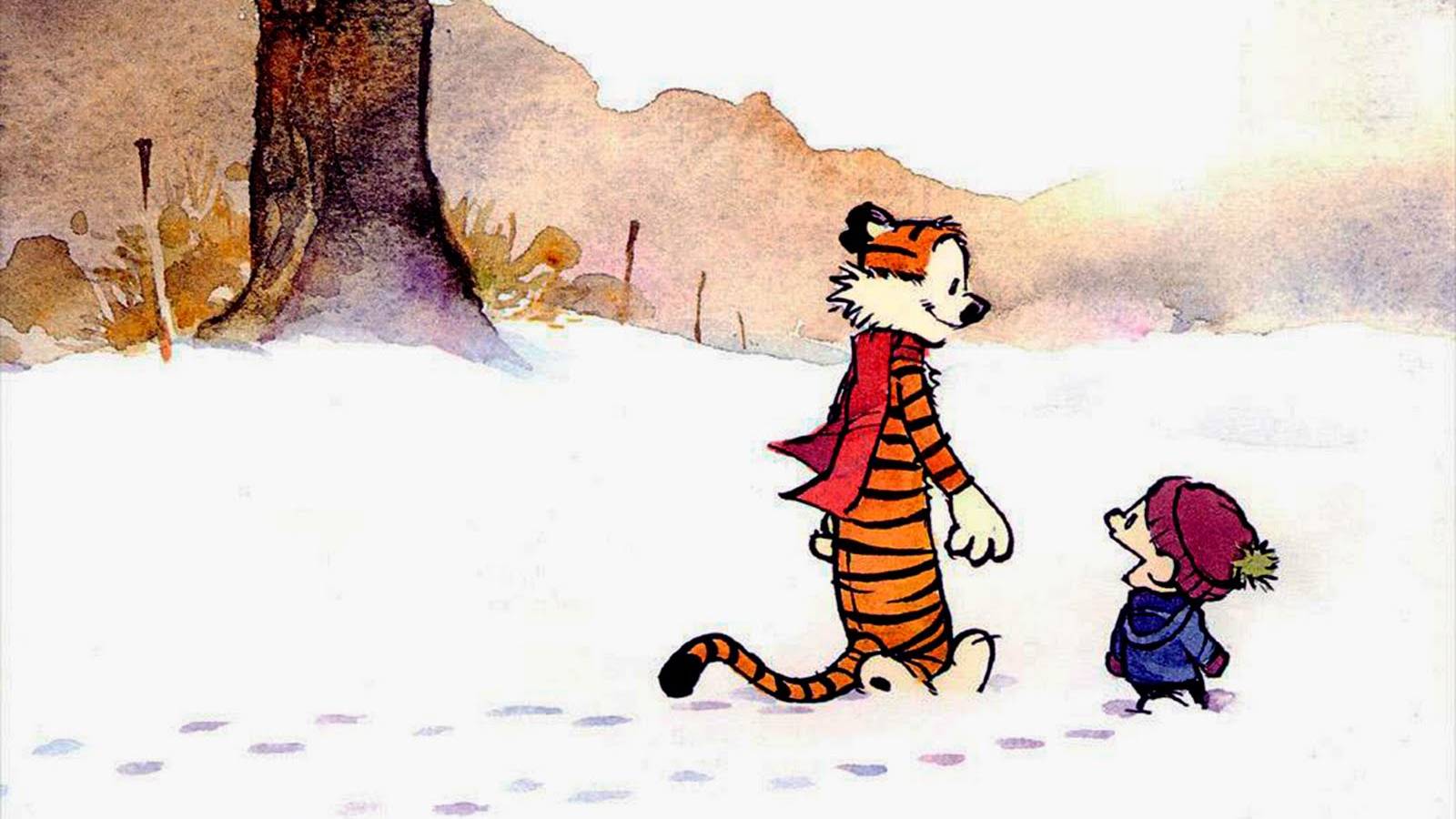
When readers reflect upon Bill Watterson’s legendary syndicated comic strip Calvin and Hobbes—which ran from November 18, 1985, to December 31, 1995—they typically evoke images of innocent childhood wonder. The standard cultural memory of the strip is painted in strokes of autumnal woods, wild sled rides careening through snow-covered hills, and philosophical musings on the meaning of life delivered from the branches of a grand oak tree. Fans remember the daydreams of Spaceman Spiff, the comforting, sardonic presence of a stuffed tiger that came alive only for his owner, and the deep, enduring bond between a hyper-imaginative six-year-old boy and his feline companion.
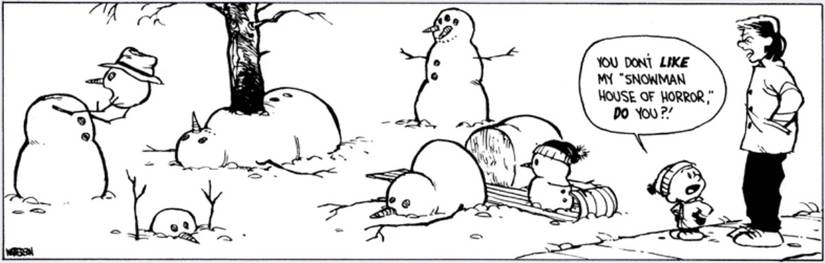
Yet, lurking beneath the whimsical exterior of suburban Midwestern life was an undercurrent of existential dread and pitch-black humor, most prominently displayed during the winter months. While contemporaries like Charles Schulz (Peanuts) or Hank Ketcham (Dennis the Menace) kept their winter gags focused on snowball fights or mild sledding mishaps, Watterson routinely weaponized the season. He turned frozen precipitation into a medium for Grand Guignol theater, crafting bizarre, unsettling, and frequently macabre snowman installations that left readers questioning the psychological state of a first-grader who could conceive of such nightmarish imagery.
These winter gags, which evolved from isolated experiments into a recurring seasonal tradition, stand as a testament to Watterson’s subversive brilliance. By contrasting the cozy, domestic safety of Calvin’s household with the carnage staged outside in the front yard, Watterson created a tension that elevated the strip from a standard newspaper funny page staple into a work of high comedic art. This retrospective examines the evolution of these winter nightmares, charting their escalation from a slow-burn narrative twist in 1988 to a staple of the strip’s psychological landscape, culminating in a definitive ranking and analysis of the ten darkest snowman gags in the history of Calvin and Hobbes.
Detailed Chronology: From Innocent Sculptures to Macabre Masterpieces
To understand how Calvin and Hobbes crossed the threshold into the macabre, one must examine the chronological progression of Watterson’s seasonal output. In the early years of the strip’s run, the snowmen Calvin built were relatively benign. They rolled into existence as standard, three-ball sculptures with coal eyes and carrot noses—traditional winter architecture. However, Watterson’s relationship with winter imagery underwent a fundamental shift on February 28, 1988.

The Turning Point: February 1988
On this fateful winter day, Watterson executed a masterclass in comic pacing. The strip begins with the seemingly innocent setup of Calvin cheerfully packing snow and fashioning figures. There is no immediate indicator of malice. However, as the reader’s eye moves across the panel layout, a gruesome narrative unfolds. Calvin has built a perimeter of meticulously sculpted snowmen surrounding the family automobile, arranging the scene to depict a catastrophic vehicular accident.
The punchline arrives not as a verbal zinger, but as a visual revelation paired with parental horror. Calvin’s parents gaze out at the carnage in absolute disbelief, leading to the immortal, diagnostic declaration from Calvin’s Dad:
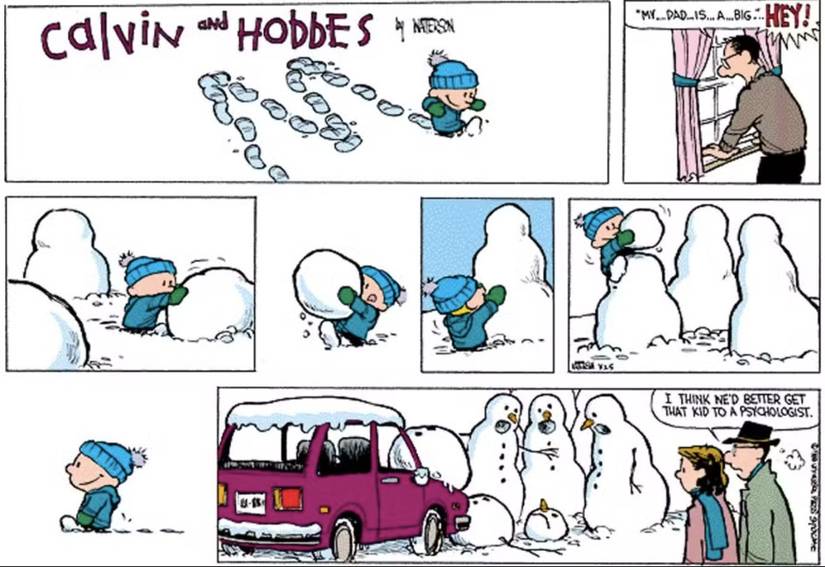
"I think we’d better get that kid to a psychologist."
This strip established a critical precedent. It proved that Calvin’s imagination was not merely active; it was uniquely cinematic, slightly unhinged, and deeply preoccupied with disaster. Yet, Watterson did not immediately turn this into a weekly routine. It would be nearly a full year before he revisited this specific brand of winter-themed morbidity, slowly ramping up the frequency until the snowman gags became a mandatory seasonal event that fans anticipated with a mixture of amusement and alarm.
The Evolution into Regularity (1989–1995)
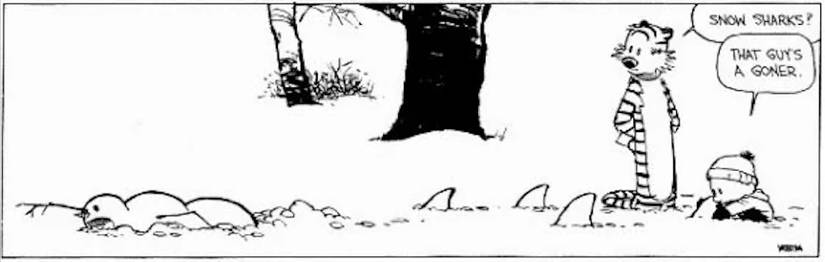
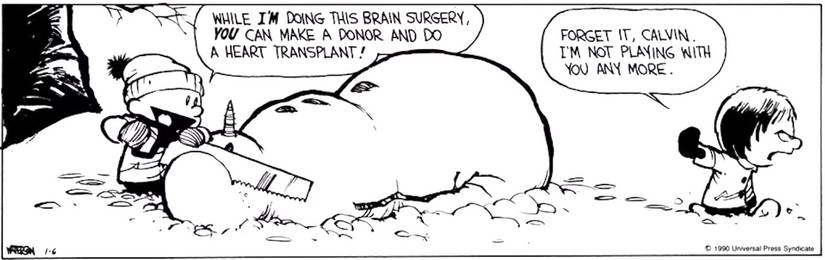
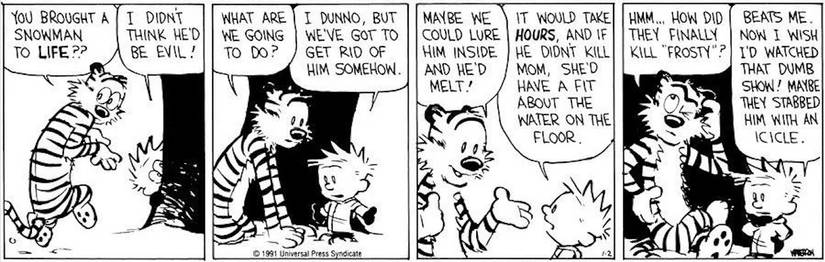
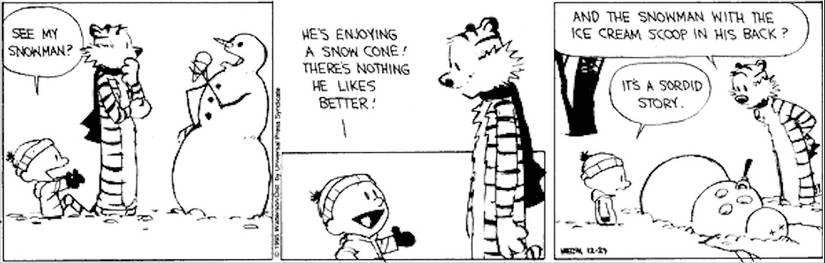
By the early 1990s, the snowman gags had graduated from one-off shock value to an established recurring motif. Watterson utilized these strips to explore themes of mortality, psychological distress, and suburban alienation. As Calvin grew slightly more self-aware—though no less destructive—his snow sculptures transformed into complex dioramas reflecting existential despair, surgical horrors, and cinematic tropes usually reserved for adult thrillers.
The juxtaposition of these dark panels against the sanitized backdrop of standard newspaper comics created a fascinating friction. Editors and syndication executives occasionally winced, but Watterson’s uncompromising artistic vision—coupled with his fierce defense of his creative independence—ensured that the snowman gags remained untouched, preserving their pristine, unhinged glory until the strip’s final bow on New Year’s Eve, 1995.
Supporting Context & Metrics: The Anatomy of Calvin’s Winter Psyche
Analyzing the scale and impact of Calvin’s winter installations requires examining the stylistic choices Watterson employed. Unlike multi-panel dialogue-heavy strips, many of the darkest snowman gags relied entirely on single-panel compositions or brief visual sequences designed for maximum, instantaneous impact.
| Gag Category | Primary Theme | Psychological Indicator | Visual Impact Rating |
|---|---|---|---|
| Predatory Danger | Nature “red in tooth and claw” | Fascination with mortal peril | High (Single Panel) |
| Domestic Terror | Invasion of home security | Calculated psychological warfare | Maximum (Narrative Arc) |
| Existential Despair | Self-destruction & Melancholy | Projection of internal chaos | Severe (Visual Metaphor) |
| Surgical/Medical | Bodily autonomy & trauma | Macabre clinical curiosity | Shocking (Contextual) |
The psychological implications of a six-year-old mastering tropes of urban decay, organized crime executions, and clinical depression within frozen water are staggering. Critics have often noted that Calvin functions as an avatar for the id—completely uninhibited, driven by impulse, and fundamentally at odds with the rigid structures of civilized society. The snowmen served as his canvas to externalize these internal conflicts, transforming a suburban Midwestern lawn into a theater of the absurd.
Official Statements & Creator Intent: Bill Watterson on Artistic Freedom
Bill Watterson was famously reclusive throughout his career, granting very few interviews and ultimately walking away from the multibillion-dollar syndication industry at the height of Calvin and Hobbes‘ popularity to protect the artistic integrity of his work. While Watterson rarely offered direct commentary on the psychological underpinnings of specific strips, his collected volume introductions and retrospective commentary shed light on his philosophy regarding humor and boundaries.
In the Calvin and Hobbes Tenth Anniversary Book, Watterson reflected on the freedom provided by his syndicate and the nature of Calvin’s character:
"Calvin is a vehicle for me to explore the absurdities of childhood and human nature. A kid’s world is intensely dramatic; their emotions are huge, and their imagination transforms the mundane into the monumental. If Calvin wants to view a simple pile of snow as a medium for existential theater, the humor comes from the absolute seriousness with which he approaches his absurd creations."
Watterson’s defense of his creative choices was rooted in the belief that comics did not need to pounce exclusively on safe, predictable humor. By pushing the boundaries of what was acceptable in a family newspaper strip, he challenged readers to look past the ink and paper to engage with the wild, untamed chaos of a child’s mind. The snowman gags were not malicious; they were an exercise in surrealist satire, using the most ephemeral material possible—snow—to stage permanent, unforgettable statements on human nature.
Future Outlook & Legacy: The Enduring Cultural Footprint of the Snow Goons
Decades after the final publication of Calvin and Hobbes on December 31, 1995, the cultural footprint of Bill Watterson’s work remains indelible. Long-form storylines like the multi-week "Snow Goon" arc—which began on December 31, 1990—continue to be cited by contemporary cartoonists, writers, and comedians as masterclasses in narrative pacing and comedic escalation.
The legacy of the snowman gags extends far beyond nostalgia. In an era where digital content is heavily sanitized and algorithmic safety guards dictate much of mainstream media output, the brazen, unfiltered morbidity of Calvin’s frozen masterpieces serves as a reminder of the power of unbridled artistic freedom. Watterson proved that children’s literature and family comics could accommodate darkness without losing their heart, bridging the gap between innocence and the stark realities of the universe.
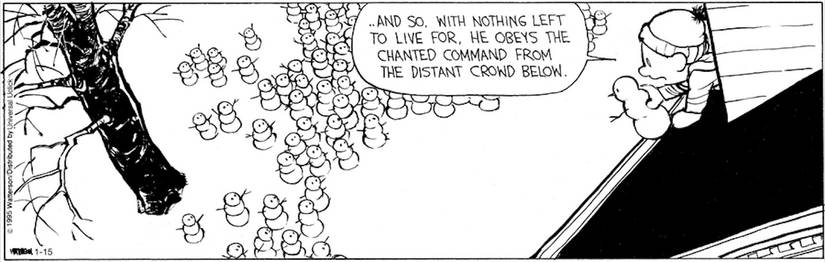
As new generations discover the collected volumes of Calvin and Hobbes, the shock value of a hanging snowman or a decapitated snow-figure on Susie Derkins’ front porch remains just as potent. It is a testament to Watterson’s genius that these panels still provoke the exact reaction he intended: a nervous gasp, a burst of laughter, and perhaps a quiet agreement with Calvin’s Dad that maybe—just maybe—that kid needed a psychologist.