Executive Overview
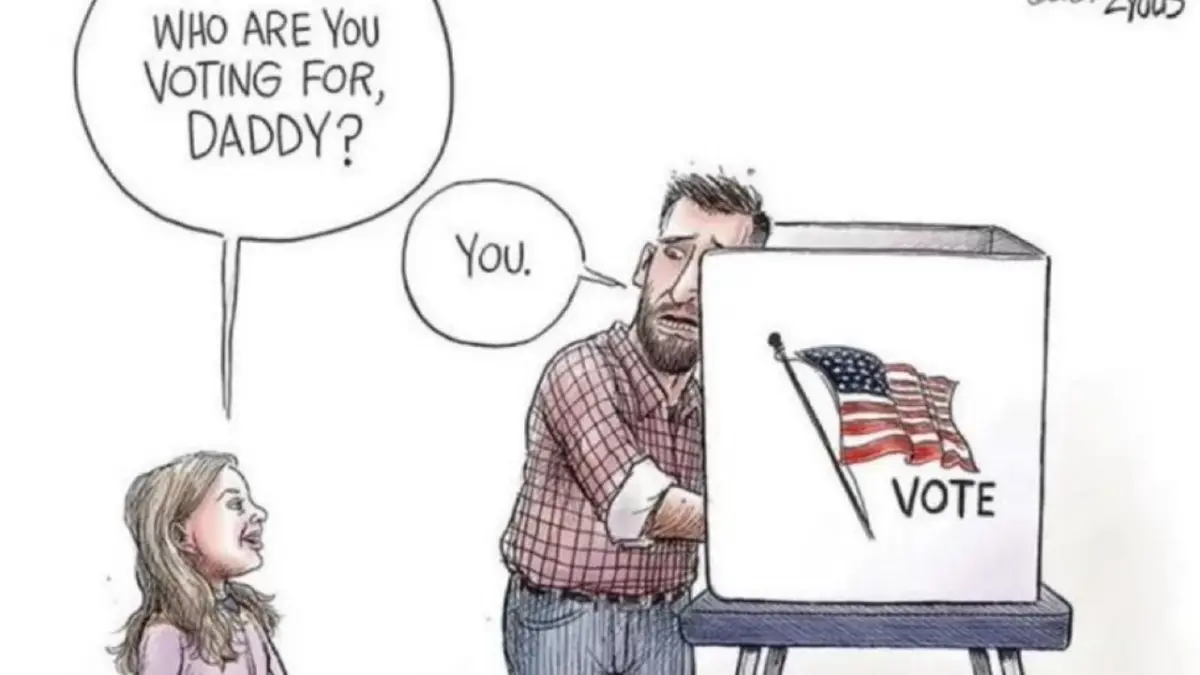
In the hyper-accelerated ecosystem of modern internet culture, the line between earnest political commentary and surreal digital satire has never been more porous. The latest case study in this phenomenon is the "Who Are You Voting For, Daddy?" meme format—an exploitable template born from a straightforward, deeply sincere political cartoon published during the 2024 United States presidential election. Originally crafted by The Buffalo News editorial cartoonist Adam Zyglis, the comic was designed to evoke a poignant emotional response regarding parental responsibility and the protection of future generations’ rights.
However, as the political calendar advanced toward the 2026 U.S. midterm elections, the digital landscape seized upon the artwork, twisting its earnest framing into an expansive catalog of absurdity. Across platforms like X (formerly Twitter), Instagram, and Facebook, the emotional query posed by the fictional daughter and the protective reply from her father became a blank canvas for absurdist non-sequiturs, pop culture references, and esoteric internet inside jokes.
Simultaneously, the meme’s trajectory exposed deeper cultural anxieties surrounding intellectual property, the rise of generative artificial intelligence, and the unintended consequences of virality in the social media era. When AI-generated variants began mimicking and altering Zyglis’s distinct artistic style to target hyper-specific regional or ideological demographics, the artist himself stepped into the fray to denounce what he termed the "soulless" homogenization of hand-drawn editorial work. This comprehensive retrospective explores the origins, evolution, and cultural resonance of the "Who Are You Voting For, Daddy?" phenomenon, tracking its journey from traditional newsprint to the bleeding edge of meme culture.
Detailed Chronology
1. The Genesis: 2024 U.S. Presidential Election and Original Publication
The story of the meme begins in the heat of the 2024 U.S. presidential election cycle. Pulitzer Prize-winning editorial cartoonist Adam Zyglis, known for his incisive visual commentary for The Buffalo News, produced a single-panel cartoon intended to encapsulate the weight of civic duty for parents.
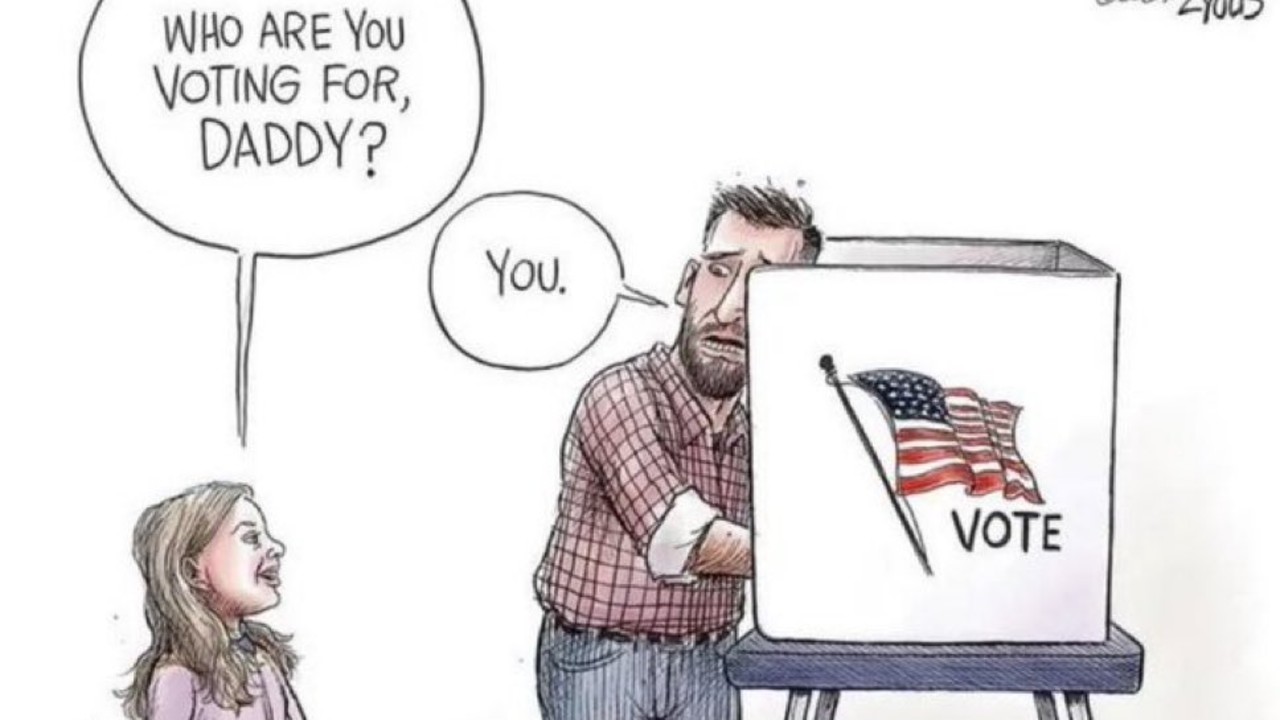
The composition of the original artwork is deceptively simple. A young daughter looks up at her father with an innocent, earnest expression, posing the central question: "Who are you voting for, daddy?" The father looks down at her with a reassuring, protective smile and answers simply: "You."
The intended subtext of Zyglis’s cartoon was transparent and values-driven: the father is casting his ballot not merely for a candidate or a party line, but for the preservation of his daughter’s rights, bodily autonomy, and future well-being. It was a direct appeal to emotional pragmatism, designed to resonate with voters weighing the long-term societal impacts of political leadership. Upon publication, the cartoon served its traditional journalistic purpose, receiving localized engagement and functioning as a standard piece of left-leaning or centrist political commentary common in American regional newspapers.
2. The Re-emergence and Early Edits: October 2026
For nearly two years, the cartoon remained a localized piece of editorial archives. That changed dramatically in October 2026, as the United States crept closer to the high-stakes midterm elections. Political discourse on social media was already heavily saturated, and meme creators began scavenging historical imagery for fresh exploitable formats.
The cartoon’s clean composition—featuring two distinct conversational beats—made it an ideal vehicle for the exploitable meme format. The earliest iterations sought to subvert the earnest political messaging by shifting the father’s motivation from child advocacy to hyper-specific, localized, or absurd political scenarios.
A notable early example surfaced on Facebook on October 13th, 2026, when user Terry Newman published an edit referencing Canada’s geopolitical climate—specifically Alberta’s controversial separatist referendum debate. By pivoting the emotional weight of a U.S. presidential cartoon toward Canadian provincial politics, the edit highlighted the template’s versatility and signaled its entry into the broader meme-sphere.
3. The AI Controversy and Artist Backlash: Mid-October 2026
As the format began picking up algorithmic momentum in mid-October 2026, it intersected with a contentious technological trend: the proliferation of generative AI tools being used to automatically alter or completely recreate viral images for targeted audiences.
Anonymous accounts and automated pages began deploying AI models to generate facsimile versions of Zyglis’s artwork. While the captions remained identical—retaining the "Who are you voting for, daddy?" dialogue loop—the visual aesthetics were altered by algorithms, often stripping away the distinct, hand-drawn character lines and idiosyncratic cross-hatching characteristic of professional editorial cartooning.
This automated replication did not go unnoticed by the original creator. On October 15th, 2026, Adam Zyglis took to Facebook to issue a formal denunciation of the AI-generated variants. In his post, which quickly amassed over 5,600 reactions, Zyglis articulated a nuanced stance on internet culture:
"I love that people are resonating with the original message, but using AI to tailor an artist’s work to a different audience bastardizes it and makes it soulless. I’m putting these butchered versions in the comments. If you see one out there, call it out and let me know!"
Zyglis’s intervention transformed the meme from a passive piece of internet ephemera into an active battleground for discussions regarding copyright, artistic integrity, and the automated erasure of human creators in the age of generative models. Ironically, the artist’s pushback amplified the meme’s visibility, driving a new wave of users to unearth and recirculate the genuine, hand-drawn 2024 source material.
4. The Peak of Absurdism: Late October to November 2026
By late October and early November 2026, the meme had completely detached itself from its original political roots, entering a phase of pure, hyper-ironic shitposting. Creators across Instagram, X, and Facebook began weaponizing the template’s emotional sincerity to deliver punchlines grounded entirely in internet lore and surrealism.
- The Big Chungus Era (October 26, 2026): Instagram user @issabreh posted an iteration where the father’s solemn declaration of protecting his daughter’s future is replaced by a resolute confession that he is voting for "Big Chungus," the classic, oversized Looney Tunes meme that has persistently haunted internet humor for years.
- The Meta-Meme Inception (November 4, 2026): X user @benji_bacon published an edit invoking the esoteric "Solo Polyamorous Hijabi Amputee" meme, garnering over 126,000 likes and proving that the template could comfortably host layers of impenetrable internet subculture references.
- Streamer and Celebrity Absurdity (November 5, 2026): The trend accelerated further as creators injected modern internet personalities and public figures into the narrative. X user @nocontextmemes substituted the punchline with "the burt peanut" (referencing streamer TheBurntPeanut), while Instagram user @soulofye posted a variant where the father proudly admits to voting for Kanye West ("Ye").
By the time the actual U.S. midterm elections arrived in November 2026, the original intent of Zyglis’s cartoon had been thoroughly buried beneath an avalanche of ironic edits, featuring everything from calls to "nuke Cleveland" and hypothetical "Dyson Swarm sacrifices" to scatological non-sequiturs like "I had a soft stool."
Supporting Context & Metrics
To understand the velocity at which the "Who Are You Voting For, Daddy?" meme traveled, it is necessary to examine the quantifiable footprint it left across major social media platforms during its peak weeks in October and November 2026.
| Date (2026) | Platform | Creator / Account | Variant Focus / Subject | Engagement Metrics |
|---|---|---|---|---|
| October 13 | Terry Newman | Alberta Separatist Referendum | 350+ reactions | |
| October 15 | Adam Zyglis (Artist) | Anti-AI statement & original cartoon | 5,600+ reactions | |
| October 25 | X | @ProjectLiberal | Repost of original hand-drawn cartoon | 2,200+ likes |
| October 26 | @issabreh | "Big Chungus" edit | 3,000+ likes | |
| November 4 | X | @benji_bacon | "Solo Polyamorous Hijabi Amputee" edit | 126,000+ likes, 7,400+ reposts |
| November 5 | X | @nocontextmemes | "TheBurntPeanut" (The Burt Peanut) edit | 5,500+ likes |
| November 5 | @soulofye | "Ye" (Kanye West) vote edit | 7,400+ likes |
The metrics reveal a distinct structural pattern common to successful modern exploitables. While localized or niche political commentary (such as the Alberta referendum or standard partisan reposts) yielded modest, community-level engagement (hundreds to low thousands of interactions), the integration of hyper-ironic, post-ironic internet subcultures (such as @benji_bacon’s post) resulted in exponential algorithmic reach, scaling into the six-figure engagement tier.
Furthermore, the public reaction to Adam Zyglis’s anti-AI post demonstrates that internet audiences are increasingly responsive to creator-driven narratives, provided the artist engages with the community on its own turf without resorting to heavy-handed legal threats.
Official Statements
The cultural discourse surrounding the meme was largely defined by the tension between commercial editorial cartooning and decentralized digital creation. Below is an excerpted analysis of the primary public statements made during the viral surge.
Adam Zyglis on AI-Generated Meme Culture
In his October 15th, 2026 statement, Zyglis did not condemn the practice of editing his cartoon—a tacit acknowledgment of the realities of remix culture—but drew a sharp ethical and aesthetic boundary against generative artificial intelligence:
"I love that people are resonating with the original message, but using AI to tailor an artist’s work to a different audience bastardizes it and makes it soulless. I’m putting these butchered versions in the comments. If you see one out there, call it out and let me know!"
This statement struck a chord with professional illustrators and digital artists navigating an era where automated tools routinely scrape copyrighted editorial work to generate derivative content. Zyglis’s strategy—embracing human-made meme edits while aggressively pushing back against algorithmic facsimiles—highlighted an emerging playbook for creators seeking to coexist with, rather than be consumed by, viral internet culture.
Future Outlook
As the dust settles on the 2026 U.S. midterm election cycle, the "Who Are You Voting For, Daddy?" meme offers a compelling window into the future of political satire and digital art.
- The Weaponization of Sincerity: The meme demonstrates that the most effective exploitable templates of the future will likely be those rooted in intense emotional sincerity. The juxtaposition of a genuinely heartfelt paternal message with absurd, nihilistic punchlines creates a comedic tension that purely cynical templates cannot replicate.
- The Battle for Artistic Provenance: Zyglis’s public confrontation with AI-generated variants marks a milestone in how traditional journalists and editorial cartoonists must navigate social media virality. As generative models become more sophisticated at mimicking artistic styles, creators will increasingly need to establish clear boundaries between human-driven remix culture and automated copyright erosion.
- Archival Permanence: Like "Distracted Boyfriend" or "Loss," the "Who Are You Voting For, Daddy?" template has secured its place in the permanent digital lexicon. Even as immediate search interest fluctuates away from the 2026 election cycle, the foundational structure of the comic—the naive question and the absolute, deadpan answer—will remain a permanent fixture in the toolkit of digital satirists for years to come.