Executive Overview
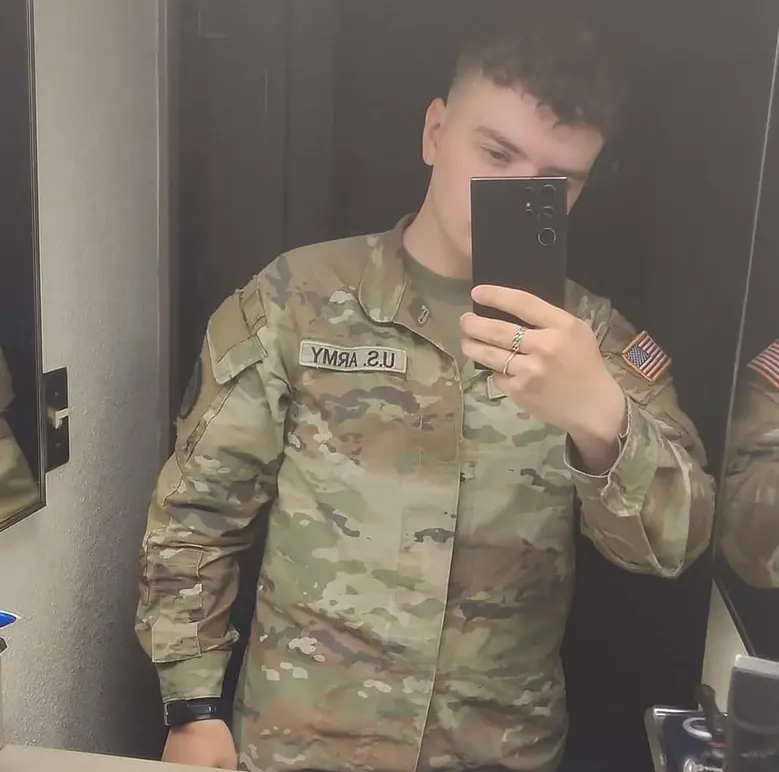
In a landmark federal sentencing hearing in Seattle, 22-year-old U.S. Army soldier Cameron John Wagenius was handed a 70-month prison sentence, closely followed by a nearly $300,000 restitution order. Operating under the dark web persona “Kiberphant0m,” Wagenius orchestrated a sprawling international cybercrime campaign that compromised telecommunications giants, most notably making off with the call and text metadata of more than 100 million AT&T customers.
Stationed at a U.S. military base in South Korea while actively maintaining a secret security clearance, Wagenius exploited basic cyber hygiene oversights at cloud storage provider Snowflake to breach major corporate databases. Working alongside a syndicate of seasoned international cybercriminals, he launched aggressive extortion schemes, leaked sensitive call logs—including those belonging to high-profile political figures—and even threatened to publish classified national security documents.
Despite the staggering volume of stolen data and the monumental potential risks posed by an insider threat with a security clearance, Wagenius’s criminal enterprise yielded a surprisingly meager financial return. Prosecutors revealed that his illicit operations netted a mere $1,500. Compounding his legal woes, federal authorities discovered that Wagenius attempted to probe prison computer systems and research escape vectors using deceptive artificial intelligence prompts while incarcerated and awaiting trial. The case has since raised critical questions regarding insider threats within the armed forces, multi-factor authentication (MFA) enforcement across enterprise cloud vendors, and the evolving intersection of generative AI and prison security.
Detailed Chronology: From Base to Federal Indictment
The unraveling of Cameron Wagenius began against the backdrop of routine military service overseas. Stationed in South Korea, Wagenius assumed the alias “Kiberphant0m” and immersed himself in international cybercriminal circles. His entry point into major corporate networks relied heavily on credentials carelessly exposed by companies utilizing cloud data storage service Snowflake. Because these specific client accounts failed to enforce multi-factor authentication (MFA)—a catastrophic oversight that Snowflake has since mitigated by mandating MFA globally—Wagenius and his co-conspirators gained unfettered access to internal data reservoirs.
By October 2024, Kiberphant0m stepped into the open cybercrime spotlight, aggressively bragging on underground forums about a massive coup: the theft of call and text metadata belonging to tens of millions of AT&T customers. This metadata included granular details such as source and destination phone numbers, timestamps, and call durations. Emboldened by this success, Kiberphant0m claimed responsibility for compromising more than a dozen telecommunications companies worldwide, including Verizon’s Push-to-Talk corporate communications infrastructure. Rather than quietly selling the data, he launched public extortion campaigns, threatening to dump the proprietary records unless corporate executives paid up.
The turning point arrived in late November 2024. Cybersecurity researcher Brian Krebs published an investigative piece warning that the elusive hacker Kiberphant0m was likely an active-duty U.S. soldier stationed in South Korea. Less than a month after this public exposure, federal law enforcement closed in. Wagenius was arrested and hit with two separate federal indictments in quick succession. Recognizing the overwhelming weight of the digital and paper trails against him, Wagenius entered a swift guilty plea to all counts across both cases, choosing cooperation over a protracted trial.
Following his guilty plea, prosecutors detailed the brazen nature of Wagenius’s final acts of desperation. Even after AT&T had already paid the extortion syndicate a $370,000 Bitcoin ransom, and subsequent law enforcement arrests—such as the capture of Canadian co-conspirator Conor Riley Moucka—were already making headlines, Kiberphant0m doubled down. He launched a re-extortion campaign, publicly posting what he claimed were AT&T call logs belonging to then-President-elect Donald Trump and then-Vice President Kamala Harris. To compound the pressure, he threatened to leak schematics allegedly stolen from the U.S. National Security Agency (NSA), dragging national security directly into a commercial cybercrime extortion plot.
Supporting Context & Metrics: The Syndicate and the Spoils
The sheer scale of the enterprise orchestrated by Wagenius required collaboration with established, hardened cybercriminals. Federal prosecutors painted a picture of a loose-knit but highly destructive syndicate operating across international borders.
- Kenneth Schuchman: A 28-year-old resident of Vancouver, Washington, Schuchman allegedly assisted Wagenius in his extortion plots. Schuchman is no stranger to federal law enforcement; in 2019, he pleaded guilty to operating the Satori botnet—a massive army of hijacked Internet-of-Things (IoT) devices deployed to execute crippling distributed denial-of-service (DDoS) attacks.
- Conor Riley Moucka: Operating under the moniker “Judische,” this Kitchener, Ontario resident was arrested in 2024 and subsequently pleaded guilty in August 2026 for his direct role in the Snowflake-related data thefts and corporate extortion schemes.
- John Erin Binns: An American citizen currently residing in Turkey, Binns remains entangled in international law enforcement crosshairs. Beyond the Snowflake operations, Binns is heavily wanted by authorities for his alleged role in a massive 2018–2021 data breach at T-Mobile that exposed the personal and sensitive identifying information of at least 76 million customers.
Despite the monumental corporate breach metrics—affecting over 100 million AT&T customers and threatening critical infrastructure—the federal sentencing memorandum revealed a staggering disparity between the breach’s magnitude and its financial yield for the primary perpetrator. While corporations faced millions in remediation, ransom demands, and reputational damage, Wagenius personally netted a paltry $1,500 from selling stolen data.
Furthermore, Wagenius’s time behind bars while awaiting sentencing was marked by continued technological transgression. According to a sentencing memo filed in September 2025 by federal prosecutors in Seattle, Wagenius violated Bureau of Prisons (BOP) computer use policies. Utilizing other inmates’ email systems, he systematically attempted to query commercial AI tools to harvest actionable cyberattack vectors.
Posing his queries under the guise of writing a book—a classic "prompt injection" technique designed to bypass safety filters built into commercial artificial intelligence models—Wagenius sought detailed information on Windows 10 Enterprise privilege escalation vulnerabilities, specific Common Vulnerabilities and Exposures (CVEs) such as CVE-2023-45208 (a command injection flaw in D-Link networking devices), instructions on constructing improvised prison antennas to extend radio reception, and even research materials regarding prison escape routes. Although the government noted no evidence that Wagenius successfully weaponized these AI-generated instructions within the prison’s internal network, the attempt underscored a persistent, compulsive compulsion toward technical exploitation.
Official Statements and Inter-Agency Coordination
The unique intersection of a high-ranking military clearance, global corporate extortion, and active-duty status triggered an unprecedented joint response from elite federal investigative arms.
Paul Russell, resident agent in charge at the Defense Criminal Investigative Service (DCIS)—the primary criminal investigative arm of the U.S. Department of Defense Office of Inspector General—emphasized the alarming nature of the case during post-sentencing reflections. Russell noted that when initial intelligence reached DCIS indicating that an active-duty soldier holding a secret security clearance was actively authoring hacking tools and trafficking in stolen corporate data, it immediately mobilized a multi-agency task force comprising the FBI, the Army Criminal Investigative Division (CID), and the U.S. Secret Service.
"We don’t often get leads where there’s an active-duty soldier with a secret clearance who’s creating hacking tools and trafficking in data," Russell stated. "That doesn’t happen every day, and so when that hits it really spins all of our partner organizations up. It was very serious from jump street, just because it was unique, it was an insider threat, and we weren’t sure what we were dealing with."
The collaborative effort highlighted the modern vulnerabilities inherent in modern military recruitment and retention. While the Department of Defense maintains stringent background check protocols, the pervasive digitization of modern warfare and military administration means that junior personnel frequently possess access to digital ecosystems that extend far beyond their physical duty stations.
Future Outlook: Industry and Legal Implications
The sentencing of Cameron Wagenius marks the formal closure of a chaotic chapter in corporate and national cybersecurity history, yet its ripple effects will be felt for years to come. The case serves as a multi-layered cautionary tale for several critical sectors:
- Corporate Cloud Security and MFA Compliance: The Snowflake breaches exposed a fundamental weakness in modern corporate IT governance. The ease with which cybercriminal syndicates accessed massive enterprise databases simply by exploiting unprotected, single-factor authentication accounts forced a systemic reckoning across the cloud storage industry. Enterprises can no longer treat multi-factor authentication as an optional add-on; it must be aggressively mandated across all administrative and client endpoints.
- The Insider Threat Paradigm: For the U.S. military and defense contractors, the Wagenius affair highlights the growing danger of tech-savvy "digital natives" enlisting while maintaining dual lives as advanced cybercriminals. Traditional counterintelligence frameworks, historically designed to look for traditional espionage indicators like foreign handlers or financial distress, must now adapt to monitor digital behavioral anomalies, underground forum activity, and illicit online personas.
- Generative AI and Prison Security: Wagenius’s calculated exploitation of commercial AI tools via inmate email systems to bypass automated safety filters—using "prompt injection" and fictional book pretexts—demonstrates a glaring new vector for institutional security. As artificial intelligence models become increasingly sophisticated at synthesizing vulnerability exploits and writing functional code, correctional and penal institutions must drastically tighten oversight over digital communication channels to prevent incarcerated hackers from weaponizing AI from behind bars.
As Wagenius begins serving his 70-month sentence in federal custody, federal prosecutors and cybersecurity analysts alike are left to reflect on how a 22-year-old soldier with a secret clearance managed to rattle international telecommunications providers, shake up corporate boardrooms, and command the attention of the nation’s premier law enforcement agencies—all for a payout of just $1,500.