Executive Overview
In an era dominated by relentless hustle culture and the grueling demands of high-performance athletics, the modern endurance narrative is undergoing a quiet revolution. Traditional training models have long dictated that success requires unwavering self-denial, pre-dawn suffering, and a rigid, unyielding schedule. However, a growing movement of everyday athletes is proving that longevity in sport does not stem from misery, but from mindfulness, comfort, and sustainable joy.
At the vanguard of this paradigm shift is Hong, a Berlin-based graphic designer, international flight attendant, and seasoned endurance athlete currently preparing for her seventh marathon. Hong’s journey shatters the outdated archetype of the elite-focused runner. Once a self-proclaimed non-runner, she has methodically built a lifestyle where rigorous physical achievement coexists harmoniously with a love for comfort, a bustling social calendar, and a distinct appreciation for the snooze button.
This investigative profile explores Hong’s weekly training regimen, dissecting how she balances the demands of a high-travel aviation career with the meticulous preparation required for long-distance racing. By examining her holistic approach—which seamlessly integrates strength conditioning, physiotherapy, active community engagement, and strategic recovery—this article uncovers the vital intersection of mental well-being and physical peak performance. Furthermore, we examine the broader implications of her philosophy for the modern wellness landscape, offering actionable insights for anyone looking to bridge the gap between personal comfort and athletic ambition.
Detailed Chronology: A Week in the Life of a Comfort-First Marathoner
To understand how an amateur athlete manages the immense physiological demands of marathon training while maintaining a dynamic professional and social life, one must examine the micro-level execution of her week. Hong’s schedule is a masterclass in time management, intuitive pacing, and psychological self-care.
Monday: Rhythmic Beginnings and the Power of Sound
The week begins against the backdrop of a demanding professional life. Splitting her time between graphic design projects and long-haul flights as a flight attendant, Hong faces a weekly schedule that would intimidate most traditional athletes.
"I am a designer and a flight attendant, which means my weeks are packed," Hong notes. "To stay consistent, I cannot afford to lose the joy of running."
On Mondays, the primary psychological barrier is often initial inertia. To combat feelings of sluggishness, Hong relies on an auditory anchor: her customized running playlist. Ranging from pulsating house tracks to driving techno and classic disco, the music serves as an artificial pacing mechanism and a mental reset.
However, flexibility remains paramount in her methodology. When cardiovascular fatigue sets in mid-run—a common occurrence when juggling professional jetlag and training loads—Hong does not resort to harsh self-criticism. Instead, she employs a unique physiological hack: she slows her pace and begins to sing.
"If I run out of breath, I shift down a gear and start singing," she explains. "It forces me to slow down and get my breathing back under control. It makes the run much more fun, and I love seeing people smile as I jog past them singing."
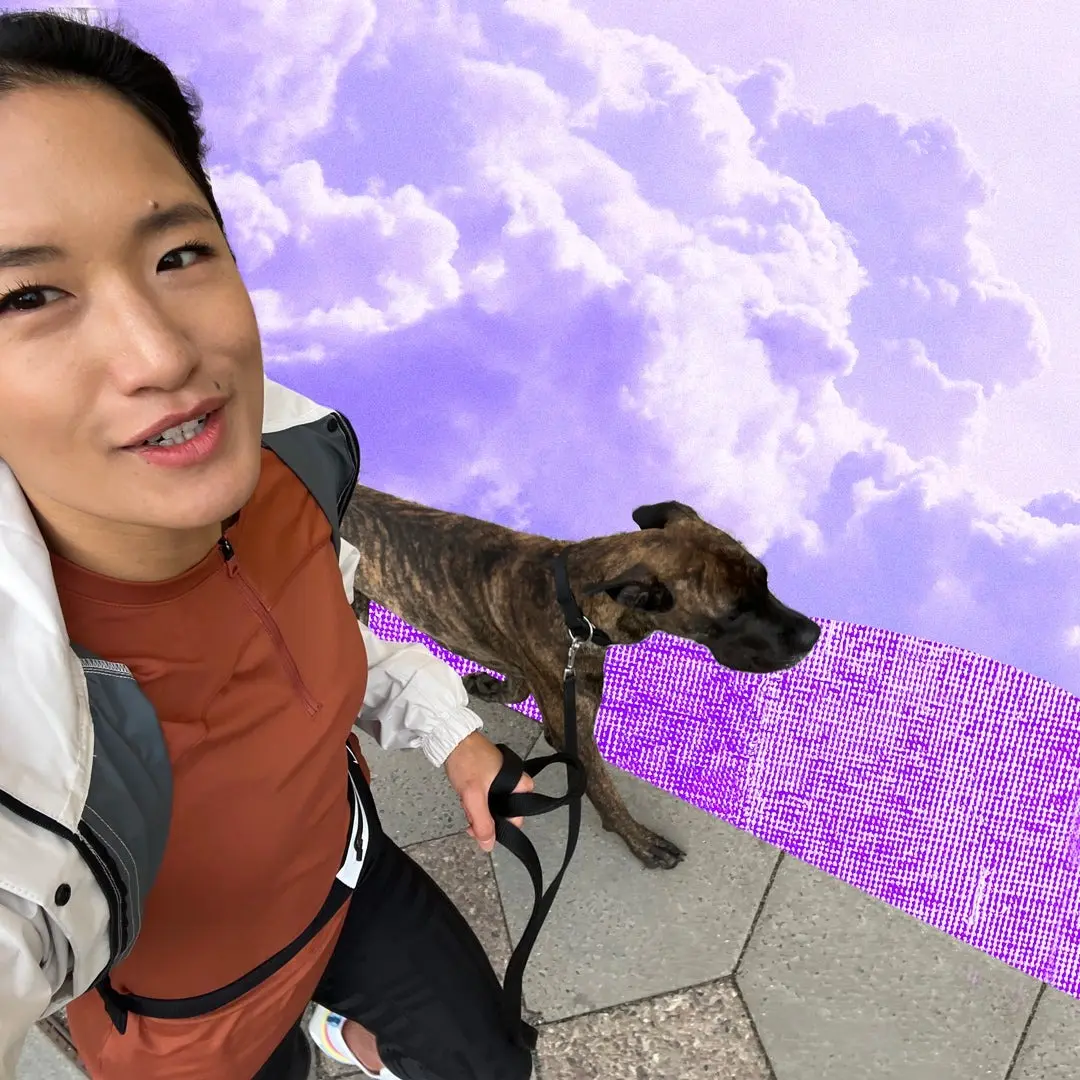
To inject an element of play into the session, Monday’s run often includes a canine companion—a friend’s energetic dog named Mia. The dynamic changes from a solitary grind to an interactive experience. "At the beginning, she pulls me; at the end, I pull her," Hong laughs. "I might not be as fast as her, but when it comes to endurance, I win."
Tuesday: Cross-Training and Injury Mitigation
True marathon preparation extends far beyond logging high weekly mileage on asphalt. Tuesday marks a strict departure from running as Hong pivots toward structural integrity and injury prevention.
Her regimen includes targeted yoga sessions, structured strength training, and regular appointments with a physiotherapist. This multi-disciplinary approach is not merely supplementary; it is the cornerstone of her athletic longevity. By building a robust, balanced musculoskeletal foundation, Hong ensures that her body can absorb the immense forces generated during high-intensity track workouts and long weekend endurance runs.
Crucially, this cross-training enables her to push the boundaries of her comfort zone without crossing the threshold into overtraining or acute injury. It provides a buffer, ensuring that she is never entirely depleted after strenuous sessions and can seamlessly transition into scheduled recovery periods.
Wednesday: Professional Travel and Cultural Respite
Mid-week often brings a clash of responsibilities. As an international flight attendant, Hong’s availability in Berlin is precious. Wednesday serves as a crucial bridge in her weekly cycle, prioritizing mental restoration and social connection over physical exertion.
Rather than forcing a substandard workout when fatigued, Hong leans into her social life. Understanding that psychological well-being directly influences athletic performance, she dedicates her time in the city to seeing friends and visiting local art exhibitions. This deliberate separation from training metrics prevents mental burnout, ensuring that her passion for running remains untainted by obligation.
Thursday: Pushing Limits with Track Workouts and Specialized Gear
If Monday and Wednesday represent intuition and recovery, Thursday is dedicated to raw physical adaptation. Many outsiders harbor the misconception that successful marathoners wake up effortlessly at 5:00 AM and casually knock out 20 kilometers without a drop of sweat. Hong is quick to debunk this myth.
"Some people think marathon runners bounce out of bed at 5:00 AM and run 20 kilometers without blinking," she says. "In reality, I sometimes need an extra dose of motivation, too. That is why comfort is so crucial to me, whether I am facing an easy recovery jog or a brutal track session."
Thursday’s session is a high-intensity track workout designed to test lactate threshold, speed endurance, and mental fortitude. To mitigate the physical impact of these punishing intervals, gear selection is paramount. Hong relies on the Nike Invincible 3, favoring its responsive, high-energy-return foam sole and secure lockdown across various surfaces. The combination of supportive footwear and competitive drive transforms a grueling test of speed into an empowering exploration of physical limits.
Friday: Active Recovery and Berlin’s Cultural Pulse
Following the high-stress physiological demands of Thursday’s track workout, Friday is designated for deliberate rest. Aside from a gentle mobility or yoga flow, the day is intentionally unstructured.
Reflecting her lifestyle as a globetrotter, Hong uses her time in Berlin to immerse herself in the local community. Visiting galleries and catching up with friends serves as a reminder of the vibrant life she maintains outside of her running shoes. This psychological grounding is vital for maintaining the emotional resilience required for elite endurance training.
Saturday: The Meditative Rhythm of the Landwehrkanal
Saturday morning belongs to the ritual of the long, unstructured run. Hong’s standard route traces the scenic banks of the Landwehrkanal, offering a shifting terrain of asphalt, packed dirt, and grass that engages stabilizing muscles.
Armed with an engaging podcast or simply tuned into the ambient acoustic landscape of Berlin, Saturday runs serve as a form of active meditation. "I love watching the people around me," she reflects.
The physical journey concludes with a well-earned reward: a artisanal coffee and a light pastry from a local market stall in Kreuzberg. This intentional pairing of exertion and culinary indulgence reinforces positive neurological feedback loops, making future training sessions something to look forward to rather than dread.
Sunday: Community Synergy and the Long Run
The culmination of the training week takes place on Sunday, anchored by Hong’s involvement with the Joy Run Collective, a vibrant local running community.
Sunday’s agenda features a long-distance endurance run through the expansive greenery of the Tiergarten. Facing colder temperatures and extended time-on-feet, preparation requires careful layering and collective energy. Running in a group provides a vital psychological shield against fatigue.
The physical effort is ceremoniously capped off with a communal brunch. For Hong, the post-run gathering is a sacred ritual. "This time, the host made homemade dumplings," she beams. "I’ve been looking forward to these dumplings all week."
Supporting Context & Metrics: The Science of Sustainable Endurance
Hong’s methodology—frequently dismissed by traditionalists as "too soft"—is increasingly validated by contemporary sports science. The traditional paradigm of "no pain, no gain" often leads to systemic overtraining, elevated cortisol levels, psychological burnout, and high attrition rates among recreational athletes.
The Physiology of Comfort and Consistency
Sports medicine research consistently demonstrates that training consistency is the single most important predictor of marathon success. An athlete who runs four moderate-to-high quality sessions every week for a year will vastly outperform an athlete who executes erratic, hyper-punishing blocks interspersed with injury-induced hiatuses.
By prioritizing comfort—through carefully selected footwear like the Nike Invincible 3, adequate sleep, and psychological pacing techniques—Hong minimizes the micro-traumas that lead to overuse injuries such as shin splints, plantar fasciitis, and Achilles tendonitis. Her integration of strength training and physiotherapy builds a protective armor around her joints, allowing her to absorb the cumulative impact of thousands of footstrikes.
The Psychology of Intrinsic Motivation
Psychological frameworks surrounding athletic adherence emphasize the distinction between extrinsic motivation (running solely to lose weight, appease social media metrics, or chase arbitrary medals) and intrinsic motivation (running for joy, community, and self-discovery).
Hong’s narrative is a textbook example of intrinsic motivation sustained through environmental design:
- Auditory Anchors: Using curated playlists to regulate mood and energy.
- Social Reinforcement: Partnering with friends, dogs, and the Joy Run Collective to transform isolation into shared experience.
- Sensory Rewards: Pairing hard physical output with high-value culinary treats (coffee in Kreuzberg, homemade dumplings).
This holistic loop ensures that the perceived barrier to entry for each workout remains low, even when physiological fatigue is high.
Official Perspectives: Redefining the Modern Athlete
The cultural shift toward sustainable athleticism is reshaping how brands, coaches, and communities approach endurance sports. Industry experts point to athletes like Hong as the blueprint for the future of running culture.
"For decades, the running industry sold a narrative of suffering. We told consumers that to be a ‘real’ runner, you had to hurt, wake up before dawn, and isolate yourself from ordinary pleasures," notes Dr. Elena Vance, a sports psychologist specializing in endurance athletes. "What Hong and modern run collectives are demonstrating is that sustainability is superior to suffering. When you remove the intimidation factor and replace it with community, comfort, and joy, you unlock exponential growth in athletic longevity."
Furthermore, community leaders emphasize the democratization of running. The rise of inclusive collectives across major European capitals like Berlin, London, and Paris has transformed running from a solitary, stopwatch-obsessed discipline into a vibrant social subculture.
"Running is no longer just about the split times on your GPS watch," says Marcus Lindqvist, co-founder of Berlin-based run culture initiatives. "It’s about the conversation during the warmup, the shared exhaustion on the hills, and the meal you share afterwards. Athletes like Hong remind us that the magic happens in the spaces between the miles."
Future Outlook: The Road to the 7th Marathon and Beyond
As Hong prepares to lace up her running shoes for her seventh marathon, her journey offers a profound lesson for the broader fitness community. Four years ago, she did not consider herself a runner. Today, at age 30, she reports feeling healthier, stronger, and more physically resilient than she ever did in her twenties.
More importantly, she has cultivated an unshakeable sense of self-confidence derived from her ability to navigate adversity without sacrificing her well-being. Her philosophy dismantles the false dichotomy between high achievement and personal comfort.
"I’ve learned that consistency and comfort do not have to be mutually exclusive," Hong reflects. "I can set new boundaries for myself and still feel completely at ease while doing it. Next stop: my 7th marathon."
As endurance sports continue to evolve, the blueprint established by athletes who refuse to sacrifice joy for performance will undoubtedly become the gold standard. For the millions of everyday individuals looking to balance career demands, personal lives, and athletic ambitions, Hong’s journey proves that the path to 42.195 kilometers doesn’t have to start in misery—it can start with a good cup of coffee, a great playlist, and a well-deserved push of the snooze button.
Hong’s Top 3 Pillars for Maximum Running Enjoyment
- Invest in Ergonomic Comfort: Prioritize supportive footwear (such as cushioned models tailored to your gait and surface) to protect joints and maintain a bouncy, enjoyable stride across varied terrain.
- Curate Your Auditory Environment: Utilize dynamic playlists—spanning disco, house, and techno—as psychological tools to elevate mood, maintain cadence, and combat training fatigue.
- Design Intentional Routes and Rewards: Combine scenic, engaging environments (like urban parks and canal paths) with meaningful social connections and post-run culinary traditions to anchor your workouts in positive reinforcement.