Executive Overview
In the modern landscape of endurance sports, the prevailing cultural narrative often demands uncompromising rigor. Society frequently romanticizes the archetype of the obsessive athlete: the individual who leaps out of bed at 4:30 AM, relentlessly logs punishing mileage in sub-zero temperatures, and treats recovery as an afterthought. Yet, a quiet paradigm shift is underway within global running communities. Endurance athletes are increasingly recognizing that sustainable performance is not forged through perpetual exhaustion, but rather through the deliberate intersection of high-level output, mental wellbeing, and radical self-compassion.
No one embodies this philosophy quite like Hong, a Berlin-based designer, flight attendant, and seasoned endurance runner currently preparing for her seventh marathon. Hong’s journey challenges the traditional gatekeeping of the sport. Once firmly identifying as a non-runner, she has systematically transformed her lifestyle over the past four years to prove a counterintuitive thesis: consistency and comfort do not have to be mutually exclusive enemies. At age 30, Hong reports being healthier, stronger, and more physically resilient than she ever was during her twenties—all while refusing to sacrifice her love for a cozy morning routine, social commitments, and the sacred ritual of the snooze button.
This report offers an in-depth journalistic examination of Hong’s training philosophy, dissecting her weekly regimen, her mental frameworks for overcoming athletic burnout, and the holistic strategies that allow her to balance a grueling travel-heavy career with elite-level marathon preparation. Through an exploration of her daily habits, we uncover a blueprint for modern runners seeking longevity, joy, and peak physical performance without compromising their quality of life.
Detailed Chronology: A Week in the Life of a Marathon-Training Flight Attendant
Balancing the demands of international aviation with the rigorous metabolic and structural requirements of marathon training requires meticulous time management. Hong’s weekly schedule is a masterclass in periodization, seamlessly integrating high-intensity track sessions, strength conditioning, mobility work, and—crucially—unapologetic rest.
Monday: Breaking Inertia and Finding Rhythm
The workweek begins under heavy logistical pressures. As both a graphic designer and a commercial flight attendant, Hong’s professional life is inherently unpredictable, characterized by shifting time zones and erratic sleep schedules. On Mondays, the primary enemy is not physical fatigue, but psychological inertia.
To combat the temptation to skip her opening workout, Hong relies on external auditory stimuli. "I don’t always listen to music when I run," she explains, "but when I feel unmotivated, my running playlist is simply my life saver." Her musical selections—spanning pulsating house, driving techno, and uplifting disco—serve as a neurological anchor, shifting her brain state from sluggish to engaged.
Monday’s run also features a unique tactical adaptation for managing breathlessness. When cardiovascular fatigue threatens to cut her session short, Hong employs an unorthodox pacing strategy: she starts singing. This intentional vocalization forces her to regulate her breathing patterns, dropping her heart rate and extending her running time. It also injects levity into the workout, often drawing amused smiles from unsuspecting pedestrians along her path.
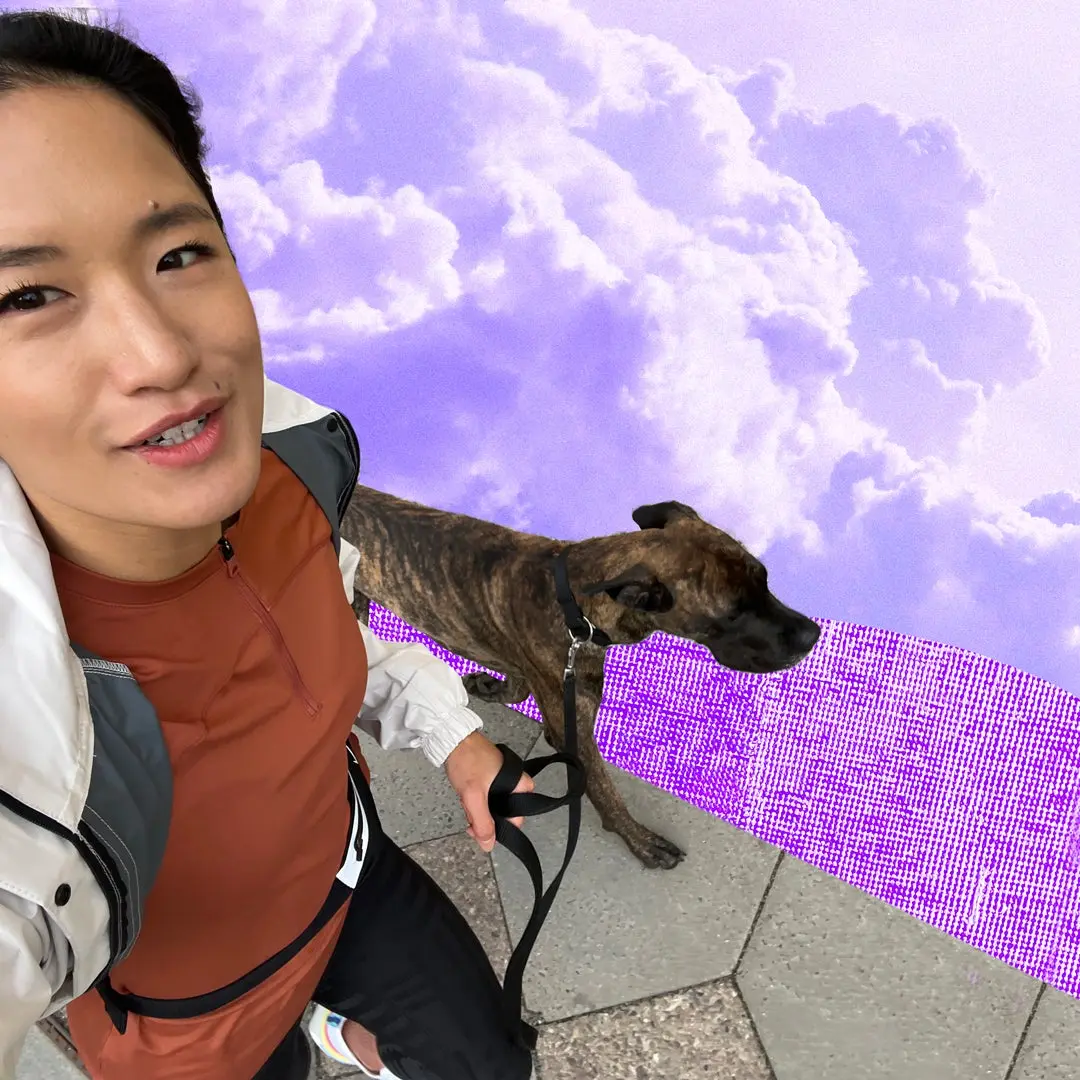
To add companionship to the miles, Monday’s excursion frequently includes Mia, a high-energy dog borrowed from a friend. The dynamic between human and canine offers a fascinating study in endurance versus speed. While the dog initially pulls Hong forward with explosive sprinter’s energy, Hong’s deep aerobic base ultimately prevails over distance. "I might not be as fast as her," Hong notes, "but when it comes to endurance, I win."
Tuesday: The Foundation of Cross-Training
True marathon preparation extends far beyond pounding the pavement. On Tuesdays, Hong deliberately pivots away from running to focus on structural integrity. Her cross-training regimen comprises targeted yoga flows, functional strength training, and specialized physiotherapy sessions.
Sports scientists and running coaches have long advocated for strength conditioning as a non-negotiable pillar of endurance sports. For Hong, this multidisciplinary approach is the safety net that allows her to step outside her comfort zone during hard running sessions without courting injury. By building a robust musculoskeletal foundation, she ensures that her body absorbs the high-impact forces of marathon training. Furthermore, this comprehensive conditioning prevents total physical depletion, allowing her to transition smoothly into the next phase of her training cycle after a mandatory rest period.
Wednesday: Active Recovery and Social Integration
Midweek marks a intentional dip in training intensity. Recognizing that physiological adaptation occurs during rest—not during the workout itself—Hong dedicates Wednesdays to recovery and social reconnection.
Given her frequent absences due to her aviation career, Hong treats her time in Berlin as a precious commodity. Rather than isolating herself in pursuit of athletic purity, she actively invests in her social capital. A typical Wednesday might involve visiting a local art exhibition, exploring a gallery, or sharing a meal with friends. This psychological downtime is just as critical to her marathon preparation as any cardiovascular threshold session, effectively lowering systemic cortisol levels and shielding her against mental burnout.
Thursday: Pushing Limits on the Track
If Wednesday is defined by tranquility, Thursday represents the crucible of Hong’s physical ambition. Dispelling the myth that elite marathoners effortlessly bounce out of bed at dawn to effortlessly rattle off 20 kilometers, Hong admits that she frequently requires an extra dose of psychological motivation—even on high-intensity days.
Thursday is track workout day, an arena dedicated to speed, threshold adaptation, and raw grit. "I love competitions. It gives me an incredible amount of joy to challenge myself," she states. During these sessions, she tests her anaerobic thresholds, measuring how fast she can run and how long she can sustain that velocity under high physiological stress.
Footwear plays a pivotal role in these demanding sessions. Hong relies on performance footwear engineered for impact absorption and energy return, specifically citing the Nike Invincible 3. The shoe’s signature "bouncy" sole and structural stability provide the psychological and physical security required to push her pace on varied urban surfaces without fearing joint strain.
Friday: Reflection, Restoration, and Art
Following the high-stress physiological load of Thursday’s track session, Friday is designated as a low-impact recovery day. Aside from a gentle restorative yoga session, Hong spares her legs from high-mileage demands.
She continues her cultural integration of Berlin life, frequently meeting friends for gallery walks or museum visits. This deliberate pacing ensures that her energy reserves are adequately replenished ahead of the weekend’s defining endurance tests.
Saturday: The Urban Long Run and Sensory Detachment
Saturday morning brings the familiar rhythms of Hong’s standard training route along the scenic Landwehrkanal. This weekly long run is a sensory journey traversing diverse terrain: smooth asphalt, uneven dirt paths, and occasionally muddy grass.
During these miles, Hong practices a form of active meditation. Sometimes she loses herself in an engaging true-crime or society podcast; other times, she turns off her headphones entirely, tuning into the ambient acoustic backdrop of the waking city. She finds profound joy in observing the urban ecosystem around her—the street vendors, cyclists, and fellow residents of Berlin.
True to her philosophy that running must be paired with reward, the Saturday session culminates in a deliberate culinary ritual: a freshly brewed coffee and a savory local snack at a bustling market stand in Kreuzberg.
Sunday: Community, Endurance, and Dumplings
The pinnacle of Hong’s training week occurs on Sunday, orchestrated by her running community, the Joy Run Collective. Group long runs through the sprawling expanses of the Tiergarten serve as the ultimate test of endurance, particularly during the colder months when thermal regulation is paramount.
Running in a collective provides vital social accountability and emotional support, transforming a solitary test of will into a shared cultural experience. The completion of the long Sunday mileage is traditionally celebrated with a communal brunch. For Hong, the post-run reward is practically a spiritual event: "This time, the host made dumplings. I’ve been looking forward to these dumplings all week long."
Supporting Context & Metrics: The Evolution of Modern Running Culture
Hong’s trajectory from reluctant non-runner to committed marathoner reflects broader sociological shifts in endurance sports over the past decade.
The Democratization of Endurance
Historically, long-distance running was viewed through an elitist lens—dominated by lean, hyper-focused individuals adhering to monastic training schedules. However, the rise of running collectives, digital fitness platforms, and inclusive sneaker engineering has fundamentally democratized the sport. Today’s running culture places immense value on community, mental health, and individual expression.
Psychological Metrics of Consistency
Sports psychologists emphasize that long-term athletic adherence is rarely driven by willpower alone; rather, it is sustained by emotional rewards and environmental design. By anchoring her runs to enjoyable elements—such as curated playlists, dog walking, social connections, and post-run culinary treats—Hong actively engineers dopamine loops that counteract the friction of early-morning fatigue.
- The Four-Year Transformation: Starting at age 26 and reaching her current athletic peak at 30, Hong’s timeline demonstrates that robust cardiovascular remodeling and structural adaptation do not require a lifetime of athletic conditioning.
- The Injury-Prevention Ratio: By allocating roughly 40% of her weekly routine to cross-training, yoga, mobility work, and rest, Hong aligns with contemporary sports science recommendations, which stress that load management is the single most effective deterrent against overuse injuries in marathon runners.
Official Statements & Personal Philosophy
Reflecting on her four-year evolution in the sport, Hong offers a profound perspective on what physical endurance has unlocked for her personal development:
"I have as an adult runner gained a tremendous amount of self-confidence because I now know just how hard I can push myself, even when I feel a bit low. I have learned one fundamental truth: consistency and comfort do not have to exclude one another. I can set new boundaries for myself and still feel completely at home in my own skin. Next stop: my seventh marathon."
This synthesis of ambition and self-care serves as a direct rebuttal to the toxic "no pain, no gain" dogma that has historically plagued endurance sports. By prioritizing psychological safety, gear comfort, and social connection, Hong has constructed an athletic identity that is both fierce and sustainable.
Future Outlook: The Road to the 7th Marathon and Beyond
As Hong sets her sights on her seventh marathon, her journey offers a compelling blueprint for the future of recreational and competitive endurance sports. The modern runner is no longer willing to sacrifice their mental health, social relationships, or joy at the altar of a personal record.
The industry is responding in kind. Footwear brands are investing heavily in technologies that maximize comfort and energy return without sacrificing performance; running collectives are prioritizing inclusivity and post-run community events over sheer pace; and athletes are increasingly embracing the reality that a well-rested runner is a faster, more resilient runner.
For Hong, the finish line of her upcoming marathon will not signify the end of a grueling ordeal, but rather the celebration of a lifestyle built on balance. Whether she is singing her way through a heavy breath, sharing a run along the Landwehrkanal with a borrowed dog, or anticipating the warm comfort of Sunday dumplings with her community, Hong proves that the path to 42 kilometers does not have to be paved with misery. It can, and perhaps should, be paved with joy.