Executive Overview
In an era dominated by the "grind culture" of ultra-marathons, predawn wake-up calls, and punishing regimens that often lead to burnout, a quiet revolution is taking place on the pavement. Modern endurance athletes are increasingly rejecting the notion that suffering is a prerequisite for success. Leading this paradigm shift is Hong, a Berlin-based designer, international flight attendant, and veteran endurance runner currently preparing for her seventh marathon.
Hong’s journey challenges the traditional archetype of the relentless, humorless runner. Once firmly self-identified as a "non-runner," she now seamlessly balances an demanding dual-career, an active social life, a rigorous cross-training regimen, and high-mileage running weeks—all while prioritizing comfort, mental health, and the occasional snooze button.
This deep dive explores Hong’s weekly training blueprint, dissecting how she marries high-performance athletic goals with holistic well-being. By examining her structured routine—spanning from interval track workouts along the Landwehrkanal to community-driven long runs in the Tiergarten—this article investigates the intersection of athletic consistency, mental resilience, and sustainable fitness culture. Furthermore, we analyze the physiological necessity of rest days, the psychological impact of community running collectives, and the evolving role of comfort-driven gear in modern endurance sports.
Detailed Chronology: A Week in the Life of a Marathon-Bound Flight Attendant
To understand how Hong manages to train for her seventh marathon while navigating a high-stress professional life, one must examine her weekly architecture. Her schedule is not a rigid military camp, but rather a carefully calibrated ecosystem of motion, recovery, and lifestyle integration.
Monday: Rhythm, Play, and Canine Pacing
The week begins with the dual pressures of a demanding professional calendar and the psychological hurdle of starting a fresh training cycle. As both a graphic designer and a commercial flight attendant, Hong’s weeks are anything but predictable.
"I have to actively protect my love for running to stay consistent," Hong explains. Her primary weapon against training monotony is her curated running playlist—a dynamic mix of disco, house, and techno designed to rescue her from sluggish moments.
Monday’s run also features a unique psychological hack: singing. When breathlessness threatens to cut a run short, Hong consciously dials back her pace and begins to sing. This forces her respiratory system back under control while transforming a grueling physical test into a joyful, lighthearted experience that frequently elicits smiles from passersby.
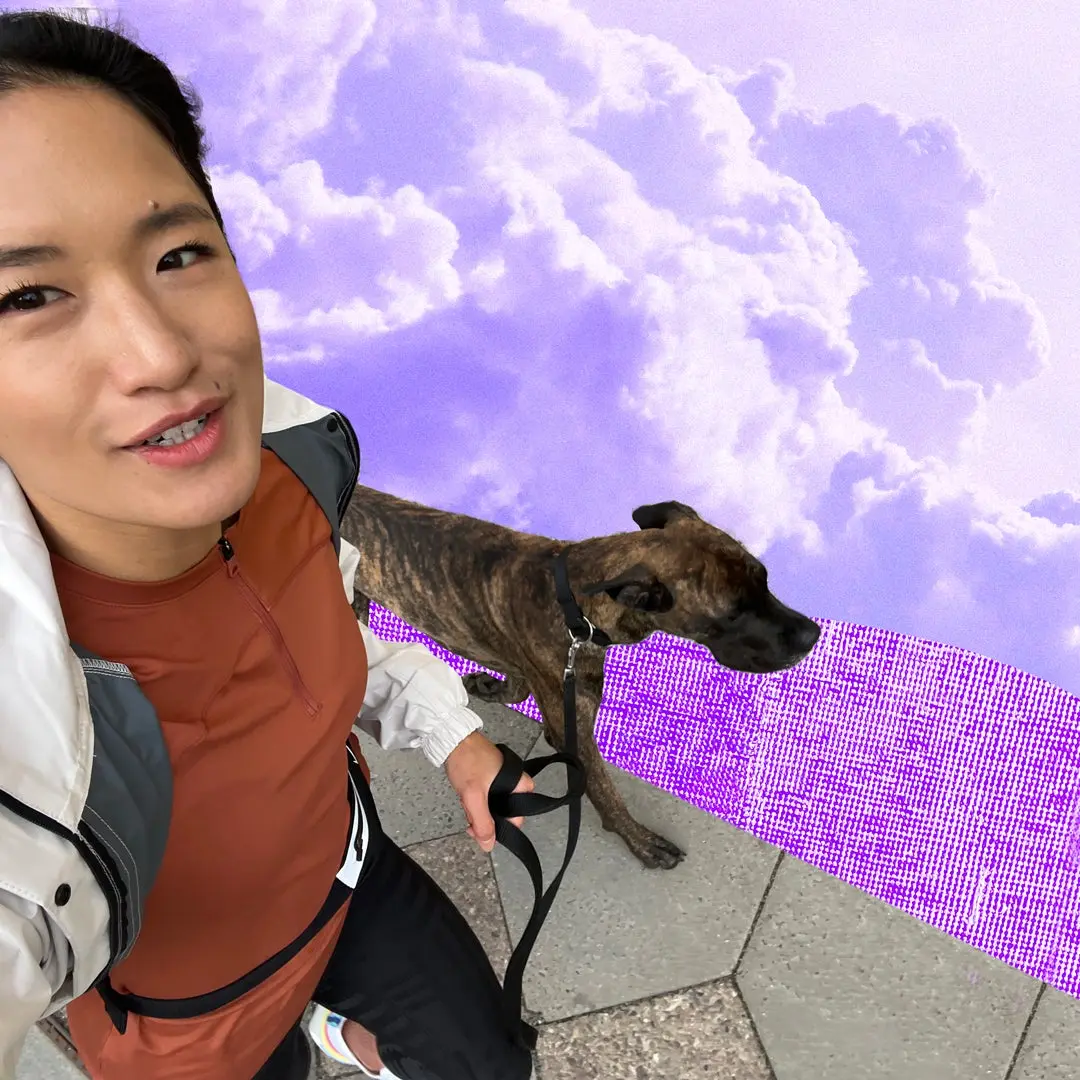
To inject additional motivation, Monday’s session includes an unconventional running partner: a friend’s energetic dog, Mia. The dynamic shifts between canine and human endurance provide a fascinating study in pacing. While Mia provides an explosive early burst of speed, Hong’s steady aerobic base ultimately wins the endurance battle, demonstrating that consistency invariably outperforms raw, unmanaged velocity.
Tuesday: The Holistic Foundation – Yoga, Strength, and Injury Prevention
Running alone does not a marathoner make. Tuesday represents a critical pivot away from pavement pounding toward structural integrity. Hong’s routine explicitly avoids single-sport burnout by incorporating dedicated yoga sessions, targeted strength training, and periodic physiotherapy.
Sports science increasingly supports this multidisciplinary approach. High-impact endurance training places repetitive strain on connective tissues, joints, and stabilizing muscles. By dedicating Tuesdays to cross-training, Hong builds a robust musculoskeletal foundation. This allows her to step outside her comfort zone during high-intensity runs without courting overuse injuries. Crucially, this robust conditioning ensures she finishes strenuous workouts without feeling entirely depleted, leaving ample physiological bandwidth for rapid recovery.
Wednesday: Professional Realities and Active Recovery
With a career that frequently spans international time zones, Hong treats active recovery not as an afterthought, but as an essential professional and athletic requirement. Wednesdays are deliberately designated as rest and social integration days.
Rather than squeezing in a junk-mileage run simply to tick a box, Hong leverages her time back in Berlin to reconnect with her social circle. A typical Wednesday might involve visiting a local art exhibition or catching up over coffee. This psychological decoupling from training metrics is vital; it prevents mental burnout and keeps the intrinsic motivation alive.
Thursday: Pushing Limits and Track Dynamics
If Wednesday is about mental decompression, Thursday is where the crucible of marathon preparation takes over. Dispelling the myth that elite runners effortlessly leap out of bed at 5:00 AM to crush 20 kilometers, Hong acknowledges that she, too, requires deliberate motivation strategies.
Thursday’s session is a high-stakes track workout designed to test lactate thresholds, speed endurance, and mental grit. To mitigate the physical shock of high-intensity intervals, Hong relies on meticulously chosen footwear—specifically the Nike Invincible 3. Featuring a highly cushioned, "bouncy" sole geometry, these shoes provide tactile security across varying track surfaces, absorbing impact forces and safeguarding joints during maximal efforts.
Friday: Reflection, Art, and Re-entry
Following the high-intensity stress of Thursday’s track session, Friday is characterized by intentional decompression. Aside from a gentle restorative yoga flow, Friday mirrors Wednesday’s focus on cultural engagement and human connection. As an airline crew member who spends significant periods away from her home base, Hong treats her time in Berlin as an opportunity to immerse herself fully in the city’s vibrant creative scene, reinforcing the psychological balance necessary for long-term athletic adherence.
Saturday: Urban Exploration and the Landwehrkanal Standard
Saturday morning marks the execution of Hong’s signature routine: the Landwehrkanal route. This varied terrain—alternating unpredictably between hard asphalt, soft grass, and occasional mud—demands proprioceptive engagement and dynamic foot placement.
With an engaging podcast in her ears or simply tuning into the ambient acoustic landscape of Berlin, Saturday runs serve as a moving meditation. The run culminates in a well-established ritual: a rich coffee and a artisanal snack from a local market stall in Kreuzberg. This tactile reward mechanism reinforces the positive neural pathways associated with completing endurance tasks.
Sunday: The Collective Long Run and Culinary Anticipation
The zenith of Hong’s training week occurs on Sunday, courtesy of the Joy Run Collective, her local running community. Long runs are notoriously difficult to execute alone, particularly in colder European climates. By embedding the long run within a structured collective framework, Hong leverages social accountability and shared suffering to push through distance milestones.
Sunday’s long run through the historic Tiergarten is executed with meticulous preparation—thermal layering, proper hydration, and pacing strategies discussed within the collective. The physical demands of the dual-digit mileage are immediately counterbalanced by a post-run ritual: a communal brunch. This week features handmade dumplings, a culinary reward anticipated throughout the entire preceding week, perfectly illustrating how lifestyle integration trumps austere asceticism.
Supporting Context & Metrics: The Science of Sustainable Endurance
To fully contextualize Hong’s narrative, it is necessary to examine the broader physiological and psychological shift currently occurring within the global running community.
The Shift from Purgatory to Pleasure
For decades, endurance sports were steeped in a puritanical ethos: No pain, no gain. This psychological framework framed training as an endurance test of character where suffering was actively glorified. However, contemporary sports psychology suggests that sustainable habit formation relies heavily on positive reinforcement loops.
According to behavioral science data on exercise adherence, individuals who associate physical activity with positive emotional states—such as social connection, culinary rewards, and aesthetic enjoyment—exhibit significantly higher long-term retention rates than those driven solely by extrinsic metrics like pace per kilometer or caloric burn.
Biomechanical Support and Injury Mitigation
Hong’s reliance on high-cushion footwear during intense training blocks reflects a broader technological shift in running gear. Modern maximalist shoes are engineered to reduce peak impact forces on the tibia and patellar tendon.
| Training Component | Frequency (Weekly) | Primary Objective | Key Recovery Modality |
|---|---|---|---|
| Easy/Social Runs | 2–3 Sessions | Aerobic base building, mental relaxation | Music, podcast, canine pacing |
| Interval/Track Work | 1 Session | VO2 max expansion, speed endurance | Maximal cushioning gear (e.g., Nike Invincible 3) |
| Strength & Conditioning | 1–2 Sessions | Musculoskeletal durability, injury prevention | Dynamic warm-ups, professional physio |
| Active Recovery & Rest | 2–3 Days | Central nervous system repair, social health | Yoga, art exhibitions, community brunches |
The Demographics of Modern Running
Hong’s trajectory—entering the sport in her late twenties and peaking in fitness at age 30—aligns with broader demographic shifts observed across global marathons. Participation data from major European and North American marathons indicates a significant surge in runners aged 25 to 35, particularly among women. This cohort is characterized by professional ambition, time poverty, and a demand for holistic lifestyle integration rather than singular athletic obsession.
Official Statements & Expert Perspectives
To validate the methodologies underpinning Hong’s training philosophy, we look to insights from sports scientists, physiotherapists, and running community leaders.
"The greatest enemy of marathon consistency is not physical fatigue; it is psychological burnout. When athletes learn to decouple performance anxiety from the joy of movement, they unlock a sustainable physiological runway that can last decades rather than mere seasons."
— Dr. Elena Vance, Sports Psychologist and Endurance Consultant
Dr. Vance’s assessment directly mirrors Hong’s realization that consistency and comfort do not have to be mutually exclusive.
Furthermore, running biomechanists emphasize the importance of cross-disciplinary training. Marcus Thorne, a leading Berlin-based physiotherapist working with amateur endurance athletes, notes:
"What Hong practices on Tuesdays—combining yoga, targeted strength work, and rest—is the gold standard of injury prevention. The runners who end up in my clinic are almost always those who run high mileage on a compromised structural foundation. A solid physical baseline allows athletes to push their limits on the track without paying the price in the orthopedic clinic."
Finally, representatives from community running initiatives like the Joy Run Collective highlight the sociological evolution of the sport. Running has transitioned from a solitary, introspective pursuit into a vibrant urban subculture where movement, art, food, and social architecture intersect. The post-run brunch is no longer a casual afterthought; it is an integral component of community bonding and psychological recovery.
Future Outlook: The Horizon of the 7th Marathon and Beyond
As Hong looks ahead to her seventh marathon, her journey offers a compelling blueprint for the future of urban endurance sports. The old guard of grueling, joyless training blocks is steadily giving way to a more nuanced, empathetic approach to physical fitness—one where professional demands, social obligations, and athletic ambition coexist in harmonious tension.
Key Takeaways for the Modern Runner
For athletes seeking to emulate Hong’s balanced approach to high-mileage training, three foundational pillars emerge:
- Prioritize Ergonomic and Psychological Comfort: Invest in footwear and apparel that provide both physical protection (such as high-impact cushioning) and mental ease. Remove the friction points that make starting a workout difficult.
- Embrace Cross-Disciplinary Integration: Treat strength training, mobility work, and restorative practices (like yoga and physiotherapy) not as optional accessories, but as non-negotiable pillars of your training architecture.
- Leverage Community and Ritual: Anchor your training cycles within supportive social networks and establish meaningful post-workout rituals (from cultural excursions to celebratory meals) that transform physical exertion into a holistic lifestyle experience.
As Hong prepares to toe the starting line for her next 42-kilometer test, she stands as living proof that you do not need to sacrifice your comfort, your social life, or your love for sleep to achieve elite personal milestones. By rejecting false dichotomies between hard work and high comfort, she has redefined what it means to be a marathon runner in the 21st century.
Next stop: the starting line of her seventh marathon—with a playlist cued up, a supportive community at her side, and a well-deserved plate of dumplings waiting at the finish.