Executive Overview
In an era defined by hustle culture and extreme athletic benchmarks—where early-morning marathons, hyper-optimized biohacking, and punishing workout schedules often dominate the wellness landscape—Berlin-based designer and flight attendant Hong offers a refreshing counter-narrative. Once identifying firmly as a non-runner, Hong has undergone a remarkable physical and mental transformation, currently training for her seventh marathon. However, her journey is not characterized by puritanical self-denial or relentless early-riser discipline. Instead, Hong champions a philosophy where high-level athletic endurance coexists harmoniously with comfort, community, and a deep appreciation for the gemütlich aspects of life.
Balancing a demanding dual-career schedule—commuting across the globe as a flight attendant while maintaining a creative career in design—requires an exceptional degree of logistical finesse. Rather than letting her packed calendar derail her fitness goals, Hong has engineered a sustainable, holistic training framework. Her routine proves that longevity in sport does not stem from punishing the body into submission, but rather from cultivating joy, prioritizing recovery, and anchoring workouts in comfort, community, and sensory pleasure. This feature explores Hong’s weekly blueprint, examining how she integrates rigorous physical conditioning with a vibrant social and professional life, and decoding the actionable lessons everyday athletes can draw from her unique approach to endurance sports.
Detailed Chronology: A Week in the Life of a Marathon-Training Flight Attendant
To understand how Hong manages her ambitious athletic goals amidst a chaotic professional backdrop, one must examine the micro-level architecture of her week. Her schedule is a masterclass in balance, blending intense physical exertion with deliberate recovery, social engagement, and creative stimulation.
Monday: Breaking the Inertia with Music and Canine Companionship
Mondays present an immediate psychological hurdle for many, and Hong is no exception. As a creative professional and aviation worker, her weeks are front-loaded with logistical challenges. To maintain her running consistency without falling prey to mental fatigue, she relies heavily on auditory motivation. "I don’t always listen to music when I run," Hong notes, "but when I feel unmotivated, it is simply my life-saver." Her carefully curated running playlist—rich in driving electronic rhythms like disco, house, and techno—serves as a psychological catalyst, bridging the gap between lethargy and movement.
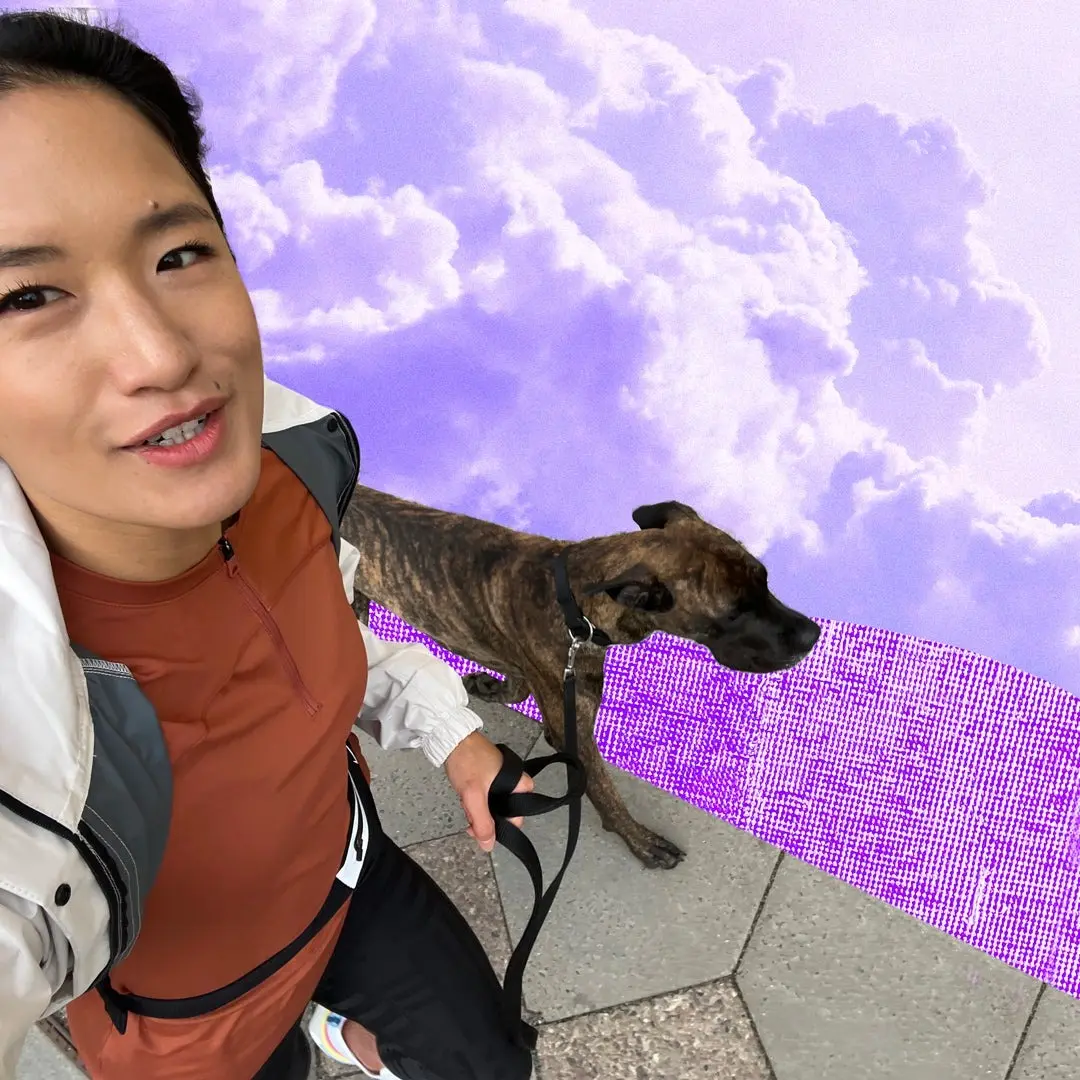
When fatigue sets in mid-stride, Hong employs a clever self-regulation technique: she slows her pace and begins to sing. This forces her to regain control of her breathing naturally, transforming a grueling exertion into a playful, rhythmic exercise that frequently draws amused smiles from passersby. To inject an extra layer of social joy into her Monday miles, Hong often borrows a friend’s dog, Mia. Brimming with canine energy, Mia provides dynamic pacing: pulling Hong forward at the start, while Hong’s superior endurance carries them both across the finish line.
Tuesday: The Foundations of Resilience
True athletic longevity requires looking beyond the pavement. On Tuesdays, Hong pivots away from running entirely to focus on structural integrity. Her cross-training regimen incorporates yoga for mobility, targeted strength training to fortify joints and prevent overuse injuries, and regular physiotherapy sessions.
This multidisciplinary approach forms the bedrock of her endurance work. By establishing a robust physical foundation, Hong ensures that when she does step out of her comfort zone during intense runs, her body can absorb the mechanical stress without collapsing into exhaustion. Crucially, this is followed by intentional rest—a non-negotiable component of her schedule that readies her nervous system for the next wave of high-intensity output.
Wednesday: Global Horizons and Cultural Respite
Given her profession as a flight attendant, Hong’s weeks are subject to international time zones and irregular transit schedules. Wednesdays often serve as a bridge in her social and professional life. When back in Berlin, she makes it a priority to reconnect with friends, stepping away from athletic pursuits entirely to visit local art exhibitions. This intentional mental disconnect is vital; it prevents psychological burnout and ensures that running remains a passionate outlet rather than a clinical obligation.
Thursday: Pushing Limits on the Track
Dispelling the myth that elite runners naturally leap out of bed at 5:00 AM craving a grueling 20-kilometer trek, Hong admits that she frequently requires an extra dose of motivation. Comfort remains her anchor, regardless of whether a gentle recovery jog or a brutal track session lies ahead.
Thursday is reserved for high-intensity speedwork—a critical stimulus for marathon preparation. On the track, she tests her anaerobic thresholds, measuring how long she can sustain peak velocities. To mitigate the high impact associated with track workouts, Hong relies on specific gear, frequently opting for the Nike Invincible 3. Their responsive, high-energy-return foam and secure multi-surface traction provide the psychological and physical safety net she needs to push her limits with confidence.
Friday: Recovery, Art, and Reconnection
The physiological toll of Thursday’s track session demands deep recovery. Aside from a gentle restorative yoga flow, Friday is dedicated to physical rest and social enrichment. Hong embraces Berlin’s vibrant cultural ecosystem, meeting friends for gallery visits and museum tours. As someone who spends significant blocks of time abroad for work, maximizing her time on home soil through shared cultural experiences is an essential psychological recharge.
Saturday: The Meditative Urban Long Run
Saturday morning signals her signature distance session. Trading concrete monotony for varied terrain, Hong’s preferred route traces the scenic path along the Landwehrkanal. Shifting seamlessly between asphalt, grass, and dirt paths, she uses this time for deep mental decompression.
Sometimes accompanied by an immersive, long-form podcast; other times enveloped purely in the ambient acoustic backdrop of the city, Hong treats this run as a moving meditation. She delights in people-watching, absorbing the kinetic energy of her fellow Berliners. The session concludes with a deeply satisfying ritual: a locally sourced coffee and a post-run snack from a bustling market stall in Kreuzberg.
Sunday: Community, Endurance, and Dumplings
The culmination of Hong’s training week takes place on Sunday, anchored by her running collective, the Joy Run Collective. Tackling a long-distance endurance run through the sprawling, tree-lined expanses of the Tiergarten requires careful preparation, particularly against Berlin’s brisk weather.
Running in a pack transforms a solitary test of willpower into a shared social triumph. Once the miles are logged, the collective transitions seamlessly from physical exertion to culinary celebration. This week’s reward? A meticulously prepared batch of homemade dumplings by a fellow group member—a gastronomic focal point Hong admits to anticipating throughout the entire week.
Supporting Context & Metrics: The Paradigm Shift in Modern Endurance Sports
Hong’s trajectory mirrors a broader, data-backed shift in how contemporary athletes approach endurance sports. For decades, running culture was dominated by a "no pain, no gain" ethos—an ascetic tradition that prized suffering, sleep deprivation, and extreme self-denial as badges of honor. Today, sports science and psychological research increasingly validate Hong’s intuitive approach: that sustainable performance is inextricably linked to psychological comfort and holistic life integration.
The Physiology of Consistency Over Intensity
Sports medicine literature consistently demonstrates that the primary driver of cardiovascular and muscular adaptation in endurance running is consistency, not sporadic bouts of maximal suffering. By incorporating yoga, strength training, and structured rest days, Hong mitigates the repetitive strain injuries that sideline an estimated 50% to 75% of runners annually.
Furthermore, her integration of low-intensity "conversational pace" runs aligns with polarized training models popularized by elite exercise physiologists. Spending approximately 80% of training volume at a low intensity builds mitochondrial density and capillary beds without overtaxing the central nervous system, leaving adequate physiological bandwidth for high-output sessions like Thursday’s track workouts.
The Psychology of Joy and Community
The psychological dimension of Hong’s success highlights the importance of intrinsic motivation. Behavioral psychology distinguishes between extrinsic motivators (such as societal pressure or aesthetic goals) and intrinsic motivators (such as the joy of movement, sensory engagement, and community belonging). Athletes anchored in intrinsic pleasure demonstrate significantly higher adherence rates over multi-year cycles.
Running groups like the Joy Run Collective serve as vital socio-psychological anchors. Studies in group dynamics and exercise psychology indicate that communal running significantly lowers perceived exertion, elevates pain thresholds through the release of communal endorphins, and combats urban isolation—a modern epidemic particularly acute among mobile professionals like flight attendants and designers.
Official Statements & Insights
Reflecting on her four-year evolution from a reluctant non-runner to a seasoned marathoner preparing for her seventh 42.2-kilometer race, Hong offers profound perspective on the transformative power of the sport:
"I started running four years ago. At 30, I am healthier and fitter than I ever was in my twenties. But running is so much more than physical training. As a runner, I have gained a tremendous amount of self-confidence because I now know how hard I can push myself, even when I feel a bit low."
Addressing the false dichotomy between comfort and ambition, Hong emphasizes that modern athletic achievement does not require self-punishment:
"I have learned a vital lesson: consistency and comfort do not have to be mutually exclusive. I can set new boundaries and challenge my limits while still feeling completely comfortable in my own skin. Next stop: my 7th marathon."
Future Outlook: Redefining the Modern Athlete
As the endurance sports market continues to expand globally—projected to reach new demographic heights with increasing participation among women and diverse professional backgrounds—narratives like Hong’s point the way toward a more sustainable athletic culture. The archetype of the obsessive, sleep-deprived marathoner training in isolation is rapidly giving way to a more integrated, lifestyle-oriented competitor.
For urban professionals navigating the complexities of modern work life—balancing remote tasks, global travel, creative projects, and social obligations—Hong’s blueprint offers a viable roadmap. It demonstrates that peak physical performance and personal well-being are not adversarial forces, but mutual reinforcements.
As Hong sets her sights on her seventh marathon, her journey serves as an authoritative reminder: ambition is most powerful when it is sustainable, boundaries are meant to be tested with joy, and the greatest finish lines are those celebrated in good company with a warm plate of dumplings waiting at the end.
Hong’s 3 Essential Rules for Maximizing Running Enjoyment
- Invest in Comfort: Prioritize supportive, high-performance footwear and gear that instill physical and psychological security on every terrain.
- Curate Your Auditory Environment: Harness the neurological power of tailored playlists (spanning disco, house, and techno) to combat mental fatigue and maintain momentum.
- Design Holistic Routes and Rewards: Combine scenic, mentally stimulating urban landscapes with intentional post-run culinary rituals and community gatherings.