Executive Overview
In the fast-paced, high-stress landscape of modern urban life, the intersection of intense athletic endurance and holistic well-being has become a holy grail for fitness enthusiasts. Enter Hong, a Berlin-based designer and flight attendant who is currently conditioning for her seventh full marathon. Breaking every stereotype of the hyper-obsessed, pre-dawn-grind endurance runner, Hong’s philosophy bridges a seemingly contradictory divide: that high-performance athletic output can—and should—coexist with comfort, social connection, and a healthy relationship with the snooze button.
This comprehensive feature explores Hong’s weekly training architecture, dissecting how she balances a demanding career in the skies with the rigorous physiological demands of marathon preparation. Far from a narrative of relentless suffering, her journey highlights an evolving paradigm in amateur sports: sustainable fitness driven by community, mental well-being, customized gear, and a deliberate refusal to sacrifice lifestyle for performance.
Detailed Chronology: A Week in the Life of an Urban Marathoner
To understand how an amateur athlete manages the labyrinthine demands of long-distance running alongside an unpredictable travel schedule, one must examine the micro-details of a weekly routine. Hong’s schedule serves as a masterclass in periodization, adaptability, and psychological resilience.
Monday: Rhythm, Play, and Overcoming the Slump
As a dual-profession individual working in design and aviation, Hong’s weeks are inherently volatile. Mondays often present an energetic deficit. To combat this, she relies heavily on curated audio stimulation.
- The Antidote to Fatigue: "I don’t always listen to music when I run, but when I feel sluggish, it’s an absolute lifesaver," Hong explains. Her playlists—spanning disco, house, and techno—provide an immediate cadence anchor.
- The Singing Strategy: When mid-run breathlessness strikes, Hong employs a unique physiological hack: she sings. By forcing her body to vocalize, she is compelled to slow her pace, thereby regaining respiratory control. Beyond its mechanical benefits, the practice injects joy into the miles, frequently eliciting smiles from passing pedestrians.
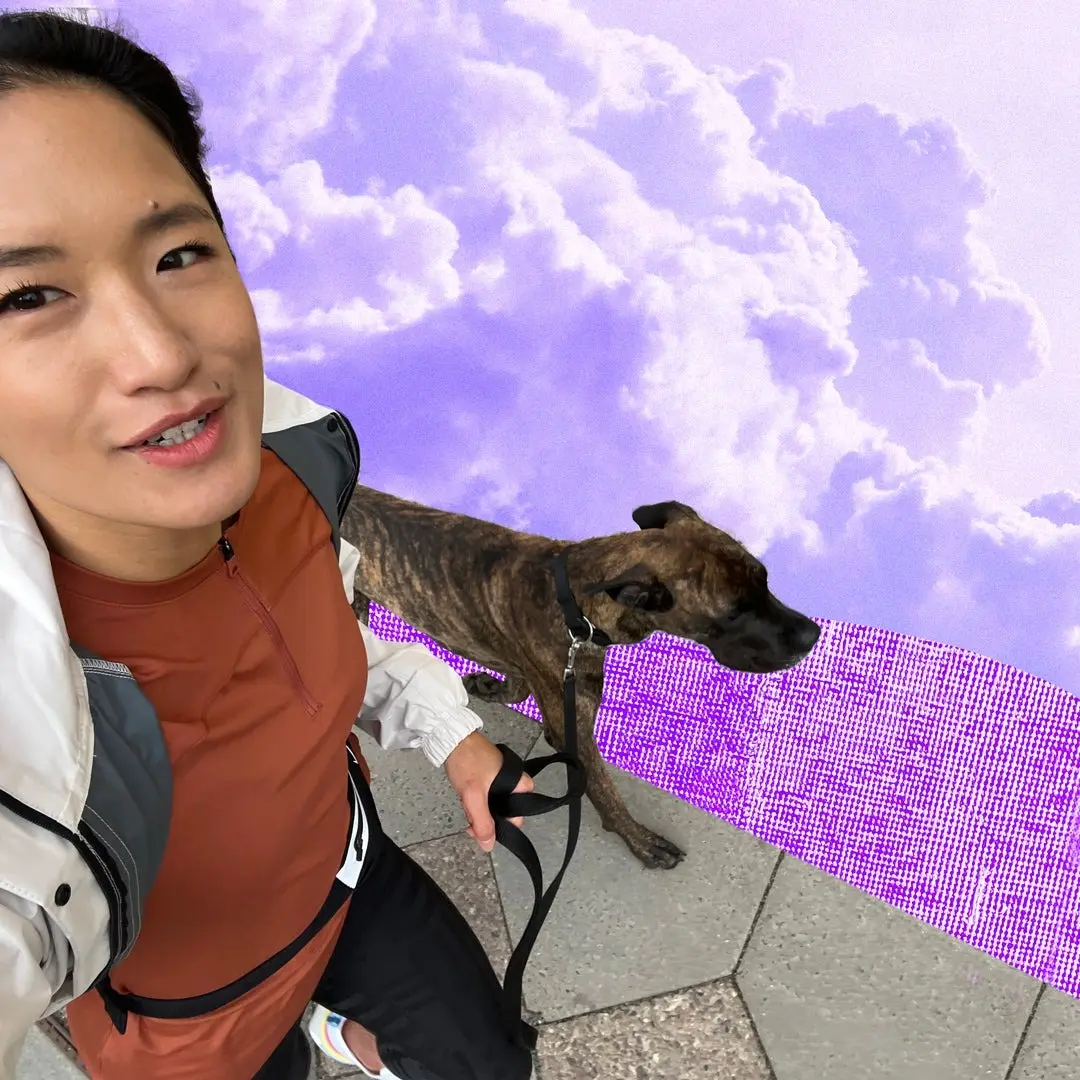
- Canine Companionship: Mondays also feature active recovery mixed with social engagement. Borrowing a friend’s high-energy dog, Mia, introduces dynamic interval dynamics. "At the beginning, she pulls me; at the end, I pull her," Hong notes. While the dog may hold the speed advantage, Hong wins on sustained endurance.
Tuesday: Cross-Training and Injury Prevention
True marathon preparation extends far beyond logging miles on asphalt. Tuesday is deliberately designated as a non-running day dedicated to structural integrity.
- The Holistic Triad: Hong combines yoga for mobility and mindfulness, targeted strength training to fortify joints and tendons against repetitive-strain injuries, and regular physiotherapy sessions.
- Expanding the Comfort Zone: This multidisciplinary foundation is what allows Hong to push her limits during high-intensity runs without running the risk of catastrophic burnout. By ensuring her musculoskeletal system is robust, she can absorb the shock of intense training blocks and bounce back swiftly.
Wednesday: Professional Realities and Cultural Recovery
With an international career keeping her airborne for days at a time, protecting personal relationships is paramount. Wednesday serves as a psychological and social buffer.
- Prioritizing the Social Battery: Rather than squeezing in a junk-mile run out of guilt, Hong redirects her energy toward cultural and social outlets. Whether visiting a contemporary art exhibition in Berlin or catching up with friends scattered across her network, Wednesday underscores her philosophy: training must fit life, not the other way around.
Thursday: Pushing the Limits on the Track
Thursday shatters the myth that Hong’s routine is entirely casual. This is high-intensity track day—the crucible where race-pace adaptation occurs.
- Challenging the Threshold: Operating under the mantra that comfort and ambition can coexist, Thursday’s session tests velocity and lactate threshold. "I love competitions. It gives me an incredible amount of joy to challenge myself," she states.
- Equipment as an Ally: To mitigate the high impact of track workouts, Hong relies on specific gear. Her shoe of choice for these demanding sessions is the Nike Invincible 3, praised for its high-energy return, responsive "bouncy" foam, and secure lockdown across varied weather and surface conditions.
Friday: Active Recovery and Creative Recharge
Following the physiological stress of the Thursday track session, Friday is mapped out for recovery.
- The Integration of Rest: Aside from a light, restorative yoga flow, Friday is marked by intentional stillness and community engagement. Because her profession frequently removes her from her home base, time spent in Berlin is treated as a precious commodity to be shared with friends in gallery spaces and cafes.
Saturday: The Meditative Long Run & Culinary Rewards
Saturday morning belongs to the Landwehrkanal—Hong’s iconic training artery.
- Terrain and Mindset: The route offers a shifting tapestry of hard asphalt, soft grass, and occasional mud, forcing stabilizing muscles to fire dynamically. Sometimes accompanied by an immersive podcast, other times tuned strictly into the ambient sounds of Berlin waking up, Saturday runs serve as active meditation.
- The Post-Run Ritual: No run is complete without a reward. The session invariably concludes at a local market stand in Kreuzberg, where coffee and a carefully chosen post-run snack serve as both physical refueling and psychological gratification.
Sunday: Collective Endurance and the Long-Awaited Brunch
The crown jewel of Hong’s training week is Sunday’s long run, executed in tandem with her running collective, the Joy Run Collective.
- Community as Fuel: Long-distance running in winter or adverse weather requires collective accountability. Protected by thoughtful, thermal layering, the group tackles extended distances through Berlin’s historic Tiergarten.
- The Culmination: The true incentive, however, is social. The run dissolves into a communal brunch hosted by community members. For this particular weekend, homemade dumplings served as the ultimate culinary finish line—a reward anticipated throughout the entire week of training.
Supporting Context & Metrics: The Evolution of Modern Amateur Athletics
Hong’s trajectory from a self-proclaimed "non-runner" who favored the snooze button to a seasoned marathoner training for her seventh 42.2-kilometer race is emblematic of a broader cultural shift in endurance sports.
The Demographics of the Modern Endurance Boom
Over the past decade, the profile of the endurance runner has undergone a radical transformation. Sports science data indicates a massive surge in participation among urban professionals, women, and individuals who balance demanding corporate careers with athletic goals. No longer the exclusive domain of elite time-trialists, the marathon has been democratized.
| Metric / Parameter | Observation in Hong’s Routine | Industry Best Practice / Scientific Standard |
|---|---|---|
| Weekly Frequency | ~5-6 days (Runs + Yoga + Strength + Rest) | Periodized training with 3-4 run days, 2 cross-training days. |
| Recovery Protocol | Yoga, Physio, Art galleries, Social connection | Active recovery, nervous system down-regulation, sleep hygiene. |
| Psychological Anchors | Music playlists, dog running, community brunch | Extrinsic motivation pairing, social reinforcement loops. |
| Footwear Selection | High-cushion trainers (Nike Invincible 3) | Injury-mitigation footwear matched to specific workout types. |
The Physiology of Comfort-First Training
Traditional coaching paradigms often emphasized a "no pain, no gain" ethos that frequently led to high rates of overuse injuries, psychological burnout, and attrition among amateur athletes. Modern sports medicine, conversely, champions the principle of sustainable consistency.
By integrating cross-training, prioritizing mental well-being, and selecting high-comfort gear that minimizes impact shock, runners like Hong reduce systemic inflammation and cortisol spikes. This holistic approach ensures that the autonomic nervous system does not remain locked in a chronic state of fight-or-flight, thereby preserving immune function and longevity in the sport.
Official Perspectives and Expert Insights
To contextualize Hong’s journey, sports psychologists and running coaches increasingly emphasize the validity of lifestyle-integrated training models.
The Psychology of Sustainable Motivation
Dr. Elena Rostova, a sports psychologist specializing in endurance athletics, notes that rigidity is the primary enemy of long-term athletic adherence:
"When athletes construct a mental framework where missing a workout or prioritizing a social event constitutes a moral failure, the cortisol response alone undermines the physical benefits of training. Athletes who successfully transition into multi-marathon veterans—such as Hong—typically possess high psychological flexibility. They view their training block as a flexible framework rather than a rigid cage."
The Role of Community in Athletic Longevity
Furthermore, the emergence of micro-communities like the Joy Run Collective highlights the changing nature of urban sport. Running has evolved from a solitary, ascetic pursuit into a primary vector for socialization. Sociologists point out that shared physical exertion releases endorphins and oxytocin concurrently, forging powerful bonds that buffer against the isolation common in hyper-dense urban environments like Berlin.
Future Outlook: The Horizon of Urban Endurance
As Hong sets her sights on her seventh marathon, her journey offers a blueprint for the future of fitness. The era of the joyless, hyper-ascetic endurance athlete is yielding to a more balanced, integrative philosophy where personal wellness, professional ambition, and athletic achievement harmoniously intersect.
Key Takeaways for Aspiring Runners
For those looking to transition from the snooze button to the starting line of their first endurance event, Hong distills her methodology into three foundational pillars:
- Prioritize Mechanical Comfort: Invest in footwear and apparel that protect the body from repetitive impact and build physical confidence on every terrain.
- Curate Your Psychological Environment: Utilize audio, community groups, and creative hacks (such as pacing via song) to transform physical discomfort into an enjoyable experience.
- Embrace Integration: Recognize that rest days, social engagements, and professional commitments are not obstacles to training—they are the vital foundation that makes peak performance possible.
In a world that constantly demands more speed, more output, and less rest, Hong proves a vital counter-thesis: true athletic endurance is not born from relentless punishment, but from a sustainable, joyful, and deeply human rhythm.