Executive Overview
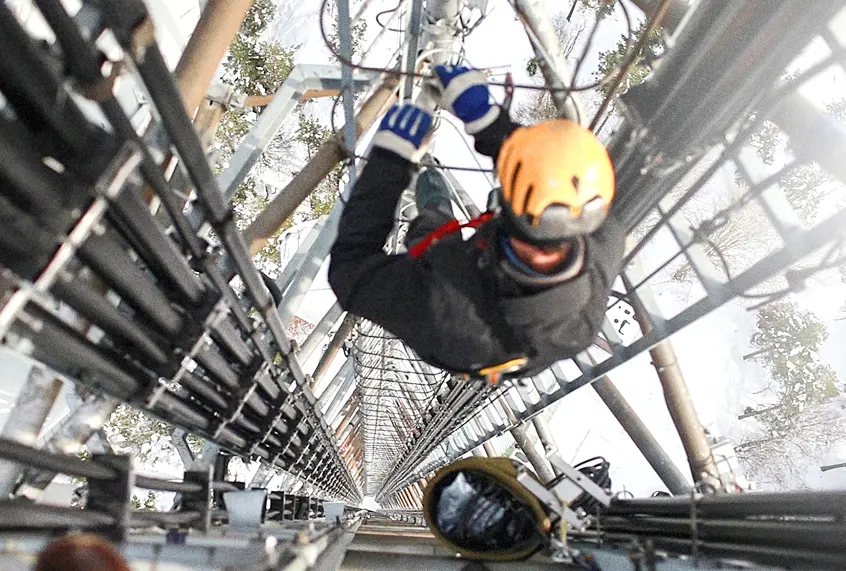
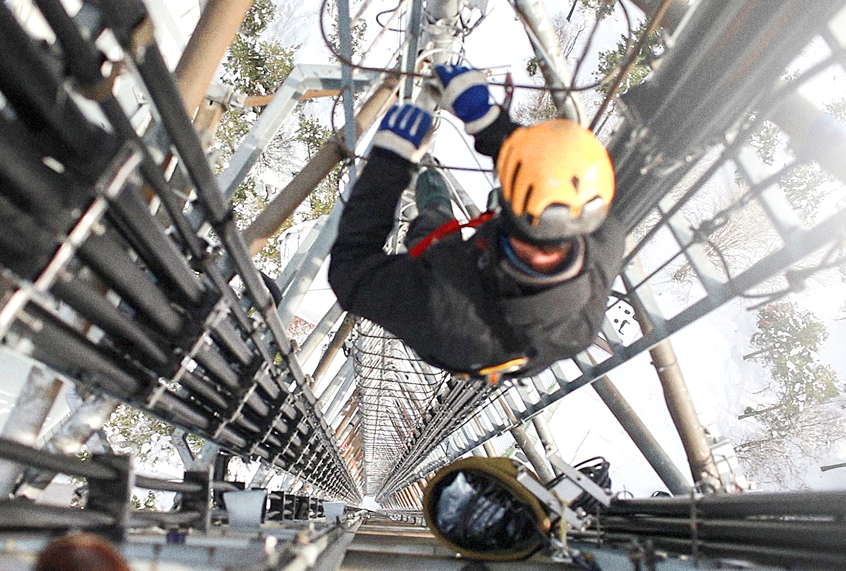
The rapid, federally mandated expansion of America’s wireless and television broadcast infrastructure has precipitated a critical occupational safety crisis. As the Federal Communications Commission (FCC) drives a sweeping modernization initiative to upgrade and relocate nearly 1,000 television stations by July 2020, communications tower technicians—often referred to as tower climbers—are facing unprecedented pressure to scale heights reaching up to 2,000 feet. This breakneck operational tempo, designed to clear airwaves for next-generation mobile broadband, has coincided with a surge in fatal workplace accidents and catastrophic structural failures.
Industry veterans, safety advocates, and labor experts warn that the current push ignores a stark physical reality: there are simply not enough qualified, certified technicians to safely execute the required volume of high-altitude work within the rigid federal timetable. Operating in a largely unregulated sector that lacks dedicated Occupational Safety and Health Administration (OSHA) standards, tower crews face risks of fatal injury estimated to be 25 to 30 times higher than the average American worker. Despite urgent pleas from industry leadership to decelerate the process and prioritize structural integrity over speed, a powerful coalition of federal lawmakers and commercial broadcasting lobbyists continues to champion strict adherence to the fast-tracked deadline, setting up a dangerous collision between economic modernization and human life.
Detailed Chronology of Tragedy: The Human Cost of the Repack
The lethal consequences of the accelerated infrastructure overhaul—frequently referred to as the "post-auction repack"—have been starkly illustrated by a series of high-profile disasters and fatalities that underscore the hazards inherent in rushed tower maintenance and construction.
September 2017: The Miami Gardens Antenna Incident
The inherent dangers of high-altitude broadcast work were violently underscored in September 2017 in Miami Gardens, Florida. A three-man crew—comprising 23-year-old Brachton Barber of Longwood, Florida; 35-year-old Benito Rodriguez of Tampa, Florida; and 31-year-old Marcus Goffena of Sidney, Ohio—was scaling a local tower to replace an antenna for WSVN-Channel 7. During the operation, tragedy struck, resulting in the deaths of all three workers. The incident shocked the local community and drew national scrutiny to the dangerous conditions under which routine television infrastructure upgrades were being conducted.
April 2018: The Fordland Tower Collapse
Just months later, in April 2018, structural catastrophe struck a massive 1,980-foot broadcast tower in Fordland, Missouri, utilized by Ozarks Public Television. The catastrophic collapse claimed the life of 56-year-old Stephen Lemay of Blaine, Washington. The towering structure, which dwarfed even the height of New York City’s One World Trade Center (1,776 feet), crumpled under conditions that immediately sparked multi-agency federal and state investigations. The collapse not only extinguished a life described by loved ones as a "picture-perfect" father, but it also completely severed public television service to thousands of regional viewers, triggering a prolonged and hazardous scramble to restore basic broadcasting capabilities.
Ongoing Vulnerabilities
These catastrophic failures are not isolated anomalies; they represent the sharp end of an ongoing safety crisis. According to tracking data compiled by industry watchdogs like Wireless Estimator, fatalities among tower technicians continue to mount unabated. As aging infrastructure is retrofitted with heavier, modern equipment to meet expanded FCC spectrum requirements, structural margins of error evaporate. The combination of environmental exposure, extreme heights, heavy rigging equipment, and intense time pressures creates an environment where a single miscalculation proves fatal.
Supporting Context & Metrics: The Mechanics of the Repack and Regulatory Voids
To understand why communication tower accidents are escalating, one must examine the sweeping regulatory actions driving the industry alongside the systemic lack of oversight protecting its workforce.
The FCC Channel Repack
The root of the current construction surge lies in the FCC’s incentive auctions and subsequent channel repack schedule. Driven by consumer demand for mobile broadband and wireless data, the federal government reallocated a portion of the broadcast television spectrum for cellular use. Consequently, nearly 1,000 television stations nationwide were ordered to transition to new broadcast frequencies. This massive technological migration requires thousands of physical infrastructure interventions: dismantling legacy equipment, hoisting multi-ton antennas, reinforcing structural supports, and realigning transmission systems on extreme high-altitude towers.
Economic Drivers and Lobbying Influence
The pressure to meet these aggressive timelines is heavily amplified by economic interests. Commercial television and radio stations poured nearly $29 million into federal lobbying efforts in 2017 alone, seeking to protect their market shares and ensure that the spectrum transition progressed without commercial interruption.
This corporate pressure found a receptive audience on Capitol Hill. A bipartisan bloc of 56 members of Congress—including prominent figures such as Representative Steve Scalise (R-La.) and Representative Darrell Issa (R-Calif.)—formally urged FCC Chairman Ajit Pai to hold firm to the July 3, 2020, deadline. In official correspondence, lawmakers defended the aggressive schedule as a matter of "economic necessity in today’s globally-connected world," prioritizing rapid broadband deployment over cautionary appeals from safety advocates.
The Regulatory Vacuum: OSHA’s Missing Standards
Compounding the physical dangers of tower climbing is a severe regulatory vacuum. Despite the well-documented lethality of the profession, OSHA has historically lacked safety standards specifically tailored to the unique hazards of communication tower construction and maintenance.
While the agency initiated preliminary work on dedicated communication tower safety standards following a devastating spike in fatalities in 2013—when 13 workers died, surpassing the death toll of the previous two years combined—comprehensive, enforceable rules have been slow to materialize.
Dr. David Michaels, who served as assistant secretary of labor for OSHA during the Obama administration, delivered a scathing indictment of the industry’s risk profile:
"Tower workers have a risk of fatal injury perhaps 25 to 30 times higher than the risk for the average American worker. This is clearly unacceptable."
Thomas Fuller, a researcher at Illinois State University, has repeatedly warned regulatory bodies that tower climbing operates in a largely unpoliced environment characterized by minimal oversight and lax enforcement. Speaking before OSHA panels, Fuller highlighted a culture of fear within the workforce:
"As towers age and additional antennae are added, they become more hazardous. Often, workers and tower climbing companies are hesitant to report structural problems for fear of losing the work. There is no federal agency to report unsafe structural conditions to and expect a timely response."
Official Statements and Industry Warnings
The friction between government-mandated speed and ground-level reality has triggered intense public friction between broadcasting engineers, industry associations, and political leaders.
Jim Tracy, chairman of the National Association of Tower Erectors (NATE), issued stark warnings to federal lawmakers regarding the physical impossibility of the mandated timeline. Testifying and lobbying against the rushed repack, Tracy emphasized a fundamental bottleneck that federal planners chose to ignore:

"There is one inescapable fact. There are not, at present, enough qualified workers to perform all the tower work we will be required to complete."
Tracy’s warnings were echoed by technical experts managing public broadcasting networks, who found themselves caught between the demand to maintain public services and the ethical imperative to protect human life. Bill Hayes, director of engineering for Iowa Public Television, captured the impossible dilemma facing station operators:
"You can be gambling at best with the reliability of your station’s service, and at worst you’re gambling with people’s lives."
Despite these warnings from engineers and contractor associations, the political momentum behind the FCC’s deadline remained unyielding. Congressional leaders insisted that the economic imperatives of expanding rural broadband access and maintaining global competitiveness outweighed calls for timeline extensions, leaving technicians to shoulder the physical risks of an accelerated schedule.
Future Outlook: Safety at a Crossroads
As the telecommunications landscape continues to evolve toward 5G deployment and hyper-connected regional infrastructure, the structural demands placed on America’s antenna towers will only intensify. The legacy of the post-auction repack serves as a cautionary case study in the human toll of regulatory acceleration.
Moving forward, industry experts argue that systemic reform is non-negotiable if further tragedies are to be prevented. Key imperatives for the future include:
- Promulgation of Dedicated OSHA Rules: Finalizing and rigorously enforcing comprehensive federal safety standards specifically written for communication tower erection, modification, and maintenance.
- Mandatory Structural Transparency: Establishing protected reporting mechanisms that allow technicians to flag structural compromises or unsafe rigging conditions without fear of economic retaliation or contract termination.
- Professional Certification and Training: Implementing mandatory, standardized training and certification protocols across the tower-climbing sector to ensure that every technician deployed to extreme heights possesses verified competency in fall protection, rescue operations, and load rigging.
- Balanced Regulatory Timelines: Cultivating a policy framework where infrastructure modernization schedules are dynamically adjusted based on workforce capacity and safety audits, ensuring that economic progress is never purchased at the expense of human lives.
Until these structural reforms are codified and strictly enforced, America’s high-altitude workforce will continue to operate on the precipice, balancing the nation’s digital connectivity against the ultimate human cost.