Executive Overview
As the United States accelerates its push toward a hyper-connected, high-bandwidth future, a silent crisis is unfolding thousands of feet above the ground. Driven by sweeping federal mandates to expand wireless capabilities and reorganize broadcast frequencies, television and communications stations across the country are racing to upgrade their infrastructure. However, this high-stakes technological transition—commonly known as the FCC’s broadcast television "repack"—comes with a devastating human toll.
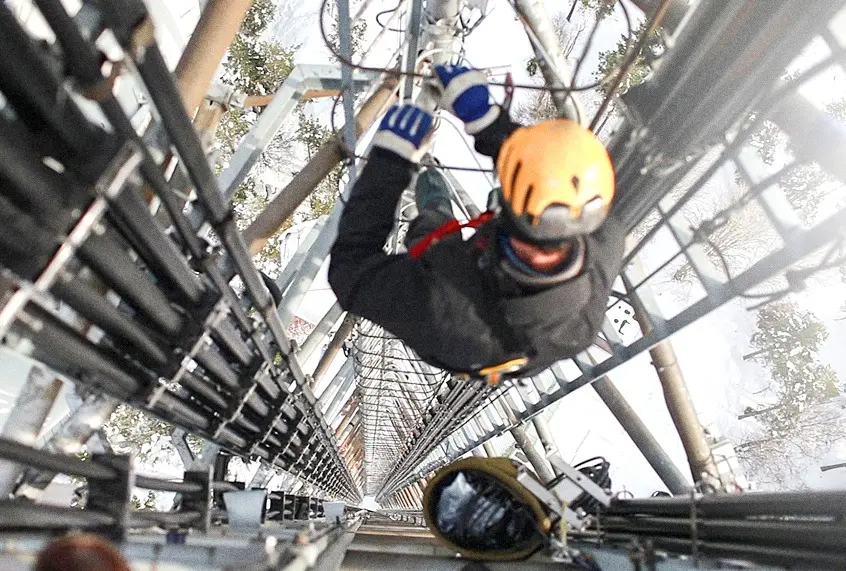
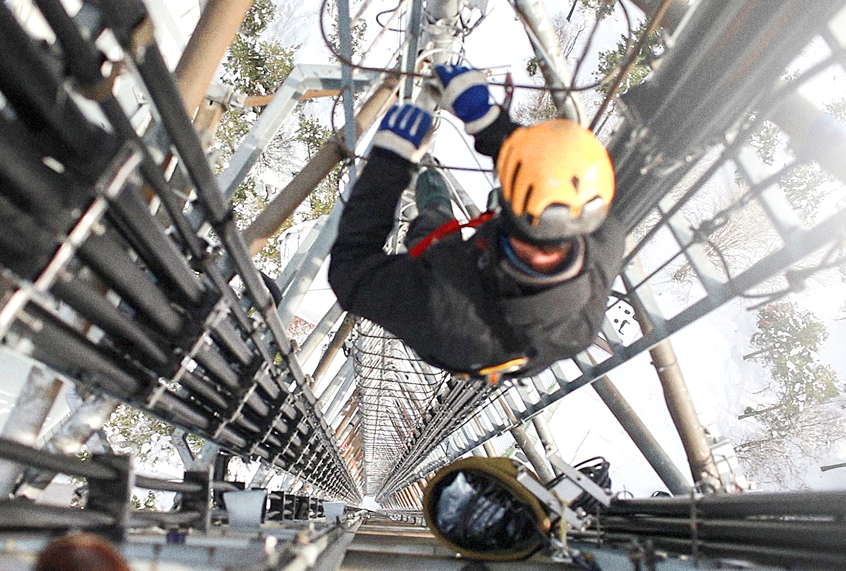
Workers known as tower climbers, scaling structures that can reach heights of up to 2,000 feet (dwarfing architectural giants like the 1,776-foot One World Trade Center), are increasingly falling victim to fatal accidents, structural collapses, and severe workplace hazards. Nearly 1,000 television stations are scheduled to transition to new channels under a rigid federal timeline enforced by the Federal Communications Commission (FCC) and backed by heavy congressional pressure.
While lawmakers and telecommunications lobbies champion the economic necessity of accelerated rural broadband and wireless expansion, safety advocates, industry leaders, and engineering experts warn that the relentless schedule is forcing an unseasoned workforce into life-threatening conditions. With limited federal regulatory oversight, a severe shortage of qualified personnel, and aging infrastructure, the rush to expand service has turned America’s communication towers into some of the most dangerous workplaces in the modern world.
Detailed Chronology
The intersection of aggressive federal telecommunications policy and soaring occupational fatalities is best understood through a timeline of recent high-profile disasters and policy flashpoints:
- 2013: A grim milestone is reached as 13 communication tower workers are killed on the job—surpassing the total fatalities recorded in the previous two years combined. This spike forces the Occupational Safety and Health Administration (OSHA) to initiate preliminary work on specialized safety standards for communication tower erection and maintenance.
- September 2017: A tragedy strikes Miami Gardens, Florida, casting a national spotlight on the dangers of broadcast maintenance. Three young workers—23-year-old Brachton Barber of Longwood, Florida; 35-year-old Benito Rodriguez of Tampa, Florida; and 31-year-old Marcus Goffena of Sidney, Ohio—are killed while replacing an antenna for WSVN-Channel 7. Around the same time, Jim Tracy, chairman of the National Association of Tower Erectors (NATE), issues a stark warning to Congress: rushing the post-auction repack is profoundly dangerous because there simply are not enough qualified workers to complete the mandated tasks safely.
- October 16, 2017: Ignoring industry warnings, a coalition of 56 members of Congress—including prominent figures such as Rep. Steve Scalise (R-La.) and Rep. Darrell Issa (R-Calif.)—sends a formal letter to FCC Chairman Ajit Pai. The lawmakers demand that the regulatory timeline remain strictly locked to a July 3, 2020 deadline, framing the rapid deployment as an economic necessity for globally connected markets. Meanwhile, commercial TV and radio stations pour nearly $29 million into federal lobbying efforts throughout the year.
- April 2018: The structural integrity of aging broadcast infrastructure fails catastrophically in Fordland, Missouri. Stephen Lemay, a 56-year-old technician from Blaine, Washington, is killed when a massive 1,980-foot broadcast tower used by Ozarks Public Television collapses. Investigations into the disaster immediately spark regional debates over whether stations are gambling with technicians’ lives to restore broadcasting signals.
- May 20, 2018: Public scrutiny intensifies as safety experts and engineers point out that OSHA still lacks dedicated, specific rules tailored to the unique hazards of communication tower work. Despite these warnings, the July 2020 repack deadline remains in full effect, cementing a trajectory where institutional urgency consistently supersedes worker protection.
Supporting Context & Metrics
The risks associated with communication tower work are monumental, distinguishing it as one of the most perilous professions in the United States. Unlike traditional construction environments, tower technicians operate in extreme verticality, often ascending between 100 and 2,000 feet. At these elevations, workers face a compounded matrix of hazards: unyielding gravity, structural instability, severe weather shifts, and high-voltage electrical currents.
Historically, the data surrounding these occupations has painted a grim picture. David Michaels, who served as assistant labor secretary under the Obama administration, noted that tower workers face a risk of fatal injury 25 to 30 times higher than the average American worker.
Compounding these environmental dangers is a severe labor shortage. Jim Tracy of the National Association of Tower Erectors highlighted a fundamental economic mismatch: the sheer volume of structural modifications required by the FCC vastly outstrips the pool of certified, highly trained rigging professionals available in the labor market. When demand spikes and qualified hands are scarce, companies often resort to hiring less experienced subcontractors or pressuring existing crews to rush through complex, high-risk procedures.
Furthermore, commercial lobbies continue to exert immense influence over the regulatory landscape. With commercial TV and radio interests spending tens of millions of dollars annually on federal lobbying, the structural momentum favors rapid technological deployment over cautious regulatory oversight. As structural loads increase—with stations continuously mounting new antennas to legacy frameworks—the physical margins for error shrink, turning routine maintenance into high-stakes gambles.
Official Statements
The conflict between regulatory bodies, federal legislators, and industry engineers exposes a deep ideological and practical rift over who bears ultimate responsibility for worker safety during major national infrastructure overhauls.
Proponents of the strict timeline argue that economic competitiveness must take precedence. In their October 2017 letter urging FCC Chairman Ajit Pai to maintain the strict July 2020 completion date, 56 members of Congress emphasized the macroeconomic stakes:
"Ultimately, it’s a matter of economic necessity in today’s globally-connected world," the lawmakers wrote, pointing to the critical need for expanded rural broadband and modernized wireless infrastructure.
Conversely, technical experts and industry associations warn that this legislative impatience is creating lethal conditions on the ground. Bill Hayes, director of engineering for Iowa Public Television, captured the gravity of the operational risks following the Missouri tower collapse:
"You can be gambling at best with the reliability of your station’s service, and at worst you’re gambling with people’s lives."
Jim Tracy of the National Association of Tower Erectors reinforced this sentiment during congressional appeals, emphasizing the immutable laws of workforce capacity:

"There is one inescapable fact. There are not, at present, enough qualified workers to perform all the tower work we will be required to complete."
Academic and safety experts have similarly criticized the systemic lack of enforcement. Thomas Fuller of Illinois State University, testifying before OSHA regarding the safety climate of the industry, pointed out the systemic disincentives for reporting structural flaws:
"As towers age and additional antennae are added, they become more hazardous. Often, workers and tower climbing companies are hesitant to report structural problems for fear of losing the work. There is no federal agency to report unsafe structural conditions to and expect a timely response."
Future Outlook
As the telecommunications landscape continues to evolve toward 5G, enhanced broadband, and consolidated digital broadcasting, the structural demands placed on America’s towers will only increase. However, the legacy of the post-auction repack serves as a cautionary tale about the human costs of rushed modernization.
The core systemic vulnerabilities—namely, the absence of OSHA regulations specifically written for communication tower erection, a fragmented oversight ecosystem, and the pressure to meet uncompromising federal deadlines—remain largely unaddressed. Without proactive federal intervention, mandatory certification standards for all climbing personnel, and enforceable accountability for aging infrastructure, the industry risks repeating its tragic history.
For the technicians who harness safety harnesses and scale the skies every day, the future depends entirely on whether policymakers and network operators are willing to slow down long enough to ensure that technological progress does not continue to come at the expense of human lives.