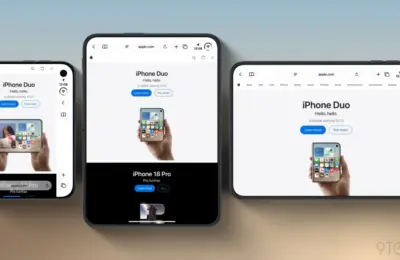
In the wake of one of the most anticipated product showcases in recent memory, Apple’s newly appointed Chief Executive Officer, John Ternus, alongside Senior Vice President of Worldwide Marketing Greg "Joz" Joswiak, sat down for an extensive, exclusive joint interview with Tom’s Guide and TechRadar. The primary focus of the post-event discussion centered on Apple’s blockbuster hardware announcements, most notably the newly unveiled iPhone 18 Pro and the company’s long-awaited, highly scrutinized entry into the foldable market: the iPhone Duo.
For over a decade, consumer technology enthusiasts and industry analysts alike have watched competitors rush headfirst into the foldable smartphone segment. Yet, Apple remained notoriously patient, watching from the sidelines as rivals iterated through countless generations of folding screens, hinges, and software patches. During this week’s sit-down, Ternus and Joswiak pulled back the curtain on why Apple deliberately waited until now to take the plunge. According to the leadership duo, the decision boiled down to an uncompromising bar for quality, durability, and a profound lack of inspiration from existing market offerings.
Beyond the product strategy, the interview carried historic weight. It marked one of Ternus’s first major media appearances since officially stepping into the role of CEO. Reflecting on his monumental promotion, Ternus offered rare personal insight into what it feels like to inherit the biggest job in the technology sector, describing a mixture of visceral excitement, profound gratitude, and a lifelong devotion to the Cupertino-based tech giant.
Detailed Chronology: The Journey to the iPhone Duo and a New Leadership Era
A Week of Transformation in Cupertino
The timeline leading up to this pivotal interview has been nothing short of historic for Apple. The autumn product cycle always brings intense scrutiny, but this year’s event carried an electric undercurrent of transition. With John Ternus taking the helm as CEO—succeeding a legacy defined by decades of iterative, revolutionary design—the stakes for the hardware lineup could not have been higher.
The unveiling of the iPhone 18 Pro cemented Apple’s continued dominance in traditional slab-form smartphones, pushing processing boundaries, camera fidelity, and energy efficiency to unprecedented heights. However, the true showstopper of the week—and the focal point of the subsequent executive debrief—was the introduction of the iPhone Duo.
Rumored, speculated upon, and anticipated for the better part of ten years, the iPhone Duo represents Apple’s official maiden voyage into the foldable device category. Rather than treating the form factor as an experimental niche for early adopters, Apple engineered the Duo to be a foundational paradigm shift, combining bespoke hardware and software synergistically from day one.
The Long Wait: Why Apple Sat Out the First Wave of Foldables
For years, critics accused Apple of lagging behind Android original equipment manufacturers (OEMs) like Samsung, Google, and various Chinese brands that pioneered foldable smartphones. Competitors released book-style foldables and vertical flip phones as early as 2019, iterating rapidly through hardware generations.
During their interviews with Tom’s Guide and TechRadar, Ternus and Joswiak addressed this decade-long delay head-on. Apple’s strategy has never been about winning a race to be first to market; rather, it has always been about being best to market.
Ternus explained that the company’s internal threshold for executing a foldable device required solving fundamental engineering challenges that early competitors simply glossed over. The folding phone market was treated by many as a playground for prototype-level consumer testing. Apple, conversely, refused to compromise on the tactile feel, structural integrity, and visual fidelity that consumers expect from its premium tier.
When the time finally arrived to greenlight production, Apple didn’t just build a folding phone—they re-architected how mobile software interacts with a dynamic, expanding canvas, ensuring that the hardware and software felt inextricably linked rather than stitched together as an afterthought.
Supporting Context & Metrics: The State of the Foldable Market vs. Apple’s Vision
Deconstructing the Competition’s Shortcomings
To truly understand Apple’s rationale for entering the foldable space with the iPhone Duo, one must examine the landscape of foldable smartphones over the past several years. While folding devices have steadily gained a dedicated following, they have simultaneously suffered from persistent consumer pain points that kept them from achieving mainstream, mass-market saturation.
Industry data compiled through 2024–2025 highlights several structural hurdles that plagued early foldable iterations:
Display Degradation: The crease running down the center of flexible OLED panels has consistently remained a primary complaint among users. Over time, repeated folding cycles exacerbated screen warping, waviness, and surface wrinkles.
Material Compromises: In a bid to keep device weights manageable and manage hinge stress, many competing manufacturers relied heavily on plastic-infused polymer outer layers. These surfaces lacked the scratch resistance, thermal dissipation, and premium "hand-feel" characteristic of chemical-strengthened glass and aerospace-grade metals.
Software Fragmentation: Early Android foldables often struggled with app continuity. Transitioning from the outer cover screen to the expanded inner display frequently resulted in layout breaks, awkward letterboxing, or apps crashing outright due to poor third-party developer optimization.
Apple observed these exact friction points and recognized a "green field of opportunity." By refusing to enter the market until engineering advancements allowed for a crease-free, durable glass-hybrid display structure, Apple positioned the iPhone Duo to directly solve the very compromises that fatigued early foldable adopters.
Official Statements: Inside the Minds of Ternus and Joswiak
The joint interviews provided rare, unfiltered quotes from Apple’s executive suite regarding both their hardware philosophy and the personal reality of corporate leadership.
On the Philosophy of the iPhone Duo
Elaborating on the engineering and design ethos behind Apple’s first foldable device, John Ternus emphasized that the project was treated as a clean-slate opportunity:
"I think for us, it’s always about when do we feel like we have a product idea that meets our bar for quality and durability, but also for design. What I think is particularly amazing about the Duo is, it’s such a good example of hardware and software coming together to make something really special.
It was like a green field of opportunity for us because there was opportunity to rethink so many different things. And I think you see that in the hardware, and you see that in the software, and the design. It all kind of came together and felt like it was the right product."
Greg Joswiak reinforced this sentiment, pulling no punches when evaluating what the rest of the tech industry had produced up to this point. According to Joz, the existing foldable market simply lacked the caliber of execution required to capture Apple’s imagination:
"What we saw other smartphone makers doing in the foldable space wasn’t very inspiring."
Adding further technical critique regarding the physical feel of competing devices, Ternus pointedly addressed the hardware flaws that Apple painstakingly avoided:
"If you’ve seen what’s been out there, not only is it just kind of cheap-feeling plastic surfaces, they don’t feel good to touch, they’re kind of wavy, wrinkly."
On Stepping Into the Role of CEO
Transitioning from Senior Vice President of Hardware Engineering to Chief Executive Officer is a seismic shift. When asked about the exact moment he discovered he would be stepping into the most influential job in the technology industry, Ternus offered an emotionally resonant response that underscored his long-standing dedication to the Apple ecosystem:
"It’s amazing, what an extraordinary privilege, right? The reality is I just, I love this place. It’s in my blood. I’ve been here for half my life. I love the people I work with. I love to be able to build the products that we all build together. And so goosebumps, excitement and yeah, just real, like really, really excited about the future."
Future Outlook: What the iPhone Duo and Ternus Era Mean for Apple
The debut of the iPhone Duo and the ascension of John Ternus mark the definitive end of one monumental chapter for Apple and the thrilling beginning of another. As the tech giant navigates the remainder of the decade, several critical trajectories are beginning to take shape:
Mainstreaming the Foldable Form Factor: By entering the foldable market with the precision-engineered iPhone Duo, Apple is poised to legitimize and accelerate consumer adoption of folding screens globally. Just as the company did with tablets, smartwatches, and wireless earbuds, Apple’s entry signals to the broader supply chain and consumer base that the technology has officially matured past its experimental phase.
Hardware-Software Synergy 2.0: Under Ternus—a veteran deeply rooted in hardware engineering—combined with Joswiak’s marketing and ecosystem oversight, we can expect an even tighter integration between Apple Silicon, custom display substrates, and iOS architecture. The "green field of opportunity" Ternus mentioned regarding the Duo’s software hints at entirely new paradigms for multitasking and ambient computing.
Leadership Continuity with Fresh Vision: Having spent half his life inside the walls of Apple’s Cupertino campus, Ternus embodies the institutional knowledge and relentless pursuit of perfection that defined the Steve Jobs and Tim Cook eras. Yet, his willingness to aggressively enter previously unexplored categories—like foldables—demonstrates a pragmatic adaptability necessary for modern market competition.
As the tech community digests the implications of the iPhone Duo and watches Ternus settle into his new office, one thing remains abundantly clear: Apple is not merely participating in the future of mobile technology—it is actively shaping its parameters on its own terms.