The battle lines for the future of the automotive dashboard are officially drawn, and legacy luxury automakers are digging in their heels against Silicon Valley’s encroachment. In the ongoing saga of in-vehicle infotainment systems, BMW has doubled down on its refusal to adopt Apple’s next-generation automotive platform, CarPlay Ultra.
While Apple envisioned its advanced software taking over every display in the cabin—from the central infotainment screen to the entire digital instrument cluster and passenger-side panels—automakers like BMW are choosing a path of sovereign software development. In recent statements, high-ranking BMW executives have made it explicitly clear that data privacy, proprietary hardware design, and bespoke user experiences are non-negotiable pillars of the brand’s philosophy.
This refusal places BMW in stark contrast with other major transport manufacturers, drawing a distinct line between brands willing to hand over the keys to the digital cockpit and those determined to keep them locked tightly in-house. Yet, in a move that will comfort traditionalists, BMW has chosen a pragmatic middle ground: while shutting the door on CarPlay Ultra’s deep system integration, the German giant remains fully committed to supporting standard, app-based CarPlay and Android Auto.
As the automotive industry undergoes its most profound digital transformation in a century, BMW’s hardline stance on CarPlay Ultra raises critical questions about user experience, data monetization, brand identity, and who truly controls the modern vehicle.
Detailed Chronology: The Escalating Rift Between BMW and Apple
To fully understand BMW’s current hardline stance, it is essential to trace the timeline of skepticism and strategic divergence between the Munich-based automaker and Cupertino.
The Seeds of Doubt (September 2025)
The public rift began to widen significantly during a major press event in September 2025. Stephan Durach, BMW’s Senior Vice President of UI/UX Development, was pressed by media members regarding Apple’s ambitious CarPlay Ultra platform. Apple had previously announced the system with much fanfare, promising deep integration that would power every single screen in a vehicle.
Durach’s response was refreshingly blunt for an industry usually cushioned by diplomatic PR speak. He noted:
"If you take a look at it, what I saw so far, it’s not so exciting. To be honest, we have specific screens, a specific screen setup, and I’m completely convinced that our setup is much more capable."
At the time, industry analysts noted that Apple had never actually touted BMW as an official rollout partner for CarPlay Ultra. Therefore, Durach’s dismissal was less of a sudden divorce and more of a public confirmation that the two tech titans were marching to entirely different drummers.
Doubling Down on Data Sovereignty (Current Interviews)
The saga escalated further when Claudia Maier, BMW’s Manager of Digital Technology, sat down for an interview with Australian automotive outlet Carsales. Maier went beyond mere aesthetics and user interface capability, driving straight to the heart of modern automotive economics: data.
Maier explained that BMW’s aversion to CarPlay Ultra stems fundamentally from its corporate philosophy on data privacy. "We want to keep the data [in-house], because we want to have it very secure," Maier stated. By refusing to let an external operating system dictate or ingest vehicle telemetry, driver habits, and cabin interactions, BMW aims to maintain an airtight vault around its customer data.
Interestingly, Maier stopped short of confirming whether BMW’s engineering teams had even put CarPlay Ultra through rigorous testing in their testbeds, suggesting that the rejection is rooted more in corporate architecture and strategic philosophy than a feature-by-feature critique.
The Consumer-Friendly Compromise
While BMW is slamming the door on CarPlay Ultra, Maier was quick to clarify that the brand is not following the controversial path forged by General Motors. Unlike GM—which famously phased out standard Apple CarPlay and Android Auto entirely in favor of its proprietary, Google-built infotainment systems—BMW recognizes the immediate desires of its buyer base.
"We don’t want to say, ‘You have to stick to our system,’" Maier explained, confirming that standard CarPlay and Android Auto will remain fully integrated into BMW’s upcoming vehicle lineups. For BMW drivers, this means you can still mirror your iPhone’s familiar maps, podcasts, and messaging apps onto the central display without forcing the vehicle’s entire core electronic architecture to bow to Apple.
Supporting Context & Metrics: The State of CarPlay Ultra in the Wild
To grasp the weight of BMW’s decision, one must look at the broader adoption landscape of CarPlay Ultra. When Apple initially announced the next-generation platform, it promised a revolution in how software interacts with physical automotive hardware. However, the rollout has proven to be an uphill battle.
The Lone Pioneer: Aston Martin
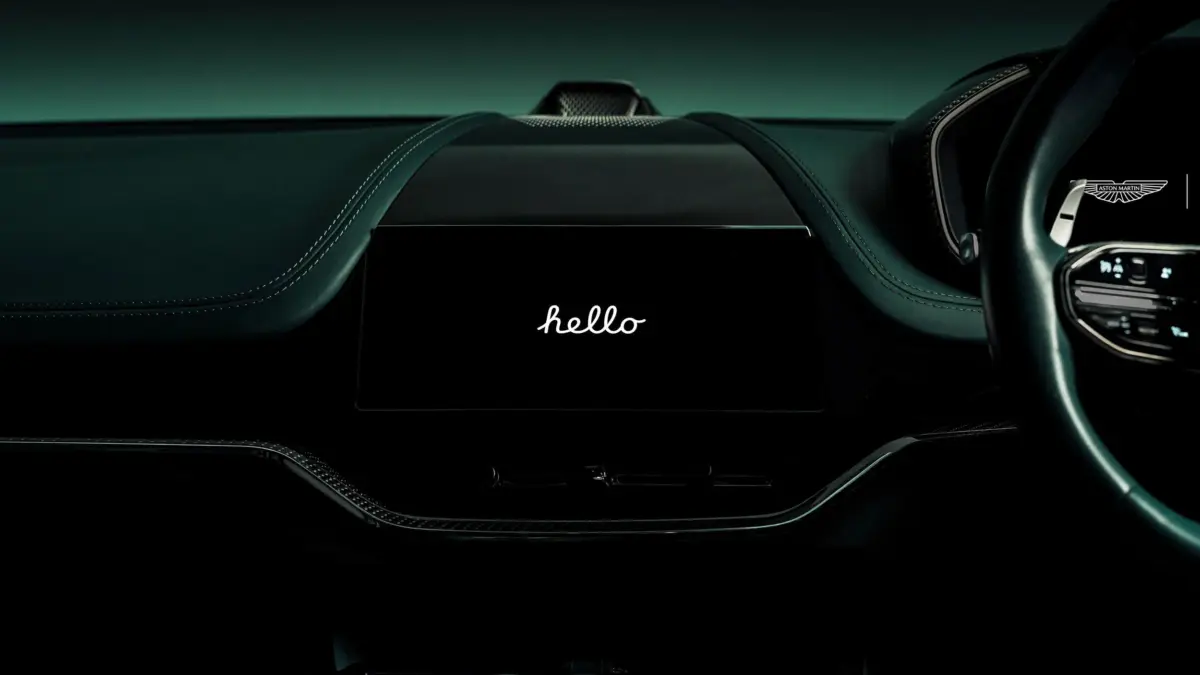
As of late 2026, the high-water mark for CarPlay Ultra availability remains remarkably low. The platform is currently exclusive to ultra-luxury performance vehicles produced by Aston Martin. For drivers shelling out hundreds of thousands of dollars for a British grand tourer, the hyper-integrated Apple interface serves as a unique selling proposition. Yet, for mass-market luxury brands like BMW—which sells millions of vehicles globally across a diverse portfolio—the calculus is entirely different.
Slow Industry Adoption and the Hyundai/Kia Rumor Mill
Beyond Aston Martin, Apple has remained conspicuously quiet regarding firm release dates for other manufacturing partners.
In February, a detailed report from Bloomberg injected a dose of optimism into the Apple ecosystem, claiming that CarPlay Ultra would make its way to "at least one major new Hyundai/Kia model" in the latter half of the year. However, whether Korean automakers will deliver on that timeline amidst shifting consumer demands and software delays remains an open question.
The GM Counter-Example
The debate over CarPlay Ultra cannot be framed without looking at General Motors. GM’s decision to sunset standard CarPlay in its newer Electric Vehicles (EVs) sparked immense consumer backlash. Many drivers rely heavily on smartphone projection systems, viewing native car software as clunky, slow, and outdated.
By keeping standard CarPlay while locking out CarPlay Ultra, BMW is attempting to thread the needle: it retains total control over the vehicle’s primary digital architecture and data streams, while avoiding the consumer alienation that plagued GM’s aggressive pivot.
Official Statements and Industry Philosophy
The friction between traditional automakers and tech giants essentially boils down to a fundamental philosophical war over who owns the dashboard.
The Tech Giant Perspective (Apple)
Apple’s vision for CarPlay Ultra is expansive. By rendering every gauge cluster, climate control interface, and entertainment menu through an Apple-designed pipeline, the tech giant ensures a seamless ecosystem experience. If a user transitions from an iPhone to an iPad to a Mac, and finally to their car, the visual language and processing logic remain identical. For Apple, this is about reducing cognitive load and maximizing ecosystem lock-in.
The Automaker Perspective (BMW)
BMW views the vehicle not merely as a smartphone accessory, but as a complex, high-performance machine where the human-machine interface (HMI) is core to the driving experience.
Stephan Durach and Claudia Maier’s comments highlight a deeply ingrained belief that BMW’s proprietary operating systems—built on platforms like BMW iDrive—are far more adept at handling vehicle-specific dynamics, such as driving modes, suspension stiffness, energy regeneration, and advanced driver-assistance systems (ADAS).
Furthermore, data security is rapidly becoming the ultimate luxury commodity. In an era where modern cars generate terabytes of data daily—tracking everything from geolocation and driving styles to cabin temperatures and voice commands—automakers realize that data is the new oil. Handing that data stream over to a third-party tech behemoth like Apple means forfeiting massive potential streams of monetization, analytics, and software-defined vehicle (SDV) control.
Future Outlook: Where Does the Connected Dashboard Go From Here?
As we look toward the remainder of the decade, the trajectory of automotive infotainment is splitting into distinct schools of thought:
The Tech-Monopolized Cockpit: Brands that fully outsource their digital experiences to tech giants (such as Google/Android Automotive or Apple CarPlay Ultra), effectively turning their hardware into a shell for Silicon Valley software.
The Sovereign Fortress: Legacy luxury houses like BMW that build robust, proprietary in-house software suites, keeping all user data locked safely away while offering standard smartphone projection purely as an auxiliary convenience.
The Hybrid Approach: Brands experimenting with customizable open-source Linux or Android-based foundations wrapped in heavy proprietary skins.
BMW’s refusal to adopt CarPlay Ultra is a calculated gamble. The company is betting that its customers buy a BMW for its driving dynamics, its distinctive design language, and its bespoke interior technology—not because it runs an Apple-branded speedometer.
However, as younger, tech-native generations graduate into luxury car ownership, consumer expectations will continue to evolve. Will the desire for deep smartphone integration eventually overwhelm BMW’s fortress walls, or will the German automaker successfully prove that its in-house digital ecosystem is superior to anything Cupertino can design?
Only time will tell, but one thing is certain: the dashboard is no longer just a place to check your speed; it is the ultimate battlefield for the future of digital identity.