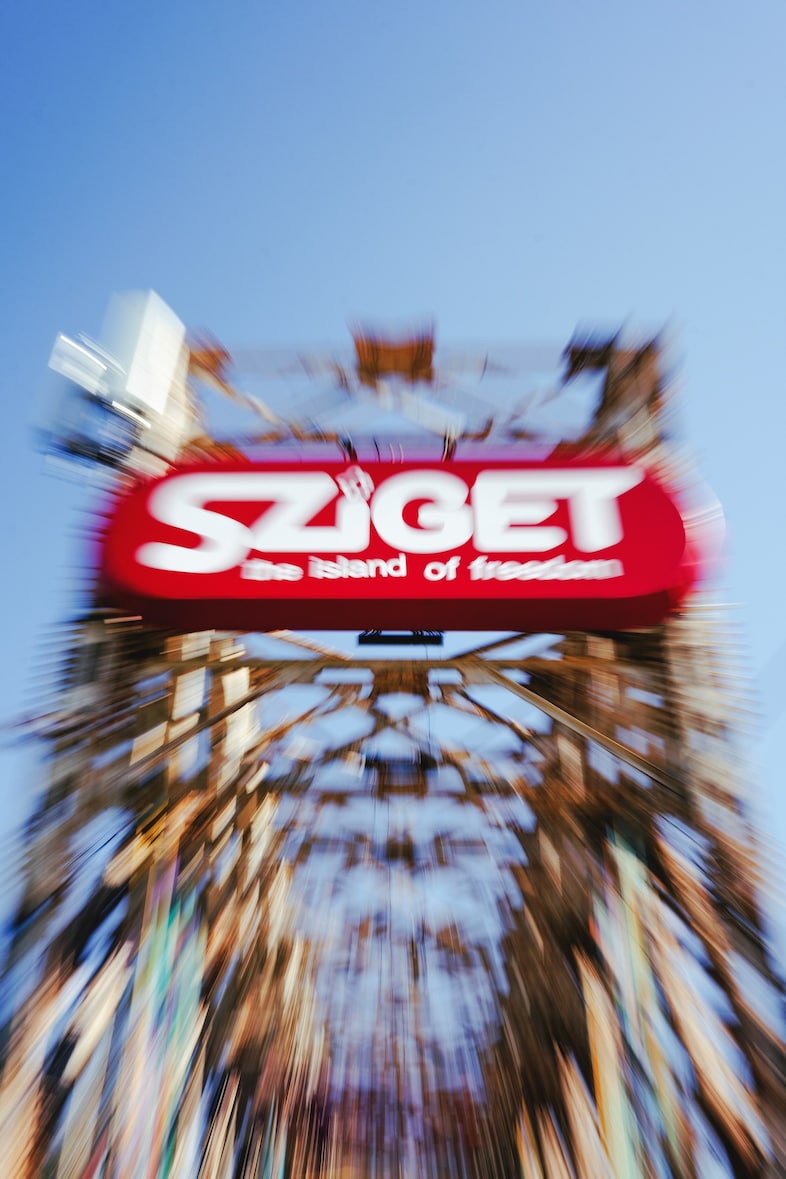
For five days every August, the teardrop-shaped landmass of Óbuda Island in Budapest, Hungary, ceases to be a mere geographic feature of the Danube River and transforms into something mythical: Sziget, the Island of Freedom. As one of Europe’s largest and most culturally diverse music and arts festivals, Sziget has long occupied a legendary status in the global festival circuit. However, the 2026 edition arrived carrying a weight far heavier than the usual logistical pressures of hosting hundreds of thousands of revellers.
Marking a triumphant return to its original Hungarian ownership after years of corporate restructuring, this year’s iteration served as a vital cultural referendum. Against a complex socio-political backdrop—particularly for Hungary’s vulnerable LGBTQ+ community following years of legislative rollbacks—Sziget functioned simultaneously as a hedonistic playground and a sanctuary of resistance.
From the booming basslines of the open-air Colosseum arena to the clandestine acrobatics of desperate gatecrashers, the festival proved that its unique counter-cultural pulse is stronger than ever. Armed with notebooks, microphones, and lenses, our team—alongside Hungarian photographer Dominik Farkas—dove headfirst into the overflowing crowds to chronicle an event where freedom is not merely celebrated, but fiercely lived.
Detailed Chronology: Day by Day on the Island
Inbound and Arrival: The "Szitizen" Rite of Passage
The pilgrimage to Sziget begins long before anyone sets foot on Óbuda Island. On the inbound flight into Budapest Ferenc Liszt International Airport, the signs were already unmistakable: seasoned "Szitizens" sporting faded, sun-bleached vintage festival tees from decades past, their eyes bright with the anticipatory adrenaline of a returning diaspora.
Even navigating the city transit system morphs into an aura-farming rite of passage. Commuter trains and subway carriages get jammed to capacity with international partygoers, creating a localized ecosystem of shared excitement, impromptu playlist sharing, and international bonding. By the time one crosses the bridge onto the island, the physical journey is complete, but the spiritual shift is instantaneous. The outside world—with its news cycles, algorithms, and rigid structures—dissolves behind a wall of sound and foliage.
The Colosseum and the Queer Sanctuary
The beating heart of Sziget’s electronic music programming is the Colosseum, a towering, open-air arena constructed of recycled and industrial materials that resembles an ancient amphitheatre repurposed for techno and house. During DJ Jazzy’s high-octane set, the venue reached a fever pitch. Funky basslines reverberated through the concrete foundations, capturing an audience that lapped up every single drop.
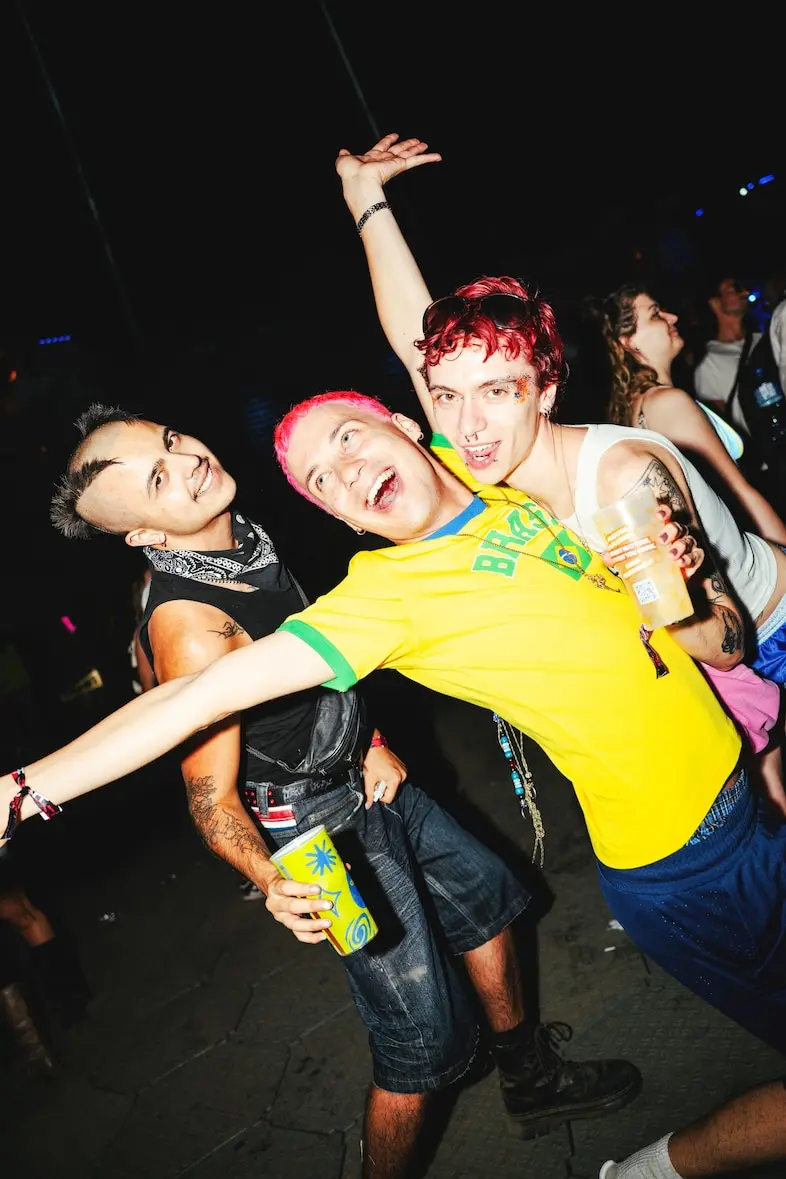
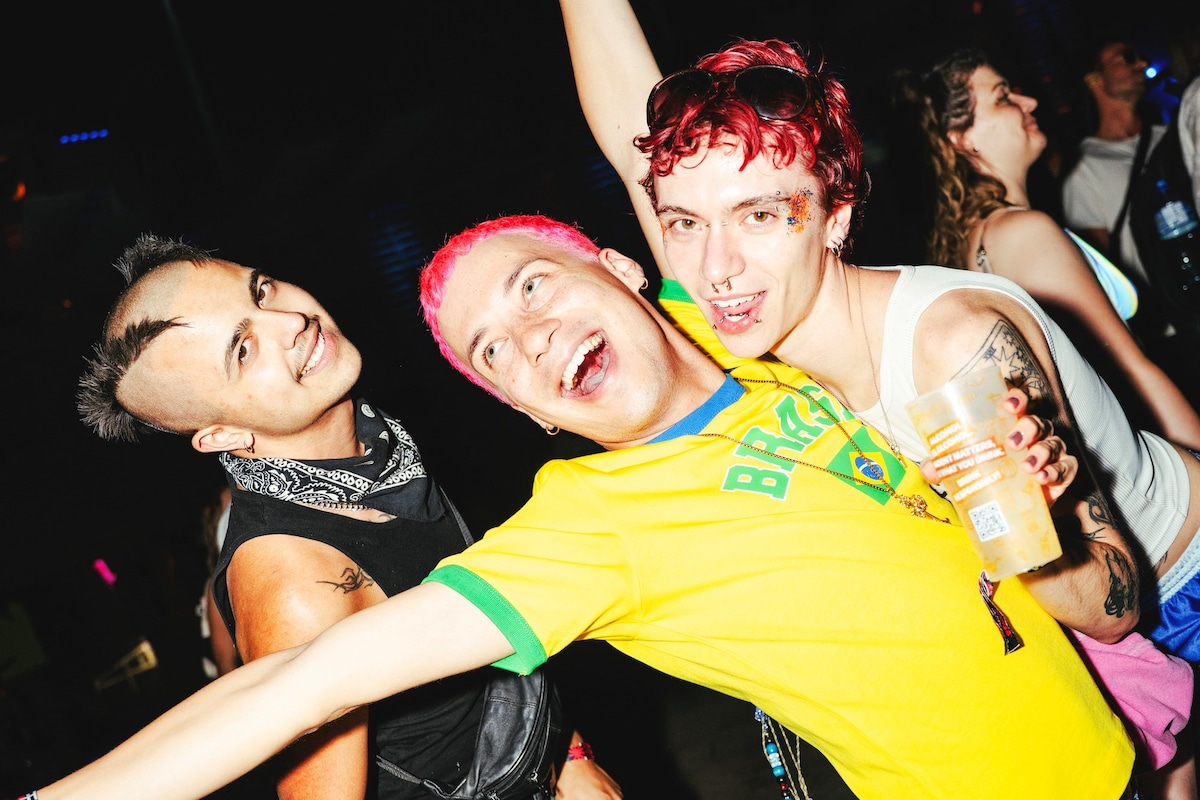
Amidst the swirling dust and strobe lights, the crowd represented a microcosm of global youth culture. "I’m coming here every year until I die!" screamed Jayden, a visitor from London, shouting directly into our microphone over the roar of the sound system. Nearby, a trio of close friends showcased wildly different yet equally showstopping hairstyles, embodying the uninhibited self-expression that Sziget has championed for over three decades.
Yet, beyond the sheer scale of the musical acts, the emotional gravity of the festival was deeply tied to its queer attendees. For Hungary’s LGBTQ+ community and their international allies, Sziget offered a rare, protected space of radical acceptance. Coming off the heels of political shifts that have curtailed queer progress in the region, the festival functioned as a "fishbowl of excitement and activity," as Izel—a first-time Sziget explorer who won her passes via a Dazed Club competition—aptly described it.
"It feels like its own separate world," Izel noted, taking in the kaleidoscope of flags, neon outfits, and open displays of affection that lined the pathways. Of course, even utopias have borders. Island security patrolled the perimeters with stoic vigilance, though their authority was hilariously tested when one determined attendee was spotted attempting a low-crawl, military-style maneuver beneath a metal barrier just to secure a better vantage point for the main stage.
The Mid-Festival Metamorphosis: Art Beyond the Audio
Sziget has always operated on the philosophy that a world-class festival must offer a multi-sensory diet. OG founder Károly Gerendai has long maintained that the true magic of Sziget begins precisely where the 90-minute headliner set ends.
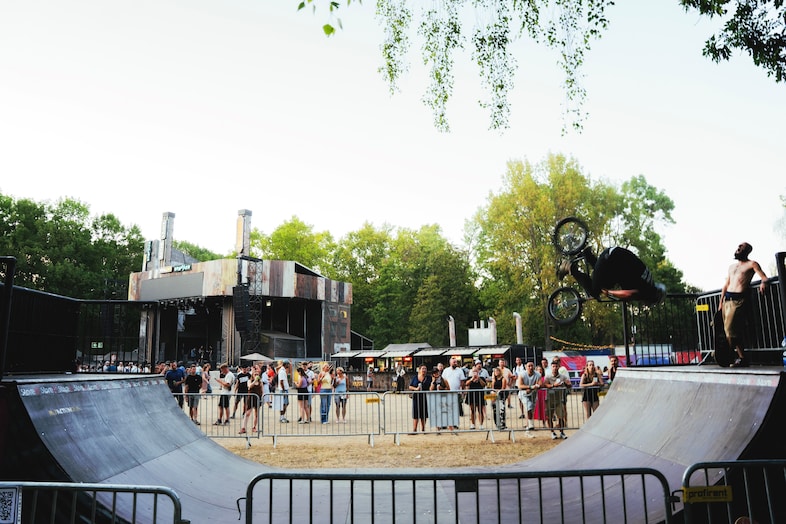
By day three, the island had transformed into a sprawling labyrinth of immersive art installations, theatrical spectacles, and pop-up venues. Revellers could pivot seamlessly from a high-stakes queer trivia tournament at the iconic Magic Mirror tent to death-defying circus acts tucked away in the Wonderland district. For the adventurous, a mini-skatepark hummed with activity, thoughtfully equipped with an onsite medical tent and an ambulance parked directly adjacent—a humorous yet essential nod to the high-velocity impacts of youth culture.
Artistic expression permeated every square meter of the island. John, one of the master constructors behind a massive, undulating inflatable luminarium, drew comparisons to the surreal, comforting architecture of the Teletubbies’ Tubbytronic Superdome. "Whether music, art, or architectural structure—the things I stumble upon here are simply fantastic to me," John reflected, wiping sweat from his brow as he admired visitors interacting with his glowing, cathedral-like creation.
Folklore in the Making: The Nights That Define Eras
As the sun dipped below the Danube, casting long, golden shadows across the food trucks and art installations, Sziget began to feel less like a temporary event and more like living, breathing folklore. Conversations with veterans revealed a generational torch-passing that is rare in modern live entertainment.
Leaning against a wooden railing near the food stalls, a sentimental woman in her early 40s reminisced about her early visits to the island as a teenager, recalling how her mother had originally purchased her tickets. Now, decades later, she was walking the same dust-laden paths, watching a new generation of youth experience the exact same awakening.
The crescendo of the night belonged to the Bolt Night Stage, where Australian house music royalty Dom Dolla delivered a dark, hypnotic, and deeply emotive set. The performance acted as a gravitational pull, dragging strangers together into feral, unchoreographed dance circles while couples lost themselves in prolonged embraces in the middle of the surging mob.
Standing in the thick of the crowd, the chaotic energy of the earlier gatecrasher seemed a distant memory—though one couldn’t help but wonder if she was still eluding security. Whether one arrived as a battle-hardened Sziget veteran, a wide-eyed virgin, or an accidental gatecrasher with zero credentials, the island possessed an uncanny ability to graft a profound sense of belonging onto everyone who entered its orbit.
Supporting Context & Metrics: Sziget 2026 by the Numbers
To understand the sheer magnitude of Sziget Festival, one must examine the logistical and cultural metrics that underpin its operation on Óbuda Island:
Duration: 5 continuous days and nights of programming across multiple stages and secret zones.
Geographic Footprint: Spanning approximately 108 hectares (267 acres) on Óbuda Island (Óbudai-sziget) in the northern district of Budapest.
Attendance Demographics: Drawing upward of 450,000 to 500,000 attendees ("Szitizens") across the week, with a massive influx of international travelers hailing primarily from the UK, Western Europe, and Australia.
Stage Count: Over 50 distinct program venues, ranging from massive open-air arenas like the Main Stage and the Colosseum to intimate spoken-word tents, cabaret spaces, and underground electronic hideaways.
Artistic Output: Hundreds of performing artists, spanning global EDM heavyweights, indie rock icons, underground techno DJs, performance artists, and circus troupes.
Official Statements and Leadership Perspectives
The transition of ownership back to local Hungarian stewardship has injected a renewed sense of purpose and autonomy into the festival’s organizational framework.
Károly Gerendai, the visionary founder whose brainchild has evolved from a student-led gathering in 1993 into a European titan, emphasized the core ethos driving the 2026 edition:
"A festival should never be just about standing in a field watching a screen. Sziget was founded on the idea of creating a temporary republic—a place where people could experiment with freedom, art, and community in ways that their daily lives simply didn’t allow. Coming back to our roots means doubling down on that promise. We aren’t just booking bands; we are building an alternate society for five days."
Cultural programmers within the festival’s curation team echoed these sentiments, noting that the international appeal of Sziget lies precisely in its refusal to conform to the sanitized, corporate-sponsor-heavy models dominating the modern global festival circuit. By prioritizing spaces like the Magic Mirror and collaborative art builds, Sziget continues to position itself as a progressive beacon in Central Europe.
Future Outlook: Where Does Sziget Go From Here?
As the dust settles on Óbuda Island and the temporary infrastructure is dismantled, the overarching question facing Sziget is how it will navigate an increasingly complex European landscape.
The successful 2026 edition proved that local ownership has revitalized the event’s operational soul, bridging the gap between its bohemian past and its corporate-scaled present. By leaning heavily into its identity as an inclusive sanctuary—an "Island of Freedom" where queer expression, counter-cultural art, and boundary-pushing electronic music coexist—Sziget has insulated itself against the homogenization plaguing rival festivals.
Looking toward future editions, the challenge will be balancing exponential growth with the intimate, serendipitous spirit that makes encounters like Jayden’s and Izel’s possible. As long as Óbuda Island remains a place where festival-goers are willing to crawl under fences, lose themselves in inflatable cathedrals, and dance until dawn beneath the Hungarian stars, Sziget will remain untouchable—a permanent fixture of European youth folklore.