Federal investigators in the United States have blown open a major cybercrime nexus by connecting the prolific ShinyHunters hacking group to high-ranking executives within the ransomware negotiation industry. The probe—sparked by an unprecedented breach of the FBI’s recruitment website—has revealed a deeply corrupt ecosystem where individuals hired to mitigate cyberattacks allegedly crossed the line into active complicity.
According to sources close to the sprawling international investigation, executives at two distinct ransomware negotiation firms maintained unusually close, illicit relationships with the extortion syndicate. Most alarmingly, authorities believe a U.S.-based consulting executive actively assisted ShinyHunters in operating a victim-shaming and pressure portal known as shinywire[.]com.
The crackdown has already yielded dramatic international arrests, including the high-profile detention of "Rey"—a teenage administrator based in Jordan—and the raid of Dutch hacker Pepijn van der Stap. Analysis of Van der Stap’s encrypted messaging apps not only exposed a nascent murder-for-hire plot targeting rivals, but also led to the October 2026 arrest of 54-year-old Canadian cybersecurity executive Edward Dubrovsky.
As federal prosecutors peel back the layers of this multi-million-dollar cyber extortion machine, the case is exposing a profound structural crisis in the cybersecurity industry: misaligned financial incentives, conflicts of interest, and the shadowy underworld of rogue negotiators working hand-in-glove with the very criminals they are paid to fight.
Detailed Chronology of the Investigation and Key Arrests
The Evolution of ShinyHunters
Active since 2019, ShinyHunters began as a French-led ring of cybercriminals responsible for dozens of high-profile data breaches. As law enforcement steadily dismantled the original core, command of the brand migrated to a Jordanian teenager known online as "Rey." Operating under the umbrella of modern cyber syndicates, Rey’s faction reportedly extorted more than $70 million from corporate and government victims throughout the year.
The FBI Job Site Breach and Accelerated Retaliation
The group’s hubris reached a breaking point in late September, when hackers aligned with ShinyHunters compromised fbijobs.gov. To taunt federal authorities, the group threatened to leak highly sensitive personnel records, including Social Security numbers, home addresses, psychological evaluations, and internal unit specializations.
The brazen targeting of the bureau triggered an aggressive, lightning-fast response. On October 3, Reuters reported that Rey had been detained by Jordanian authorities and was actively cooperating with the FBI.
The Raid on Pepijn van der Stap
Rey’s ascension to leadership had been made possible only after the sudden neutralization of a key senior cohort. On the evening of September 15, 2026, Dutch police executed a tactical raid—complete with flash-bang grenades—to apprehend convicted hacker and ShinyHunters insider Pepijn van der Stap.
Law enforcement caught Van der Stap actively logged into his Signal instant messaging account. This tactical win allowed investigators to harvest a goldmine of recent communications with frequent contacts, notably ransomware negotiators operating in Canada and the United States.
Sources indicate that Van der Stap’s Signal chats held the keys to unravelling not just the hacking infrastructure, but a disturbing plot: Dutch media outlet RTL reported that Van der Stap had allegedly issued orders for two murders-for-hire abroad (though no attacks were ever successfully carried out). Furthermore, the chats revealed that prominent Canadian cybersecurity executive Edward Dubrovsky was in regular contact with Van der Stap, often receiving advance knowledge of ShinyHunters victims before the victims themselves even realized they had been breached. Most damningly, investigators found Dubrovsky knew ShinyHunters had exfiltrated confidential data from FBI servers and chose to remain silent, never alerting the bureau prior to the public leaks.
The Arrest of Edward Dubrovsky
On October 9, the FBI arrested Edward Dubrovsky, a 54-year-old Canadian cybersecurity executive and the co-author of a recent book on handling cyber extortion. Dubrovsky—charged in U.S. federal court with threatening to disclose hacked data and interfering with interstate commerce through extortion—now faces detention pending trial, with court records placed under seal.
Supporting Context & Metrics: The Mechanics of Modern Extortion
The Rise and Fall of Shinywire
The investigation’s scope widened significantly when federal investigators identified a direct link between the hackers and corporate insider help. According to internal sources, at least one executive at a prestigious U.S.-based consulting firm with over 1,000 associates played an active operational role in running shinywire[.]com.
Active from May 3, 2026, until mid-October, the Shinywire portal cataloged nearly 100 organizations compromised by ShinyHunters. The site exerted psychological and financial pressure on victims by:
Displaying countdown timers and publishing samples of stolen proprietary data.
Directing victim organizations to open dialogue with the cybercrime group.
Threatening to dump all stolen files on an anonymous Tor-based shaming blog if demands were ignored within seven days.
A prominent example of this tactic included the extortion demand targeting Intuitive Surgical, an American medical technology firm breached via targeted phishing credentials earlier in the year.
The "Ghostbyte" Connection and Industry Feuds
Complicating the narrative further are longstanding internal feuds and historical ties within the Canadian cybersecurity scene. Court documents from an Ontario lawsuit filed earlier this year revealed a bitter falling out between Dubrovsky and his former business partner, Daniel Tobok, former CEO of Cypfer. Dubrovsky alleged Tobok systematically pushed him out of business decisions. In response, Tobok filed a counterclaim accusing Dubrovsky of misappropriating confidential information and competing unfairly via another firm, CyberSteward Inc.
Simultaneously, former colleagues of Tobok revealed he had long been known to ransomware circles under the alias "Ghostbyte." In 2018 investigations surrounding the Russian-language Dharma ransomware affiliate program, victims seeking guarantees of data deletion were explicitly pointed toward an IT contact using the email address [email protected]. Intelligence platforms like Constella Intelligence later mapped email aliases frequently used by Tobok to usernames featuring "ghostbyte," deepening the intrigue surrounding historical ties between remediation firms and threat actors.
Despite these entanglements, Cypfer issued a firm public statement maintaining it had no prior knowledge of Dubrovsky’s actions, has never facilitated ransomware payments, and operates independently from CyberSteward. Cypfer was recently acquired by Apros Group, a holding company led by former FBI special agent Jason Hogg.
Official Statements and Industry Perspectives
The Conflict of Interest in Ransomware Remediation
The arrests of figures like Dubrovsky, alongside the Department of Justice’s recent prosecution of MonsterCloud CEO Zohar Pinhasi (who allegedly pocketed millions by secretly paying hackers behind his clients’ backs) and the sentencing of negotiator Angelo Martino, have thrown a harsh spotlight on the ethics of cyber ransom negotiation.
Mark Camillo, Chief Executive of CyberAcuView—an industry group founded by major cyber insurers—pointed out an inherent, dangerous conflict of interest within the negotiation landscape. While some firms charge flat retainers, many ransomware remediation outfits charge a percentage of the final ransom payout.
"This makes no sense if they are also the negotiator," Camillo noted. "There needs to be more transparency in the process as no one in the ecosystem should be profiting purely on the size of the ransomware transaction or payment itself."
The War Against Payment
Leading incident response firms like Coveware and Unit 221B have consistently warned organizations against paying ShinyHunters, noting that paying ransoms rarely guarantees data destruction. Instead, stolen records are frequently resold or weaponized for secondary extortion waves—such as the widespread follow-up extortion campaigns that plagued school districts after the massive PowerSchool breach in late 2024.
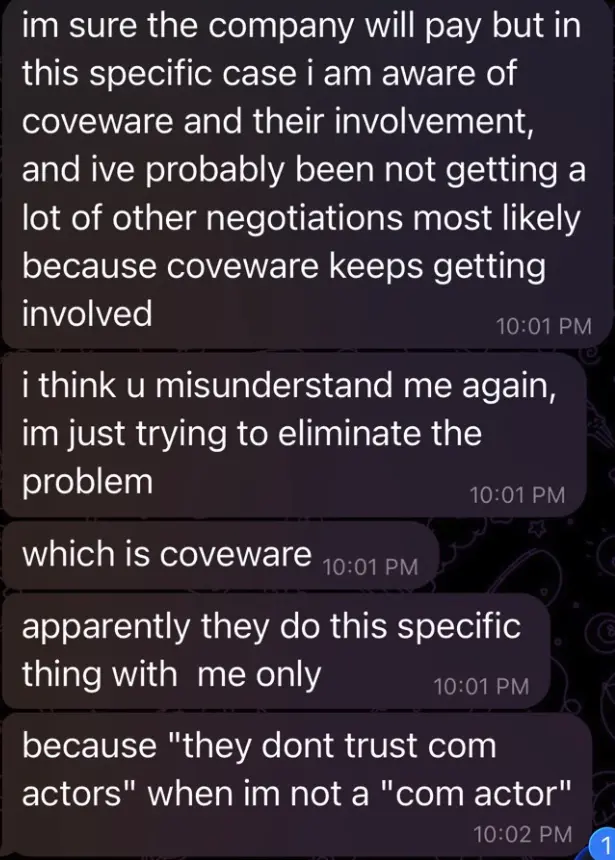
Leaked Telegram chats revealed just how much financial pain these anti-payment warnings caused the cybercriminals. In private communications from spring 2026, the main operator of the ShinyHunters account bitterly complained that Coveware was tanking their monetization rates:
"Go on my website, majority of those companies would’ve paid if it weren’t for Coveware giving them misinformation," the hacker lamented to a co-conspirator, adding that they were actively seeking ways to "eliminate the problem."
Future Outlook: Cleaning House in Cybersecurity
The unfolding ShinyHunters investigation marks a watershed moment for the global cybersecurity and cyber insurance industries. For years, the normalization of paying ransom demands created a lucrative shadow economy, breeding an environment where unscrupulous brokers could play both sides of the fence—acting as trusted corporate advisors by day while colluding with extortionists by night.
As the U.S. Department of Justice presses forward with prosecutions, and as international law enforcement continues to harvest digital forensic evidence from encrypted chats and seized servers, the industry faces an uncomfortable reckoning. True resilience will require absolute regulatory transparency, strict oversight of ransom facilitation fees, and a zero-tolerance policy for intermediaries who choose profit over protection. The myth that the ransomware remediation industry is entirely benign has been shattered; the road ahead will demand rigorous self-policing and uncompromising federal accountability.