Executive Overview
Artificial intelligence has officially crossed the threshold from an exploratory tech novelty into the foundational infrastructure of modern digital product development. Yet, as AI-driven tools proliferate across code repositories, design boards, and project management pipelines, a pervasive sentiment has taken root across the tech industry: AI fatigue.
The industry is caught in a polarized tug-of-war. On one extreme, techno-optimists promise a fully autonomous utopia where code is written, interfaces are generated, and design systems scale themselves with minimal human oversight. On the other extreme, doomsayers predict widespread job displacement, severe homogenization of digital experiences, and the erosion of foundational craft. Both extremes create a deafening layer of noise that obscures the reality of what artificial intelligence can actually achieve today.
What has been notably absent from the mainstream discourse is practical context. Developers, UI/UX designers, and engineering leaders are asking critical questions: Where does artificial intelligence actually fit into a legitimate, production-grade development workflow? How can machine learning models be leveraged to enhance, rather than degrade, human creativity and code integrity? And crucially, how can design systems—the single source of truth for modern organizations—safely integrate AI without collapsing under the weight of generated inconsistencies?
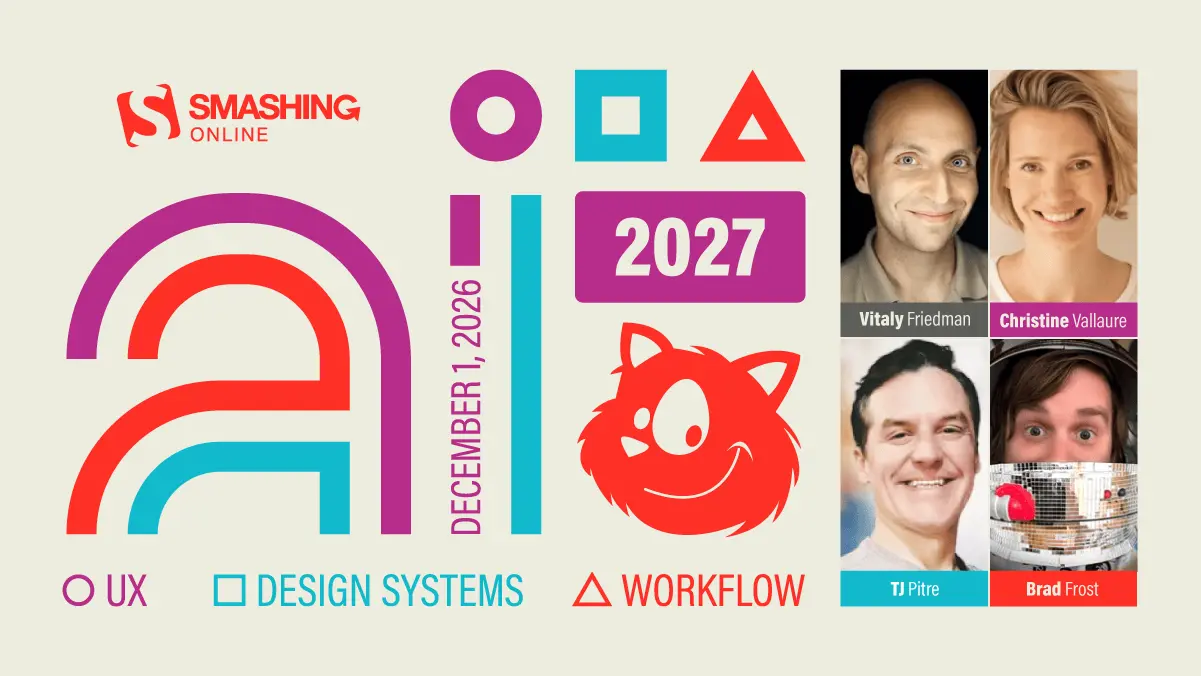
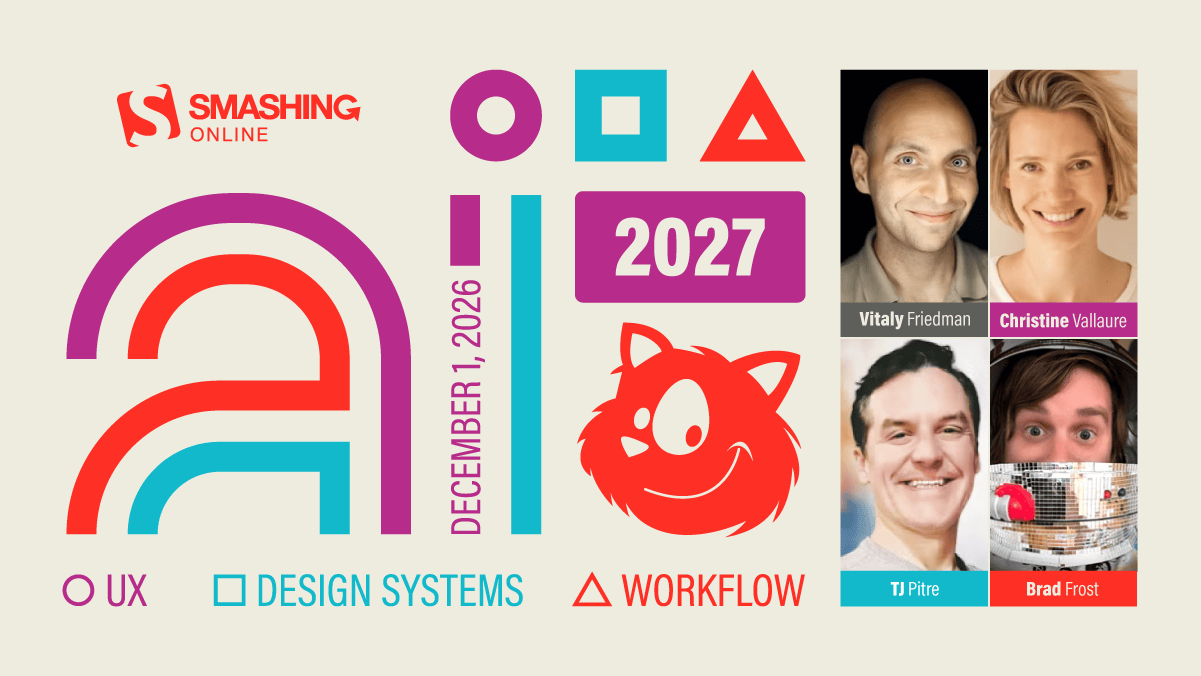
To answer these questions and cut through the deafening marketing hype, industry-renowned publication Smashing has organized a high-stakes, highly focused live online event: the Smashing AI-2027 Conference, scheduled for December 1. Known for checking the hype luggage at the door, Smashing has curated an elite roster of practitioners to provide a grounded, evidence-based exploration of AI’s role in design systems.
This comprehensive report examines the mounting fatigue surrounding artificial intelligence, the structure and philosophy of the upcoming Smashing conference, the industry leaders slated to speak, and what this pivotal online gathering means for the future of digital product design and front-end engineering.
Detailed Chronology: The Rise of AI Fatigue and the Search for Pragmatism
Phase 1: The Generative Boom and Initial Exuberance (2022–2023)
The modern era of artificial intelligence accelerated dramatically in late 2022 with the widespread public release of advanced large language models (LLMs) and generative interfaces. For front-end developers and digital designers, this period was marked by radical experimentation. Tools capable of turning text prompts into rudimentary wireframes, CSS snippets, and boilerplate React components flooded the market.
During this initial phase, the prevailing industry narrative was one of disruption. Venture capital poured into developer-tool startups promising instant applications. Conferences, webinars, and newsletters shifted their focus overnight to accommodate the generative wave, often prioritizing sensationalism over architectural soundness.
Phase 2: The Integration Reality Check and Fatigue Set-In (2023–2024)
As the initial novelty faded, engineering teams and design system architects began deploying these tools in production environments. The realities of software development quickly exposed the limitations of raw, uncurated AI output.
- Generated components frequently violated accessibility (a11y) standards.
- Automated code often introduced subtle, hard-to-debug performance bottlenecks.
- AI-generated design tokens routinely broke established design system governance models, creating parallel, unmaintainable UI variants.
By mid-2024, "AI fatigue" was no longer an abstract concern; it was a measurable phenomenon. Professionals reported exhaustion from endless product announcements, shifting toolchains, and unfulfillable promises of overnight efficiency gains. The community craved a return to disciplined engineering principles, looking for voices that could filter the noise and establish realistic boundaries for machine learning integration.
Phase 3: The Pivot Toward Workflow Integration (Late 2024–Present)
Recognizing the exhaustion within the community, thought leaders began pivoting the conversation away from replacement and toward augmentation. The focus shifted from "Can AI build my app?" to "How can AI reliably automate repetitive documentation, accelerate component scaffolding, and assist design token translation without compromising quality?"
This evolution sets the stage for targeted, highly technical interventions like the Smashing AI-2027 Conference. Rather than indulging in science-fiction projections, the event marks a deliberate industry-wide pivot toward rigorous evaluation, pragmatic workflow integration, and sustainable design system scaling.
Supporting Context & Metrics: The State of AI in Design Systems
To understand why an event like the Smashing AI-2027 Conference is timely and necessary, one must examine the current state of design systems and the integration metrics surrounding modern software engineering.
The Maintenance Burden of Design Systems
Design systems are living ecosystems. According to recent industry surveys conducted across enterprise engineering organizations, up to 42% of a design system team’s capacity is consumed by routine maintenance tasks:
- Documenting component prop changes.
- Ensuring cross-framework synchronization (e.g., maintaining parity between Figma UI kits, React components, and Vue wrappers).
- Auditing legacy codebases for design token drift.
Where AI Fits (and Fails) in the Workflow
Industry benchmarks indicate a stark divergence in AI efficacy depending on the task:
| Task Category | AI Efficacy & Reliability | Primary Risk Factors |
|---|---|---|
| Boilerplate Scaffolding | High | Minor syntax errors, easily caught by linters. |
| Documentation & Annotation | High | Hallucinated parameters; requires human verification. |
| Design Token Translation | Medium | Namespace conflicts and loss of semantic meaning. |
| Complex Architectural Layouts | Low | Lack of spatial reasoning; accessibility failures. |
| Autonomous Code Generation | Very Low | Severe security vulnerabilities and debt accumulation. |
These metrics underscore the central thesis of the upcoming Smashing event: artificial intelligence is a powerful scalpel for specific repetitive tasks, but a dangerous instrument when applied blindly to foundational architecture.
Official Statements and Industry Insights: The Lineup
What elevates the Smashing AI-2027 Conference above standard industry webinars is its uncompromising commitment to practitioner-led education. Rather than featuring corporate executives selling proprietary black-box software, the event brings together veterans who build, maintain, and stress-test design systems daily.
Brad Frost on Scalability and System Integrity
Brad Frost, creator of the Atomic Design methodology and a globally recognized consultant, has long advocated for systems thinking in web design. In previewing the themes of the conference, Frost emphasizes that design systems must remain human-centric.
"Systems exist to bring clarity and cohesion to human collaboration," industry analysts note when reflecting on Frost’s philosophy. "If AI is introduced without strict governance, it doesn’t scale a design system—it scales chaos."
Christine Vallaure on Tokenization and UI Consistency
As an expert in UI/UX architecture and design systems, Christine Vallaure brings a meticulous lens to how machine learning interacts with visual languages. Her work consistently demonstrates that AI tools must be trained on tightly governed design tokens to prevent visual fragmentation across multi-platform products.
Vitaly Friedman and TJ Pitre on Practical Front-End Workflows
Vitaly Friedman, co-founder of Smashing, has built a reputation for curating content that avoids passing fads in favor of enduring web standards. Alongside front-end expert TJ Pitre, the discussions will dive deep into the trenches of real-world implementation. Attendees can expect live demonstrations showing exactly how front-end developers can integrate AI into their daily pipelines—such as automating CSS regression testing or generating comprehensive test suites—without sacrificing code quality or team velocity.
Future Outlook: What the AI-2027 Horizon Holds
Looking ahead, the trajectory of artificial intelligence in web development and design systems will be defined by maturation, standardization, and strict ethical boundaries.
1. Shift Toward Local and Deterministic Models
As privacy concerns and enterprise security requirements tighten, the industry is shifting away from generalized cloud-based LLMs toward fine-tuned, localized models. These specialized models are trained exclusively on an organization’s proprietary design system repository, ensuring that generated components adhere strictly to internal style guides, accessibility rules, and security baselines.
2. Deep Integration with Design Token Pipelines
By 2027, the friction between design tools (like Figma) and code repositories (like GitHub) is projected to be largely mediated by AI-driven synchronization layers. Rather than manual handoffs or brittle plugins, intelligent pipelines will automatically flag semantic drift between a designer’s intent and an engineer’s implementation, suggesting precise refactors in real-time.
3. The Re-Valuation of Human Craft
Paradoxically, as automated generation becomes commoditized, the value of human expertise will skyrocket. The ability to architect resilient systems, audit for edge-case accessibility, and maintain empathetic user experiences will separate exceptional digital products from mediocre, AI-saturated noise.
Conclusion & Registration Details
The Smashing AI-2027 Conference on December 1 offers a rare opportunity to bypass the hype cycle and engage directly with the practitioners charting a sensible course for our industry. It is an essential event for designers, front-end engineers, and stakeholders committed to building sustainable digital products.
Event Access and Community Perks
- Date: December 1 (Live Online Event)
- Standard Cost: €50
- Exclusive Discount: Readers can utilize the special discount code
AITRICKSCSSwhen registering for the event via Tito. - Community Giveaway: In partnership with event organizers, free tickets are being made available. Interested participants are encouraged to check the original announcement and engage in the community discussion.
For a direct link to secure your spot and view the complete schedule of speakers, visit the Smashing AI-2027 Conference Portal.