Executive Overview
In a landmark transaction that redefines the competitive contours of the semiconductor industry, Nvidia has announced a $3.5 billion strategic investment in Taiwanese chip design titan MediaTek. Far more than a traditional venture alignment, the capital infusion cements a deep architectural partnership aimed at integrating MediaTek’s custom chip designs directly into Nvidia’s enterprise data center ecosystem. Under the terms of the deal, MediaTek will license and integrate Nvidia’s proprietary NVLink Fusion interconnect platform, enabling third-party Application-Specific Integrated Circuits (ASICs) to communicate seamlessly alongside Nvidia GPUs within standardized, rack-scale AI factories.
The transaction arrives at a pivotal juncture for the artificial intelligence hardware market. As mega-cap cloud hyperscalers—including Amazon Web Services (AWS), Google, and Microsoft—alongside leading AI research institutions like OpenAI and Anthropic, aggressively expand their internal custom silicon initiatives to curb reliance on Nvidia’s flagship processors, Nvidia is executing a calculated strategic shift. By opening its interconnect infrastructure and rack architectures to external custom chipmakers like MediaTek, Nvidia is surrendering a portion of pure compute silicon dominance in exchange for an enduring, inescapable hold over global AI data center scaffolding.
Through this multi-billion-dollar initiative, Nvidia effectively ensures that regardless of whether a next-generation AI model runs on native graphics processing units (GPUs) or specialized client-designed ASICs, the underlying infrastructure fabric—spanning interconnects, networking protocols, power management, and server rack architectures—remains anchored to the Nvidia ecosystem. Furthermore, the collaboration extends Nvidia’s reach far beyond the data center, leveraging MediaTek’s consumer electronics and automotive expertise to deploy unified AI hardware solutions across personal computing, physical AI systems, and software-defined vehicles.
Detailed Chronology of the Deal and Market Background
+-----------------------------------------------------------------------------------+
|                        THE CUSTOM SILICON LANDSCAPE EVOLUTION                     |
+-----------------------------------------------------------------------------------+
|  Phase 1: GPU Monopoly                                                            |
|  - Nvidia dominates AI training and inference with H100/B200 architecture.         |
|                                                                                   |
|  Phase 2: Hyperscaler Diversification                                             |
|  - AWS, Google, Microsoft, OpenAI, & Anthropic design custom in-house ASICs       |
|    to reduce reliance on high-margin Nvidia hardware and lower TCO.               |
|                                                                                   |
|  Phase 3: Ecosystem Neutralization (The MediaTek Deal)                             |
|  - Nvidia invests $3.5B in MediaTek & licenses NVLink Fusion interconnects.        |
|  - Outcome: Custom ASICs now plug directly into Nvidia rack-scale infrastructure. |
+-----------------------------------------------------------------------------------+
The paths of Nvidia and MediaTek have converged following a rapid, multi-year acceleration in hyperscaler chip self-sufficiency. Over the past three years, rising enterprise capital expenditure on AI compute has forced cloud service providers to reassess the total cost of ownership (TCO) associated with off-the-shelf GPU clusters.
The Rise of In-House Silicon
The trend toward custom ASICs has moved rapidly across the technology sector:
- Amazon Web Services continuously iterates on its proprietary Trainium and Inferentia silicon families to lower training and inference overhead for cloud clients.
- Google Cloud has expanded its Tensor Processing Unit (TPU) deployments, powering internal models and external enterprise workloads alike.
- Microsoft Azure entered the fray with its Maia accelerators, tailored specifically for large language model workloads.
- OpenAI has benchmarked and developed custom inference silicon, such as its internal "Jalapeño" platform, optimized for high-throughput, low-latency deployment.
- Anthropic has engaged in deep technical discussions with foundry and design partners—including Samsung—to fabricate custom processors optimized for its Claude model family.
Recognizing that hyperscalers would inevitably attempt to offload a portion of their workloads to specialized, cost-effective custom silicon, Nvidia initiated a strategy to capture the surrounding infrastructure layer.
The Infrastructure Counteroffensive
The first major public signal of this strategy emerged when Nvidia revealed a massive infrastructure deal with Amazon Web Services. Under that agreement, AWS committed to deploying an additional 2 million Nvidia GPUs across its global cloud availability zones while simultaneously adopting Nvidia’s NVLink Fusion architecture to interlink heterogenous computing nodes.
Days later, Nvidia formalized its $3.5 billion equity and operational partnership with MediaTek. By extending NVLink Fusion to MediaTek—a primary contract design partner for global hardware OEMs and emerging ASIC clients—Nvidia successfully built a bridge between its proprietary cluster architecture and third-party custom chips.
The deal establishes a standardized design pipeline: MediaTek can architect custom accelerators tailored precisely to a cloud provider’s proprietary workloads, while utilizing Nvidia’s scale-up, scale-out networking topologies, software stacks, and physical rack specifications. Consequently, custom chips no longer threaten to displace Nvidia’s data center footprint; instead, they operate directly inside Nvidia’s compute chassis.
Supporting Context & Metric Analysis
Data Center ASIC Market Projections ($ Billions)
2024 | $1.2B  (MediaTek Early Operations)
2025 | $1.5B  (Interconnect Licensing & Prototyping)
2026 | $2.0B  (Target Custom Data Center ASIC Revenue)
To evaluate the structural magnitude of the Nvidia-MediaTek agreement, one must examine the rapid expansion of MediaTek’s high-performance computing (HPC) and ASIC divisions. Historically recognized as a market leader in mobile system-on-chips (SoCs), smart TV processors, automotive connectivity, and Wi-Fi chipsets, MediaTek has quietly assembled a enterprise data center division focused on high-end custom ASICs.
MediaTek publicly projected that its data center ASIC business will generate $2 billion in revenue in 2026. Prior to the Nvidia partnership, MediaTek faced substantial competitive friction against entrenched custom silicon heavyweights like Broadcom and Marvell Technology, both of which command significant market share in high-speed networking silicon, SERDES development, and custom hyperscaler ASIC co-design.
By securing access to Nvidia’s NVLink ecosystem, MediaTek gains a decisive technological differentiator. NVLink provides high-bandwidth, ultra-low-latency, memory-coherent interconnect capabilities that far surpass traditional PCIe bus limits. Through NVLink Fusion, MediaTek’s custom-designed compute die can communicate directly with Nvidia GPUs, central processing units (CPUs), and Networking Interface Cards (NICs) at terabytes-per-second speeds without encountering system bottlenecks.
+-----------------------------------------------------------------------------------+
|                        NVLINK FUSION HETEROGENEOUS ARCHITECTURE                    |
+-----------------------------------------------------------------------------------+
|                                                                                   |
|    +------------------------+                     +------------------------+      |
|    |   MediaTek Custom      | <--- NVLink Fusion  |   Nvidia High-Perf.    |      |
|    |   Hyperscaler ASIC     |      Interconnect   |   Data Center GPU      |      |
|    +------------------------+                     +------------------------+      |
|                |                                              |                   |
|                +------------------+        +------------------+                   |
|                                   v        v                                      |
|    +-----------------------------------------------------------------------+      |
|    |            Unified NVLink High-Speed Memory & Switch Fabric           |      |
|    +-----------------------------------------------------------------------+      |
|                                   |                                               |
|                                   v                                               |
|    +-----------------------------------------------------------------------+      |
|    |         Nvidia Standardized Data Center Rack Architecture             |      |
|    +-----------------------------------------------------------------------+      |
+-----------------------------------------------------------------------------------+
Multi-Domain Strategic Integration Metrics
The economic parameters of the partnership extend beyond hyper-scale server farms, spanning consumer computing and mobility:
| Domain / Segment | Core Technology Integrated | Primary Objective |
|---|---|---|
| Data Center ASICs | NVLink Fusion, Rack-Scale Reference Designs | Enable custom cloud silicon to co-exist natively inside Nvidia server racks. |
| Developer Edge Compute | DGX Spark Platform | Provide desktop-class hardware for AI engineers prototyping local models. |
| Consumer AI PCs | RTX Spark & MediaTek SoC IP | Integrate Nvidia neural rendering and processing into consumer client chips. |
| Physical AI & Auto | Nvidia Drive AGX & MediaTek Automotive Systems | Power software-defined vehicles, intelligent cockpits, and autonomous driving engines. |
MediaTek’s established presence across smart home systems, smart cockpits, and 5G wireless networking gives Nvidia a direct distribution channel into high-volume edge devices. The ongoing joint development of the "DGX Spark" developer platform and "RTX Spark" consumer PC processors signals Nvidia’s intent to embed its AI runtime environments across every tier of hardware—from low-power consumer notebooks to million-watt data centers.
Official Statements and Strategic Commentary
During a call detailing the partnership, Dion Harris, Senior Director of High-Performance Computing (HPC) and AI Hyperscaler Infrastructure Solutions at Nvidia, framed the transaction as a natural evolution of the company’s core corporate identity:
"Nvidia is an AI infrastructure company. We expanded beyond pure computing chips years ago."
— Dion Harris, Senior Director of HPC & AI Hyperscaler Infrastructure Solutions, Nvidia
Harris emphasized that the proliferation of custom silicon among cloud providers is an opportunity rather than a structural risk, provided those chips adopt Nvidia’s networking topology:
"Basically, every cloud, every model builder is deploying our platform in some shape, form, or fashion. So by MediaTek being able to offer this extension to its customers, it allows them to standardize on the rack-scale infrastructure across their AI factories… and also deploy their custom chips right alongside those using the same standard platform. This is really about opening up this ecosystem to the entire MediaTek customer base."
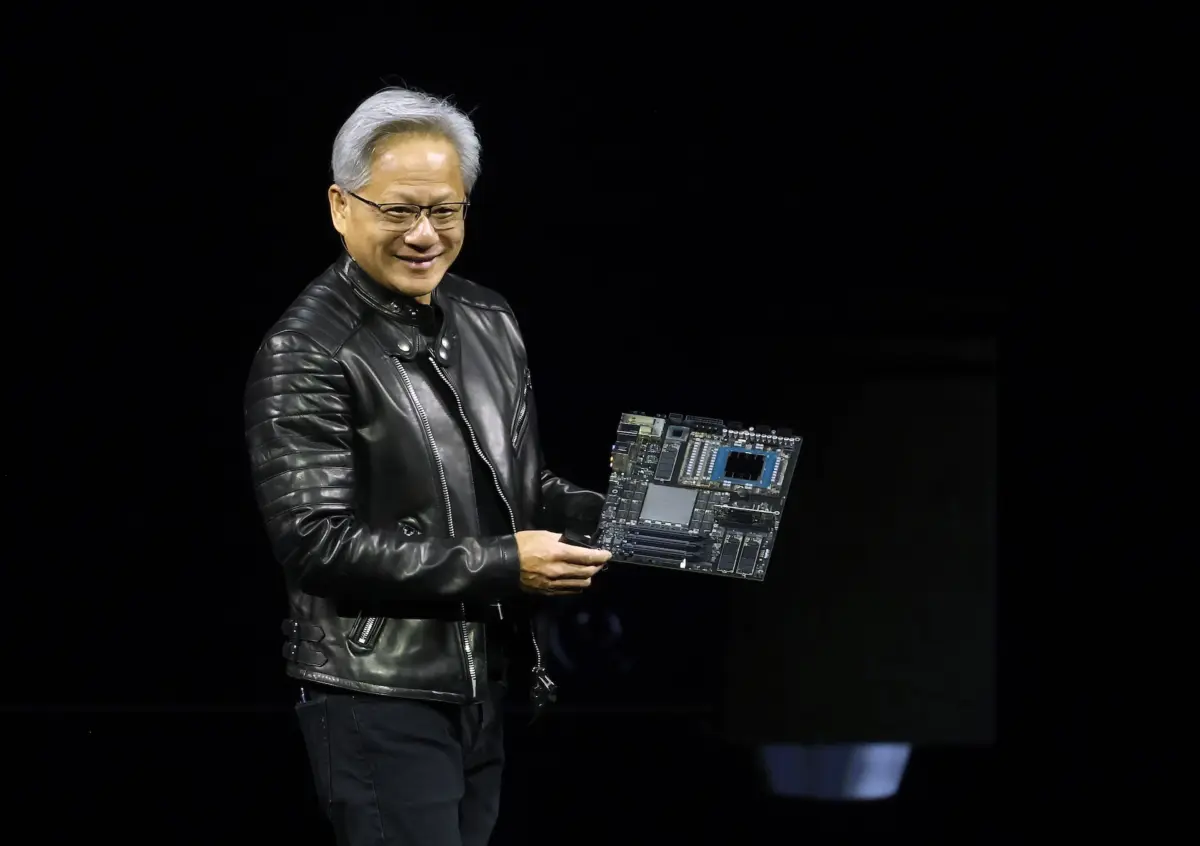
Jensen Huang, Founder and Chief Executive Officer of Nvidia, emphasized the broad scope of the alliance, which extends beyond enterprise data centers to physical AI systems and edge computing platforms:
"AI is transforming every computing platform — from the world’s largest AI factories to the PC and the car. Together, we’re building platforms that bring NVIDIA accelerated computing to new markets and give customers the freedom to create differentiated AI systems at enormous scale."
— Jensen Huang, Founder and CEO, Nvidia
The strategic alignment of these executive statements underscores Nvidia’s long-term vision: pure compute silicon is becoming commoditized, while system integration, networking fabrics, and unified software platforms constitute the enduring competitive moat.
Future Outlook & Industry Implications
The $3.5 billion partnership between Nvidia and MediaTek alters the long-term trajectory of the global semiconductor supply chain and high-performance computing market.
                                  +-----------------------+
                                  | Nvidia Investment     |
                                  | $3.5B Capital Injection|
                                  +-----------+-----------+
                                              |
                                              v
                                  +-----------------------+
                                  | MediaTek Custom ASIC  |
                                  | Adoption of NVLink    |
                                  +-----------+-----------+
                                              |
                      +-----------------------+-----------------------+
                      |                                               |
                      v                                               v
        +---------------------------+                   +---------------------------+
        | Hyperscaler In-House Chips|                   | Edge, PC, & Auto Markets  |
        | Integrated into Nvidia    |                   | RTX/DGX Spark & Connected |
        | Rack-Scale Factories      |                   | Software Vehicles         |
        +---------------------------+                   +---------------------------+
1. The Neutralization of the Custom ASIC Threat
For years, Wall Street analysts have questioned Nvidia’s ability to defend its market valuation if major cloud providers successfully transition training and inference workloads to custom in-house accelerators. By licensing NVLink Fusion to MediaTek, Nvidia creates an architectural environment where custom silicon no longer displaces Nvidia hardware. Cloud providers can design bespoke processing units for specific algorithmic tasks while remaining reliant on Nvidia’s rack designs, switches, network cards, software libraries, and cooling systems.
2. Heightened Competition in Custom ASIC Co-Design
MediaTek’s integration into Nvidia’s infrastructure ecosystem creates immediate competitive pressure for incumbent ASIC design vendors like Broadcom and Marvell. Backed by Nvidia’s $3.5 billion investment and direct access to NVLink IP, MediaTek can offer hyperscalers a distinct advantage: the ability to build custom chips that plug directly into the world’s largest installed base of AI server racks without undergoing expensive, custom fabric development.
3. Consolidation of Taiwanese Semiconductor IP
This partnership reinforces the central role of the Taiwanese semiconductor ecosystem in global AI infrastructure. With MediaTek leveraging advanced design nodes and TSMC’s advanced packaging technologies (such as Chip-on-Wafer-on-Substrate, or CoWoS), the alliance deepens technical synergy across Taiwanese design and manufacturing hubs, creating a unified standard for heterogeneous AI packaging.
4. Acceleration of Edge AI and Autonomous Mobility
Beyond the enterprise cloud, the ongoing collaboration on DGX Spark, RTX Spark, and automotive platforms positions the Nvidia-MediaTek partnership to capture emerging opportunities in "physical AI." By pairing MediaTek’s cost-effective mobile and automotive SoCs with Nvidia’s advanced RTX neural graphics engine and Drive AGX autonomous software stack, the duo can dominate smart cockpits, automated driving units, and consumer AI PCs.
In summary, Nvidia’s $3.5 billion investment in MediaTek represents a pivotal shift from a GPU-centric business model to a holistic hardware-software platform. By turning potential custom chip rivals into partners within its NVLink ecosystem, Nvidia ensures that no matter how specialized artificial intelligence hardware becomes, the underlying infrastructure of global computing remains firmly under its control.