Executive Overview
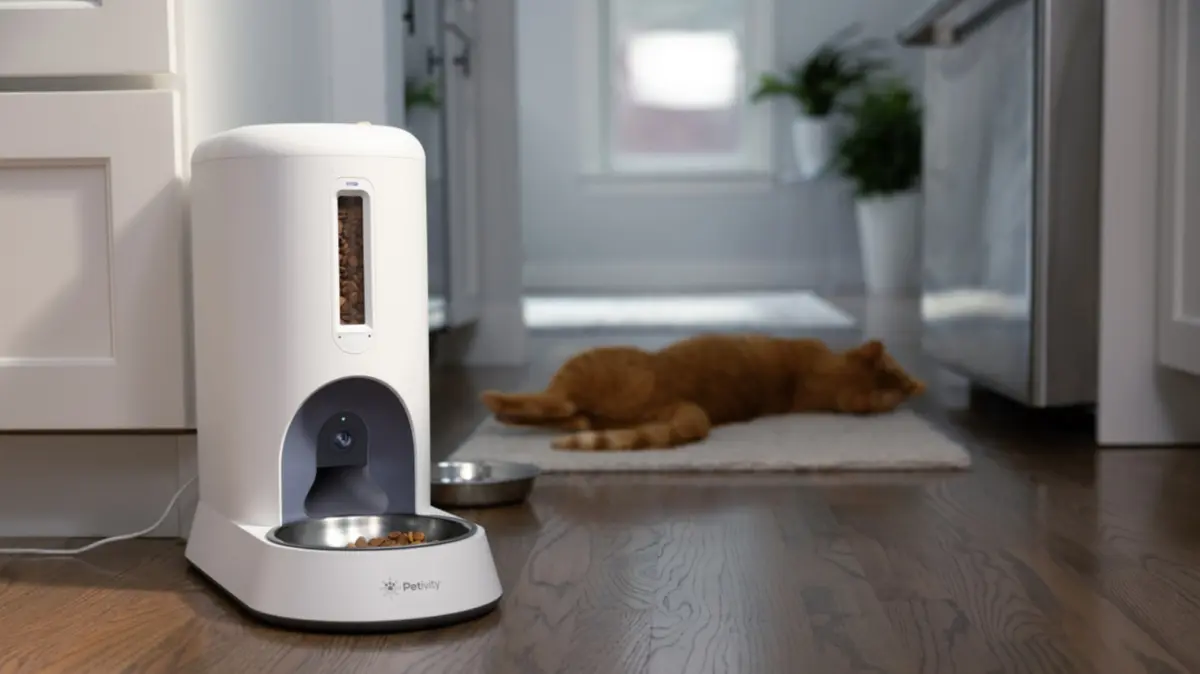
The intersection of artificial intelligence and the booming pet care industry has reached a fascinating new milestone. Purina-backed pet health brand Petivity has officially launched its latest hardware innovation: a smart cat feeder equipped with advanced facial recognition technology and high-definition cameras. Priced at $150 and operating without the burden of a recurring monthly subscription fee, the Petivity Smart Feeder for Cats aims to solve one of the most persistent logistical and health-monitoring challenges faced by modern pet owners—managing the dietary habits of multiple cats living under one roof.
As pet humanization trends continue to accelerate globally, owners are increasingly demanding medical-grade insights into their animals’ daily routines. Until recently, automated feeders were largely treated as basic mechanical conveniences designed simply to dispense dry kibble while owners were away at work or traveling. However, the introduction of machine learning algorithms capable of differentiating between individual feline faces transforms a routine feeding appliance into a proactive health-monitoring hub.
By tracking intricate metrics such as portion sizes, eating frequency, and subtle behavioral shifts, the device promises to bridge the communication gap between veterinarians and pet parents. While it shares the dry-food-only limitation common to most automated feeding units on the market, its ability to police multi-cat food piracy and log individualized consumption data marks a significant leap forward in smart home pet technology.
Detailed Chronology
The Evolution of Smart Pet Care Technology
The journey toward AI-integrated pet feeding devices did not happen overnight. Over the past decade, the pet technology sector has evolved from rudimentary electronic timers and gravity-fed dispensers into sophisticated IoT (Internet of Things) ecosystems.
- Early 2010s: The market saw the introduction of programmable digital timers attached to hoppers, allowing owners to drop dry food at set intervals. These devices lacked feedback loops, meaning owners had no way of knowing if the food was actually consumed, let alone who ate it.
- Mid-to-Late 2010s: Wi-Fi connectivity and basic cameras were integrated into pet cameras and feeders. Brands began offering remote viewing capabilities and two-way audio, enabling owners to check in on their pets via smartphone applications.
- The AI Turning Point (2020s): As machine learning algorithms became more accessible and cost-effective, tech companies began applying computer vision to pet monitoring. Initial applications focused heavily on general movement tracking, litter box usage (via smart boxes), and general health telemetry.
- Present Day: The debut of the Petivity Smart Feeder represents the convergence of facial recognition computer vision with automated portion control, specifically calibrated for the biological and behavioral nuances of domestic felines.
The Development and Testing Phase
Before bringing the device to market, Petivity’s engineering and data science teams undertook a rigorous training and testing regimen to ensure the facial recognition software could reliably distinguish between felines—a notoriously difficult task, especially when dealing with multiple cats of the same breed or coat color.
The underlying AI models were trained on an extensive dataset comprising 21,000 real-world feeding sessions, 1,400 hours of high-definition video, and more than 15,000 distinct photographs of cats. This extensive dataset allowed the algorithm to account for varying lighting conditions, angles, and physical postures as cats approach and interact with the feeding bowl.
During the product testing phase, the company focused not only on the accuracy of the software but also on feline ergonomics and psychological acceptance. According to internal metrics, 99.5 percent of cats participating in product trials readily accepted and ate from the new feeder without displaying behavioral aversion or anxiety toward the camera hardware.
Upon its official market rollout, the device was made immediately available to consumers for $150, deliberately avoiding the paywalled subscription models that have frustrated consumers across the smart home and pet tech landscapes.
Supporting Context & Metrics
Solving the Multi-Cat Household Dilemma
For owners of multiple cats, feeding time can frequently resemble a logistical nightmare. In many households, one dominant cat may bully others away from their bowls, or a stealthy feline may constantly scavenge leftover food from a companion’s dish. This becomes a severe medical risk when one cat requires a specialized veterinary prescription diet—such as a low-phosphorus formula for early-stage chronic kidney disease or a weight-management formulation—while others eat standard maintenance food.
The Petivity Smart Feeder is engineered to address this exact vulnerability. The device is capable of learning the unique feeding behaviors of up to five individual cats. While the machine cannot physically block or sort different types of food within a single bowl, its camera and facial recognition system instantly identify who is eating the moment their head approaches the dish.
If a restricted cat attempts to steal a meal meant for a sick housemate, the system flags the behavior, sending an immediate alert to the owner’s smartphone via the companion app. This level of granular tracking ensures that dietary regimens prescribed by veterinarians can be enforced with algorithmic precision, even when human owners are asleep or out of the house.
Data Collection and Health Telemetry
Beyond policing food theft, the device serves as a passive health diagnostic tool. Subtle changes in feeding habits are frequently the very first warning signs of underlying feline illnesses, including dental disease, hyperthyroidism, diabetes, or cognitive dysfunction syndrome. Cats are master evolutionarily conditioned to hide pain and weakness, meaning behavioral shifts are often imperceptible to human observers until an illness has reached an advanced stage.
The Petivity feeder continuously logs:
- Consumption Volume: Exact weight of kibble consumed per session.
- Eating Frequency: How many times a day an individual cat visits the bowl.
- Feeding Duration: The time spent chewing and eating per session, highlighting potential dental discomfort if eating times become unusually protracted.
This data is translated by the companion application into actionable health insights. When owners visit their veterinarian, they can export these detailed telemetry logs, replacing vague estimations ("I think he’s eating less lately") with objective, empirical data regarding their pet’s metabolic patterns.
Hardware and Usability Specifications
From a mechanical perspective, the device balances advanced electronics with practical household maintenance realities. Key features include:
- Remote Dispensing and Scheduling: Owners can configure customized feeding schedules or trigger manual kibble drops remotely through the app.
- Video Interactivity: Integrated high-definition cameras facilitate live video calls, allowing owners to interact with their pets audibly and visually.
- Low-Food Alerts: Automated sensors notify users when the internal hopper is running low, preventing unexpected empty-bowl emergencies.
- Hygiene Management: Unlike many luxury pet appliances that feature complex electronic housings that are difficult to clean, numerous components of the Petivity feeder are dishwasher-safe, simplifying routine sanitation.
The Wet Food Limitation
Despite its advanced feature set, the device shares a notable limitation inherent to the broader automated pet feeder market: it is exclusively compatible with dry kibble.
Engineering an automated dispensing and facial-recognition system for wet food requires complex refrigeration, airtight sealing, and spoil-prevention mechanisms to inhibit bacterial growth, which would dramatically increase the retail cost and mechanical complexity of the unit. Consequently, owners who rely heavily on canned wet diets must continue to manage those meals manually, utilizing the Petivity system strictly for supplemental or primary dry food administration.
Official Statements
Industry analysts and company representatives have emphasized that the launch of the Petivity Smart Feeder marks a philosophical shift in how pet nutrition and technology intersect.
A spokesperson for Petivity noted during the product rollout:
"Our goal was never simply to build another remote-controlled dispenser. We wanted to turn everyday feeding time into a source of real, actionable health insight. By leveraging advanced machine learning to recognize individual felines, we are giving pet parents the diagnostic visibility they need to catch subtle shifts in behavior long before they manifest as serious veterinary emergencies."
Veterinary behaviorists have also weighed in on the integration of computer vision into animal husbandry environments. Early reviews from veterinary professionals suggest that passive tracking devices remove human error and subjectivity from at-home health monitoring.
Dr. Elena Vance, a small animal internal medicine specialist, remarked:
"In veterinary medicine, our greatest handicap has always been the subjectivity of our patients’ owners. When a cat is losing weight or developing a systemic issue, the earliest symptom is almost always a micro-change in caloric intake or feeding cadence. Having a device that can reliably isolate individual cats in a multi-pet home and track those metrics down to the gram is a monumental leap forward for preventative veterinary care."
Future Outlook
The launch of Purina’s AI-powered smart feeder signals a broader, irreversible trend toward the "Internet of Animals," where every aspect of a pet’s daily life is quantified, analyzed, and optimized via cloud-connected ecosystems. As computer vision hardware becomes cheaper and more reliable, several developments can be anticipated in the near-to-long-term future of pet care technology:
- Cross-Device Integration: Future iterations of pet health technology will likely see smart feeders communicating directly with smart litter boxes (to track output volume against input volume), smart water fountains (to monitor hydration levels), and wearable activity monitors. Synthesizing this data into a unified health dashboard will provide an unprecedented holistic view of animal wellness.
- Advanced Veterinary Telehealth: As structured data sets generated by devices like the Petivity feeder become standardized, veterinary telemedicine platforms will increasingly integrate these metrics. Vets will be able to monitor chronic conditions remotely, adjusting dietary or pharmacological prescriptions based on real-time data feeds rather than episodic, high-stress clinic visits.
- Multi-Diet Dispensing Hardware: While current models are restricted to dry kibble due to mechanical and food safety constraints, ongoing research and development in localized thermal regulation and automated sealing mechanisms will eventually pave the way for smart, multi-cat feeders capable of physically separating and dispensing wet and specialized prescription diets under algorithmic control.
- Subscription-Free Market Pressures: By launching at a competitive price point of $150 with zero recurring subscription fees, Petivity has set a new consumer expectation. Future market entrants will find it increasingly difficult to lock core tracking analytics behind paywalls, forcing manufacturers to compete on hardware reliability, aesthetic design, and open-ecosystem compatibility.
Ultimately, the Petivity Smart Feeder for Cats illustrates how deeply integrated technology has become in the modern human-animal bond. By transforming a mundane household chore into an intelligent health-monitoring station, Purina has established a new benchmark for what consumers should expect from the appliances that care for their most vulnerable household companions.