Executive Overview
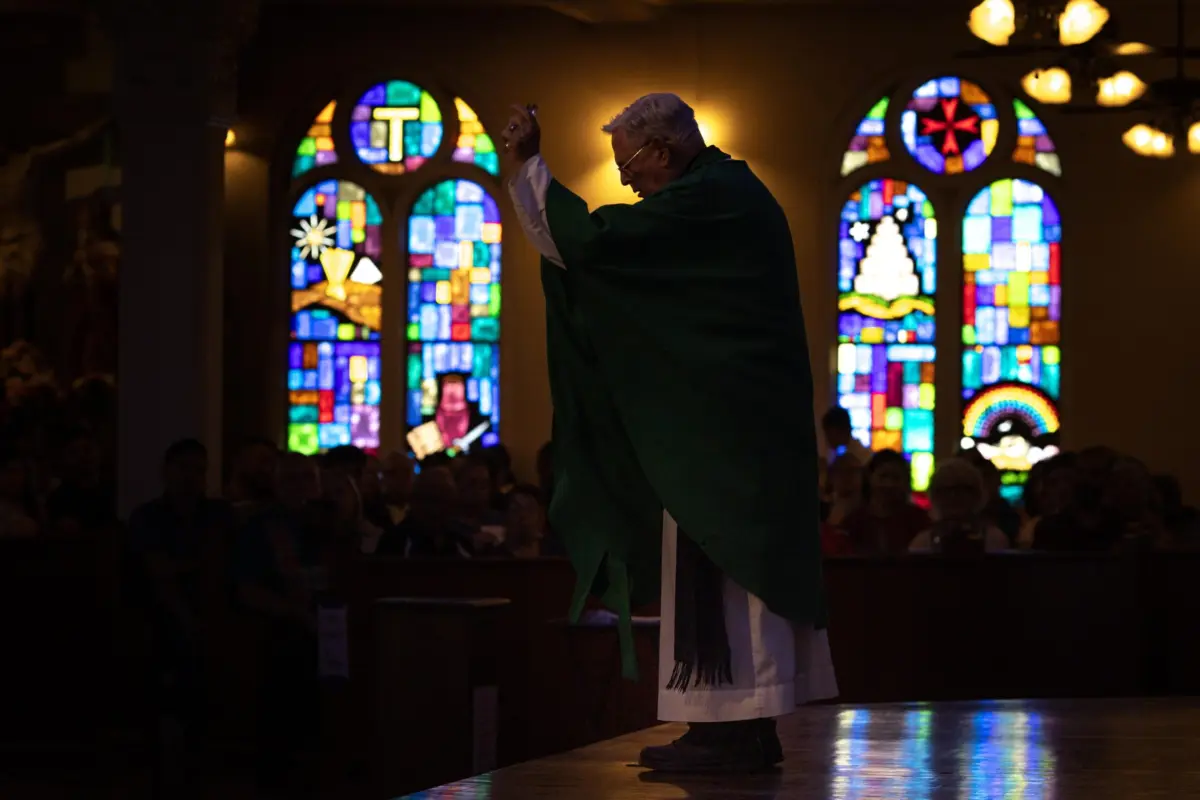
To the casual observer monitoring the trajectory of American democracy, the conclusion that religion has served as a primary accelerant of civic decay over the past decade is difficult to dismiss. Across the political landscape, right-wing religious leaders—such as prominent Southern Baptist televangelist Robert Jeffress—have openly endorsed Christian nationalism. Conservative Catholic intellectuals and evangelical pastors routinely debate whether the United States ought to transition toward a modernized theocracy. Meanwhile, top-tier defense officials have invoked bloody medieval crusades and Christian theology to frame geopolitical conflicts, cementing a growing public perception that organized religion has become a direct threat to the pluralism and tolerance essential for a functional democratic republic.
Yet, a provocative and counterintuitive argument is rapidly gaining traction among political and theological theorists: What if the antidote to this anti-democratic slide is more religion, rather than less?
A compelling new book, Can Religion Save Democracy? How More Faith, Not Less Can Heal Our Public Life, co-authored by conservative evangelical Christian Matthew Kaemingk and liberal Muslim writer Shadi Hamid, challenges conventional secular wisdom. The authors posit that declining levels of religiosity across the board—particularly among liberals—have exacerbated political polarization, thereby eroding fundamental democratic norms. According to Kaemingk and Hamid, one of the most effective ways for secular and liberal Americans to safeguard democracy is to engage with religious communities and scriptural traditions with renewed respect, curiosity, and openness. Furthermore, they urge liberals who hold personal religious beliefs to abandon their hesitation and reintegrate themselves into organized religious life.
Rather than trying to convert nonbelievers to a specific dogma, the authors argue that secular society must recognize the indispensable regulatory function that institutional religion plays. When Americans abandon houses of worship in droves, they do not leave behind their deeply held spiritual passions; instead, they transfer those passions directly onto the political battlefield. The central thesis is both urgent and alarming: without the moderating, moral constraints of traditional religious institutions, civic spaces are left vulnerable to political fanaticism, tribalism, and nihilism.
Detailed Chronology: The Secular Retreat and the Rise of Political Idolatry
To understand how American public life reached its current fractured state, one must trace the simultaneous decline of institutional religion and the explosive rise of hyper-partisan secularism over the last three decades.
- The Late 1990s and Early 2000s: The cultural landscape witnessed the emergence of the "New Atheism" movement, spearheaded by public intellectuals who openly denigrated organized religion, framing faith as fundamentally incompatible with science, reason, and progressive values.
- The Mid-2000s to 2010s: As documented extensively by sociologist Robert Putnam, American participation in traditional civic and religious "third spaces" plummeted. Millions of Americans—disproportionately leaning liberal or moderate—withdrew from local churches, synagogues, and mosques, seeking meaning and community entirely within secular environments.
- The 2016 Presidential Election: The political realignment exposed the consequences of a de-churched population. Observers noted an unprecedented level of quasi-religious fervor surrounding political figures and ideological movements. Donald Trump’s populist appeal rapidly generated a powerful cult of personality, while the anti-Trump resistance and progressive social movements adopted rigid in-group markers, sacramental language, and secular dogmas.
- The 2020–2024 Electoral Cycles: Political polarization deepened into an intractable stalemate. Conservative religious believers concentrated heavily on the political right, while nonreligious, equally fervent citizens coalesced on the left, resulting in an environment defined by mutual existential dread and political demonization.
- The 2026 Midterm Cycle and International Pushback: A notable counter-trend emerged as a new wave of religious Democrats—including high-profile Senate nominees and gubernatorial candidates—began speaking openly and comfortably about their personal faiths. Concurrently, international religious authorities, such as Pope Leo XIV during his historic visit to France, publicly challenged secular leaders to reexamine their hostility toward religious liberty, warning that eradicating faith from the public square inadvertently breeds dangerous far-right extremist movements.
Supporting Context & Metrics: The Mechanics of the "Religion-Shaped Hole"
At the core of Kaemingk and Hamid’s thesis is a psychological and sociological reality: human beings possess an innate, religion-shaped drive for ultimate meaning, moral certainty, and transcendent belonging. When institutional religion recedes from the public square, this spiritual impulse does not evaporate; rather, it finds a surrogate home in modern politics and secular ideologies.
Drawing upon historical intellectual traditions, the authors synthesize three foundational frameworks:
- St. Augustine’s Theology: The timeless observation that human hearts remain restless until they find their ultimate anchor in the transcendent.
- Robert Putnam’s Civic Sociology: The modern empirical documentation showing that religious institutions historically served as the primary incubators for civic partnership, social trust, and interpersonal accountability.
- Abraham Kuyper’s Pluralism: The 19th-century Dutch philosopher’s insight that all human beings are inherently religious, and that unacknowledged religious fervor quietly powers every radical political movement.
When religious frameworks are stripped away, politics fills the vacuum. As Kaemingk and Hamid write:
"As Americans exit churches in droves, they’re not leaving behind their religious passions. Instead, they’re transferring those passions to the political battlefield. In this new post-religious context, Christian faith and Scripture function less as moral constraints within evangelical circles and more as political cudgels to use against one’s opponents."
This shift has degraded both sides of the American political aisle. On the right, elements of the Christian tradition have been weaponized to serve authoritarian nationalism. On the left, secular ideological movements have adopted dogmatic, inquisitorial qualities—exemplified by phenomena such as internet conspiracy subcultures and rigid ideological purity tests—that mimic religious zealotry without offering the humility, grace, or spiritual accountability found in mature theological traditions.
The Paradox of Evangelical Participation
A critical and valid critique often leveled against arguments like Kaemingk and Hamid’s is the empirical reality of the contemporary American church. If religion is inherently moderating, why have some of the most overtly religious demographics—specifically white evangelicals and frequent churchgoers—formed the bedrock of support for populist political movements characterized by polarization and democratic backsliding?
In interviews, Hamid addresses this paradox by pointing to a crucial nuance: the most fervent populist-nationalist supporters within the evangelical sphere are often those who least frequently attend institutional church services. The process of de-institutionalization has hollowed out the moderating structures of Protestantism. When individuals break away from accountable, localized congregations, their faith becomes unmoored from communal guidance, allowing partisan identity to subvert theological commitments.
Official Statements and Perspectives
The debate over the intersection of faith and democracy has drawn commentary from prominent theologians, politicians, and global religious leaders.
Shadi Hamid, Co-Author of Can Religion Save Democracy?:
"We’re not trying to convert nonbelievers. Believing is one thing, but believing that religion can play a positive role is another. And we want to encourage secular readers to embrace the second proposition, even if they don’t believe religion is true or don’t believe God exists… Americans should be able to bring their full convictions into the public arena. If they’re editing themselves or suppressing their religiosity out of fear of alienating constituencies, that’s not good for democracy."
Pope Leo XIV, Addressing Civic Leaders in Paris:
"A Christian engaged in public service and guided by the light of his or her conscience, illumined by faith, cannot be considered a proselytizer or a threat to the unity of the nation. Indeed, authentic secularity does not exclude religion but is capable of valuing it as an educational resource."
Reflecting further on the relationship between secularized states and extremist co-optation of religious symbols, Pope Leo noted during a papal flight:
"It would be interesting to study, analyze if and how there may be a relationship, for example, between the growth of these groups on the far right… with some expression of a combination of these far-right points of view with a certain kind of religion, which… is not an authentic expression of Christianity."
Future Outlook: Rebuilding Pluralism Through Mutual Reconciliation
For secular liberals and progressive Americans who have spent the last decade fighting the encroachment of Christian nationalism, the suggestion to embrace, respect, or participate in organized religion may initially feel unpalatable. The creation of politically charged religious offices, the invocation of scripture to justify hardline policies, and the historical marginalization of secular voices have understandably fostered deep-seated apprehension.
However, the prescription offered by Kaemingk, Hamid, and a growing cohort of pragmatic politicians points toward a necessary reconciliation. The path forward for American democracy does not lie in the forced eradication of faith from public life—an experiment that history shows only intensifies spiritual and political fanaticism—nor does it lie in theocratic submission.
Instead, the future depends on a dual movement:
- Secular Openness: Secular and liberal citizens must cultivate intellectual curiosity and respect for religious traditions, recognizing faith communities not as inherent enemies of pluralism, but as vital educational and moral resources that temper raw political ambition.
- Religious Accountability: Believers across the theological spectrum must recommit to institutional accountability, ensuring that their faith serves as a check against partisan tribalism rather than a cudgel for political domination.
In a diverse, highly polarized nation, citizens have no alternative but to learn how to live alongside one another. By welcoming religious convictions back into the public square—not as tools of exclusion, but as shared languages of humility, grace, and redemption—American democracy may yet find the institutional resilience required to heal itself.